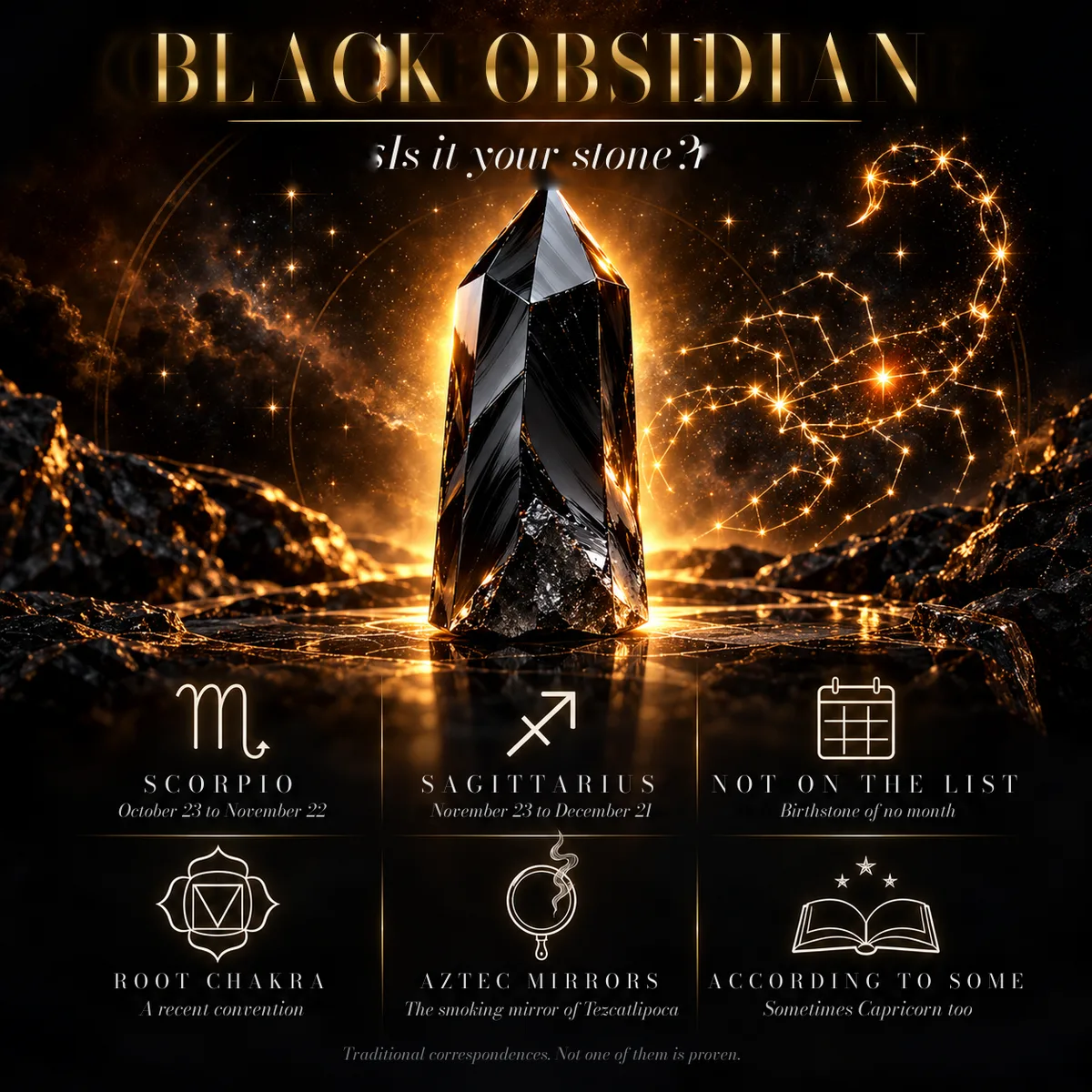
Description
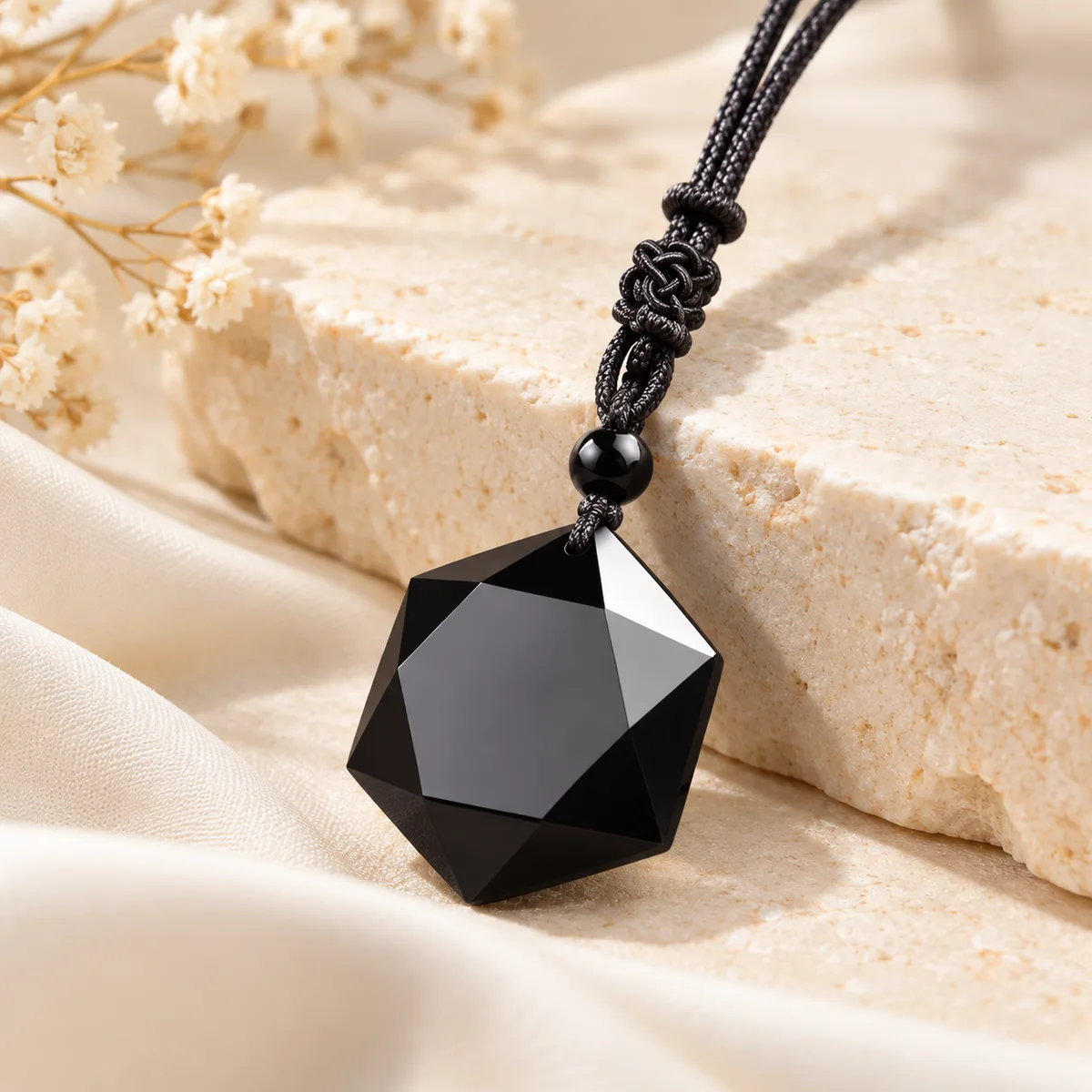
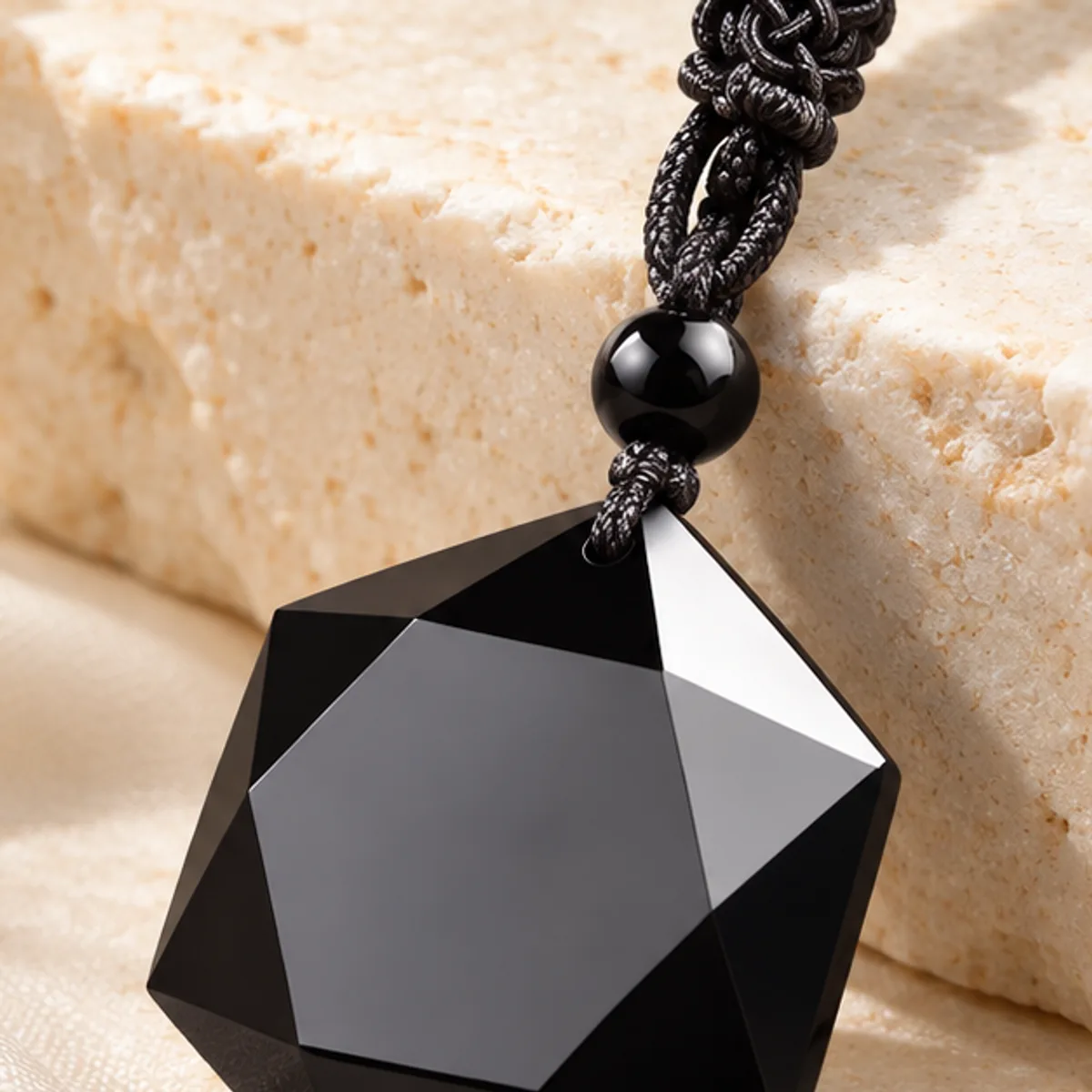
An obsidian polyhedron with twenty triangular faces, hung from a braided black cord. No face is parallel to its neighbor, so the pendant never returns the same reflection twice.
The shape is an icosahedron, one of the five regular solids of Greek geometry: twenty identical equilateral triangles, thirty edges, twelve vertices. On a transparent stone you would choose it for refraction; on a black glass it serves something else. Each facet is a small mirror set at a different angle, and the pendant lights up in separate glints instead of returning a pool of light the way a cabochon does.
It is the least expensive piece in the catalog, and that comes from the cutting and not from the stone. A regular polyhedron is cut on an index machine: you lock the stone, then present the same face to the wheel twenty times, turning it by a fixed angle each time. A cabochon, by contrast, is shaped by hand and calls for an eye on every pass. Same material, ten times less work. The other pendants are here.
The reservation is the edges. Thirty sharp edges on a volcanic glass are thirty places where the stone can chip, and one knock against a belt buckle is enough. The edges are softened by hand before assembly, which protects them without rounding them to the point of losing the drawing, but a polyhedron will always be more fragile than a polished drop. That is the price of the shape.
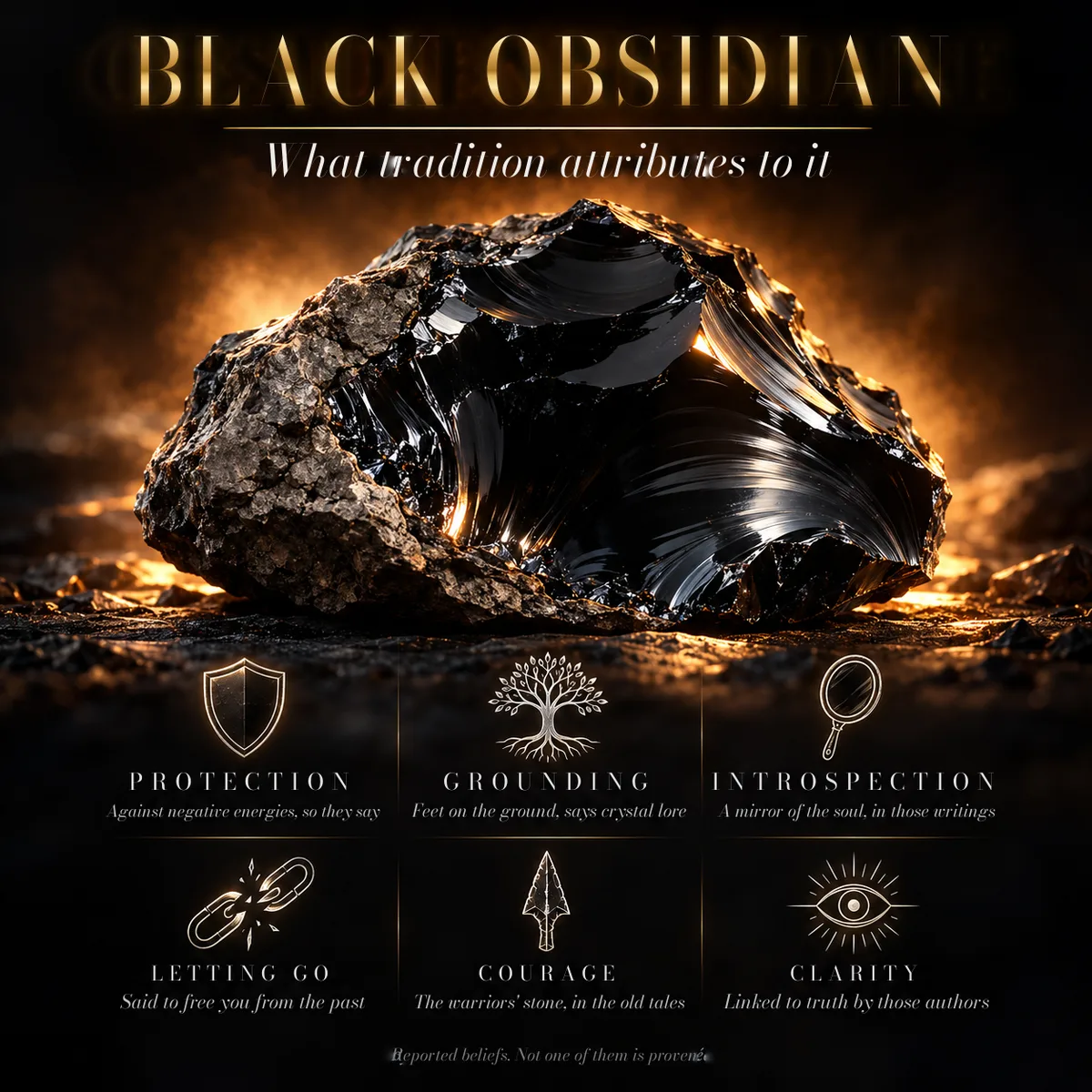
Crystal lore ties obsidian to grounding, and regular geometry to balance. None of that is proven, and no piece of jewelry heals anything. I have gathered separately what tradition attributes to obsidian, in the conditional from start to finish.
- Genuine black obsidian, cut as an icosahedron with twenty triangular faces.
- Adjustable braided black cord, no metal clasp.
- Edges softened by hand: thirty sharp edges would be thirty breaking points.
- The most affordable pendant in the range, through the cutting and not the stone.
What to know before you wear it
 |  |  |
The specifications
- Stone
- Black obsidian, volcanic glass
- Cut
- Icosahedron, twenty triangular faces
- Dimensions
- About 3/4 in (20 mm)
- Setting
- None, the stone is drilled and knotted
- Cord
- Braided black cord, adjustable length
- Gender
- Unisex
- Brand
- Bijoux Obsidienne

Twenty faces on a glass that flakes away in shells
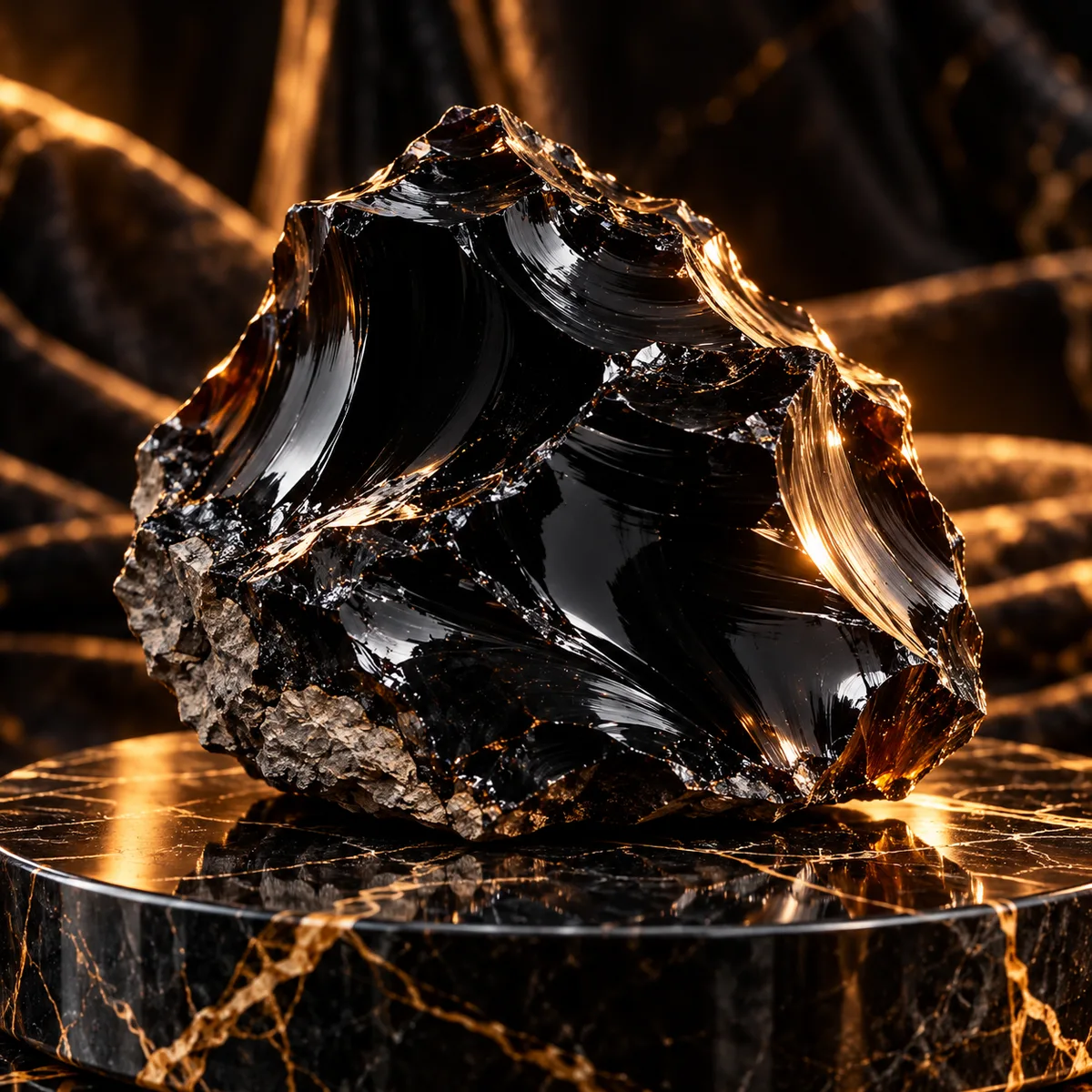
Faceting a volcanic glass has nothing to do with faceting a quartz. A crystal splits along its planes and warns you: the break follows a direction. A glass has no plane, it flakes away in shells, in small round scales, and it does so without warning as soon as the wheel heats up or the angle of attack is too abrupt. On twenty faces, one pass pressed too hard is all it takes to lose the whole stone at the nineteenth triangle. That is what explains the reject rate on this kind of cut.
This piece exists because people kept asking me for a low-priced obsidian pendant that was not a badly polished offcut. A geometric shape answers that request well: it is cheap to produce and it has a drawing. The other pendants are here and the obsidian guide explains the material.
A crystal warns before it breaks, it follows its planes. A glass flakes away in shells, announcing nothing.
Obsidian does not mind water, but a polyhedron chips at the edges far more easily than a rounded stone. Take the pendant off before sport and do not wear it under a belt. A soft cloth is enough, never an ultrasonic bath. Cleaning an obsidian piece covers the rest.