
Description
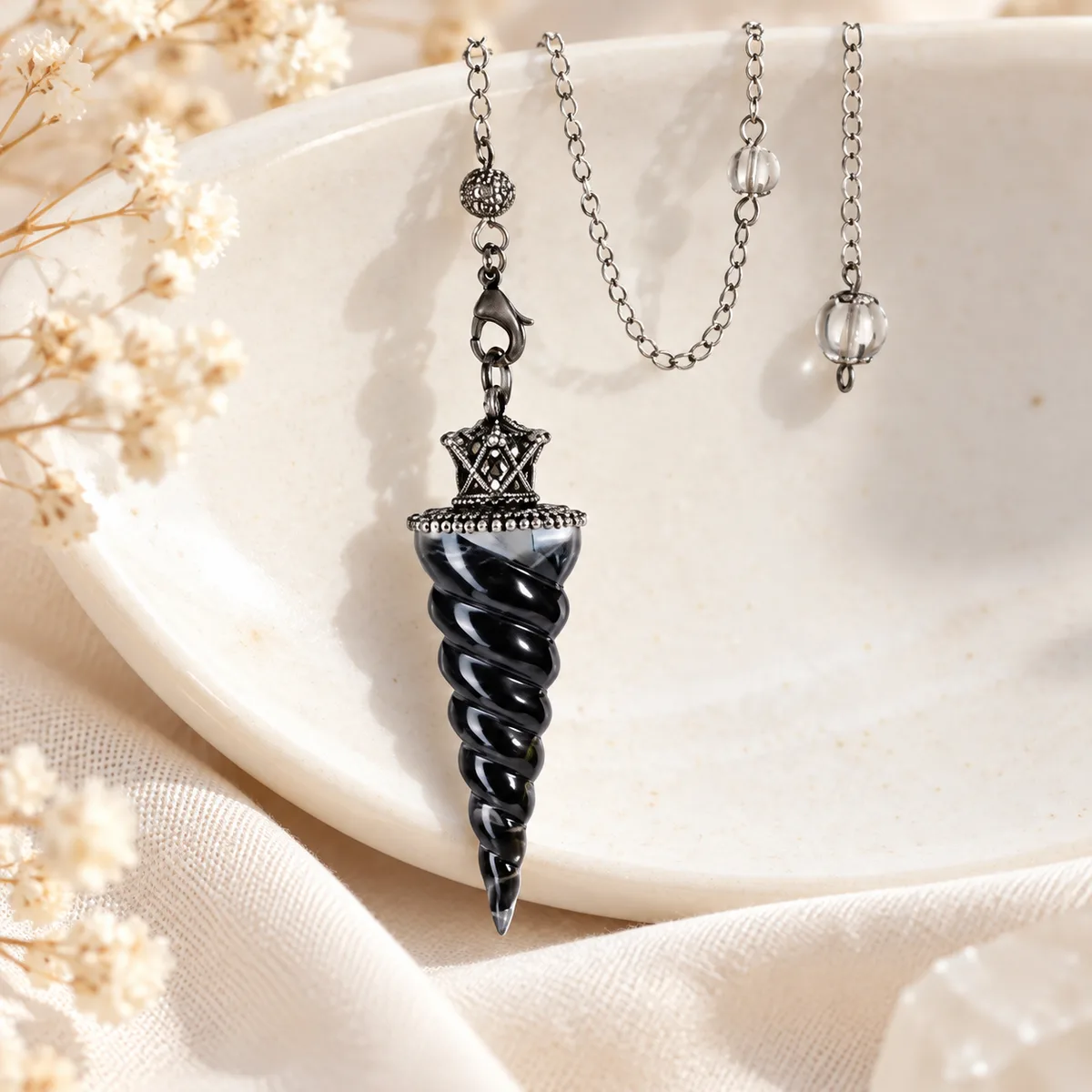
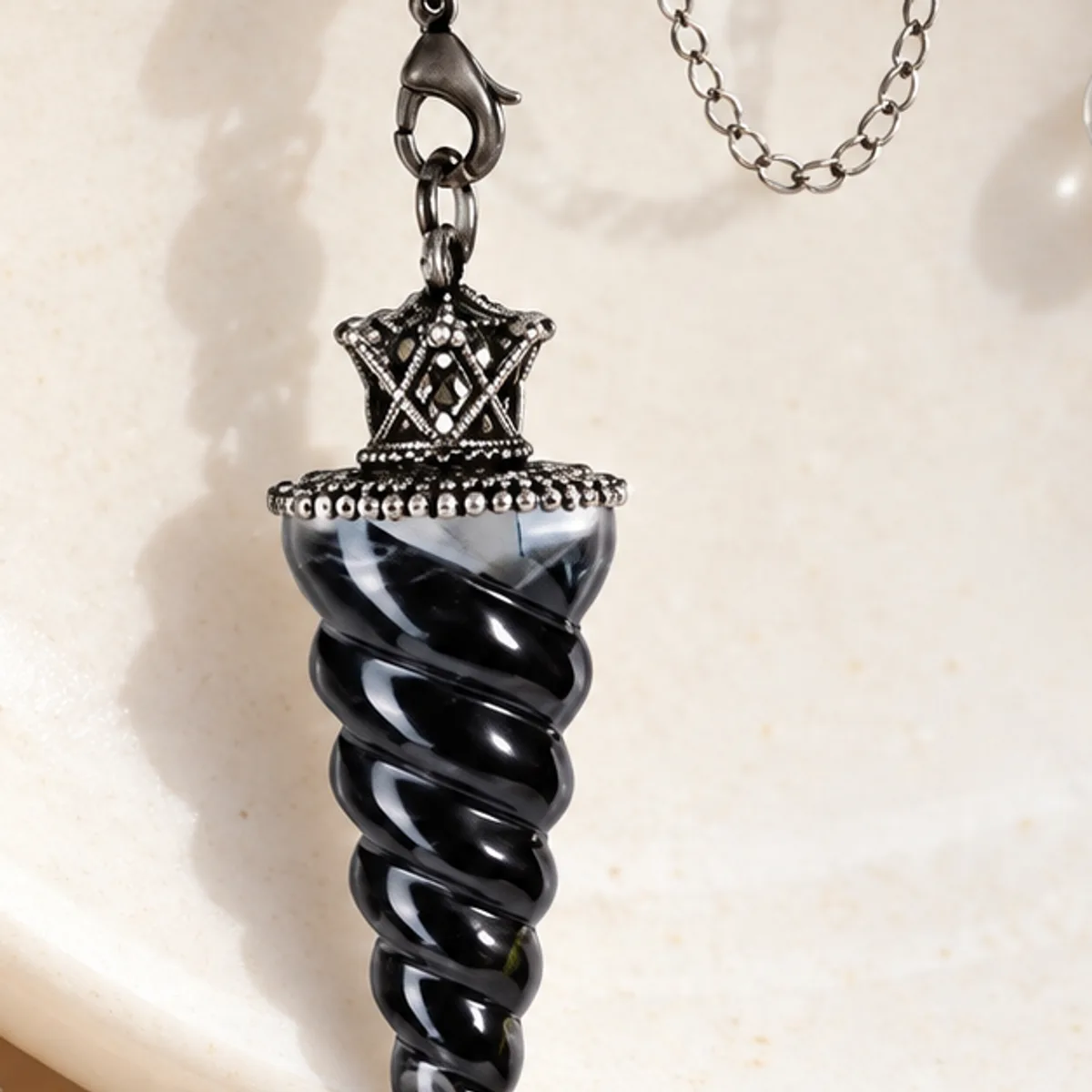
An obsidian pendulum cut as a spiral, a continuous twist running from the top down to the point. It is a dowsing object, and its shape is a cutter’s work, not an added function.
I will start with the point that matters, because you often read the opposite: the spiral changes nothing about how the pendulum works. A pendulum swings because the hand holding it produces involuntary micro-movements, the ideomotor effect, documented since the nineteenth century. The shape of the suspended mass plays no part in that mechanism. What counts mechanically is the weight, the symmetry and the suppleness of the chain, not the twist.
That said, the spiral is not pointless for all that: it is a difficult piece to cut, and the result is beautiful. The pitch of the twist must stay constant from top to bottom, failing which the shape looks slack toward the point. On a volcanic glass that flakes away in shells, that regularity calls for some twenty very light passes instead of five or six. That is what you are paying for, and it is honest to put it that way. The pendants meant to be worn are here.
The reservation is the point, and it is severe on this object. A pendulum falls, that is its nature, and a fine obsidian point chips at the first hard contact. The spiral makes the problem worse: it creates raised edges along the whole length, so many places where the stone can chip. It is the piece in the catalog I least recommend to anyone clumsy. Use it over a table, never standing on tile.
Crystal lore ties obsidian to grounding. Dowsing, for its part, has no scientific validation, and blind trials have never shown a result better than chance. This object heals nothing and detects nothing. I have gathered separately what tradition attributes to obsidian, in the conditional.
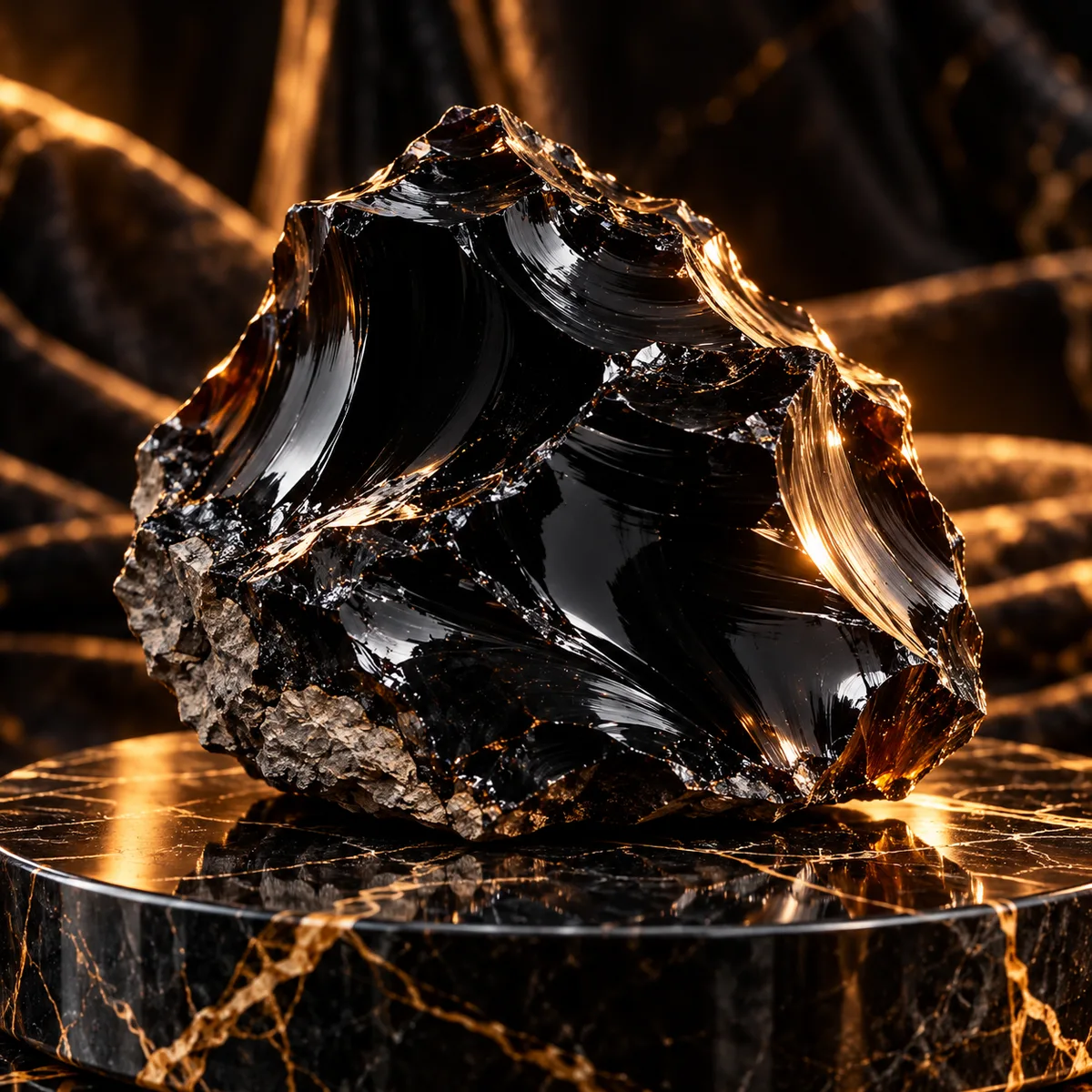
- Genuine black obsidian, cut as a spiral with a constant pitch.
- The spiral changes nothing about how it works: it is a cutter’s work, not a function.
- Metal cap and supple chain with holding beads.
- The raised edges chip easily: use it over a table.
What to know before you use it
 |  |  |
The specifications
- Stone
- Black obsidian, volcanic glass
- Shape
- Twisted spiral ending in a point
- Stone length
- About 2 in (50 mm)
- Total weight
- About 1 oz (28 g)
- Chain
- Fine chain with holding beads
- Use
- A dowsing object, not worn at the neck
- Brand
- Bijoux Obsidienne

Cutting a spiral in a glass, and why it takes so long
A spiral is cut by turning the piece through a constant angle between each pass, and everything rests on the regularity of that angle. If the cutter speeds up toward the end, which happens naturally because the piece thins and works faster, the pitch tightens and the point looks wrung. There is no recovering it: going back over the top to match the bottom would thin the whole piece. The only way around it is to count the passes aloud, like a beat.
This pendulum sits in the catalog beside a plain model with a bronze setting, and I will not claim it works better. It is more beautiful and dearer because it takes more work, full stop. If the use matters more than the object, take the other one. Both are here.
The cutter naturally speeds up toward the point, and the pitch tightens. You count the passes aloud to avoid it.
Obsidian does not mind water, but the edges of the spiral chip at the slightest knock. Keep the pendulum in its pouch and do not leave it hanging from a hook. Never an ultrasonic bath. Cleaning an obsidian piece covers the rest.