
Description
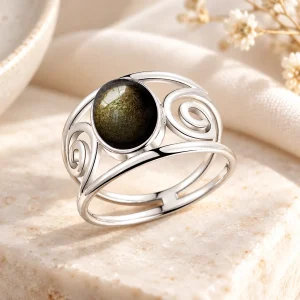
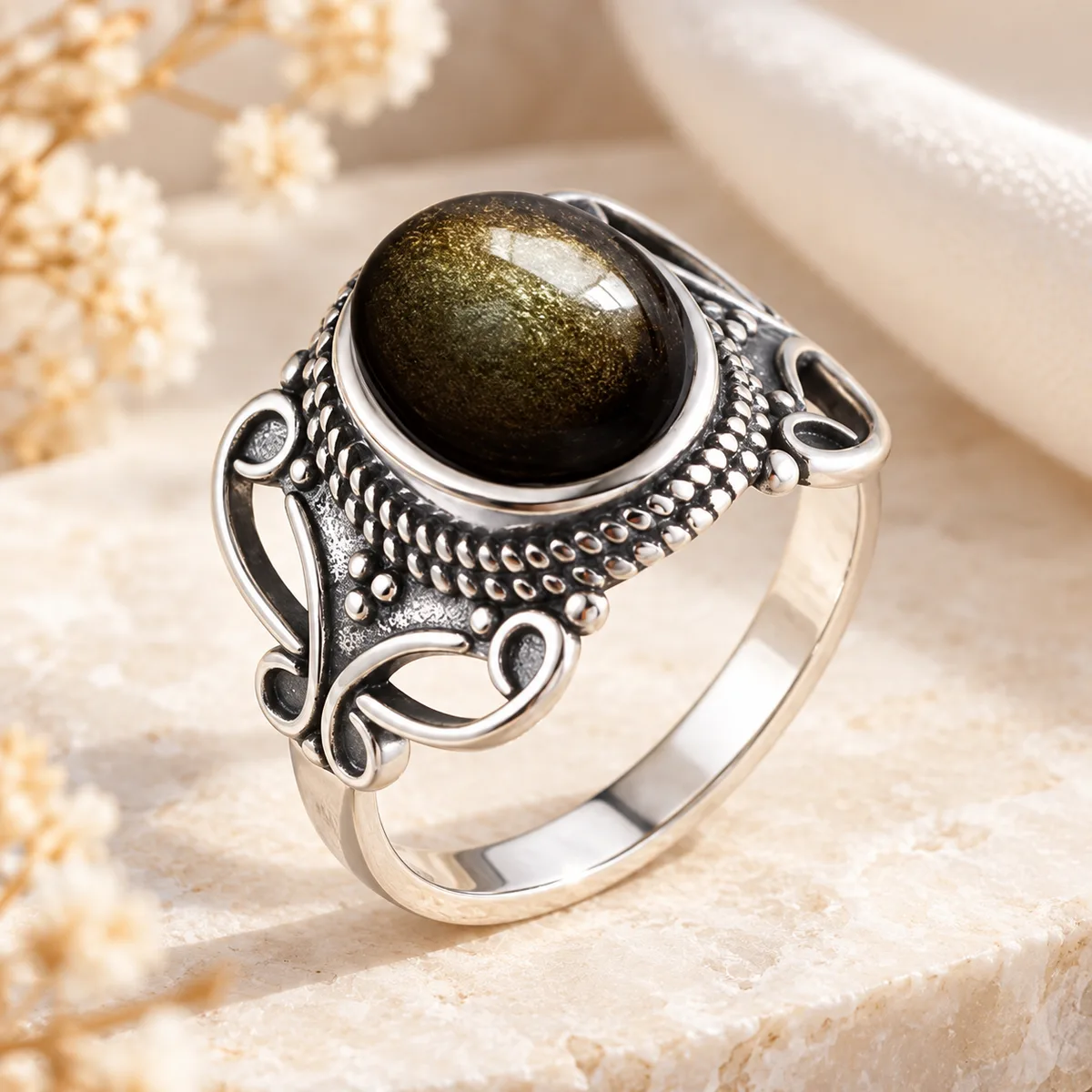
An oval gold sheen obsidian cabochon, ringed by a row of silver beads and set on shoulders pierced into arabesques. It is the most worked of the fifteen settings in the series.
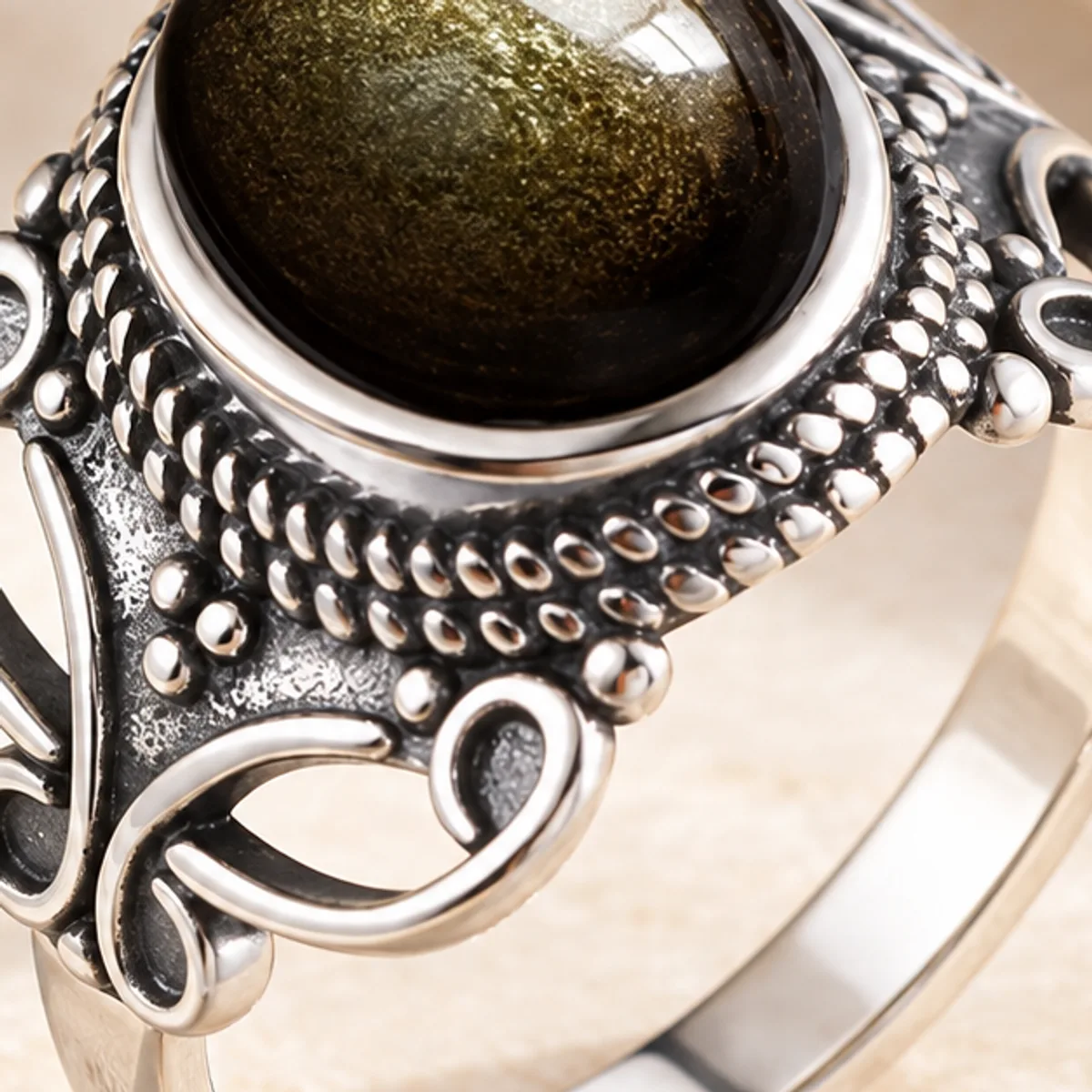
The beaded border is that row of small beads running around the setting. It is not only decoration: it breaks the hard line between the metal and the stone, and it makes the cabochon look larger than it is by drawing a second outline around the first. It is an old goldsmith’s device, used since antiquity for that precise reason.
The shoulders are pierced, that is, cut through with voids. That lightens a wide ring visually and lets the skin show through the metal, which completely changes the way it wears: a solid ring of this width would look heavy, this one stays airy. The catalog offers the same stone in some fifteen settings, from the plainest to this one, the most loaded. The other rings are here.
The reservation is the upkeep of the blackening. The hollows of the arabesques and the gaps between the beads of the border are blackened by hand, and that black is what makes the design readable. A polishing cloth takes it off in a few passes, and the ring then turns uniformly gray, the pattern gone. Never polish this ring: a rinse in lukewarm water is enough.
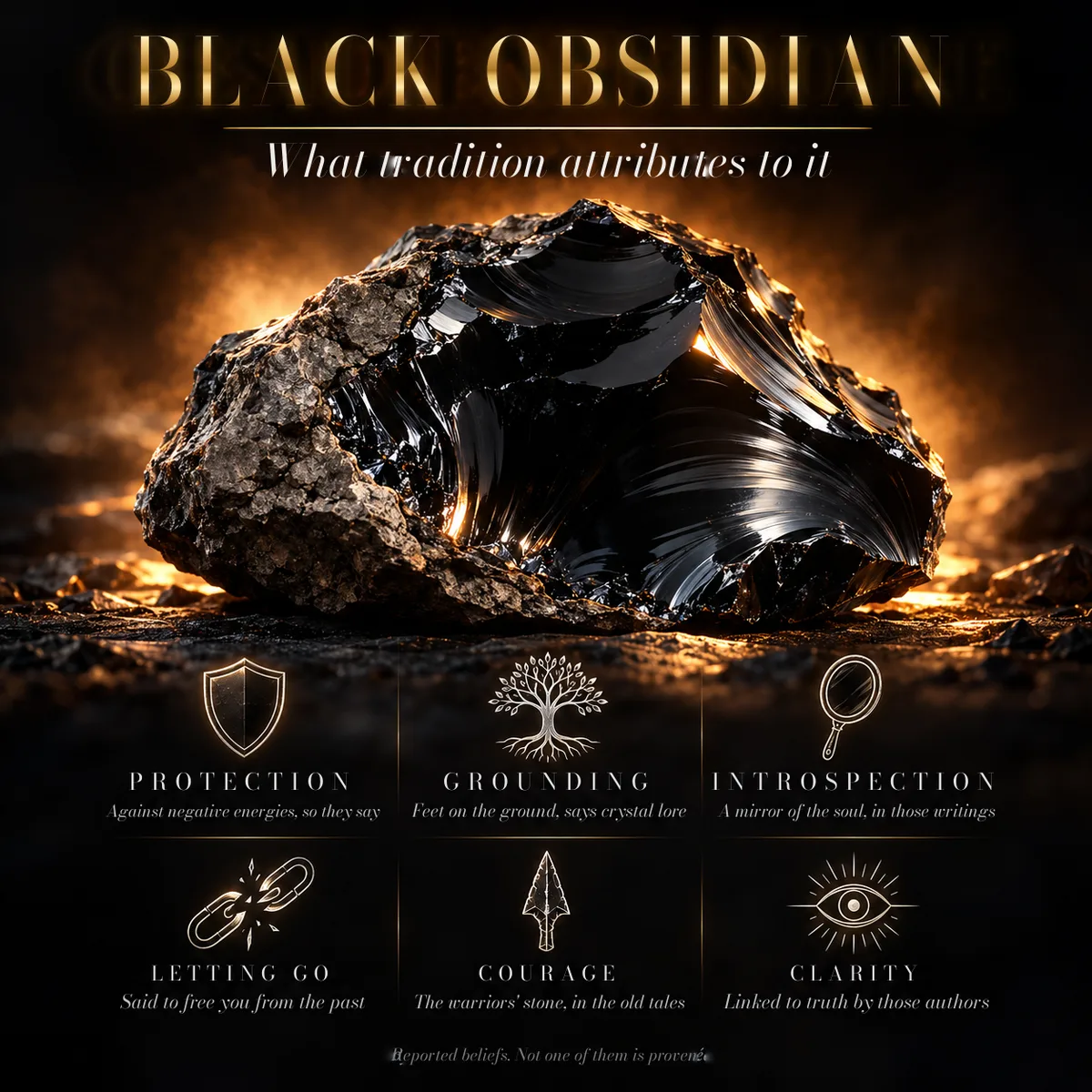
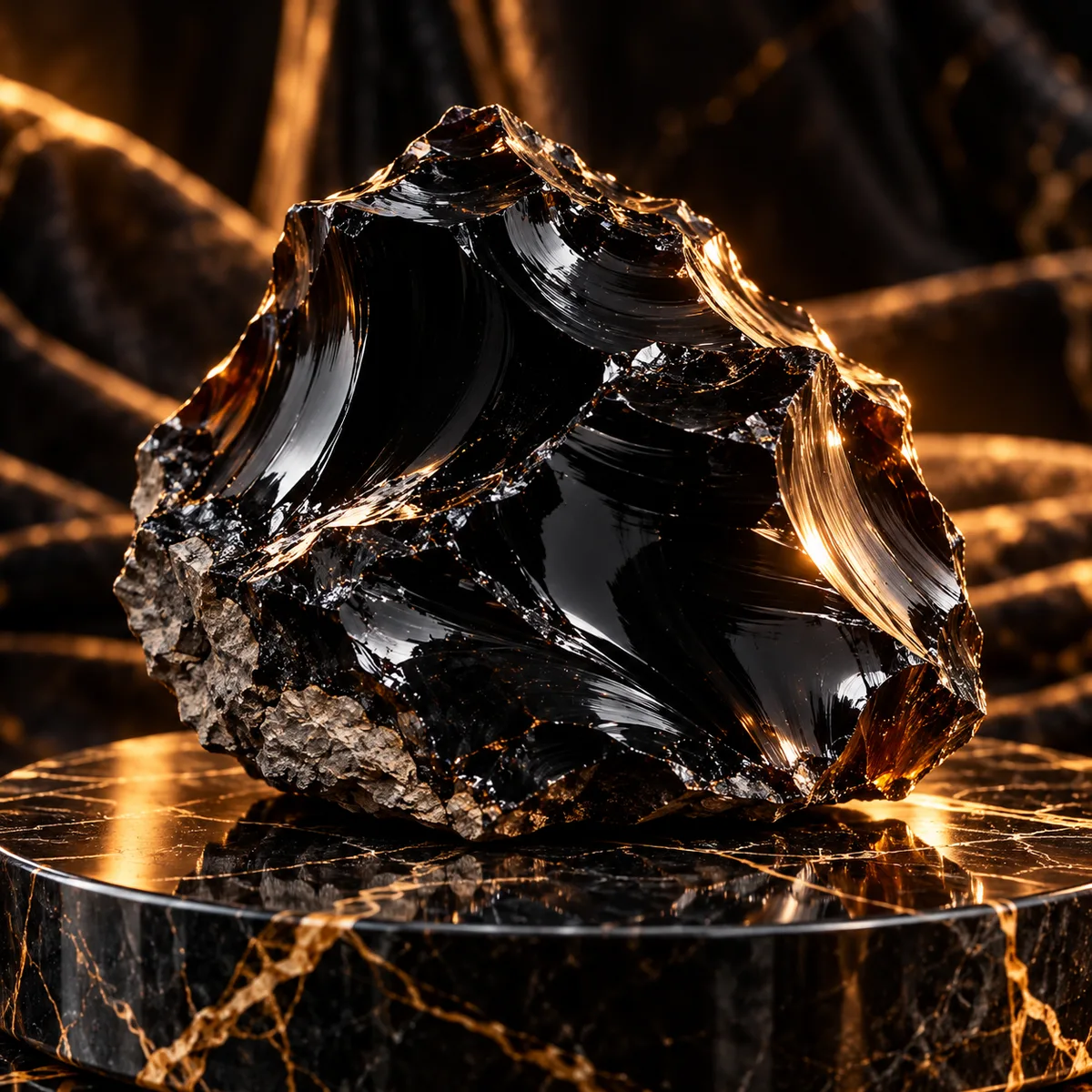
Crystal lore ties obsidian to grounding, and gold sheen in particular to self-confidence. None of that is proven, and no piece of jewelry heals anything. I have gathered separately what tradition attributes to obsidian, in the conditional from start to finish.
- Genuine gold sheen obsidian, oval cabochon in a closed bezel, ringed by a beaded border.
- Sterling silver 925, shoulders pierced into arabesques, hollows blackened by hand.
- Never polish: the black in the hollows goes and the design disappears.
- Fifteen settings for the same stone: this one is the most loaded.
What to know before you wear it
 |  |  |
The specifications
- Stone
- Gold sheen obsidian, volcanic glass, oval cabochon
- Metal
- Sterling silver 925, S925 hallmark
- Setting
- Closed bezel ringed by a beaded border, no glue
- Decoration
- Pierced arabesques, blackened hollows
- Sizes
- 52 to 62 (inner circumference in mm)
- Gender
- Women
- Brand
- Bijoux Obsidienne

The beaded border, and why it goes on last
A beaded border always goes on after the setting, never before, and that is counterintuitive, because it would be easier to form on a rim still free. The reason is that folding the rim over the stone slightly deforms its upper edge, by a few hundredths, and a border already formed would end up with two or three beads crushed on the side the tool pushed from. So you set the stone, then form the beads one by one on the already folded edge. It is slower and no bead comes out oval.
This setting is the opposite of the catalog’s scroll version. One shows nothing but the stone, this one shows as much metal as stone. Neither is better, and I say so because people often ask me which is the prettier: that is a question of the hand. The other rings are here and the size guide saves a return.
You set the stone first and form the beads afterwards. Otherwise two or three end up crushed on the side the tool pushed from.
Obsidian does not mind water, but it shatters on impact. Take the ring off before DIY and sport. Never polish it: the black in the hollows goes and the pattern disappears. A rinse in lukewarm water is enough. Cleaning an obsidian piece covers the rest.