Black Obsidian: Protection & Grounding Stone
Of all stones, black obsidian is perhaps most strongly linked to protection and grounding. Here's what crystal healing traditions ascribe to it, and how to embrace it daily with wisdom and care.
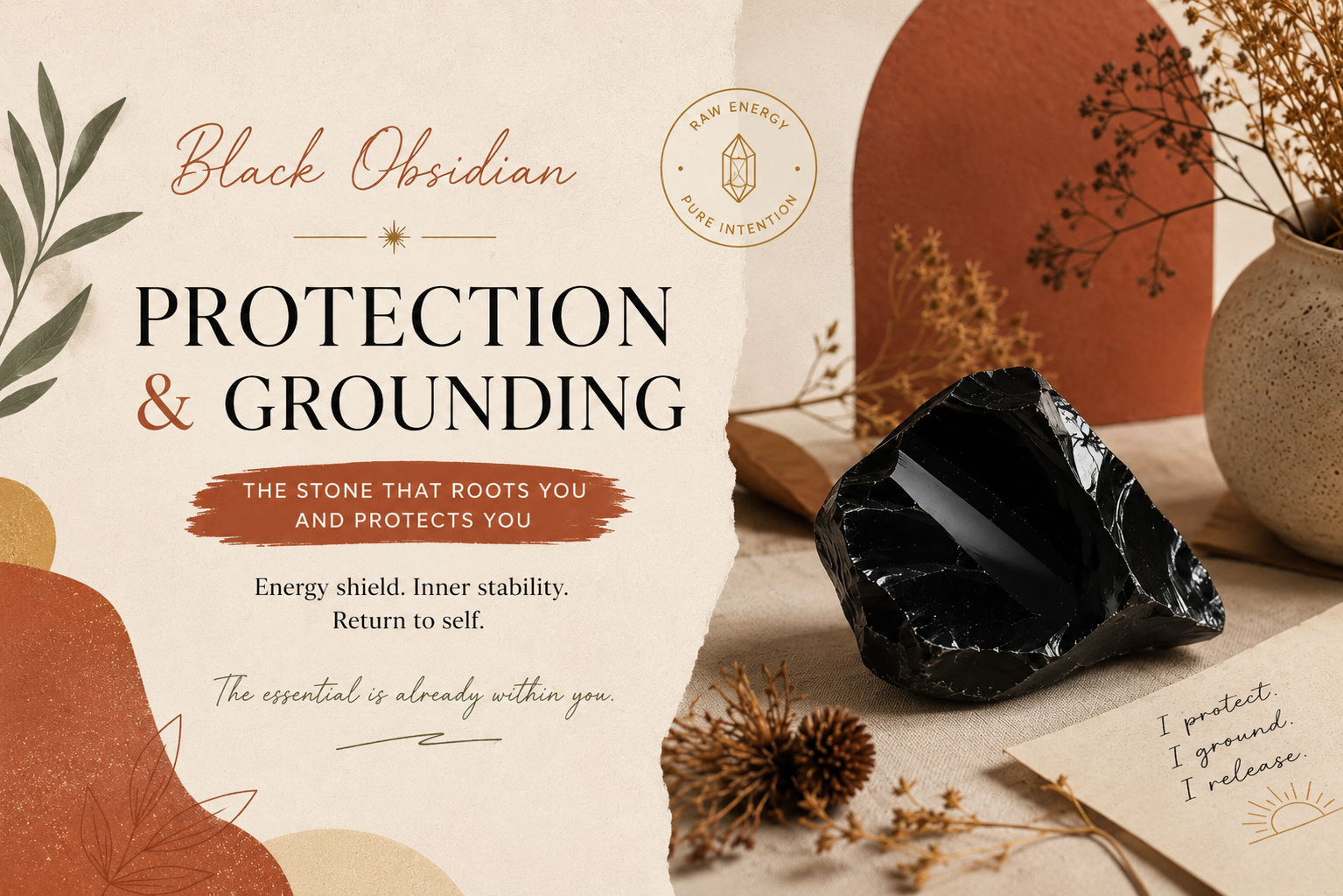
A protection stone
In crystal healing traditions, black obsidian is renowned as a protection stone par excellence. It's said to act like a shield: a dark mirror that reflects back what one perceives as negative energy rather than letting it reach you.

It's also called a "truth stone": through its mirror-like quality, it's said to invite you to face what you sometimes avoid, and thus protect yourself first through a bit of self-awareness. Protection that begins, in a sense, with clarity about yourself.
Grounding and the root chakra
Obsidian's other major reputation is grounding. In crystal healing language, grounding means reconnecting to earth, to the present moment, to your body, finding stability when scattered or "in your head."
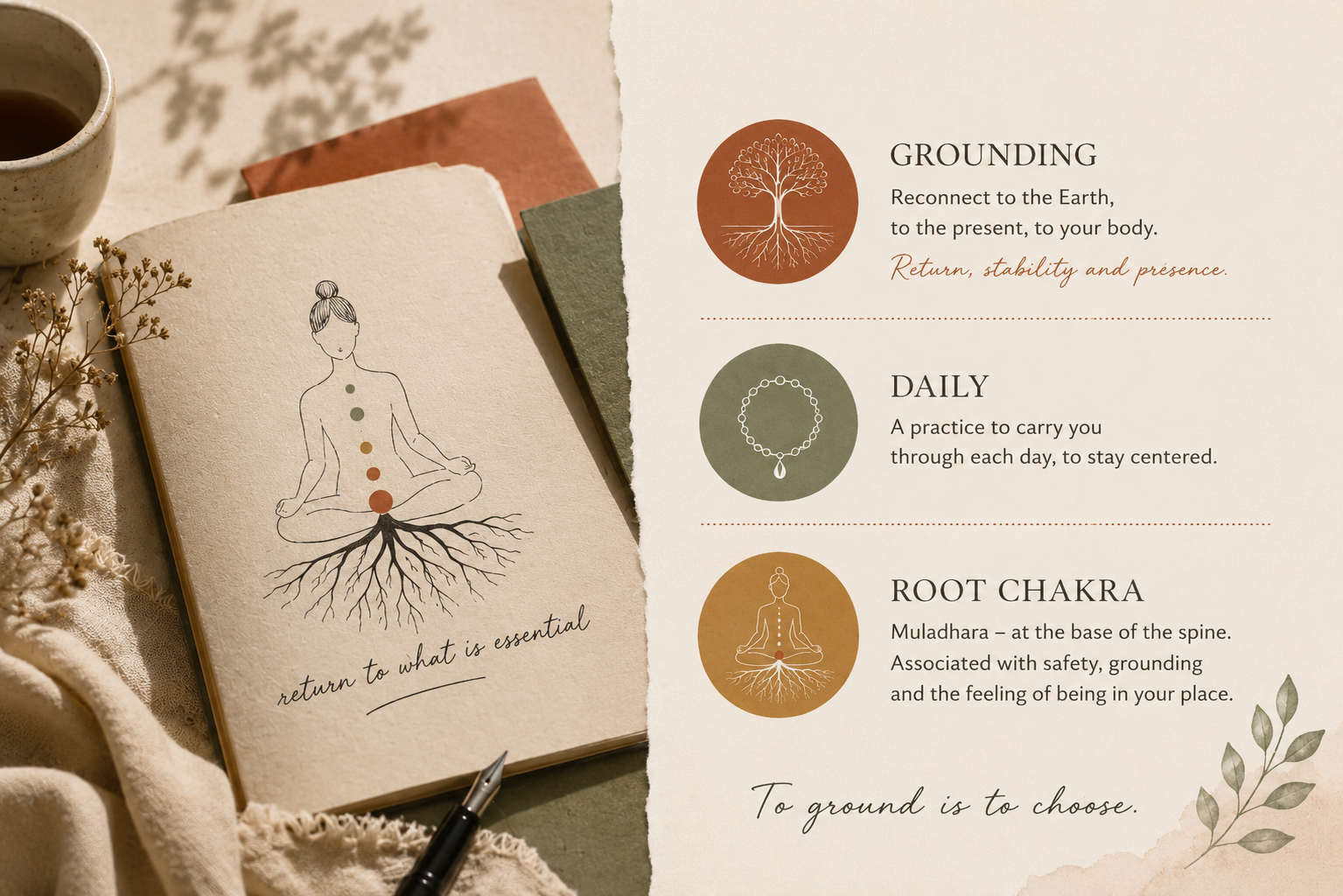
Energetically, black obsidian is traditionally connected to the root chakra (Muladhara), located at the base of the spine. It's the center linked to security, rootedness, and feeling "at home." You can see why this dark, dense stone is so often paired with it.
Why protection and grounding go together
These two qualities always return together because they're intertwined: it's hard to feel protected if you're floating, and hard to ground if you feel exposed. Obsidian is cherished in times when you need to recenter and feel solid: during transitions, emotional fatigue, or in challenging environments.
I've gotten into the habit of wearing my obsidian bracelet on rough days, a meeting that intimidates me, a hectic day. Feeling it at my wrist simply reminds me to breathe and keep my feet on the ground.
How to use obsidian for protection and grounding
The simplest way is to wear it on your body, to keep it in contact throughout the day:
- as a bracelet, the most common form: a widespread convention says to wear it on the left wrist to "receive," on the right to project outward for protection;
- as a pendant or necklace, to keep it near your chest or heart;
- as a polished stone in a pocket, to hold during a moment of stress.
At home, place one near the entrance or in a living space. During quiet time or meditation, holding it at the base of the body or in your palm is said to help you recenter. What matters most is the intention you bring.
Pairing with other stones
Obsidian pairs readily with other stones, depending on what you want to strengthen:
- for protection: black tourmaline, or tiger's eye (which adds a grounding touch);
- for grounding: hematite, red jasper, or garnet, all deeply "earthy";
- to soften its intensity: rose quartz, amethyst, or labradorite, known as gentler protection.
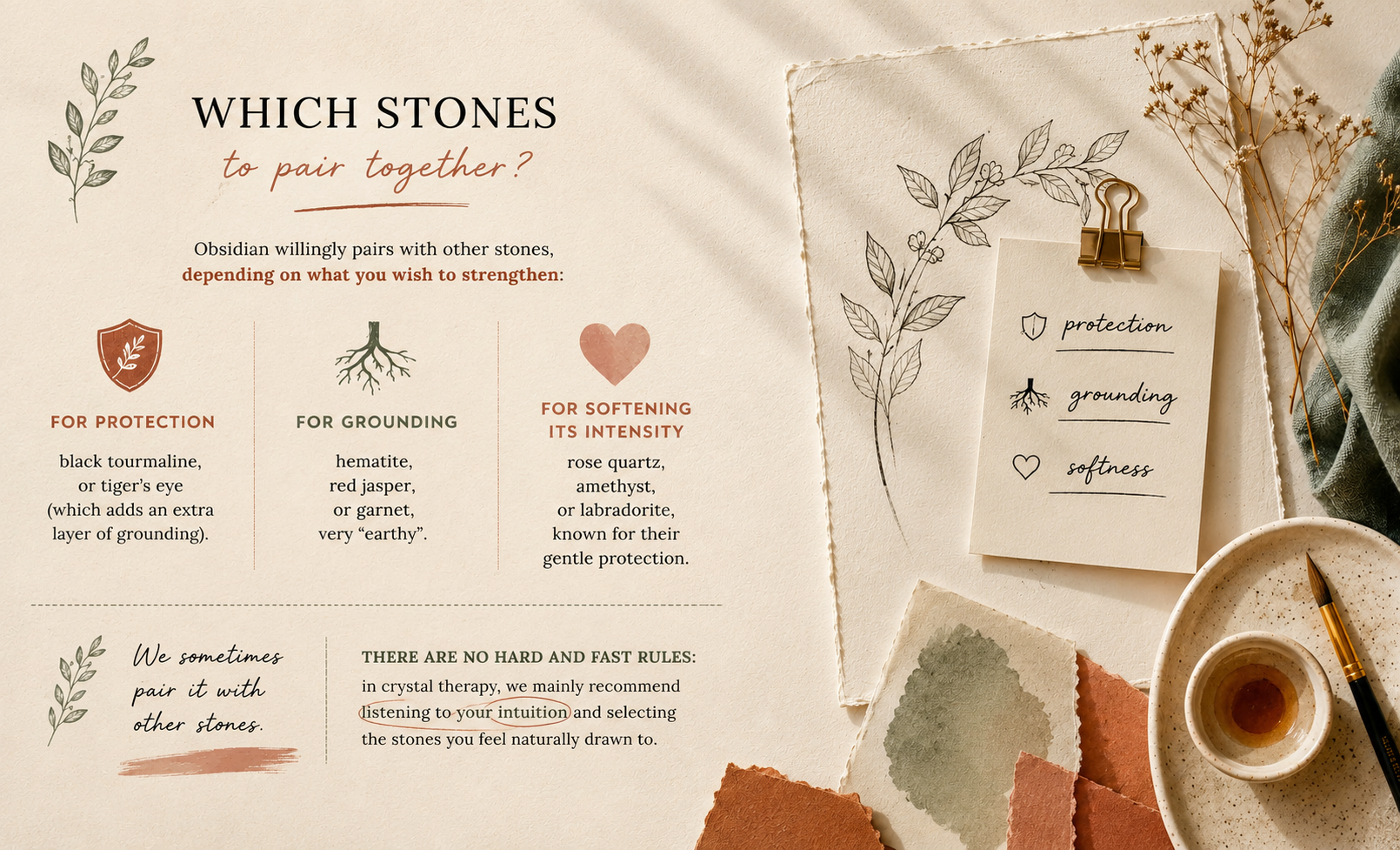
There's no absolute rule: in crystal healing, the advice is mainly to listen to your intuition and choose the stones you feel drawn toward.
Which obsidian piece to choose?
For daily protection and grounding, a simple black obsidian bracelet is best, discreet and easy to wear. If you prefer to keep the stone near your heart, explore a pendant or necklace.

You'll find my obsidian bracelets and entire collection in the shop, each handmade with natural stones selected one by one. To learn where this stone comes from, read how obsidian forms, and for a complete picture of its properties, see the properties section in my complete guide.
Caution and wisdom
Obsidian is often described as a powerful and honest stone. Many suggest easing into it gradually, and pairing it with a gentler stone if you find it too intense. Also remember to cleanse it regularly, especially after purchase and if you wear it often.
Keep in mind, the properties described here come from crystal healing, a wellness approach rooted in tradition and belief. They are not medical claims, do not cure any disease, and never replace professional medical advice or treatment. For health concerns, consult a doctor.
I tell my customers often: a stone is not magic. It's a little support, a reminder, an intention you give yourself. That's already plenty, and that's exactly how it should be.