Description
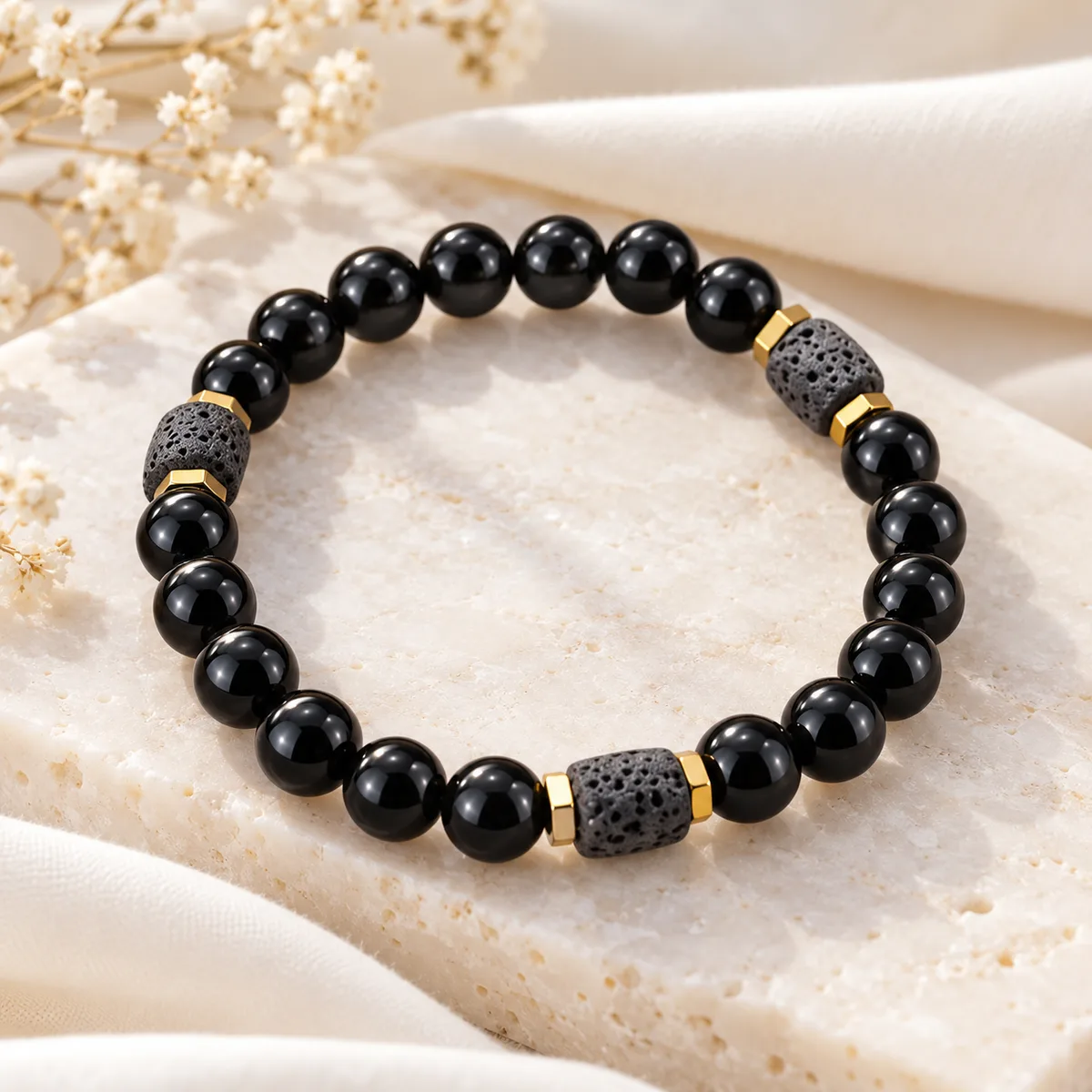
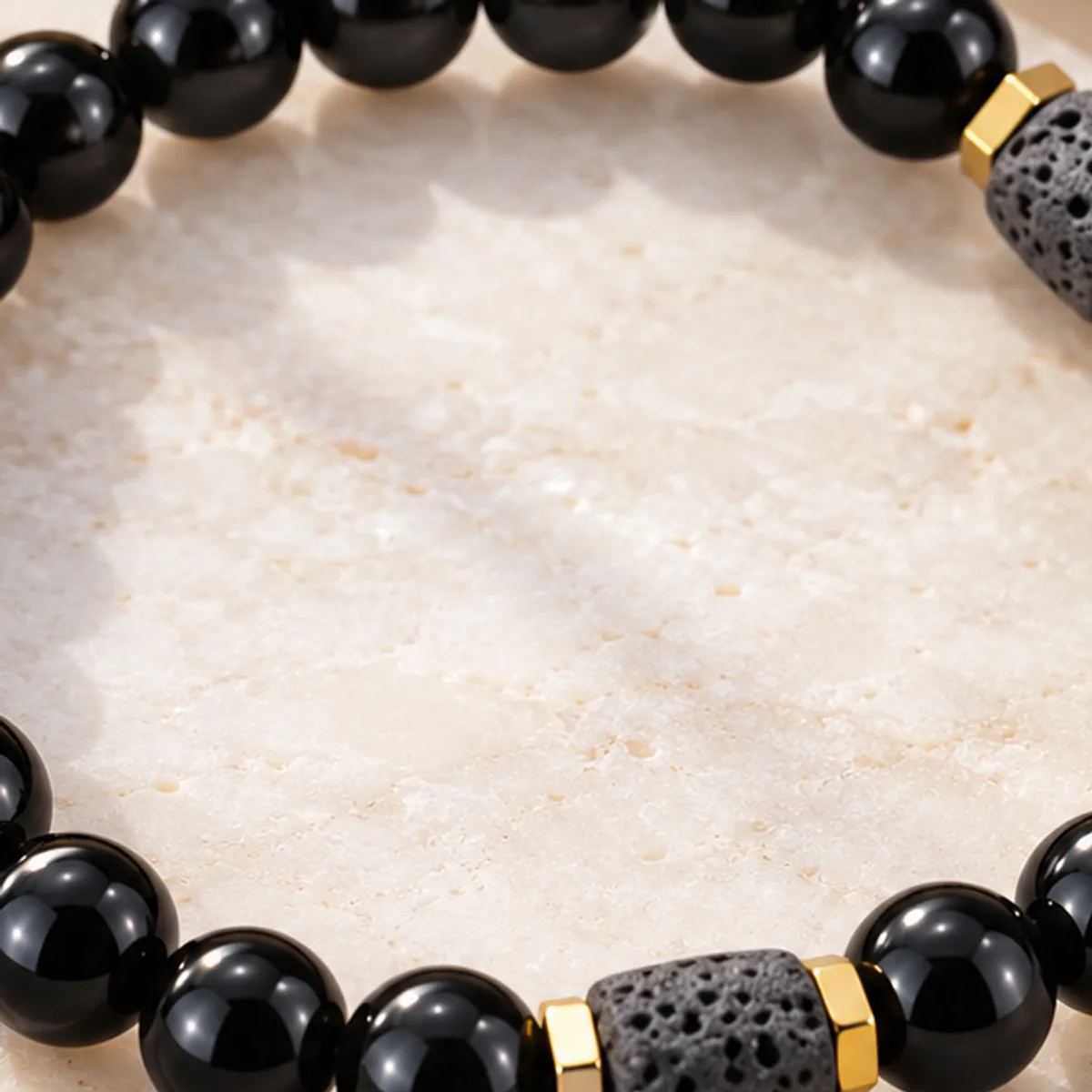
An 8 millimeter strand alternating obsidian, black and polished like glass, with lava stone, grey and riddled with holes. Three gold rondelles part the groups. Both stones come out of the same volcano and look nothing alike.
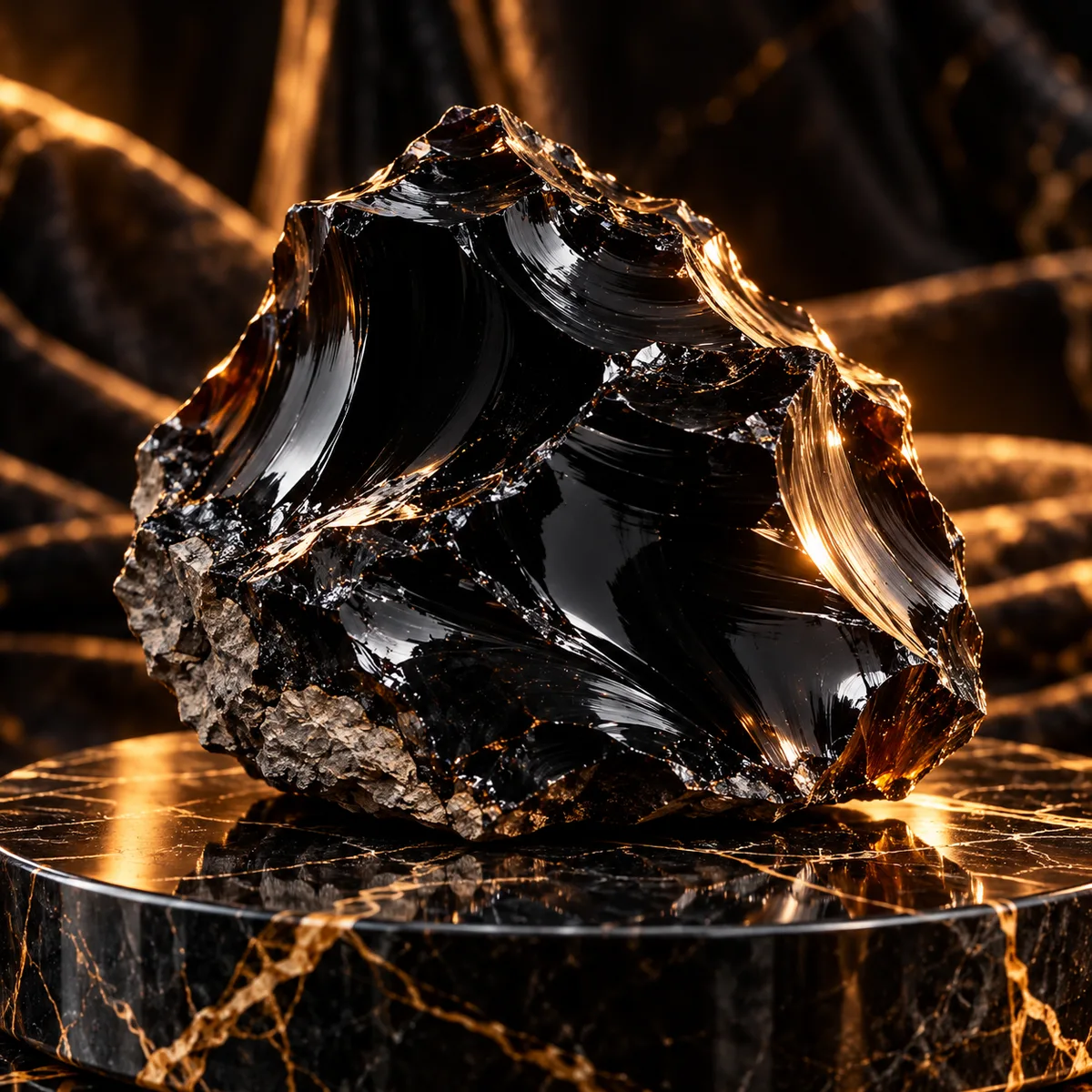
It is cooling speed that separates them, nothing else. A lava that sets in a few hours, leaving the gases no time to escape and the atoms no time to organize, gives vesicular basalt: lava stone, full of frozen bubbles. The same lava cooled faster still, at the surface of a flow, gives a glass with no bubbles and no crystals: obsidian. Two opposite textures, one origin. The obsidian guide tells that story.
The contrast of surfaces is the subject of the bracelet. Obsidian returns light, lava absorbs it entirely, and the eye passes from one to the other with no transition. The gold rondelles are not decorative: they create a breath between two textures that would otherwise clash. The other bracelets are here.
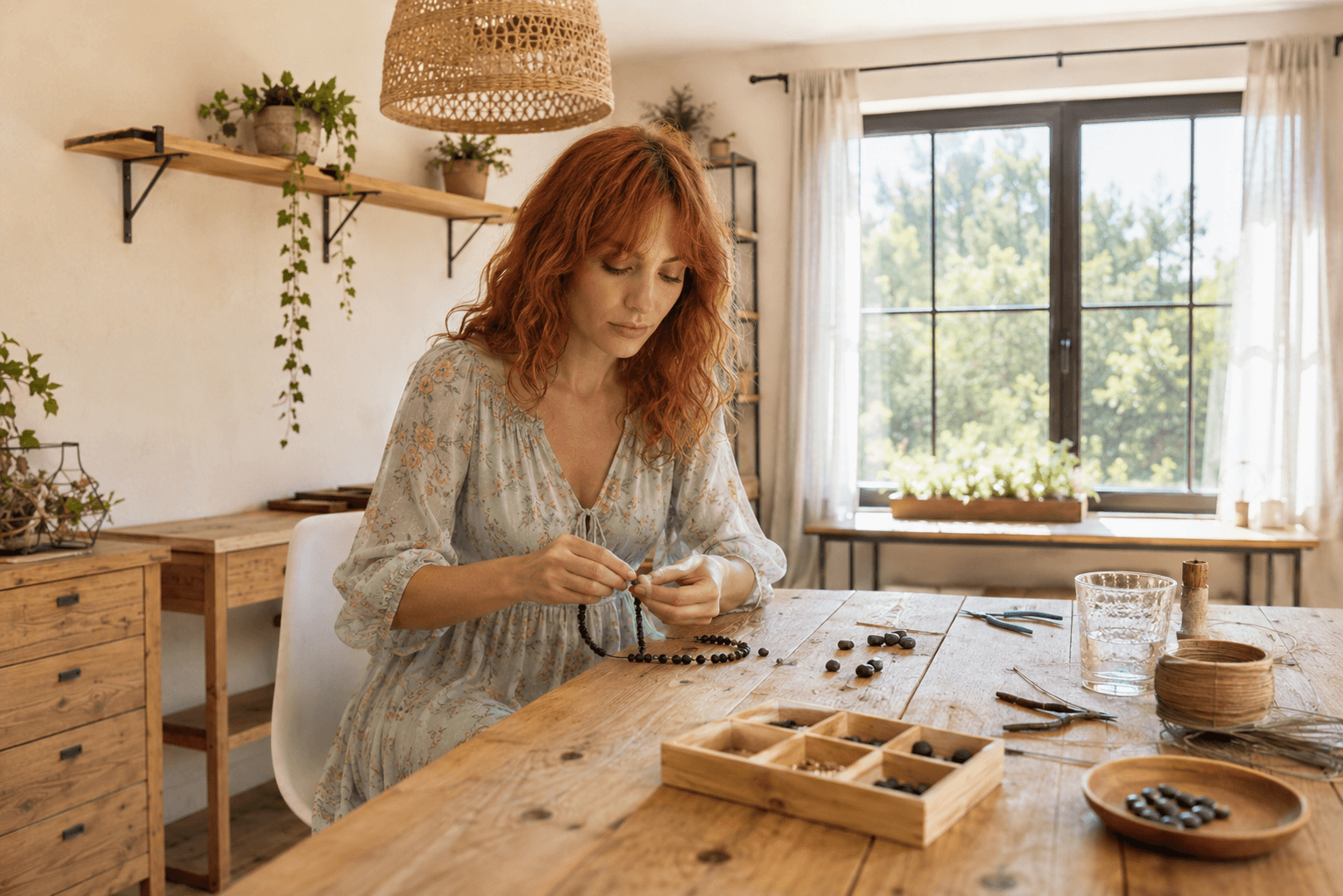
Lava stone is porous, and that is both its appeal and its constraint. Many use it as an essential oil diffuser, one drop lasting two or three days. But what goes in does not come out: a scented oil leaves a lingering smell, and liquid soap or hand cream lodge there too. After a year the stone keeps everything it has drunk. You do not really clean it, you accept it as it is.
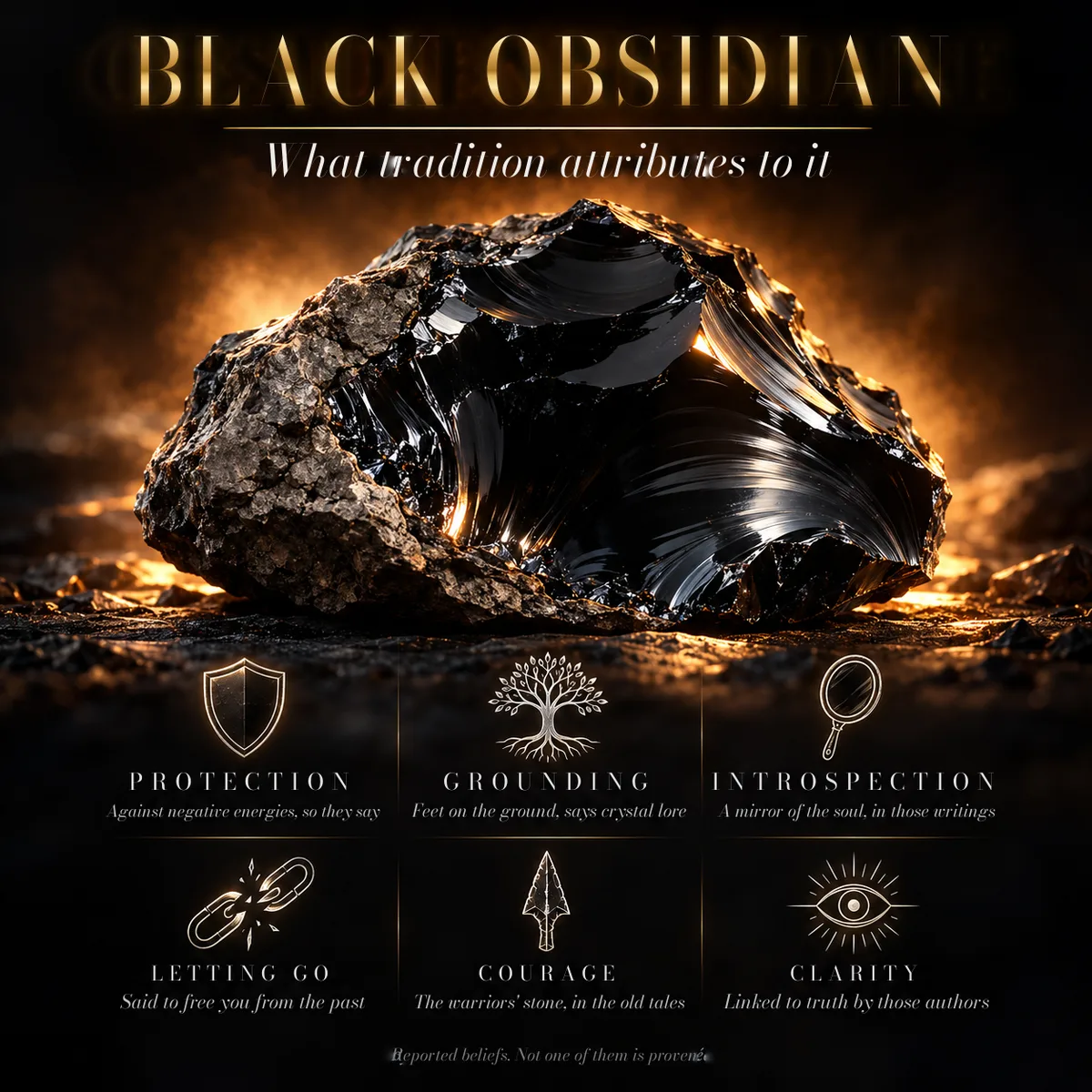
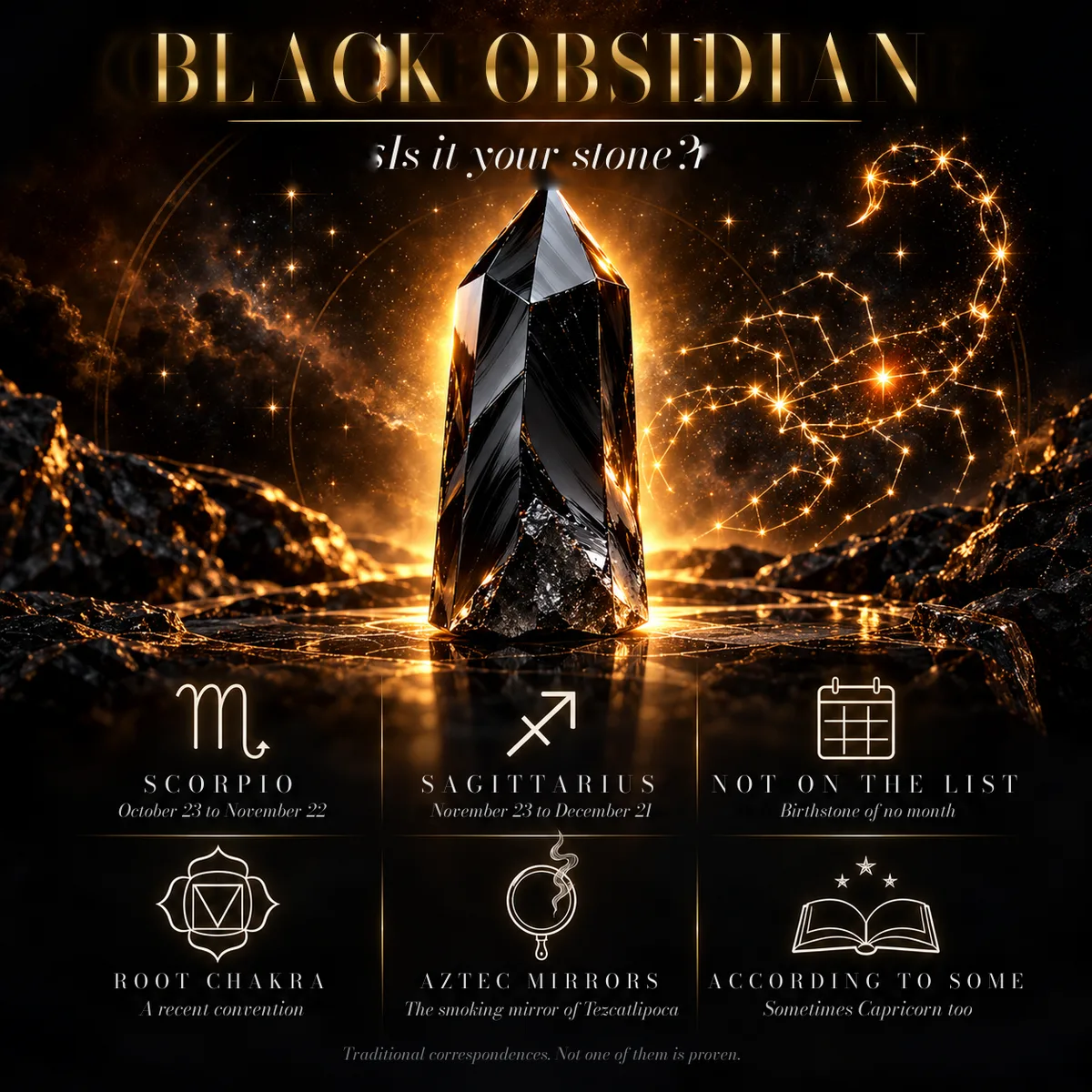
Crystal lore ties obsidian to grounding and lava stone to calm. None of that is proven, and no piece of jewelry heals anything. I have gathered separately what tradition attributes to obsidian and what it says about pairings, in the conditional from start to finish.
- Two real volcanic rocks: polished obsidian and porous lava stone, 8 mm beads.
- Gold-plated brass rondelles, placed to part the two textures.
- Lava stone holds oils and soaps for a long time.
- Hand-strung in France on braided elastic cord, no clasp.
What to know before you wear it
 |  |  |
The specifications
- Stones
- Black obsidian, lava stone (vesicular basalt)
- Bead diameter
- 8 mm
- Trim
- Three gold-plated brass rondelles
- Wrist size
- 6 3/4 to 7 1/2 in (17 to 19 cm), elastic
- Stringing
- Braided elastic cord, no clasp
- Weight
- About 0.5 oz (15 g)
- Stone origins
- Mexico, Indonesia
- Gender
- Unisex
- Brand
- Bijoux Obsidienne
Lava stone drinks whatever you give it
Stringing lava next to obsidian raises a sizing problem invisible in a photograph. A lava bead has no regular surface: its measured diameter varies by two or three tenths of a millimeter depending on where you set the caliper, because the jaw falls into a hole or onto a ridge. Next to a perfectly spherical obsidian, the irregularity shows. So I pick the roundest lava beads in the batch, which easily sets aside a quarter of them.
This strand exists because the question keeps coming back: is obsidian a lava stone. The answer is yes and no, and a blog page does not make it as clear as the two textures side by side on a wrist. The obsidian varieties and the other bracelets fill in the rest.
A quarter of the lava beads go to waste because they are not round enough next to a polished glass.
Obsidian does not mind water. Lava stone, on the other hand, absorbs everything: keep liquid soap, hand cream and perfume away from it, because the smell stays. Take the bracelet off before the shower. A soft dry cloth, never an ultrasonic bath. Cleaning an obsidian piece covers the rest.