Description
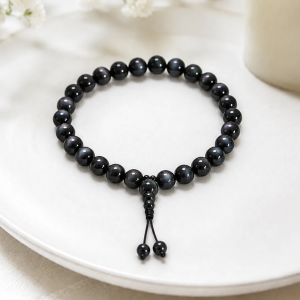
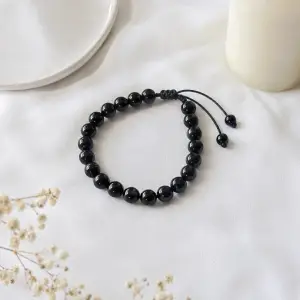
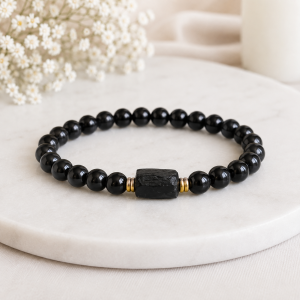
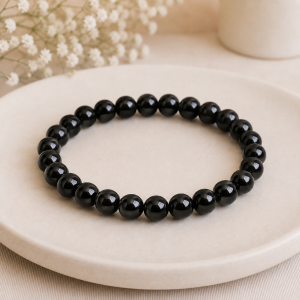
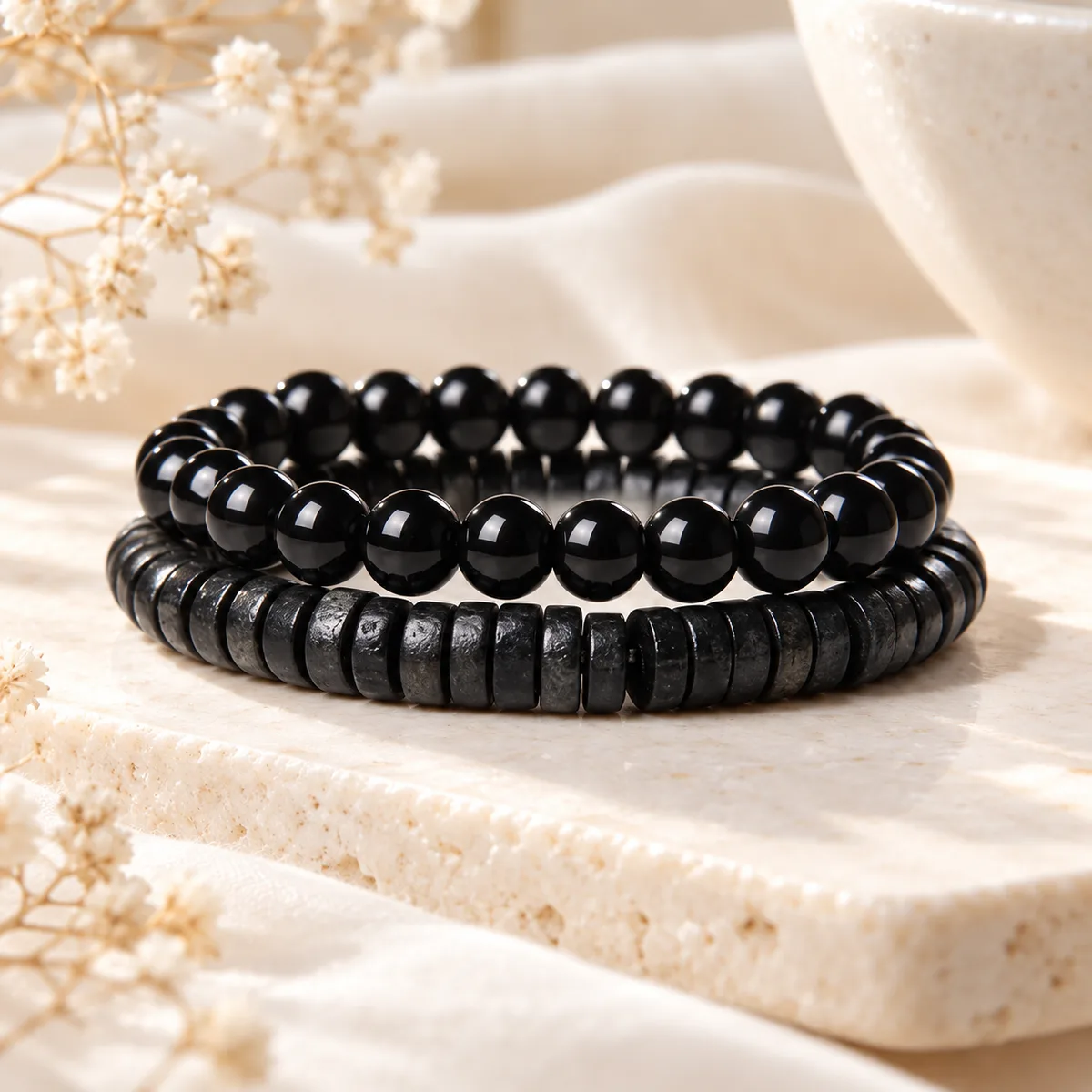
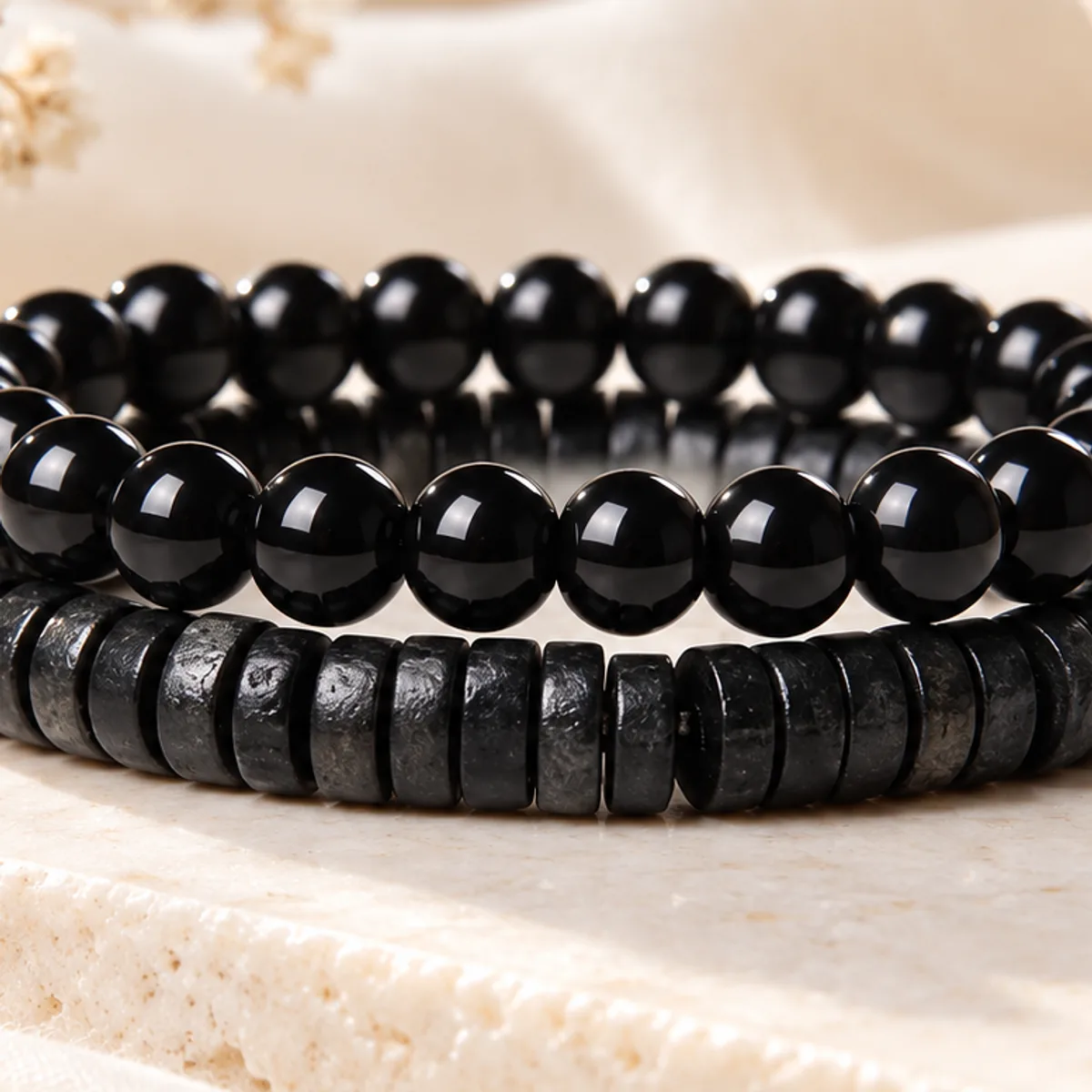
Two bracelets sold together and meant to be worn side by side. One is a strand of round polished obsidian beads, the other a strand of flat grey matte hematite discs. Round against flat, glossy against dull.
Hematite is an iron oxide, and that is what explains its density: at equal volume it weighs almost twice what obsidian does. The disc strand is therefore distinctly heavier than the bead strand, even though it looks slimmer. Its name comes from the Greek for blood, because of the red powder it leaves when rubbed on a porcelain plate, a mineralogist’s test that still works.
The disc shape, called heishi, is not a stylistic whim. Stacked discs follow the curve of the wrist with no gap between them, where spheres touch at a single point. The lying strand is therefore more supple and closer to the skin, and it does not roll. That is why it is so often paired with a strand of round beads: the two do not move the same way. The other bracelets are here.
The reservation concerns hematite and water. It is not the stone that is fragile, it is its polished surface: a long stay in damp air brings out tiny orange rust spots that never come off. A forgotten shower does nothing, a week in a damp toiletry bag shows. Obsidian, being a glass, could not care less.
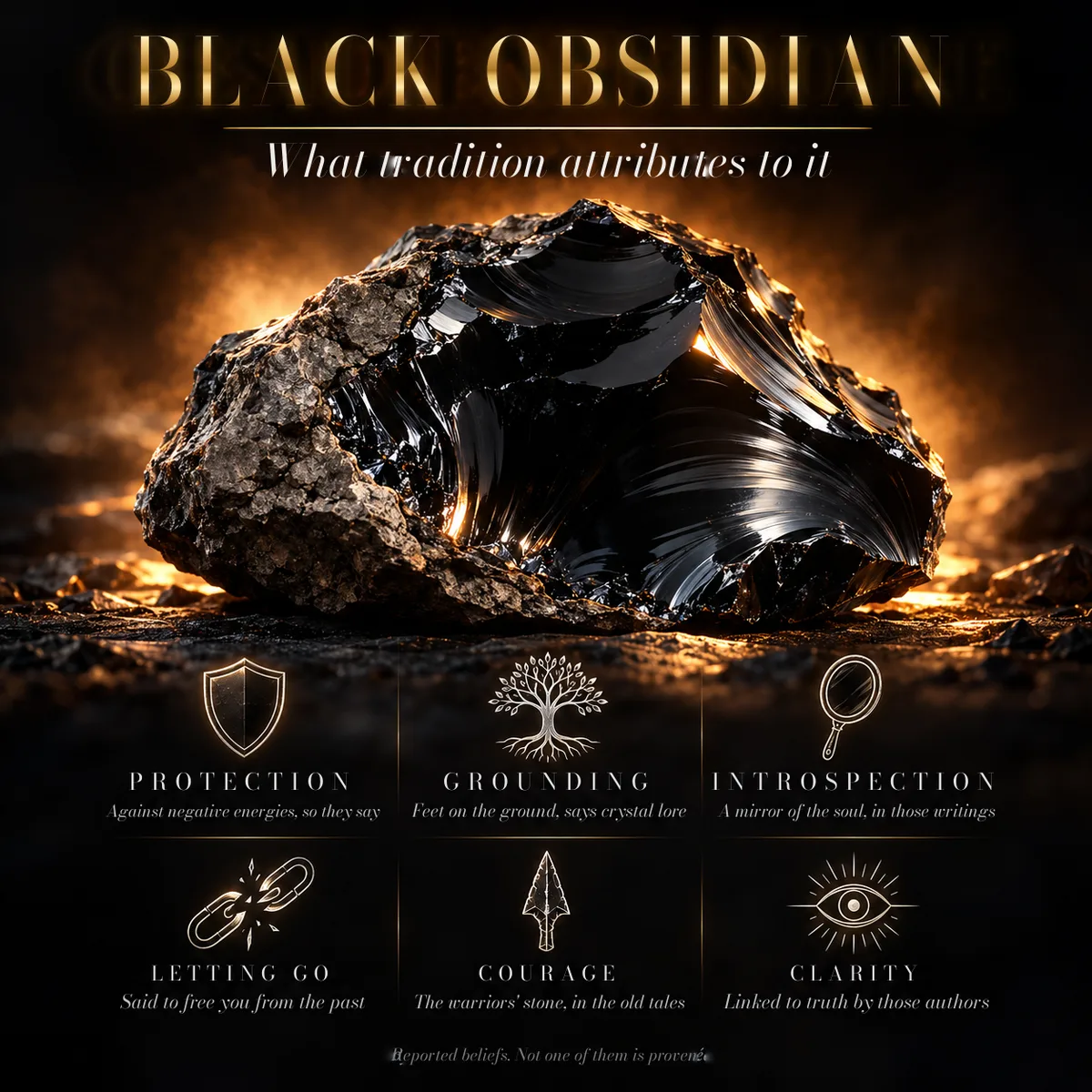
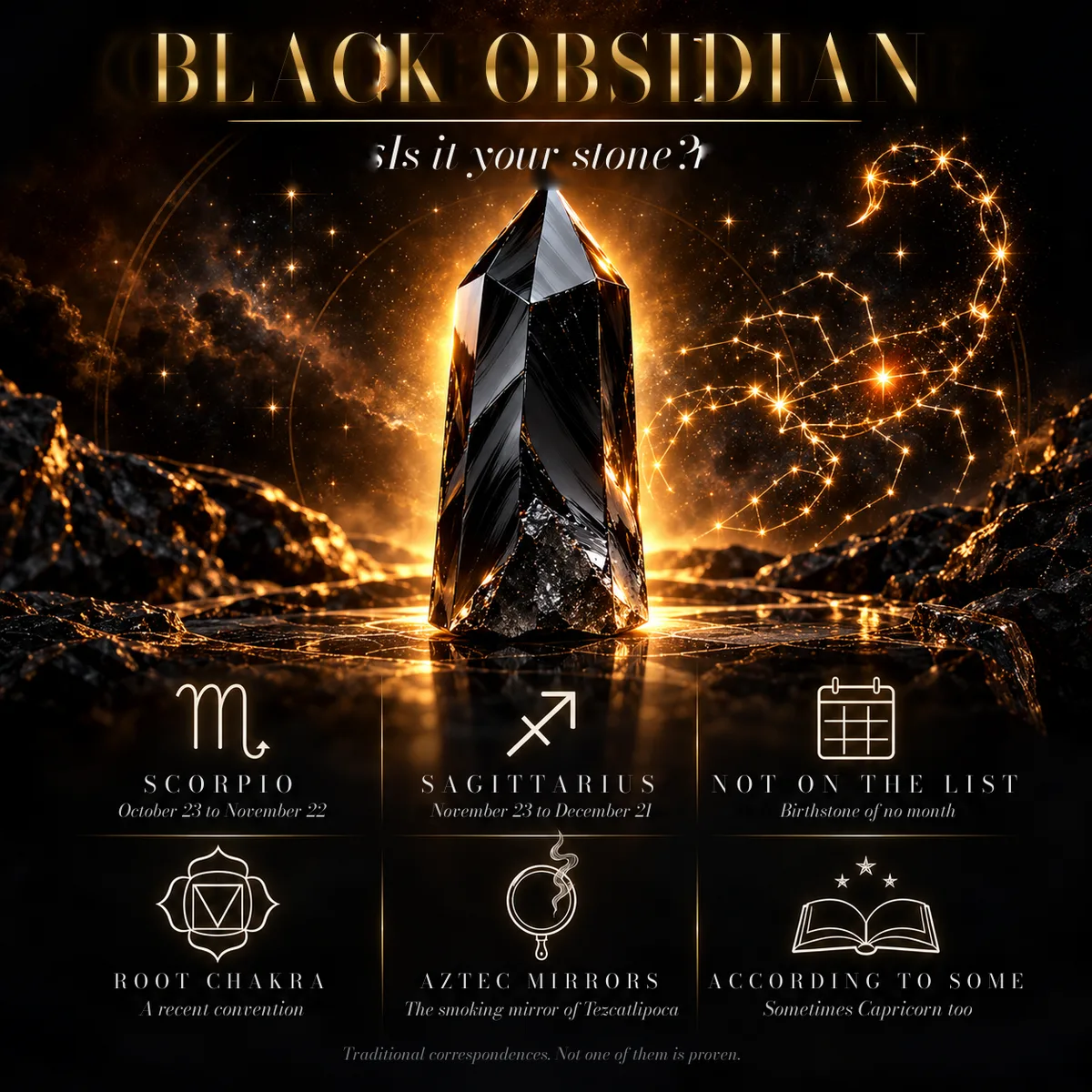
Crystal lore ties obsidian to grounding and hematite to strength. None of that is proven, and no piece of jewelry heals anything. I have gathered separately what tradition attributes to obsidian and what it says about pairings, in the conditional from start to finish.
- Two bracelets sold together: round obsidian beads and flat hematite discs.
- Two opposite behaviors on the wrist: the round rolls, the flat stays lying down.
- Hematite weighs almost twice what obsidian does at equal volume.
- Hand-strung in France on braided elastic cords, no clasp.
What to know before you wear them
 |  |  |
The specifications
- Stones
- Black obsidian, hematite
- Shapes
- Round 8 mm beads, flat discs
- Contents
- Two bracelets
- Wrist size
- 6 3/4 to 7 1/2 in (17 to 19 cm), elastic
- Stringing
- Braided elastic cords, no clasp
- Weight
- About 1.2 oz (34 g) for both
- Stone origins
- Mexico, Brazil
- Gender
- Unisex
- Brand
- Bijoux Obsidienne

Why discs are not strung like beads
A strand of discs is not strung like a strand of beads. Every disc has to face the same way, otherwise two faces meet askew and the strand ripples instead of staying flat. And the count has to be tight: one disc either way takes the bracelet from too loose to impossible to slip on, because a disc is one millimeter thick where a bead is eight. So the adjustment happens on the elastic, not on the count.
This duo exists because a single obsidian strand looks thin on a wide wrist, and doubling the same strand looks heavy. Two different shapes fill the wrist without the weight. The other bracelets are here, and the obsidian guide explains the main stone.
One disc either way takes the strand from too loose to impossible to slip on. A disc is one millimeter, a bead is eight.
Obsidian does not mind water, but hematite spots with rust if it stays damp for several days. Take the bracelets off before the shower and do not store them in a toiletry bag. A soft dry cloth, never an ultrasonic bath. Cleaning an obsidian piece covers the rest.