Description
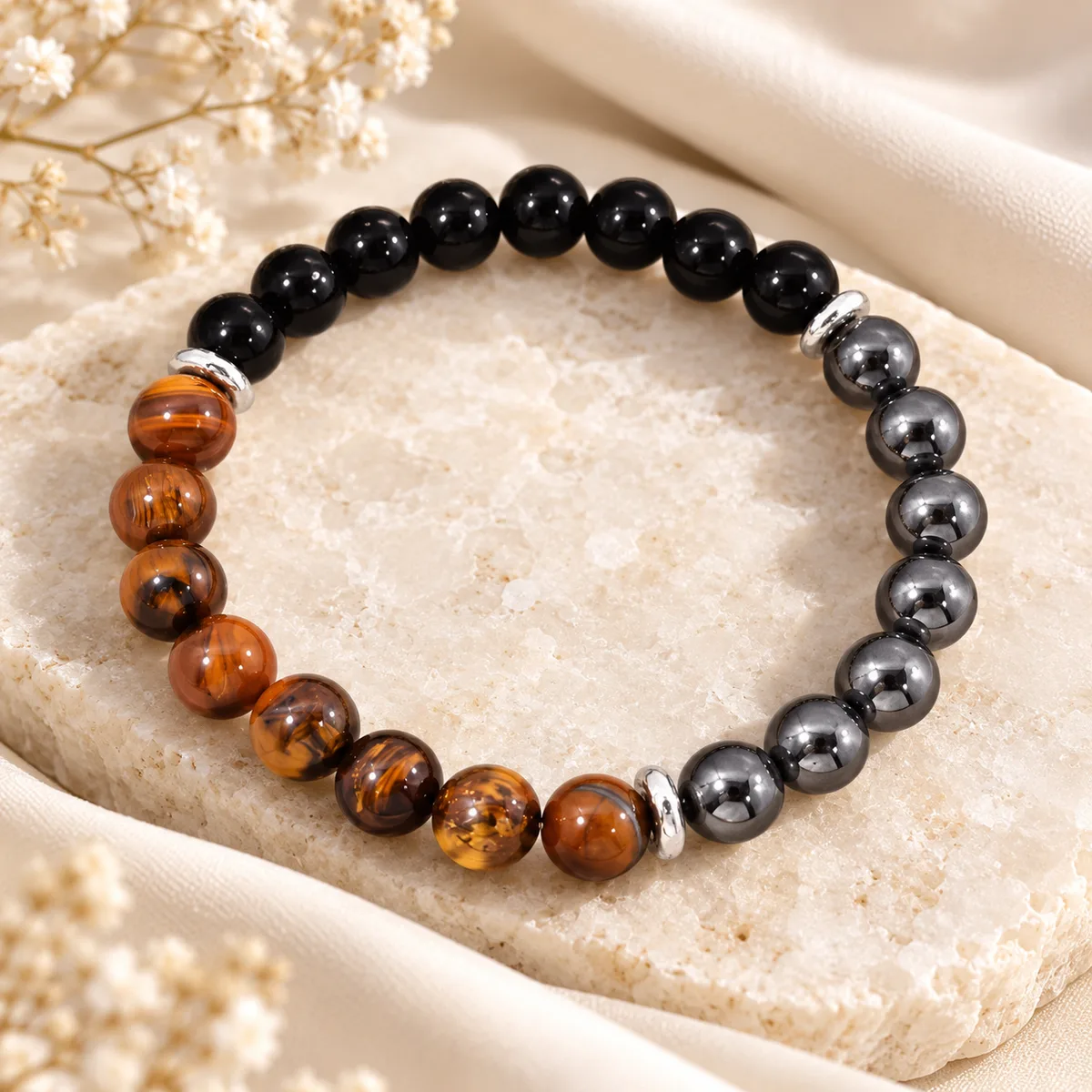
The same three stones as the catalog’s triple protection bracelet, but arranged differently: a third of brown tiger’s eye, a third of black obsidian, a third of grey hematite, parted by two silver rondelles. The gradient runs from warm to metallic.
Three stones, three mineral families. Tiger’s eye is a quartz whose fossilized fibers produce a moving band of light. Obsidian is a volcanic glass with no structure, which polishes like optical glass. Hematite is an iron oxide, the densest of the three, with its metallic sheen. Nothing brings them together geologically, and it is modern crystal lore that put them side by side. Pairing obsidian with other stones goes into these mixes.
The catalog already sells this trio, mixed bead by bead. Here the three are grouped into blocks, and the difference is real on the wrist: a mixed strand gives a speckled effect that reads up close, a strand in thirds gives three zones of color that read from a distance and turn over the course of the day. The brown can end up underneath, the hematite on top, and the bracelet changes appearance without anyone touching it. Both are here.
Two reservations. The first is inherent to the assembly in thirds: if you want one particular stone visible at all times, you will have to put it back in place several times a day, which a mixed strand avoids. The second is hematite, which spots with surface rust if it stays damp for several days, and whose orange dots never come off. Obsidian, being a glass, could not care less.
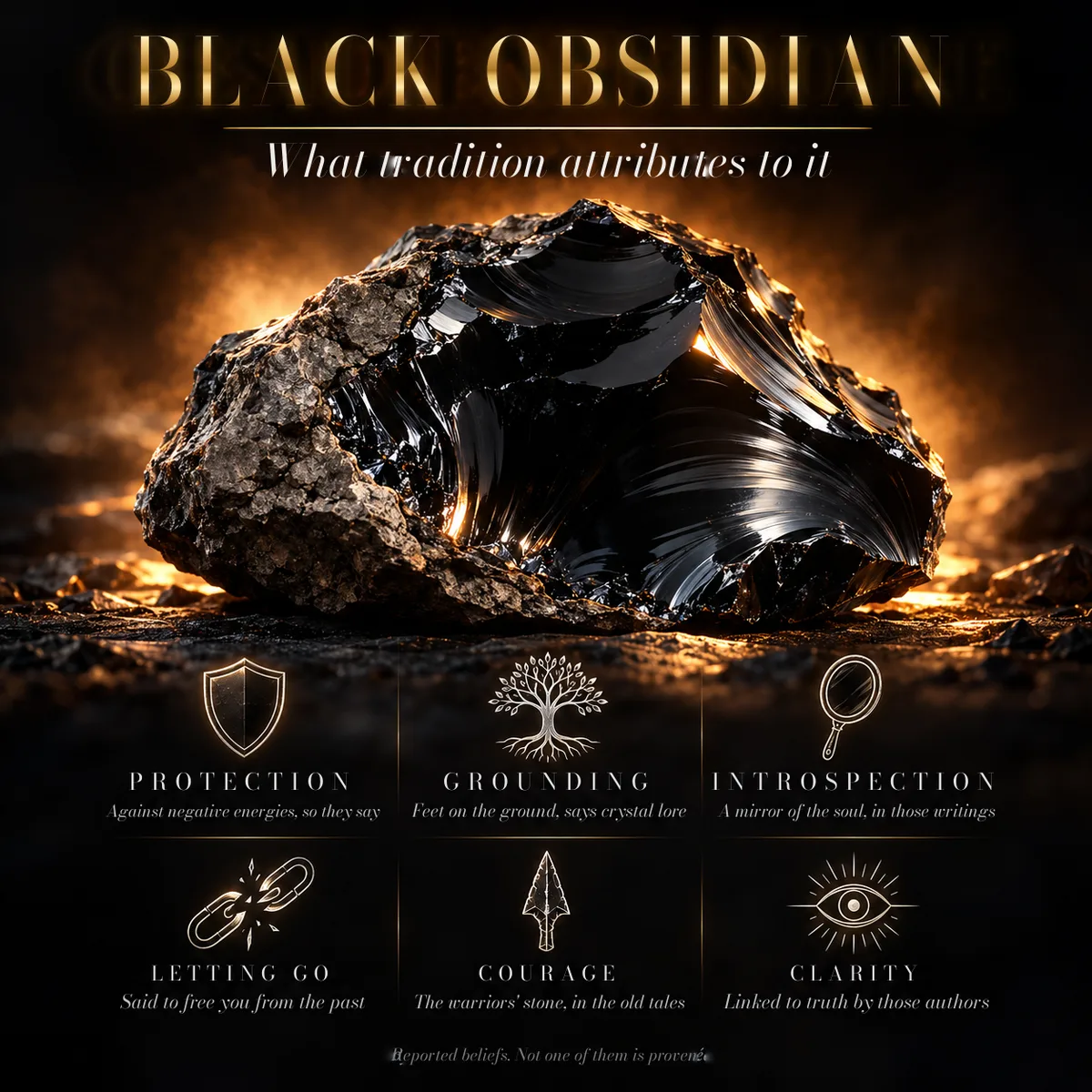
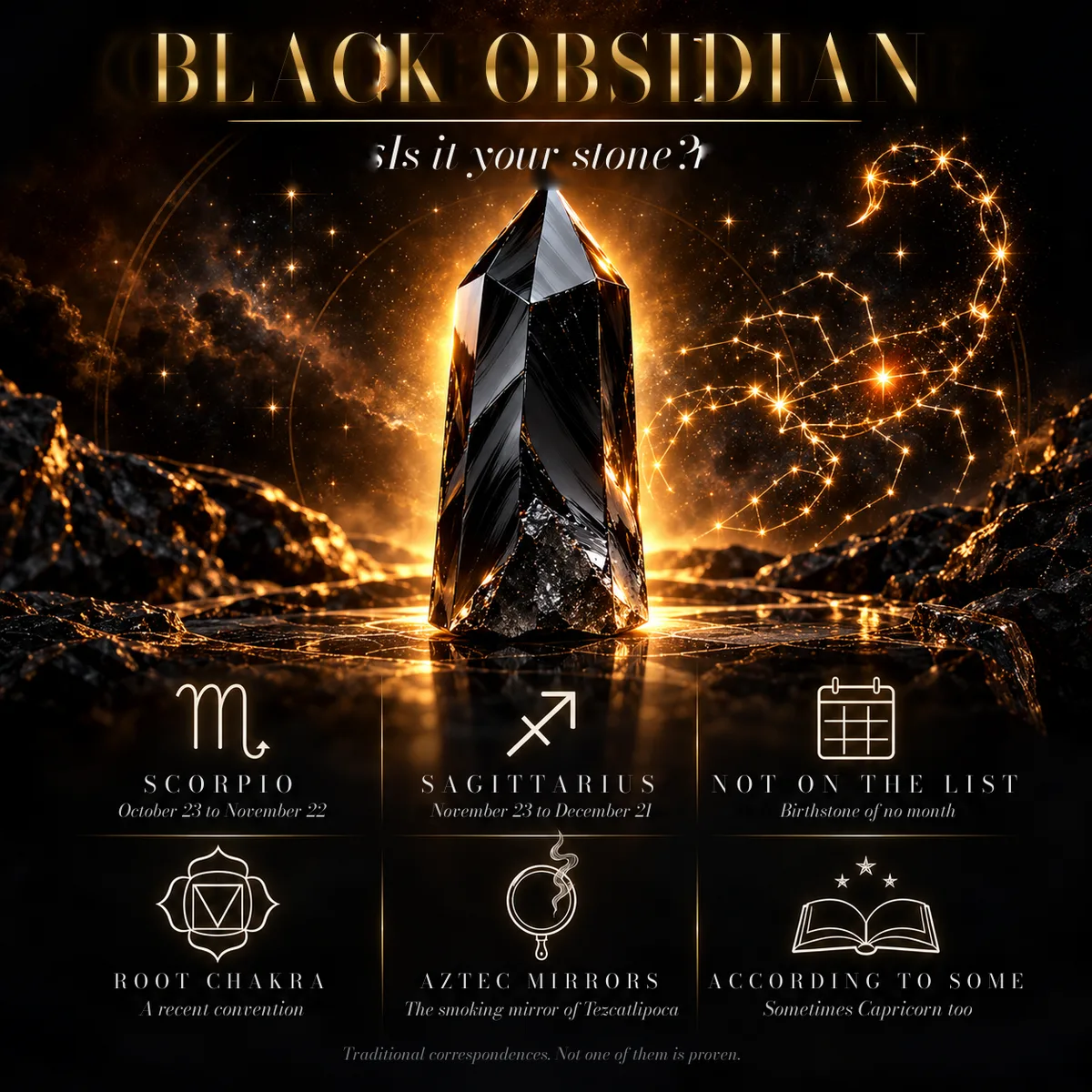
Crystal lore calls this trio the triple protection and gives each stone a distinct role. None of that is proven, and no piece of jewelry heals anything. I have gathered separately what tradition attributes to obsidian, in the conditional from start to finish.
- Three real stones in 10 mm beads: brown tiger’s eye, black obsidian, hematite.
- Arranged in three thirds rather than mixed: three zones of color that turn on the wrist.
- Two silver rondelles part the blocks.
- Hand-strung in France on braided elastic cord, no clasp.
What to know before you wear it
 |  |  |
The specifications
- Stones
- Natural brown tiger’s eye, black obsidian, hematite
- Bead diameter
- 10 mm
- Three-block assembly
- Parted by two metal rondelles
- Wrist size
- 6 3/4 to 7 1/2 in (17 to 19 cm), elastic
- Stringing
- Braided elastic cord, no clasp
- Weight
- About 1.2 oz (34 g)
- Stone origins
- South Africa, Mexico, Brazil
- Gender
- Unisex
- Brand
- Bijoux Obsidienne

Three thirds, and two rondelles to part them
A strand in three blocks is built the opposite way to what you would think. You do not count seven beads per third, you weigh: the three stones do not have the same density, therefore not the same weight, and a heavier block drags the bracelet round and always ends up under the wrist. Hematite weighs almost twice what obsidian does. So I build a shorter hematite block than the other two, and the bracelet no longer tips. To the eye, the three thirds look equal.
This model came out of one precise request: a customer wanted to be able to show one stone rather than another depending on the day. A mixed strand does not allow that, a strand in blocks does, you just turn it. It is the only advantage of this assembly, and it is enough to justify it. The other bracelets are here.
Hematite weighs twice as much, so its third is shorter. To the eye the three blocks look equal, and the bracelet no longer tips.
Obsidian and tiger’s eye do not mind water, but hematite spots with rust if it stays damp for several days. Take the bracelet off before the shower and do not store it in a toiletry bag. A soft dry cloth, never an ultrasonic bath. Cleaning an obsidian piece covers the rest.