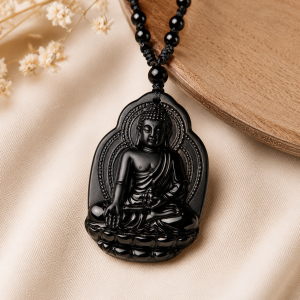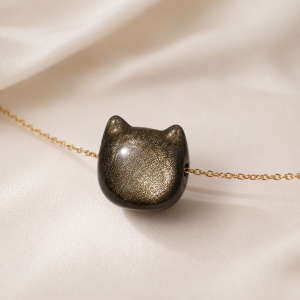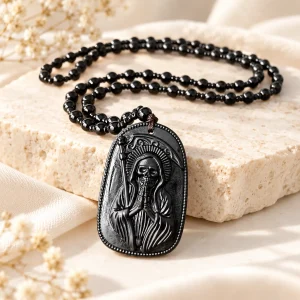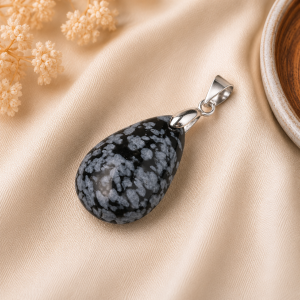
Description
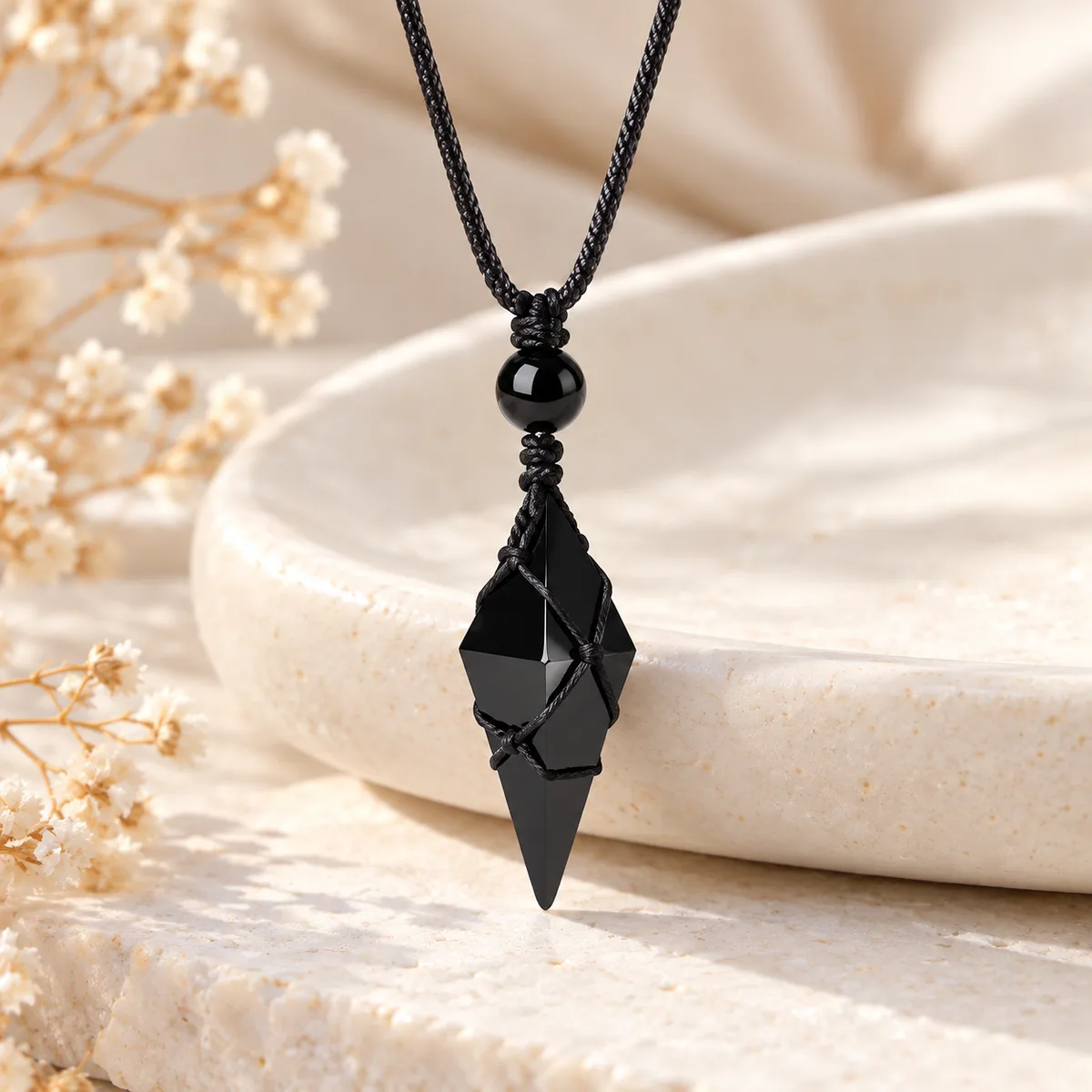
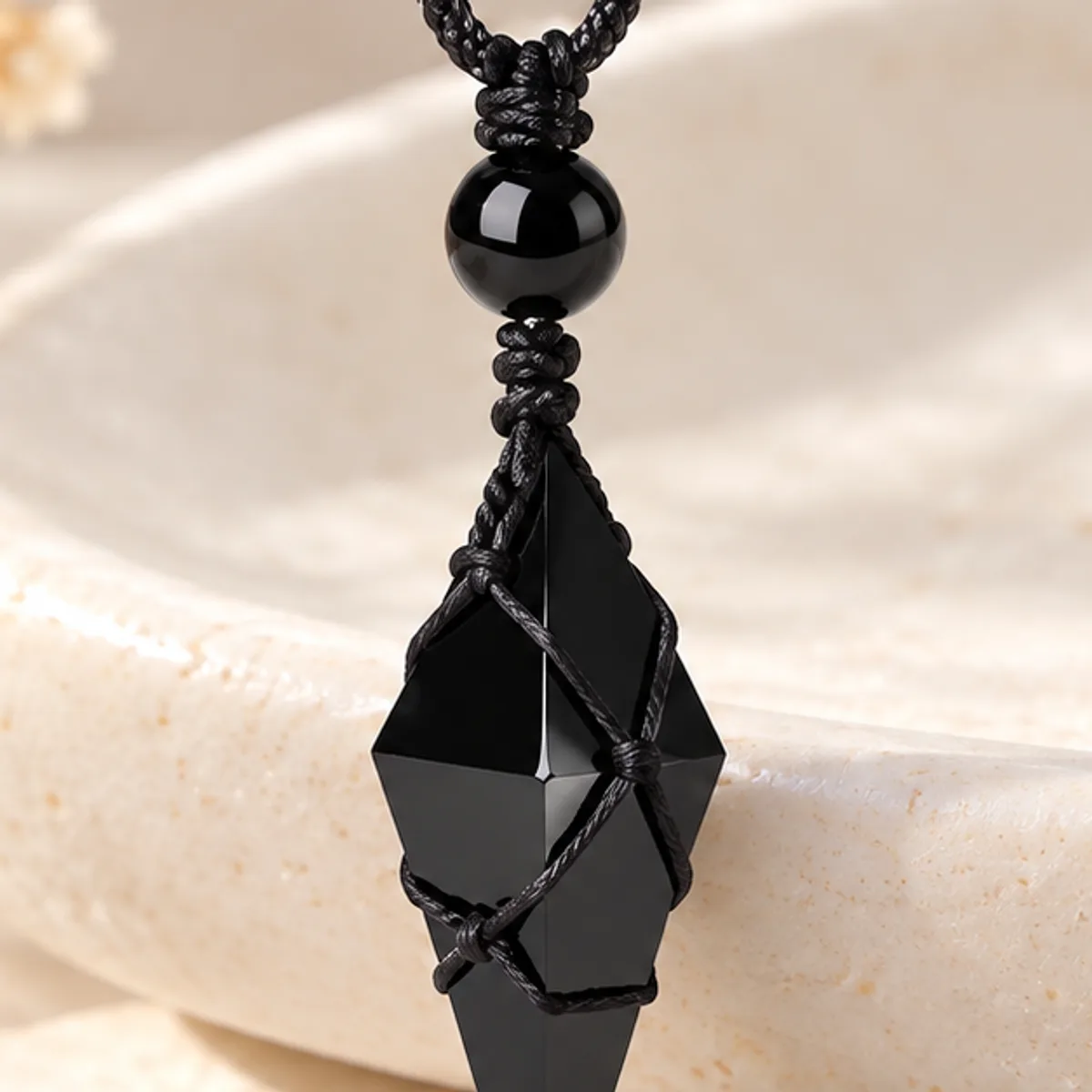
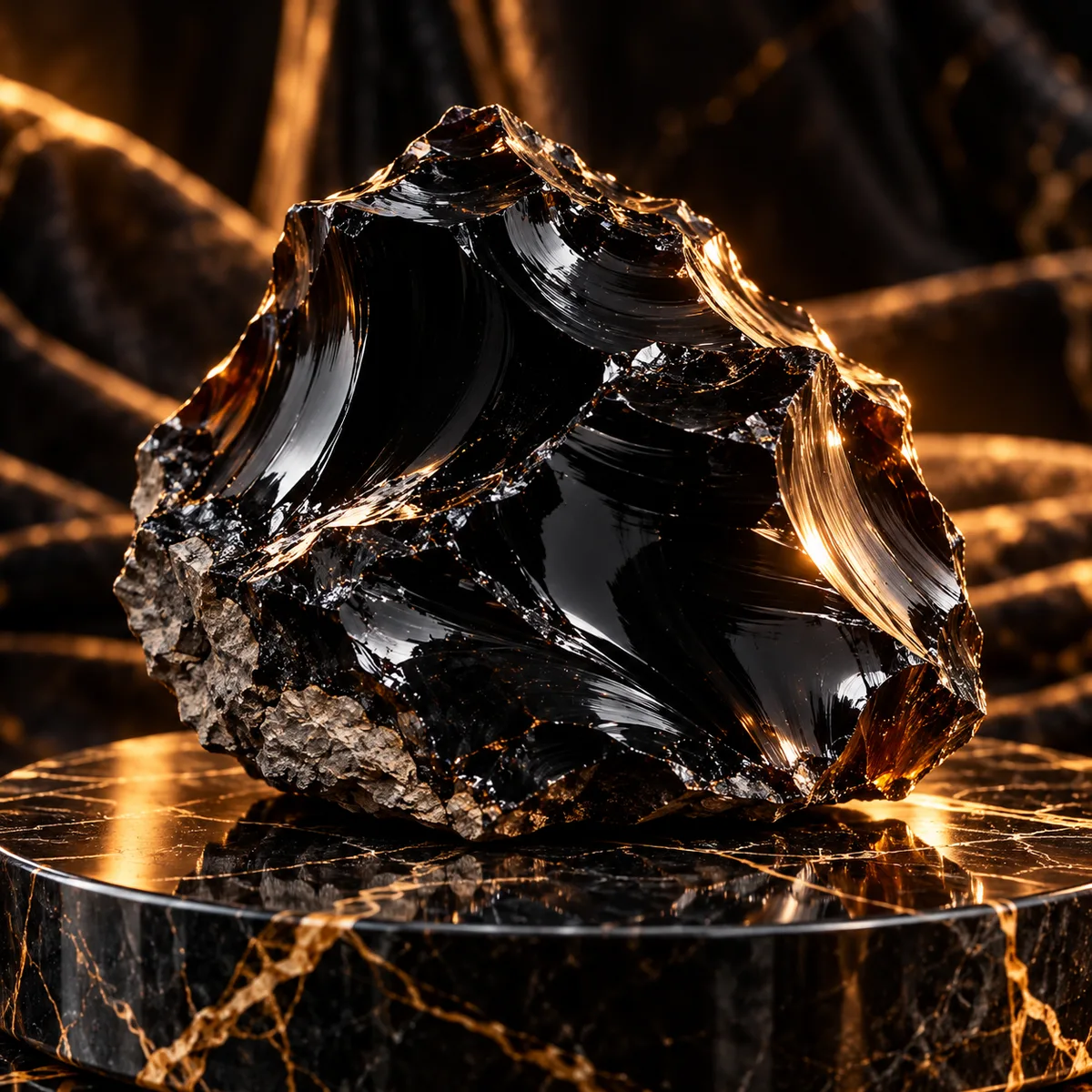
An obsidian point cut as two opposed pyramids, held by a black cord wrapped in a criss-cross. No bail, no prongs, no metal touches the stone. It is the only assembly in the catalog where the cord does all the work.
The stone is not drilled, and that is the starting point for everything else. Drilling obsidian is the riskiest operation you can put it through: the bit heats up, the glass flakes away in a shell where the hole comes out, and a fine point is lost one time in five. Holding it in a wrap of cord removes the drilling and therefore the risk. The trade-off is that the assembly rests entirely on the tension of the cord.
The bipyramidal cut, two opposed points parted by a median edge, is not a natural form of obsidian: it is a cut borrowed from quartz, where it reproduces the growth of the crystal. On a volcanic glass it is purely decorative, and I say so because you often read the opposite. Obsidian does not crystallize, so it has neither natural points nor natural prisms. The obsidian varieties go into this family.
Two reservations. The wrapped cord slackens over the years, and the tension should be checked once a year: a criss-cross with play in it ends up letting go of the stone. I redo it at no charge. And the lower point is the most exposed part of the pendant: it sticks out, it catches, and a knock against a belt buckle chips it. That is the price of a point you chose not to drill.
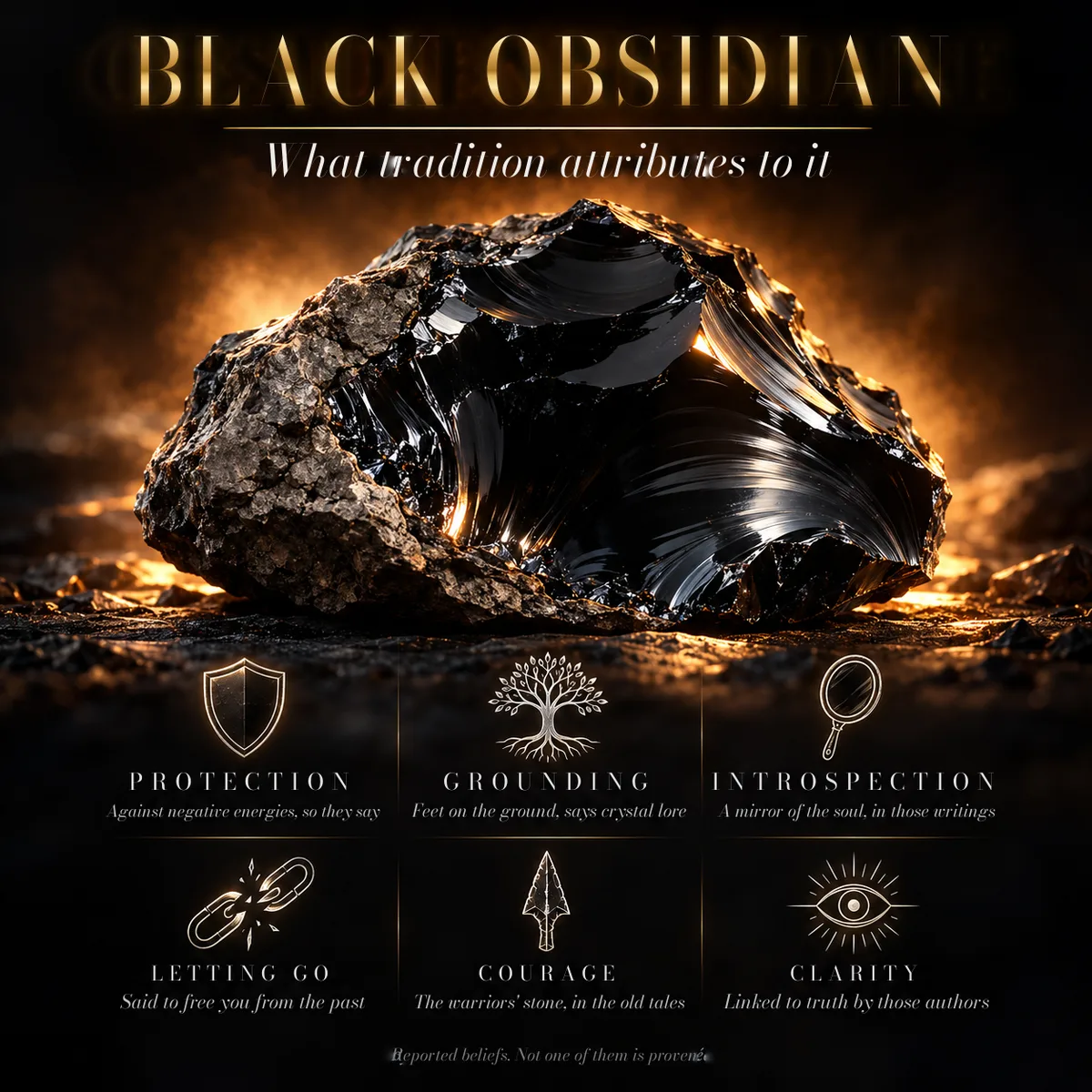
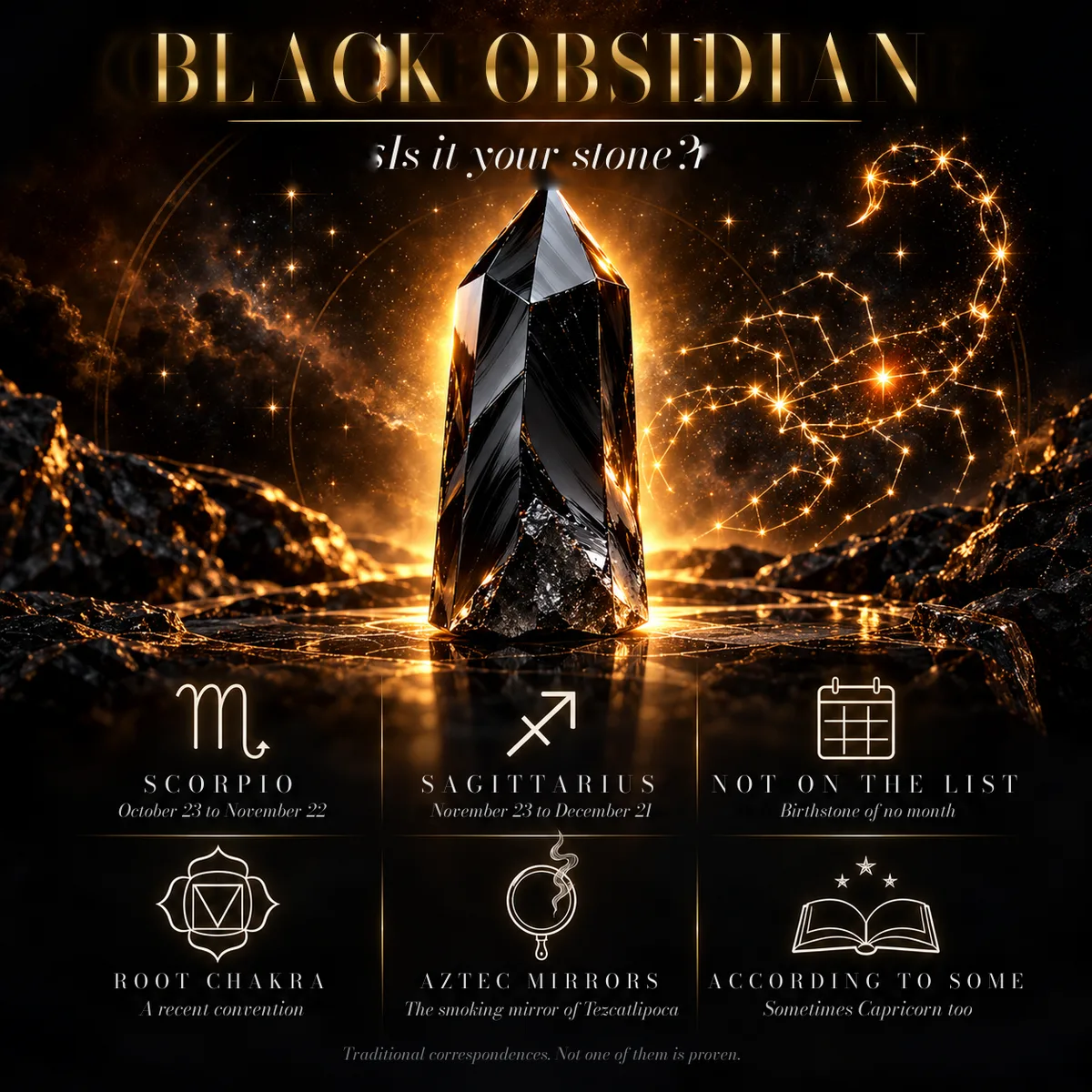
Crystal lore ties obsidian to grounding and credits pointed shapes with a role of direction. None of that is proven, and no piece of jewelry heals anything. I have gathered separately what tradition attributes to obsidian, in the conditional from start to finish.
- Genuine black obsidian, cut as a bipyramidal point, undrilled.
- Held by a cord wrapped in a criss-cross: no metal touches the stone.
- The cord’s tension is checked once a year; I redo it at no charge.
- Adjustable braided cord, no metal clasp.
What to know before you wear it
 |  |  |
The specifications
- Stone
- Black obsidian, volcanic glass
- Cut
- Bipyramidal, two opposed points
- Stone length
- About 1 1/2 in (40 mm)
- Setting
- None, cord wrapped in a criss-cross, stone undrilled
- Cord
- Braided black cord, adjustable length
- Gender
- Unisex
- Brand
- Bijoux Obsidienne

Holding a stone without drilling it
A wrap that holds does not squeeze the stone, it encloses it. The difference is real: a tight cord compresses the glass at two points and eventually leaves the start of a crack there, invisible at first, open at the first knock. An enclosing cord crosses above and below the median edge and retains the stone by its geometry, with no pressure. You check by pulling: the point must stay in place without any criss-cross marking the surface.
This assembly exists because I was losing too many points to drilling. A finely cut stone drilled at its top means one piece in five goes in the bin, and that reject rate inevitably shows up in the price. The wrapped cord settles the problem another way, and it is also why this pendant costs more despite having no metal: it is hand time. The other pendants are here.
A tight cord marks the glass and prepares the crack. A cord that encloses holds by the shape, without pressing.
Obsidian does not mind water, but braided cord takes a long time to dry and slackens faster wet. Take the pendant off before the shower. The lower point chips on impact: avoid belt buckles. A soft cloth is enough, never an ultrasonic bath. Cleaning an obsidian piece covers the rest.