
Description
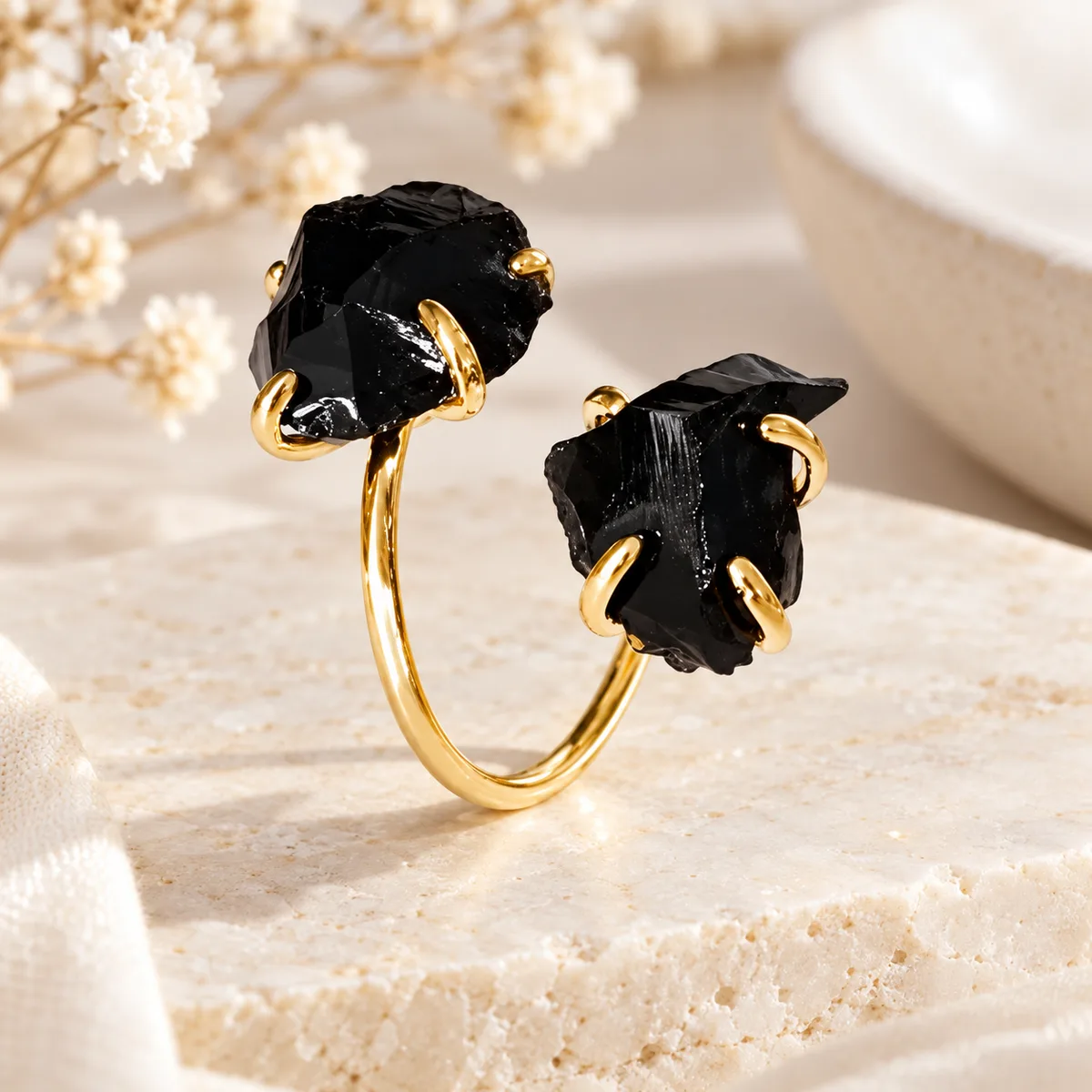
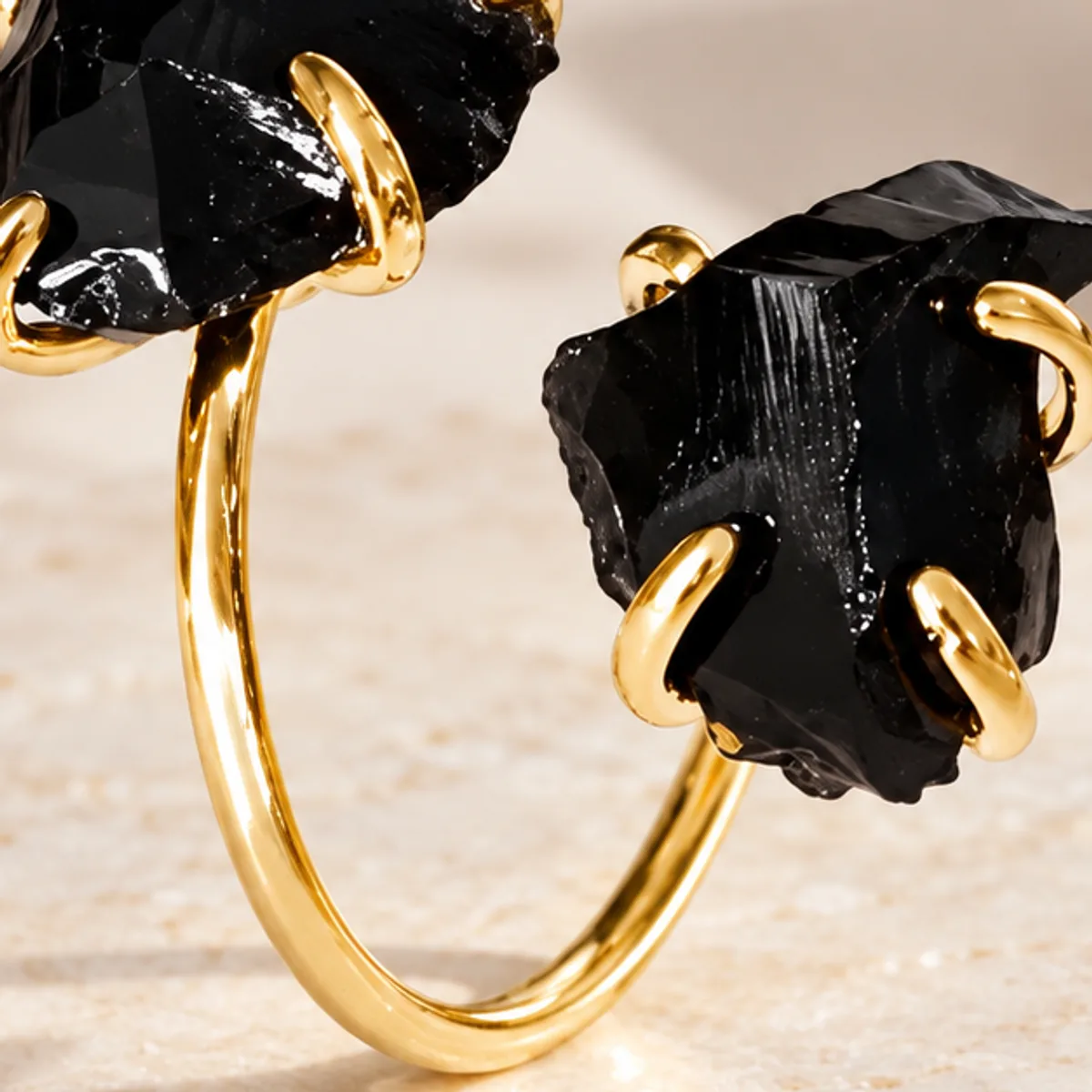
Two shards of raw obsidian, unpolished and uncut, prong-set at both ends of an open gold-tone band. The faces are the ones the rock gave when it broke, and not one of them is flat.
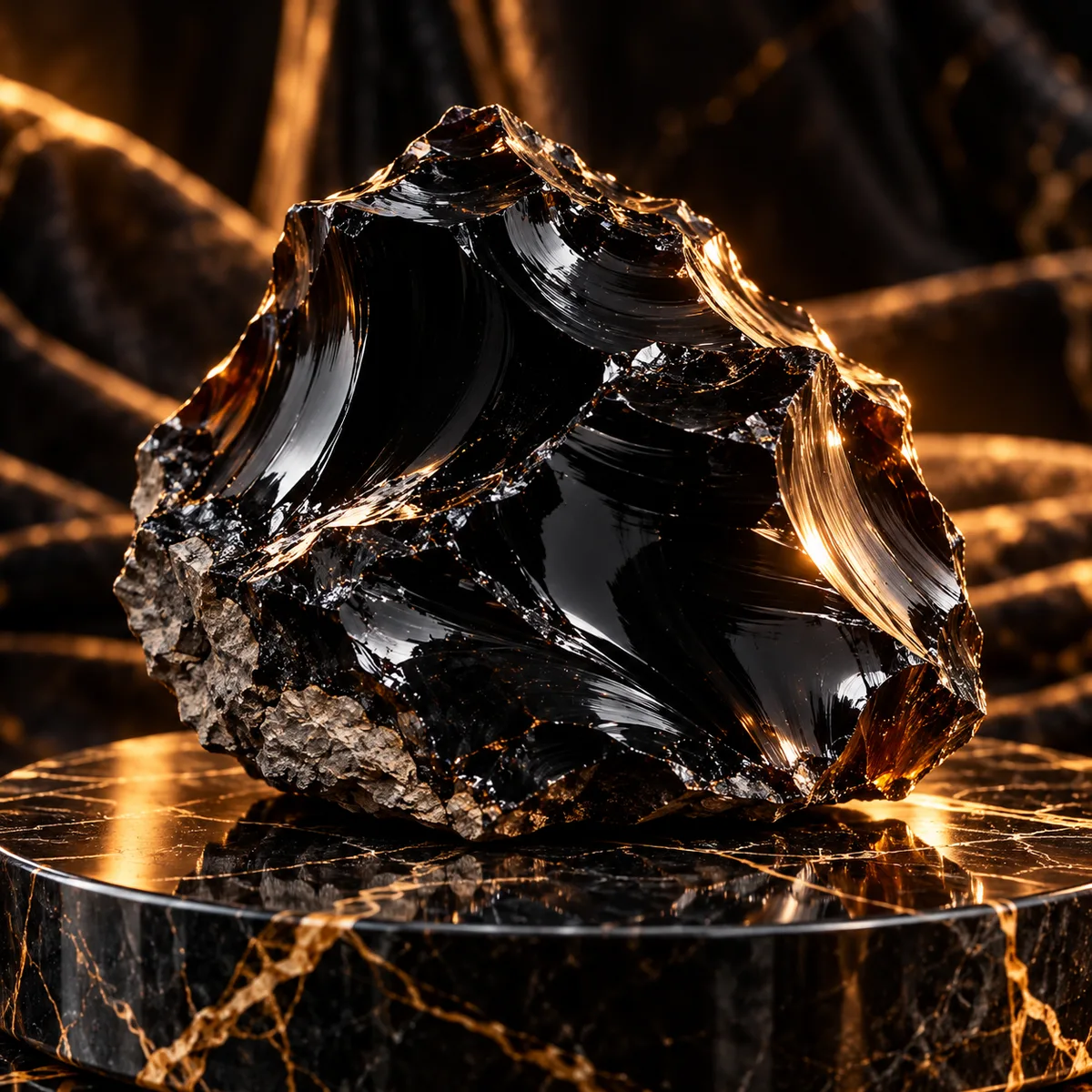
Obsidian breaks in shells, what is called a conchoidal fracture, and it is that property which made it the material of prehistoric blades. A raw shard therefore carries slightly concave surfaces, bright as broken glass, with sharp edges. Here they have been left as they are, with only the edges that touch the skin softened: the rest is the rock, exactly as it opened.
The band is open, which makes the ring adjustable over two or three sizes by spreading or closing the arms slightly. That is useful for a piece given as a present without knowing the size, and it is the only adjustable ring in the range with a raw stone. The two shards are worn on either side of the finger, or both on top if you close it further. The other rings are here.
Two blunt reservations. Raw shards catch: this is unpolished rock with edges, and it marks a wool sweater or a pair of tights. And the prongs hold an irregular shape, so over less surface than a regular cabochon: a sideways knock can dislodge a stone. Check the prongs once a year by pushing each shard with a finger, it must not move. I tighten them free of charge.
Crystal lore ties obsidian to grounding, and credits raw stones with a quality polished stones supposedly lack. None of that is proven, and no piece of jewelry heals anything. I have gathered separately what tradition attributes to obsidian, in the conditional from start to finish.
- Two shards of genuine raw obsidian, unpolished, original fracture faces.
- Open gold-tone band, adjustable over two or three sizes.
- The edges in contact with the skin are softened, the others are left as they are.
- A raw stone catches on knitwear: this is not a ring to wear with a wool sweater.
What to know before you wear it
 |  |  |
The specifications
- Stone
- Raw black obsidian, two unpolished shards
- Metal
- Gold-plated brass
- Setting
- Prong set on an open band
- Adjustment
- Adjustable over two or three sizes
- Gender
- Women
- Brand
- Bijoux Obsidienne

Setting a stone with no flat face at all
Setting a raw shard has nothing to do with setting a cabochon. A cabochon has a regular girdle on which the prongs always rest at the same level; a shard has none, and each prong has to be bent at a different height to find a solid bearing point. You position them one by one, turning the stone, and sometimes you have to start again because a prong resting on a sharp edge would split it under pressure. The rule is always to press on a surface, never on an edge.
This ring exists because everything else in the catalog is polished. Polishing is a choice, not a given, and it erases precisely what is most particular about obsidian: its fracture. A raw stone shows it. It is the only piece in the range where you can see how this rock breaks. The obsidian guide explains that fracture.
A prong resting on an edge splits it. You always press on a surface, never on a corner.
Obsidian does not mind water, but gold plating wears with soap and perfume. Take the ring off before the shower. Check the prongs once a year by pushing each shard with a finger. Cleaning an obsidian piece covers the rest.