
Description
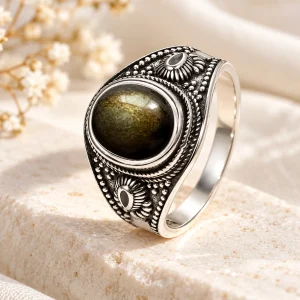
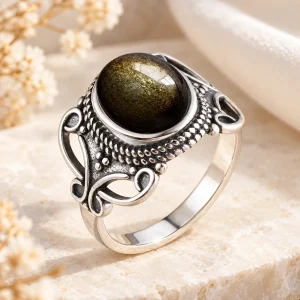
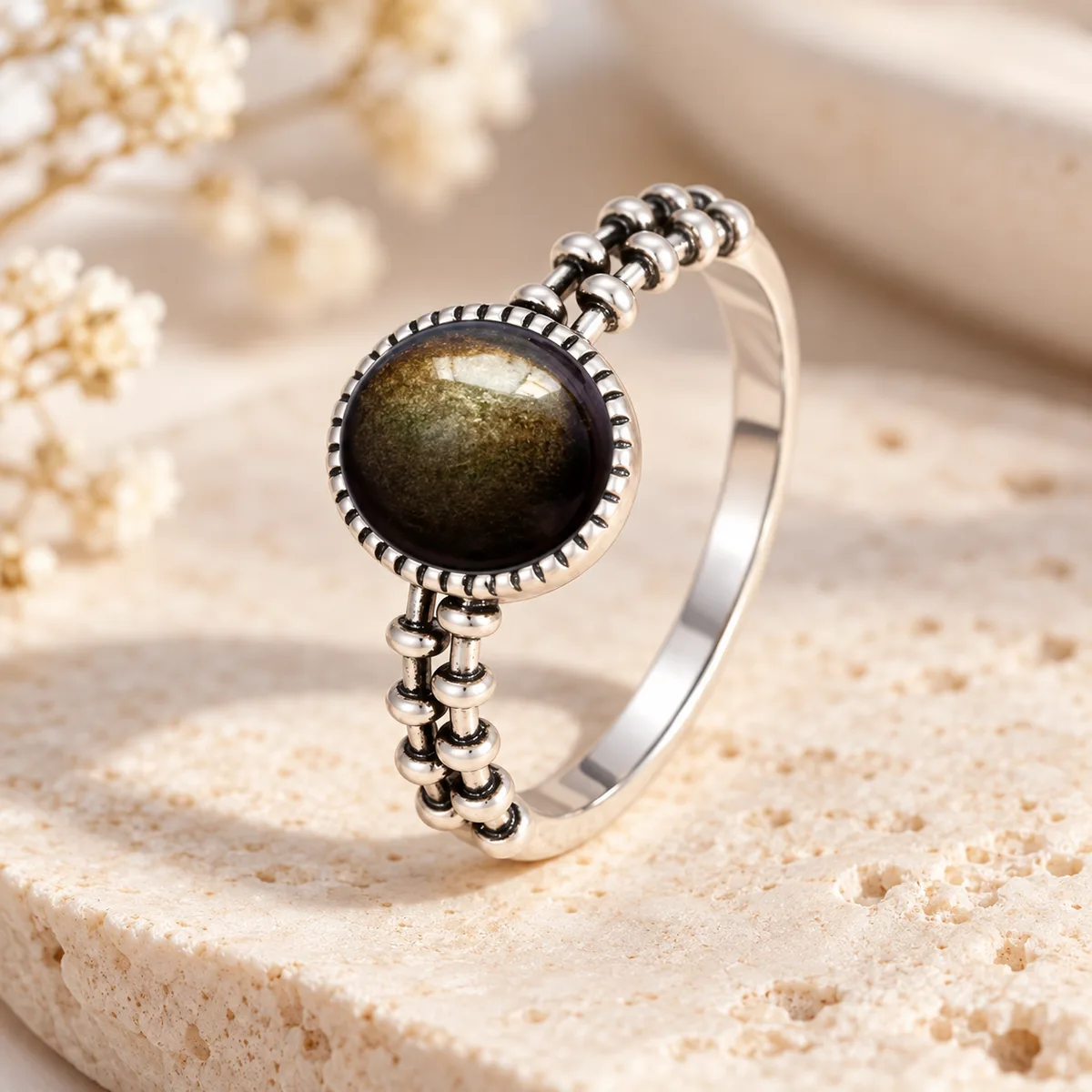
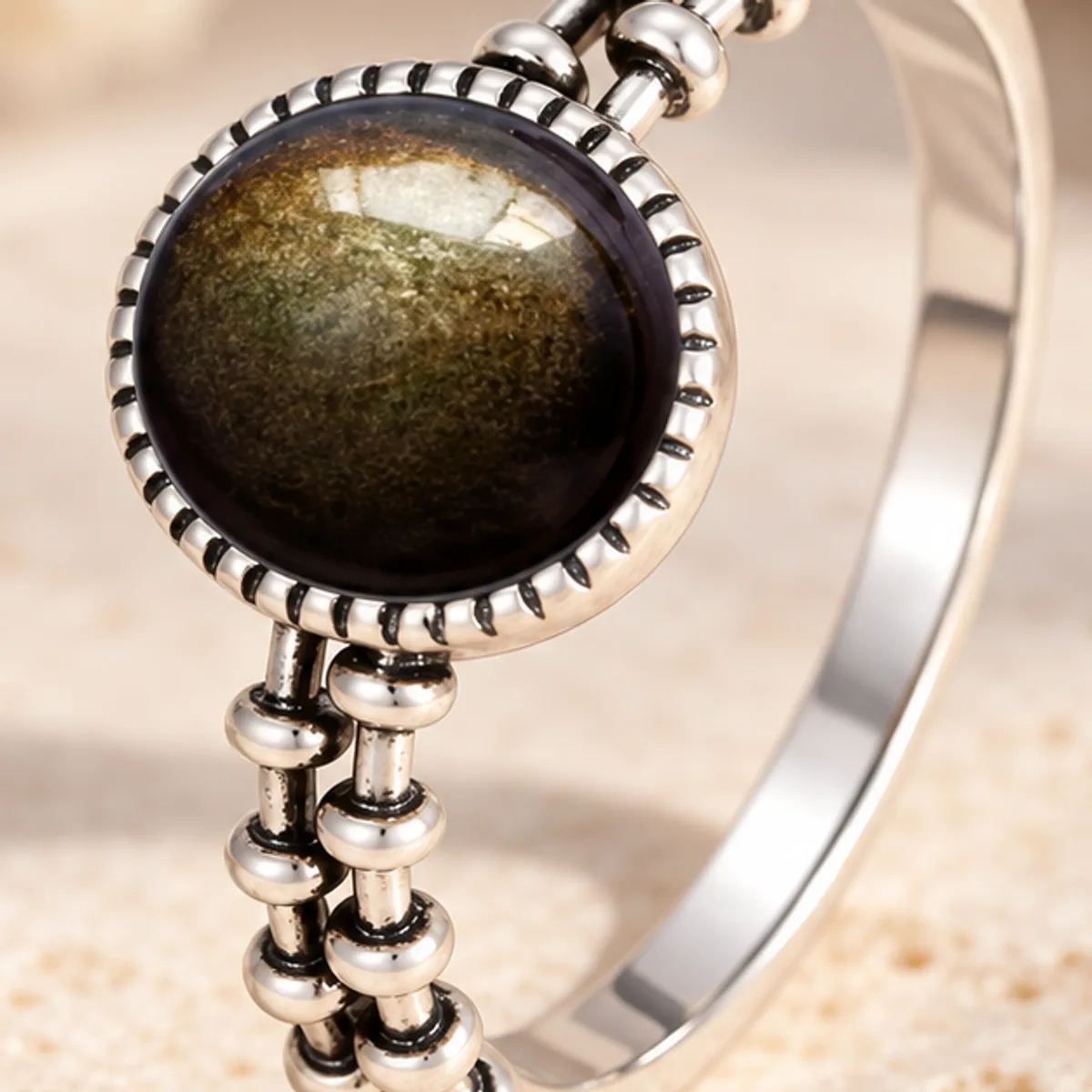
Silver beads of decreasing size run down each side of the round cabochon and meet the band. The subject of this ring is neither the stone nor the decoration: it is the transition between the two.
On any stone ring, the passage between the head and the shank is the hardest part to get right and the one most often skimped. A wide head set bluntly on a fine band makes a step that the eye reads as a part stuck on. Here five beads of decreasing diameter make the transition on each side: the head does not stop, it tapers away until it becomes the shank. It is the model’s only subject.
That passage is also the mechanical weak point of any ring. It is where the metal breaks when a ring breaks, because it is where the section changes abruptly. A gradual transition spreads the stress instead of concentrating it on one line, and this setting is, mechanically, the strongest of the fifteen in the series. The other rings are here.
The reservation is that this work does not show. A buyer comparing photographs will see a beaded ring among fifteen decorated settings, and nothing will tell them this one is the most durable. It is the kind of quality you notice only the day another ring has given way. I mention it because nobody else will. The size guide saves a return.
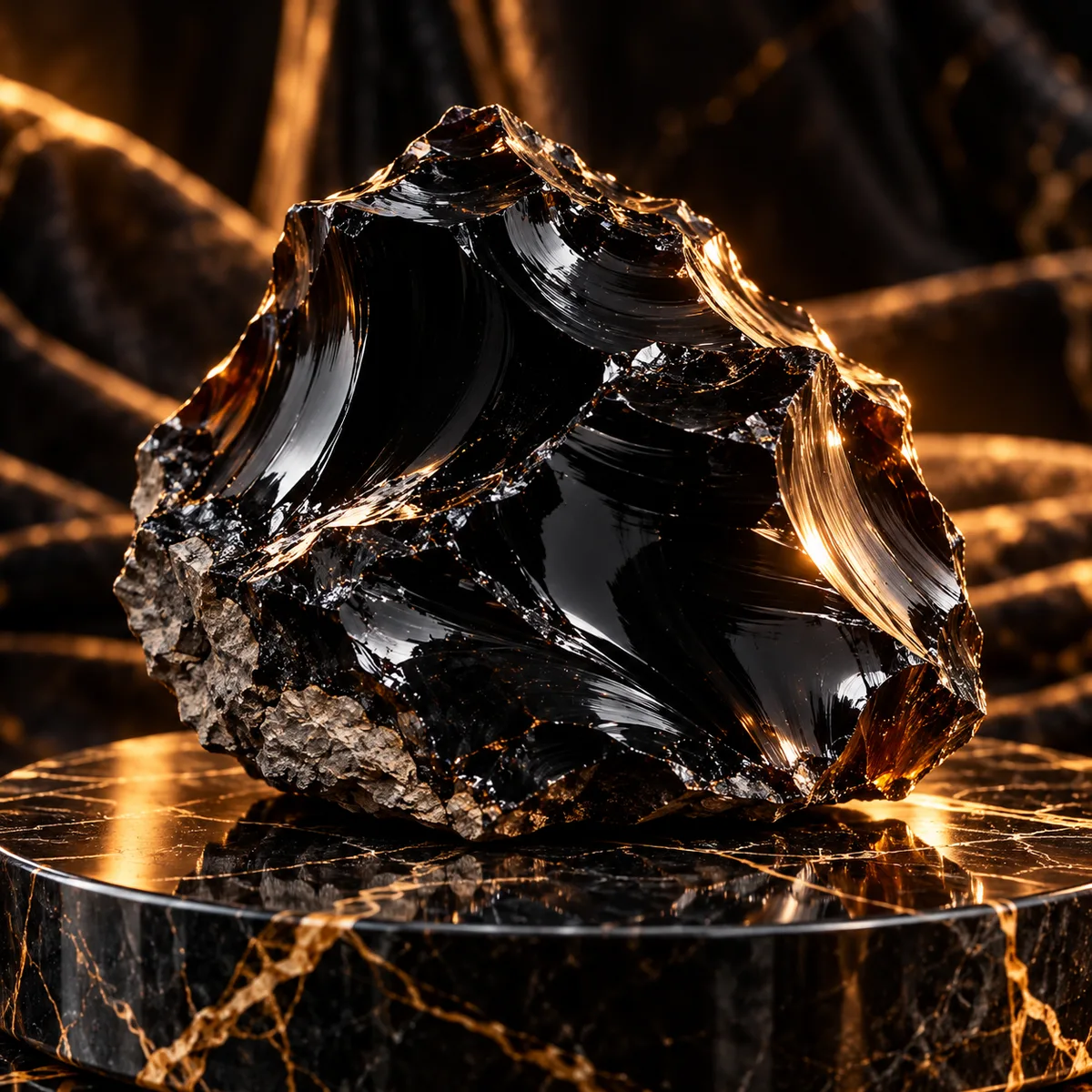
Crystal lore ties obsidian to grounding, and gold sheen in particular to self-confidence. None of that is proven, and no piece of jewelry heals anything. I have gathered separately what tradition attributes to obsidian, in the conditional from start to finish.
- Genuine gold sheen obsidian, round cabochon in a closed bezel, no glue.
- Sterling silver 925, five decreasing beads on each side, blackened hollows.
- The gradual transition spreads the stress: mechanically the strongest in the series.
- A quality invisible in a photograph, noticed the day another ring gives way.
What to know before you wear it
 |  |  |
The specifications
- Stone
- Gold sheen obsidian, volcanic glass, round cabochon
- Metal
- Sterling silver 925, S925 hallmark
- Setting
- Closed bezel, graduated beaded shoulders, no glue
- Decoration
- Five decreasing beads per shoulder, blackened hollows
- Sizes
- 52 to 62 (inner circumference in mm)
- Gender
- Women
- Brand
- Bijoux Obsidienne

The passage from head to shank, the weak point of every ring
The run of beads has to follow a steady falling away, and the common mistake is making it linear. Five beads whose diameters drop by a quarter of a millimeter each time give a transition that seems to stop dead at the last one. What is needed is a decrease that slows down, the first beads markedly smaller than the one before, the last ones almost identical to each other. The eye then reads a curve and not a staircase. It is the same rule as for a fillet in engineering.
This setting is in the catalog because I was regularly repairing rings broken in the same place, the junction of head and shank, and always on models where the transition was abrupt. This one answers that observation. It is not the prettiest of the fifteen, it is the one that will last the longest. The other rings are here.
Five beads decreasing steadily make a staircase. The decrease has to slow down for the eye to read a curve.
Obsidian does not mind water, but it shatters on impact and scratches against a hard metal. Take the ring off before DIY and sport. Do not polish the blackened hollows between the beads: the black comes away in a few passes. Cleaning an obsidian piece covers the rest.