Description
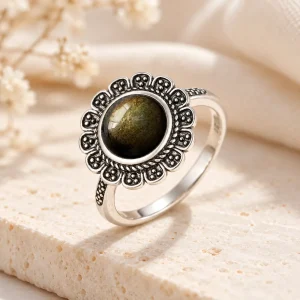
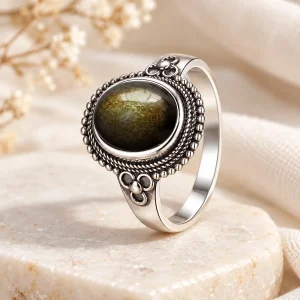
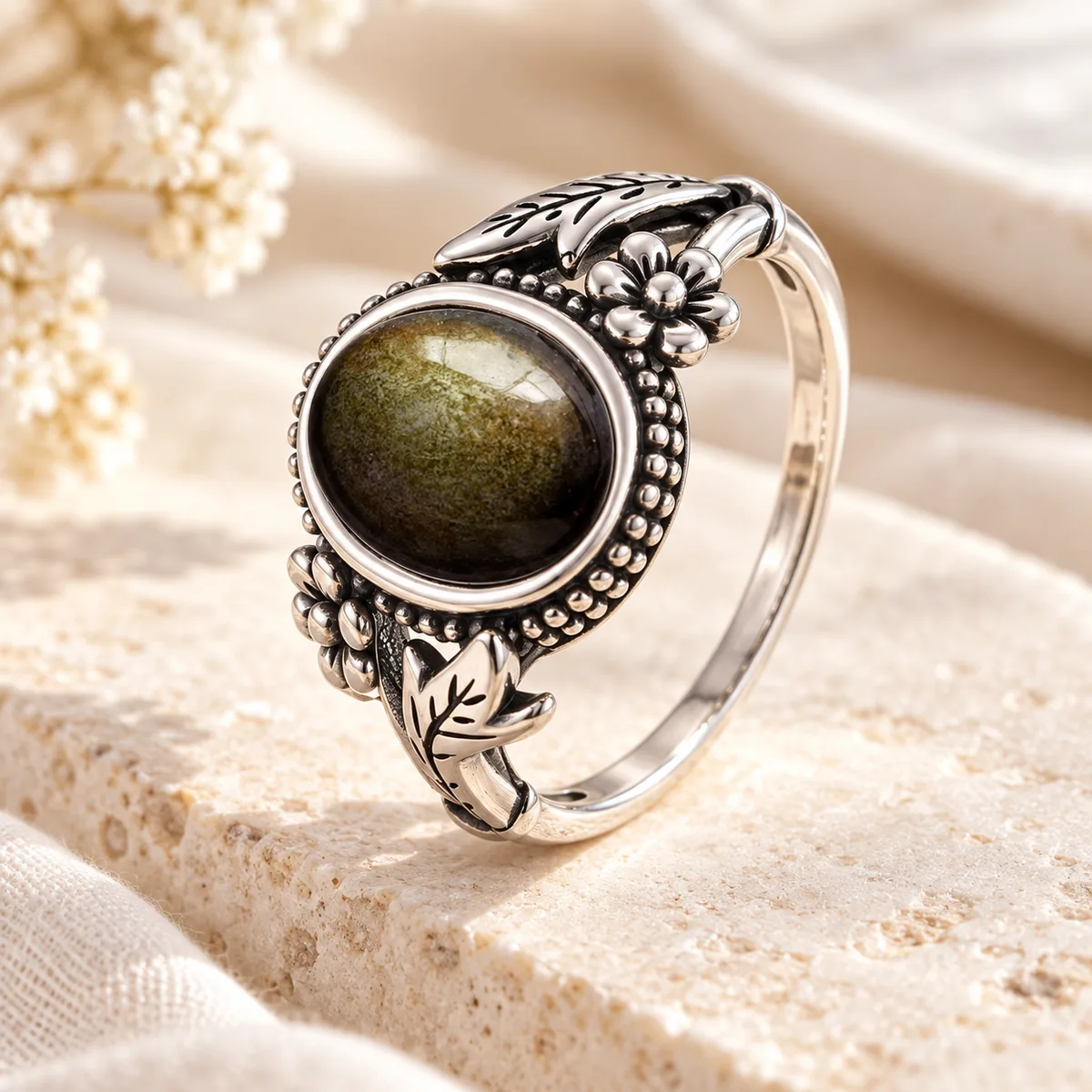
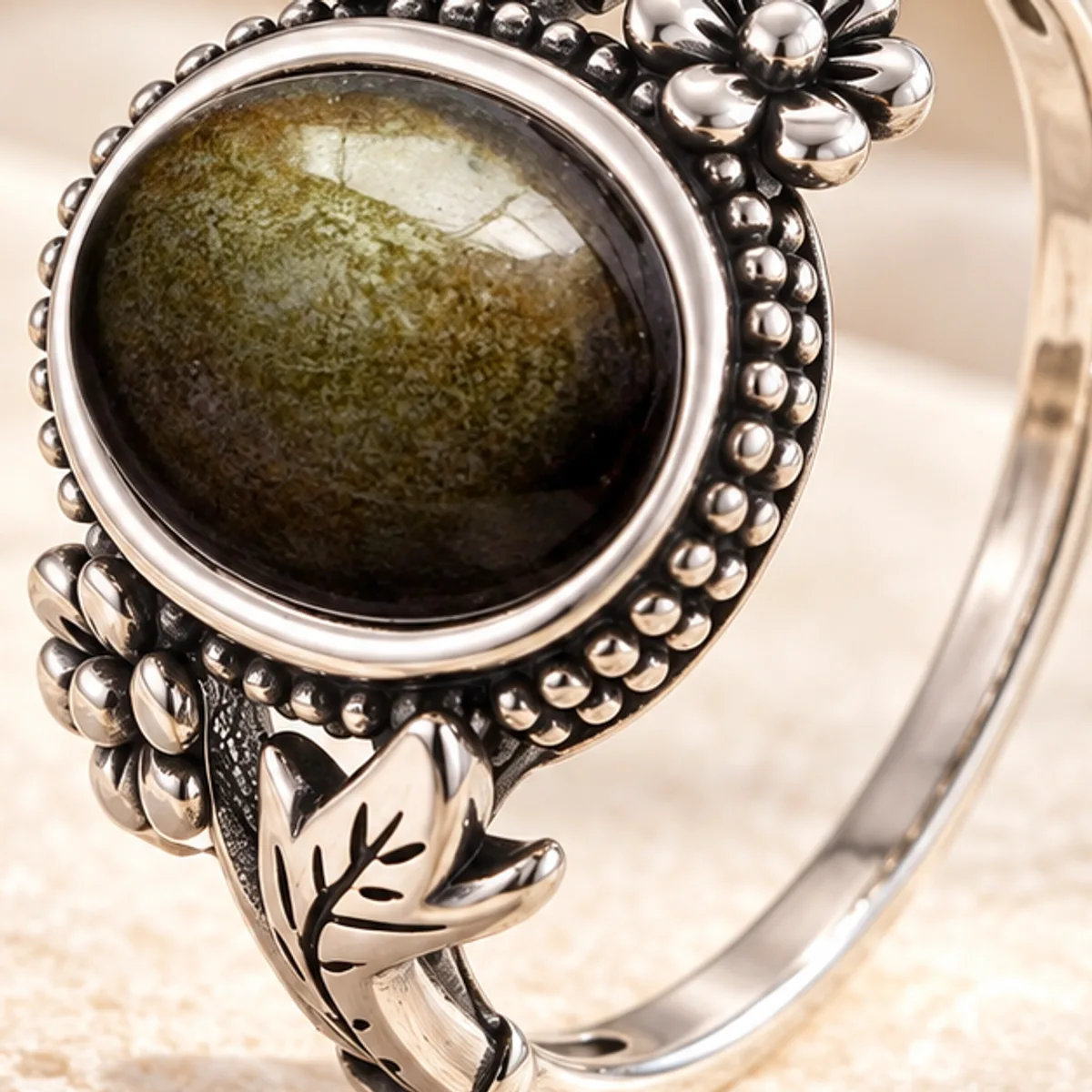
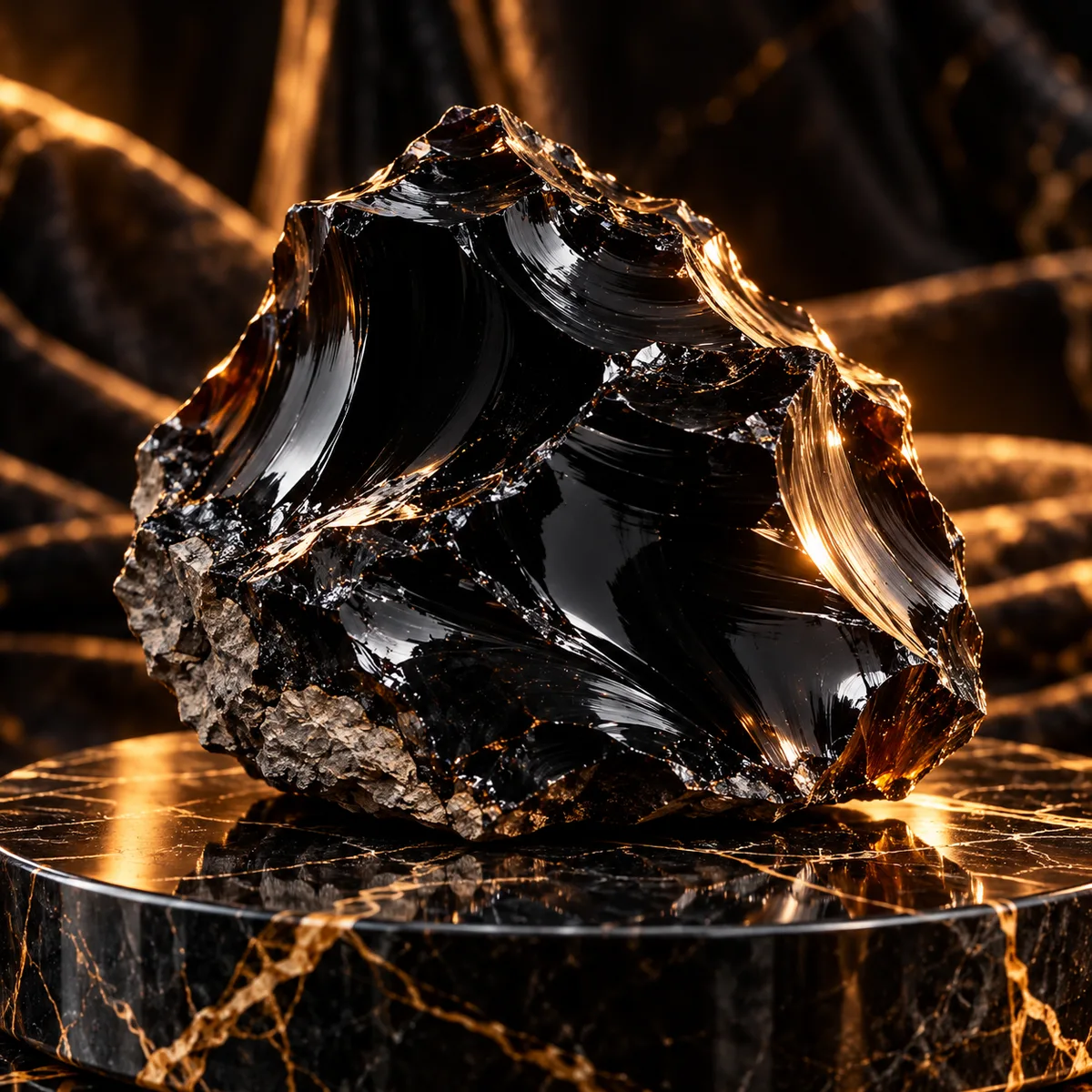
A gold sheen obsidian cabochon set between a leaf on one side and a flower on the other, on a deliberately asymmetric setting. It is the only one of the fifteen settings in the series where the two shoulders do not answer each other.
Every other ring in the series is symmetrical: what is on the left is on the right, mirrored. This one is not, and that is a design decision, not an oversight. An asymmetric setting gives the ring a direction, the eye starts at the leaf, passes through the stone and ends on the flower. A symmetrical setting holds the gaze at the center. They are two opposite ways of making a piece of jewelry read.
The practical consequence is that there is a right way round to wear it. One way, the leaf points toward the hand and the ring seems to descend; the other way, it points toward the wrist and the ring seems to rise. Both can be argued for, but you have to choose, which a symmetrical ring never asks of you. The other rings are here.
The reservation comes down to the same point. An asymmetric ring shows when it has turned, where a symmetrical one stays correct in every position. On a finger a little wide for the size chosen, you will be putting it back several times a day. Take the exact size, and if you are between two, take the smaller one on this model in particular. The size guide saves a return.
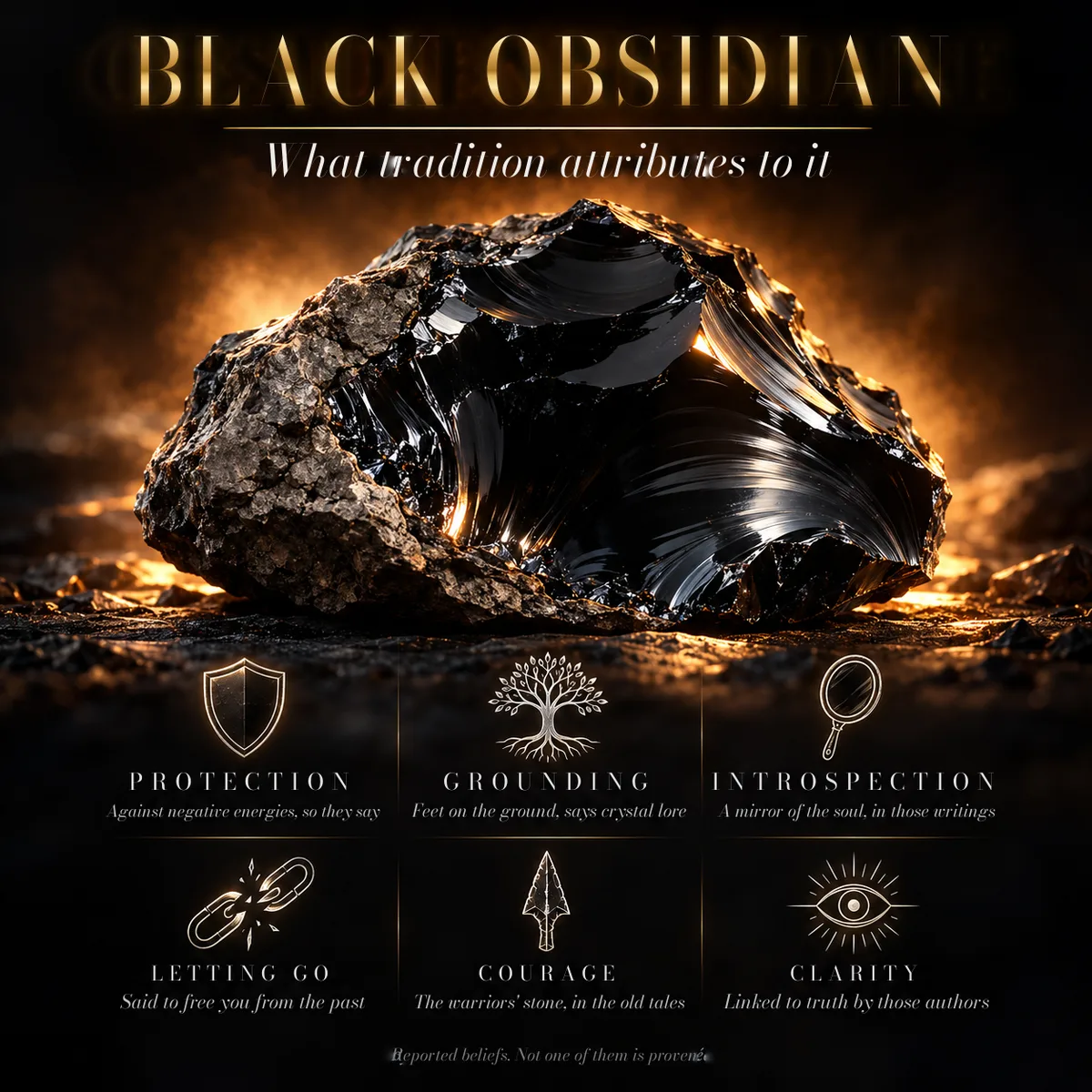
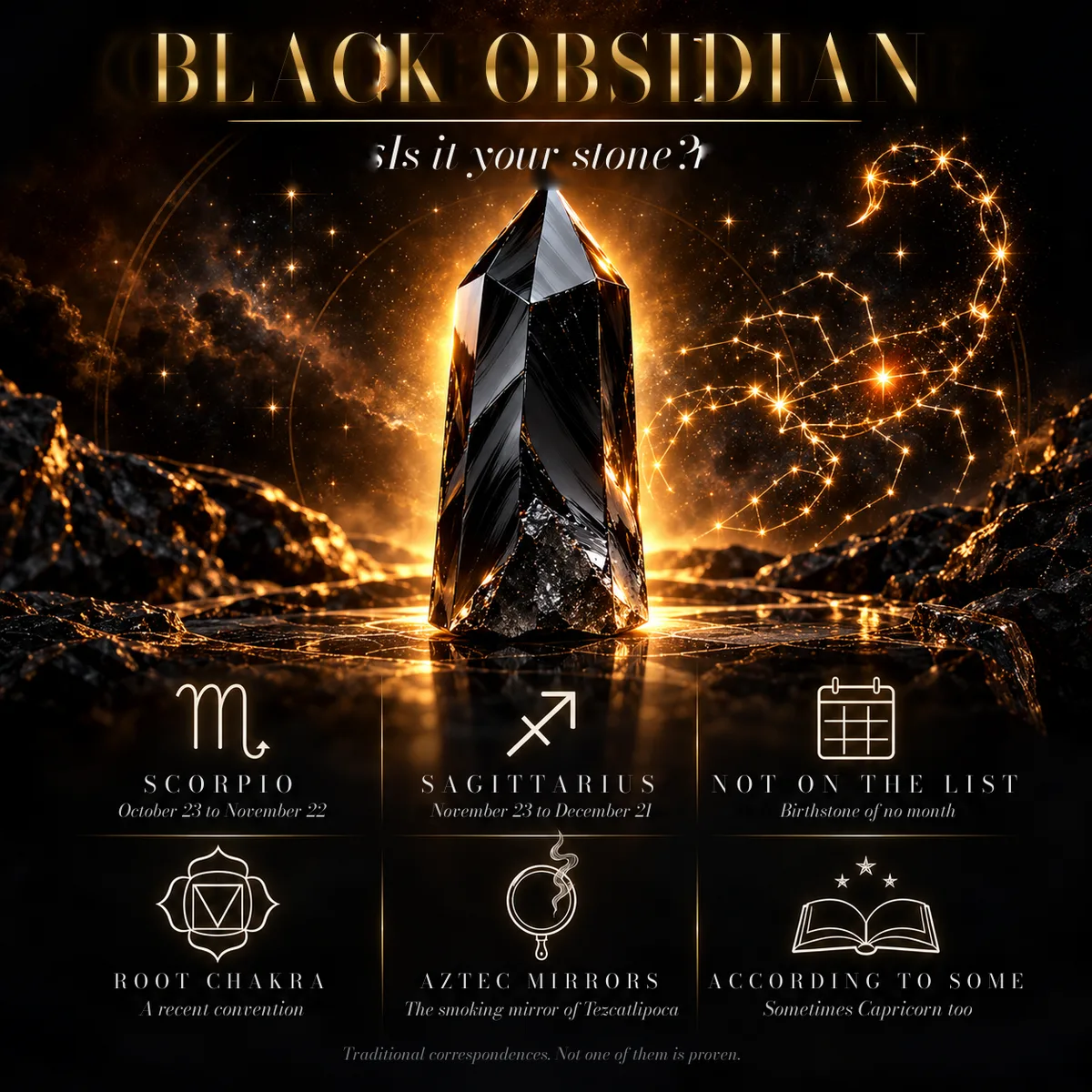
Crystal lore ties obsidian to grounding, and gold sheen in particular to self-confidence. None of that is proven, and no piece of jewelry heals anything. I have gathered separately what tradition attributes to obsidian, in the conditional from start to finish.
- Genuine gold sheen obsidian, oval cabochon in a closed bezel, no glue.
- Sterling silver 925, a leaf on one side, a flower on the other, hollows blackened by hand.
- The only asymmetric setting in the series: it gives the piece a direction.
- It shows when it has turned: take the exact size.
What to know before you wear it
 |  |  |
The specifications
- Stone
- Gold sheen obsidian, volcanic glass, oval cabochon
- Metal
- Sterling silver 925, S925 hallmark
- Setting
- Asymmetric closed bezel, no glue
- Decoration
- Leaf and flower, blackened hollows
- Sizes
- 52 to 62 (inner circumference in mm)
- Gender
- Women
- Brand
- Bijoux Obsidienne
Asymmetry is not improvised
An asymmetric setting raises a problem of mass that symmetry settles on its own. If the two sides do not weigh the same, the ring pivots on the finger until the heavy side ends up underneath, and the design sits crooked permanently. So the leaf and the flower, which have nothing like the same shape, have to weigh exactly the same. You get there by hollowing out the back of the heavier one, which cannot be seen once the ring is on the finger. It is the kind of invisible correction that holds a design together.
This setting is in the catalog because fourteen symmetrical rings is a lot. One of them had to break the series, and asymmetry is the only way to do that without changing either the stone or the metal. The other rings are here and the obsidian guide explains the stone.
The leaf and the flower do not have the same shape and must weigh the same. You hollow out the back of the heavier one.
Obsidian does not mind water, but it shatters on impact and scratches against a hard metal. Take the ring off before DIY and sport. Do not polish the blackened hollows of the foliage: the black comes away in a few passes. Cleaning an obsidian piece covers the rest.