Description
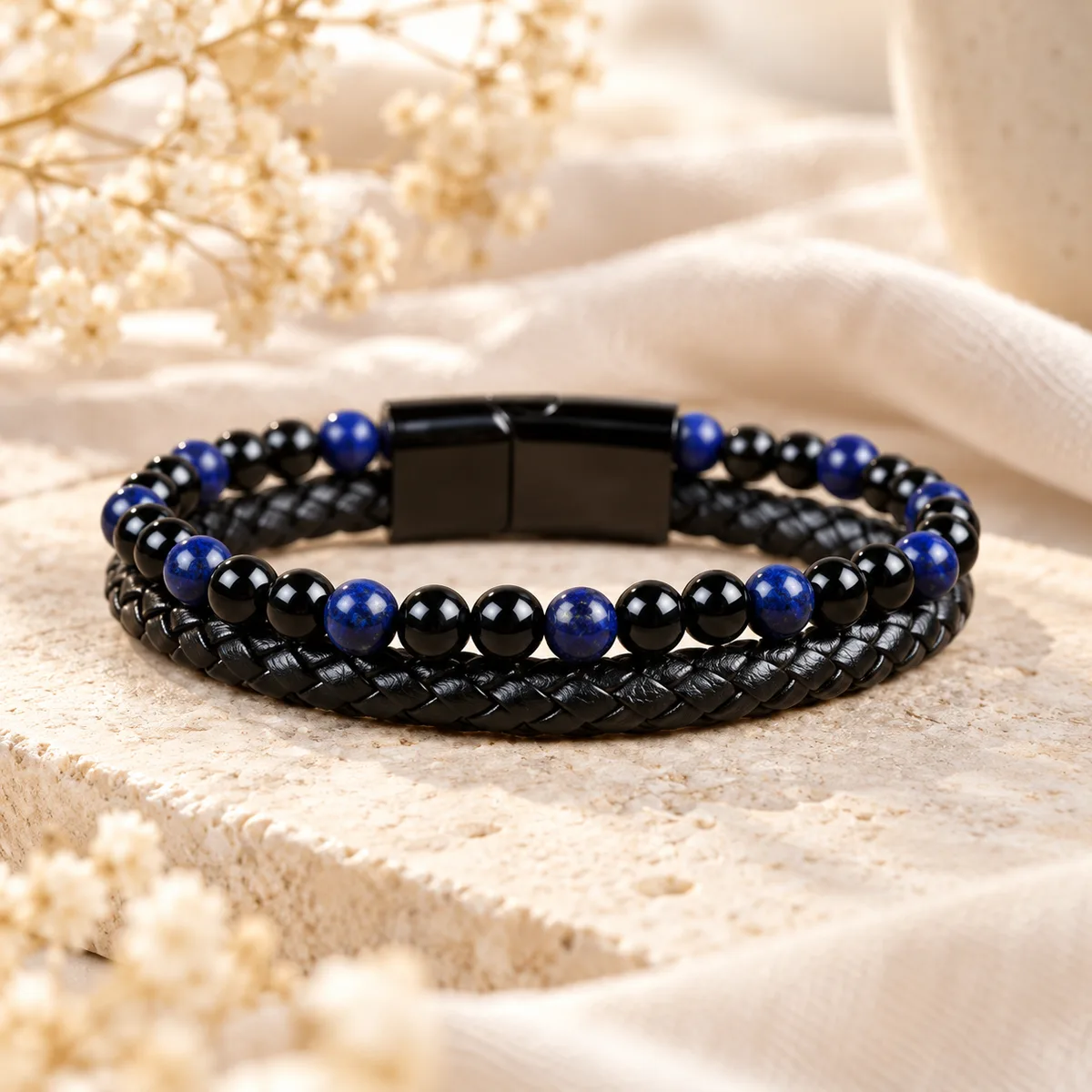
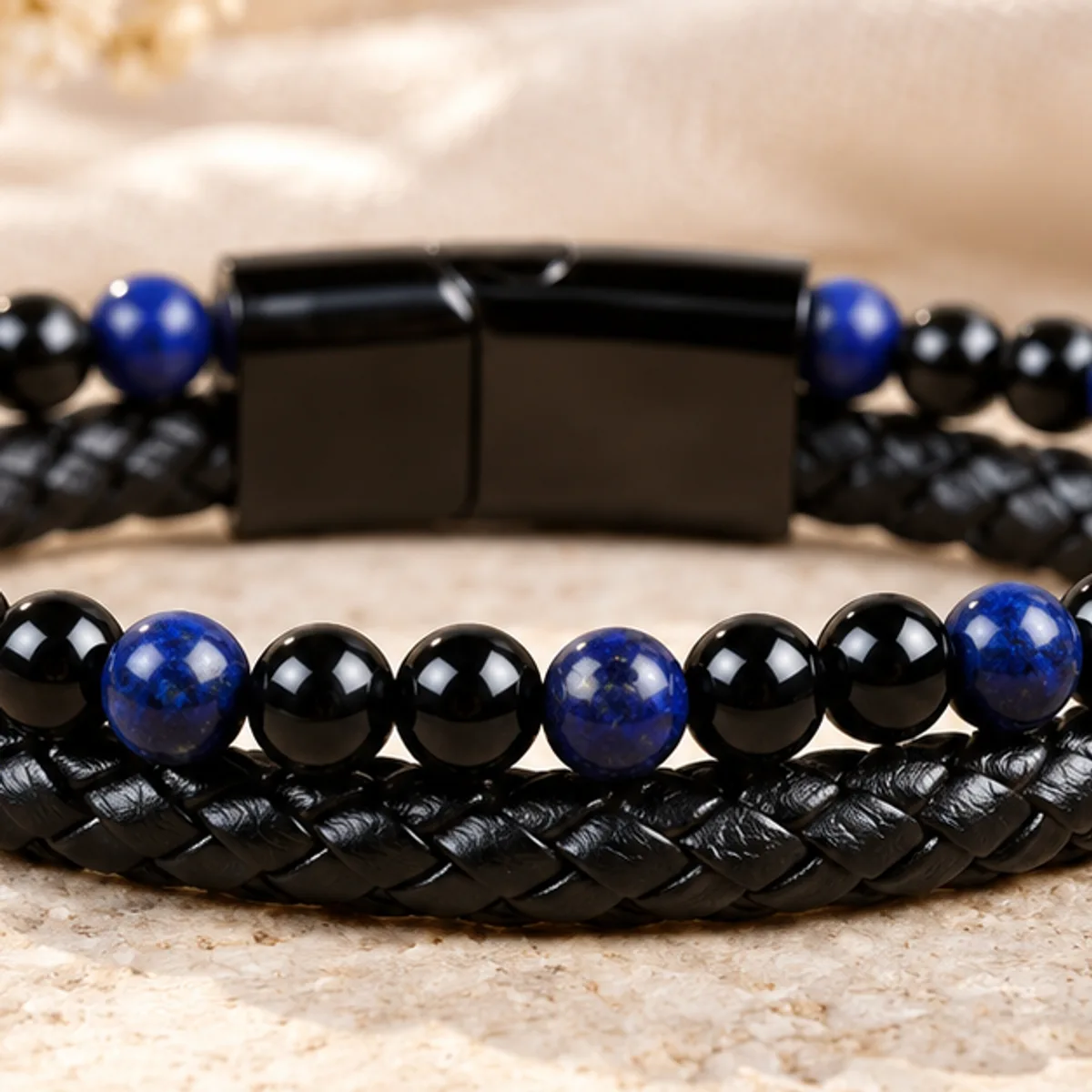
Two parallel strands and a single closure: a braid of black leather underneath, a strand of 4 millimeter beads above, where obsidian alternates with the blue of lapis lazuli. The clasp is magnetic and closes one-handed.
The beads are 4 millimeters, half the usual diameter in the range, and that is no detail. At that size a stone no longer reads as an object but as a color: the strand becomes a blue and black line rather than a series of beads. That is what lets it sit next to leather without the two fighting. The other bracelets are here.
Lapis lazuli is not a mineral but a rock, dominated by blue lazurite with white calcite and golden pyrite. The gold specks you will see on some beads are that pyrite: it is the signature of lapis, and an absolutely uniform bead, without a single speck, should on the contrary raise doubt. Pairing obsidian with other stones goes into these mixes.
Two reservations on this model. The magnetic clasp closes one-handed, which is its point, but it also lets itself be torn open by a sweater or a bag handle: it is not a security clasp and you should not trust it with a piece you care about in a crowd. And leather is leather: it likes neither prolonged water nor direct sun, and it dries hard if you soak it.
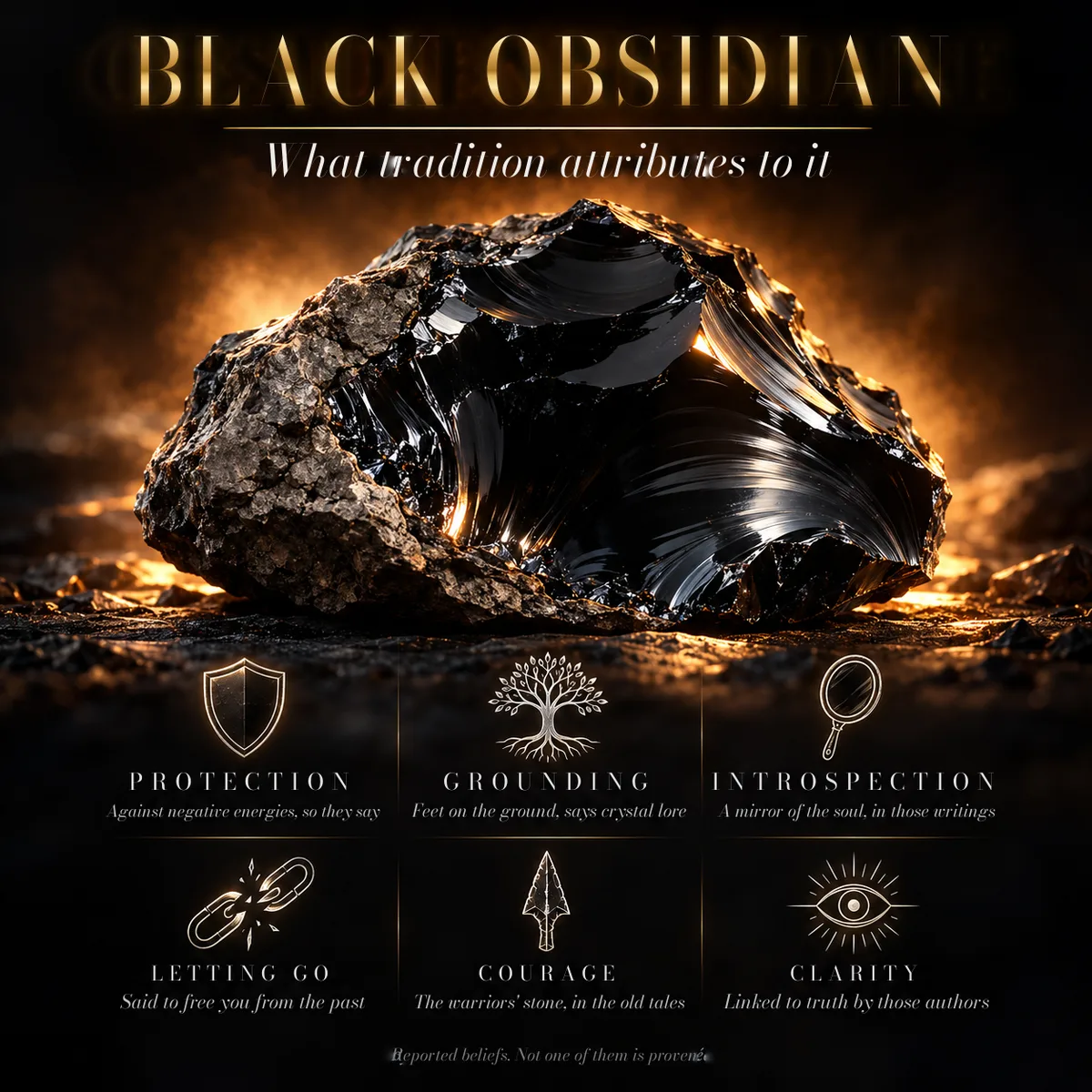
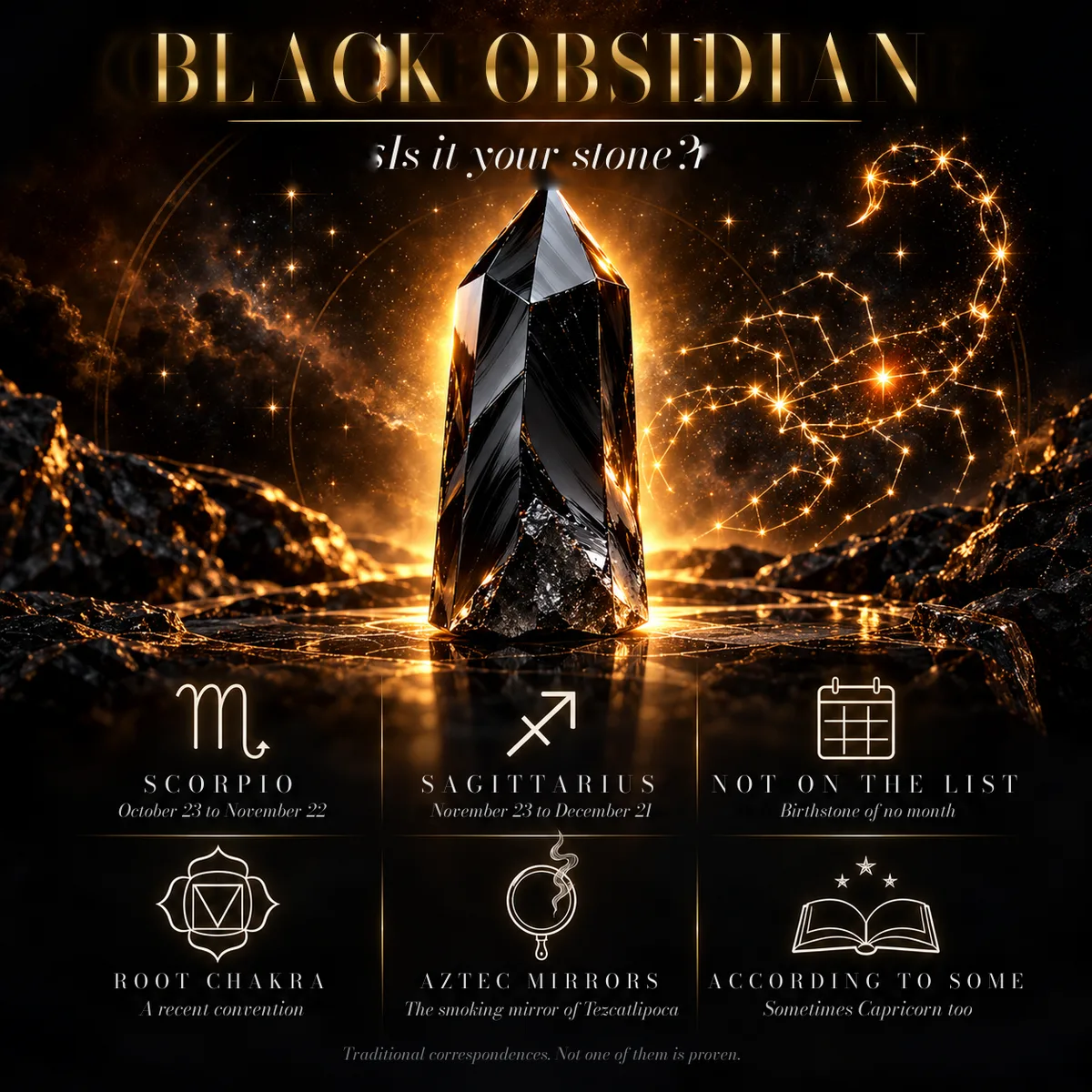
Crystal lore ties obsidian to grounding and lapis lazuli to speech. None of that is proven, and no piece of jewelry heals anything. I have gathered separately what tradition attributes to obsidian, in the conditional from start to finish.
- Two strands on a single closure: braided black leather and 4 mm beads.
- Obsidian and genuine lapis lazuli, with its pyrite specks.
- Magnetic clasp: closes one-handed, but does not resist being torn open.
- Leather likes neither prolonged water nor direct sun.
What to know before you wear it
 |  |  |
The specifications
- Stones
- Black obsidian, lapis lazuli
- Bead diameter
- 4 mm
- Other material
- Braided cowhide leather
- Clasp
- Magnetic clasp in blackened steel
- Wrist size
- About 7 1/2 in (19 cm), not adjustable
- Stone origins
- Mexico, Afghanistan
- Gender
- Men
- Brand
- Bijoux Obsidienne

The magnetic clasp, its point and its limit
A magnetic clasp is chosen on one measurement, its pull-apart force, and makers rarely state it. The bench test is rustic: hang the closed bracelet and hook a weight onto it. Below five hundred grams, the clasp opens inside a coat sleeve and the bracelet is lost before the end of winter. This one holds a little over a kilo, which is decent without being a security clasp, and I would rather write that than let anyone assume otherwise.
This model exists because many people cannot close a lobster clasp with one hand, and that is exactly what a bracelet is asked to do. The magnet settles the gesture. The other bracelets, strung on elastic with no clasp at all, are here.
Below five hundred grams of pull, a magnetic clasp opens inside a coat sleeve. This one holds a kilo.
Obsidian and lapis do not mind water, but leather dries hard and a magnetic clasp attracts metal filings. Take the bracelet off before the shower, the pool and any DIY. A soft dry cloth, never an ultrasonic bath. Cleaning an obsidian piece covers the rest.