Description
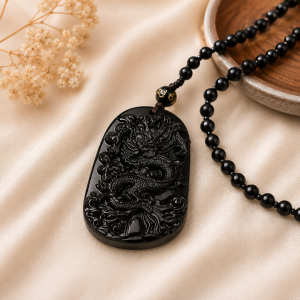
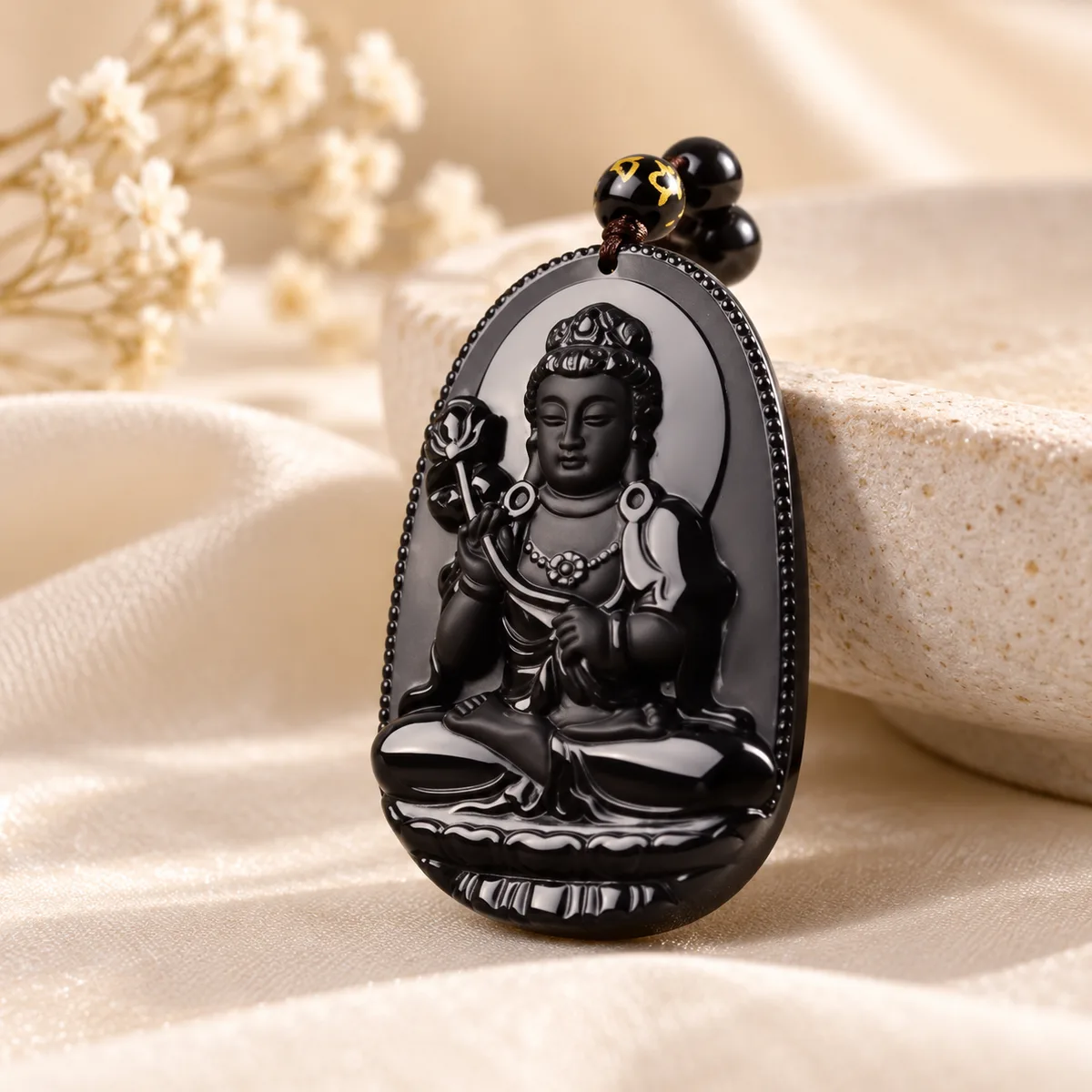
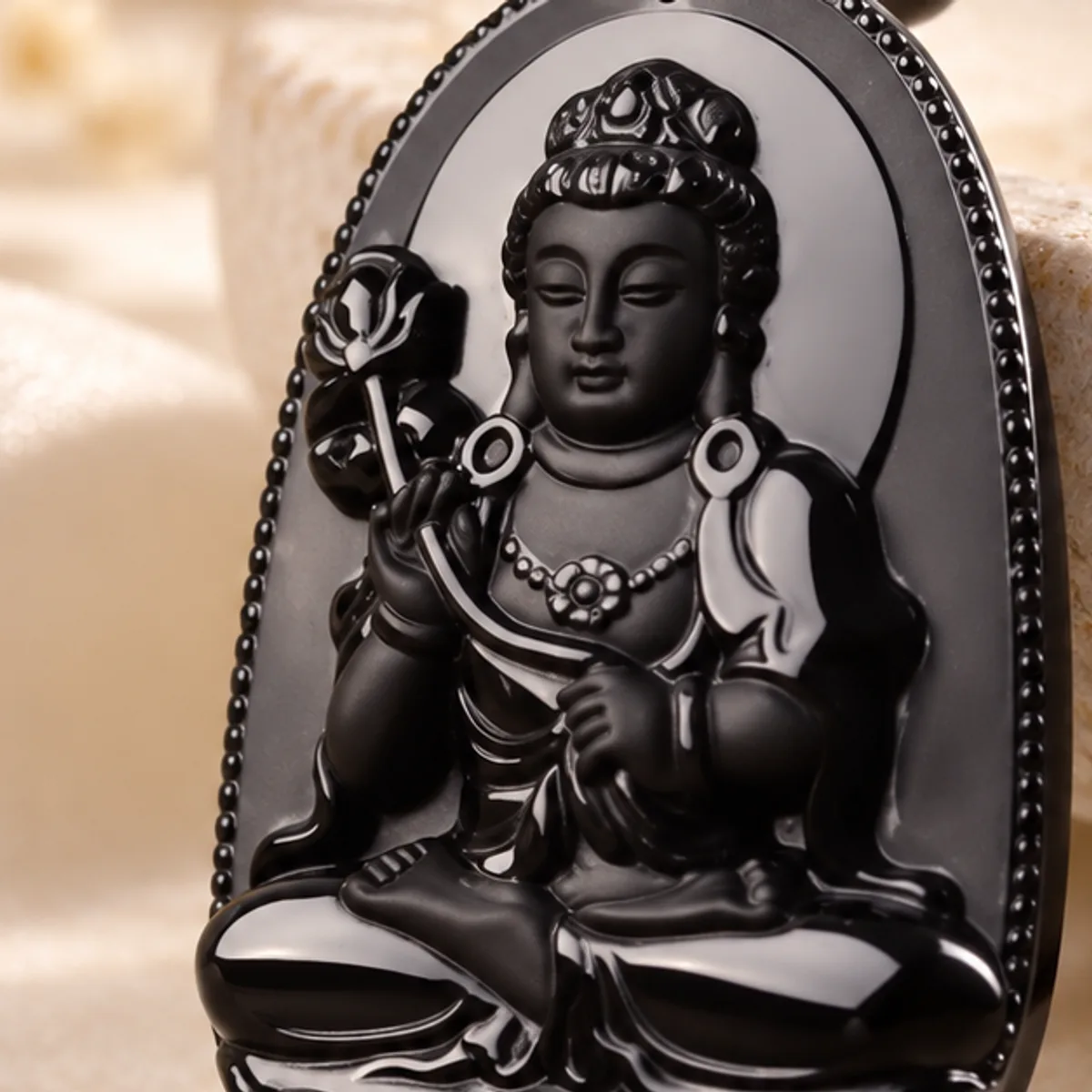
An oval obsidian plaque, with Guanyin carved in relief, seated on a lotus, a flower in hand. The ground is left mirror polished, which brings the figure forward without a single color being added.
Guanyin is not a Buddha, and the confusion is so widespread that it deserves a line. She is a bodhisattva, Avalokiteshvara, a figure of compassion, who passed from India to China where the representation became female from roughly the tenth century on. A Buddha is shown seated in meditation, hands joined or in a mudra; Guanyin holds an attribute, here a flower, and wears a headdress. The catalog sells both, and they are not variants of each other.
The relief is obtained by removal, not by molding. The craftsman cuts away the ground around the figure and leaves the material in place where it must stay, which is why the face always sits at the original height of the plaque. It is easy to verify: on a piece molded in resin the edges of the relief are soft and identical from one piece to the next; here they are crisp and they vary. The other pendants are here.
The reservation concerns the polished ground. The hollows around the figure hold dust and grease, and a pendant worn every day loses contrast after a few months: the ground turns grey and the relief stands out less. A pass under lukewarm water with a soft toothbrush brings it all back. It is the only maintenance this piece asks for, and it needs thinking about two or three times a year.
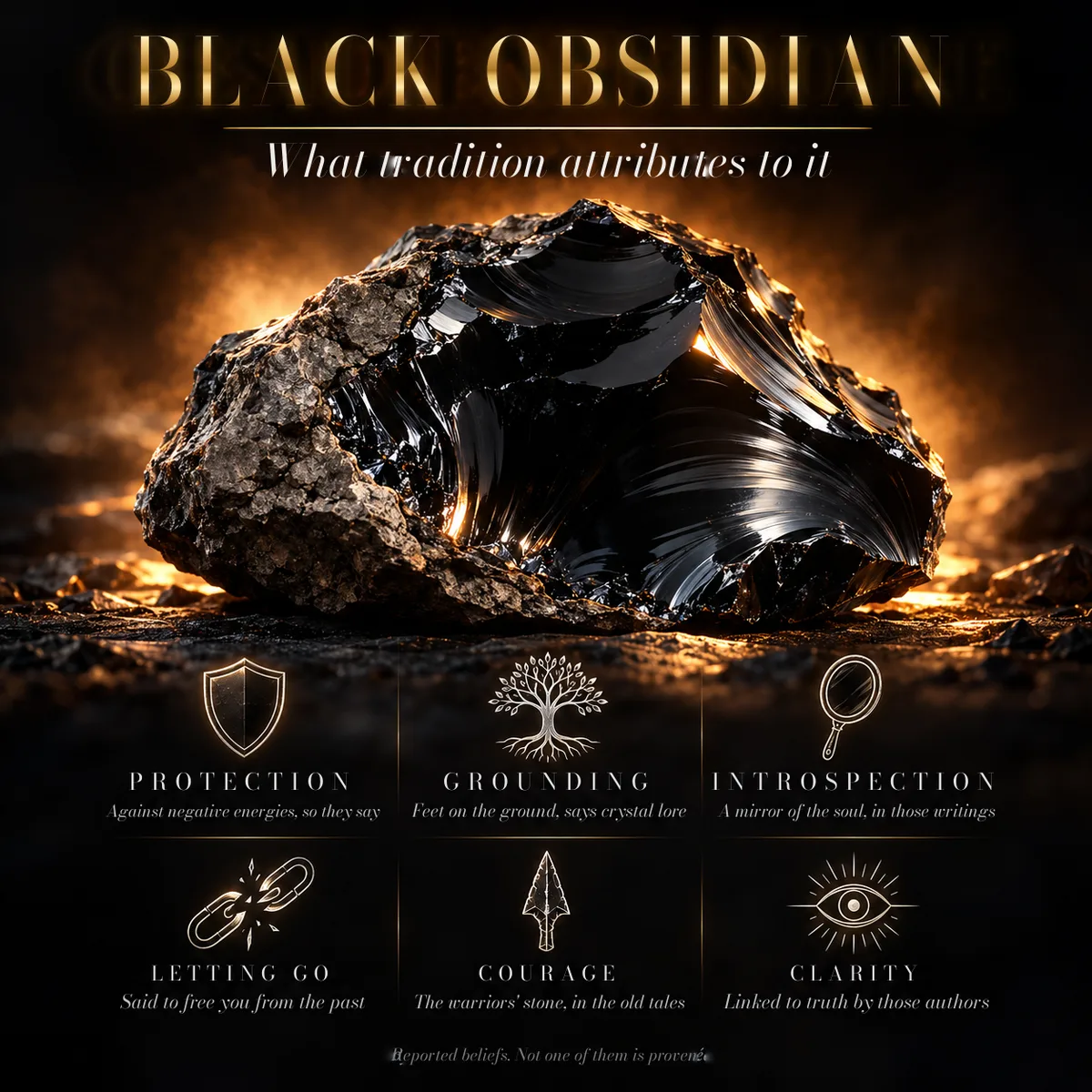
Crystal lore ties obsidian to grounding. As for Guanyin, she belongs to a living religious practice, and it is not for a French jeweler to interpret her. None of the above is proven, and no piece of jewelry heals anything. I have gathered separately what tradition attributes to obsidian, in the conditional.
- Genuine black obsidian, oval plaque with relief carved by removal.
- Guanyin, bodhisattva of compassion: this is not a Buddha, and the catalog sells both.
- Mirror-polished ground, no paint and no highlight: the contrast comes from the relief alone.
- Adjustable braided black cord, no metal clasp.
What to know before you wear it
 |  |  |
The specifications
- Stone
- Black obsidian, volcanic glass
- Shape
- Oval plaque, carved relief
- Dimensions
- About 2 x 1 3/8 in (50 x 35 mm)
- Figure
- Guanyin seated on a lotus
- Setting
- None, stone drilled and knotted
- Cord
- Braided black cord, adjustable length
- Gender
- Unisex
- Brand
- Bijoux Obsidienne

Carving a face on a glass that flakes away
Carving a face in a volcanic glass imposes an order of work you would not guess. You clear the ground first and the face last, where instinct would say the opposite. The reason is that every pass makes the piece vibrate, and a vibration passed into a finished relief chips it on its finest edges, those of the nose and the eyelids. By finishing with the face, you put it through no further vibration. A piece worked in the wrong order has slightly blunted features.
This figure is in the catalog because people kept asking me for it under the name Buddha, and it is not one. Rather than correct every customer, I preferred to sell both and write the difference down once and for all. Both are here and the obsidian guide explains the material.
You clear the ground first and the face last. One more vibration on a finished nose and it chips.
Obsidian does not mind water. The hollows of the relief hold dust: a pass under lukewarm water with a soft toothbrush two or three times a year brings the contrast back. Never an ultrasonic bath. Cleaning an obsidian piece covers the rest.