Obsidian and Chakras: The Complete Guide
Obsidian is, first and foremost, a root chakra stone. That's its natural home, and it's worth saying plainly before anything else. But every variety has its own color and shimmer, and a few of them do reach toward other centers. Here's the honest, chakra-by-chakra breakdown of obsidian and the chakras: which variety fits where, and what crystal healing actually claims.
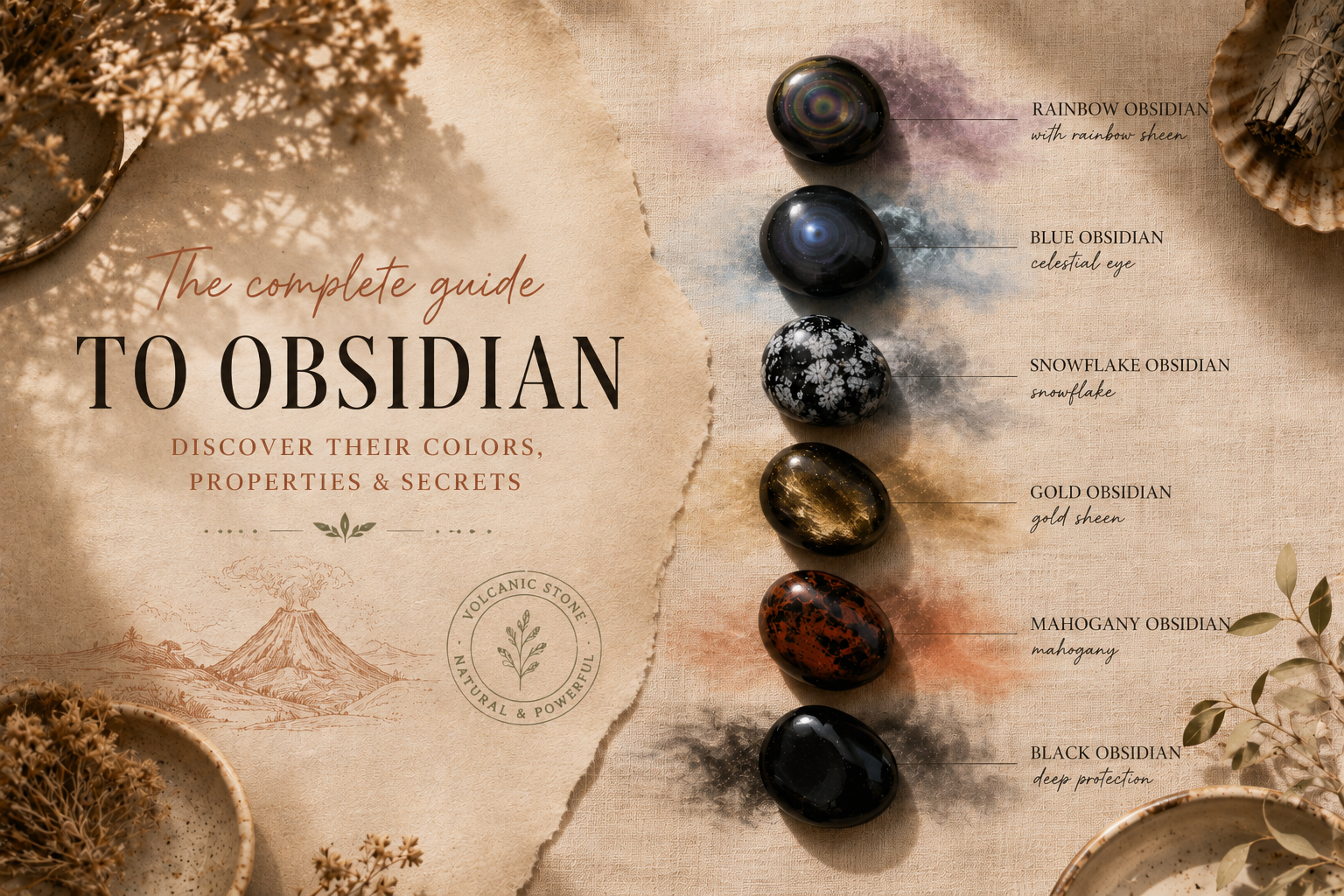
Obsidian and chakras: how it works
In the Indian tradition, the chakras are seven energy centers running along the spine, from the base of the pelvis to the crown of the head. Each carries a color, an element, and an area of life: safety, creativity, will, love, voice, intuition, and connection to something larger than the self.
Crystal healing links stones to chakras through color and energetic correspondence. That's where obsidian holds an unusual place: it's dark, dense, born of volcanic fire and then frozen solid by cold. I tell that origin story in my article on how obsidian is formed.
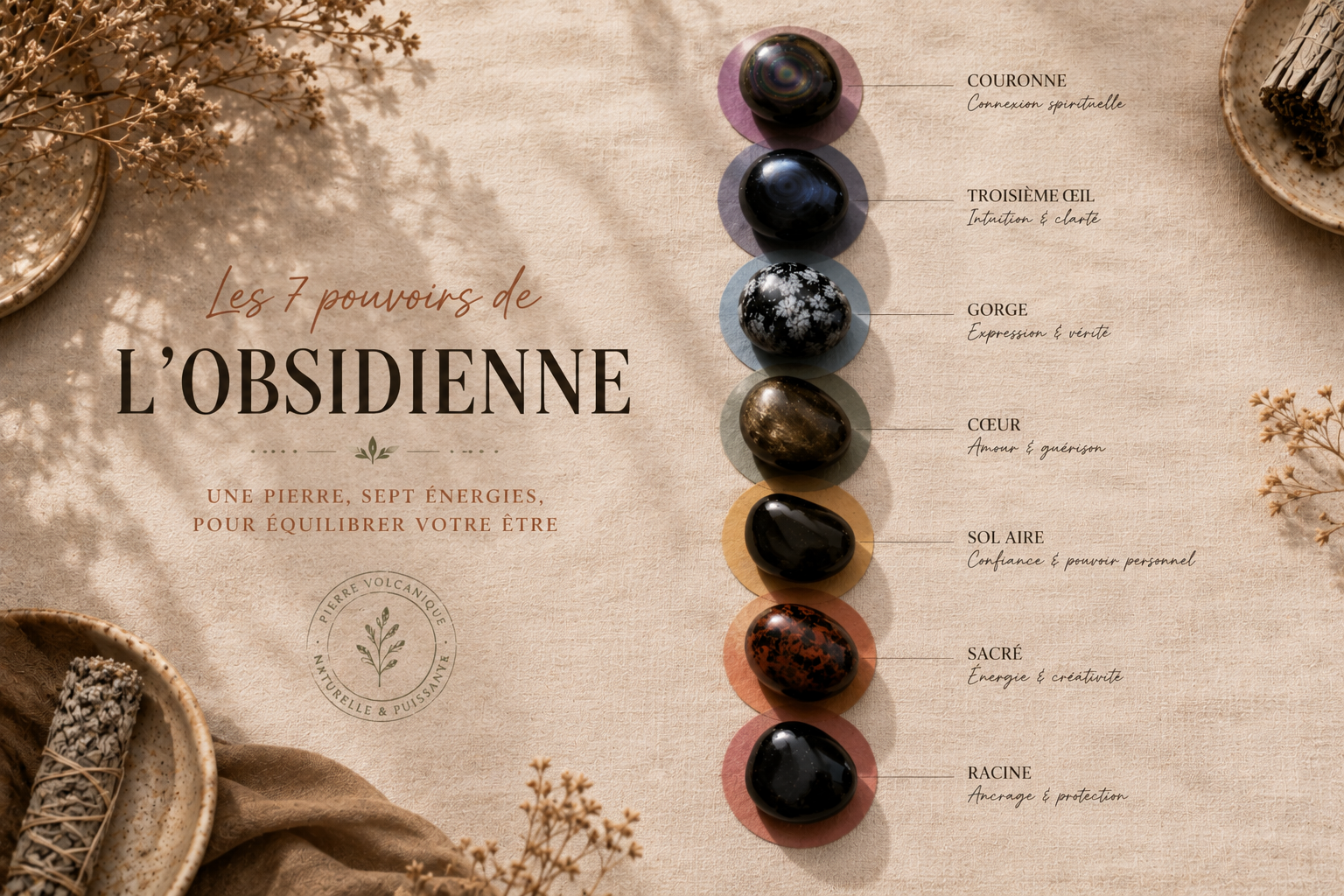
That darkness makes obsidian a stone that pulls downward, in the best sense: toward the ground, the body, the concrete. Which is why its true specialty, if you can call it that, is the very first center, the root chakra. Other correspondences do exist, but they run through variety, not through the base material: the golden sheen, the blue-violet flash, the rainbow iridescence. You'll find all of them in my obsidian varieties guide.
People ask me all the time, "which obsidian is for the heart chakra?" My honest answer: obsidian isn't a heart stone, and I'd rather say so than make something up. What it does do very well is prepare the ground underneath.
The 7-chakra chart for obsidian
An overview, from the most grounded center to the most subtle:
| Chakra | Location & color | Obsidian variety | Strength of the link |
|---|---|---|---|
| Root · Muladhara | Base of spine · red | Black, mahogany | Very strong |
| Sacral · Svadhisthana | Lower belly · orange | Mahogany | Strong |
| Solar plexus · Manipura | Stomach · yellow | Gold sheen | Strong |
| Heart · Anahata | Chest · green | Snowflake | Indirect |
| Throat · Vishuddha | Throat · blue | None (see below) | Weak |
| Third eye · Ajna | Forehead · indigo | Rainbow | Strong |
| Crown · Sahasrara | Top of head · violet | Rainbow | Moderate |
Good to know, obsidian isn't an "every chakra" stone. It's heavily weighted toward the lower centers. The upper correspondences rest on the shimmer of certain varieties, not on the base mineral itself, treat them as nuance, not equivalence. You'll also notice rainbow obsidian listed twice: the same variety, with a blue-violet sheen tied to the third eye and a more colorful iridescence sometimes read at the crown.
Root chakra: obsidian's true home
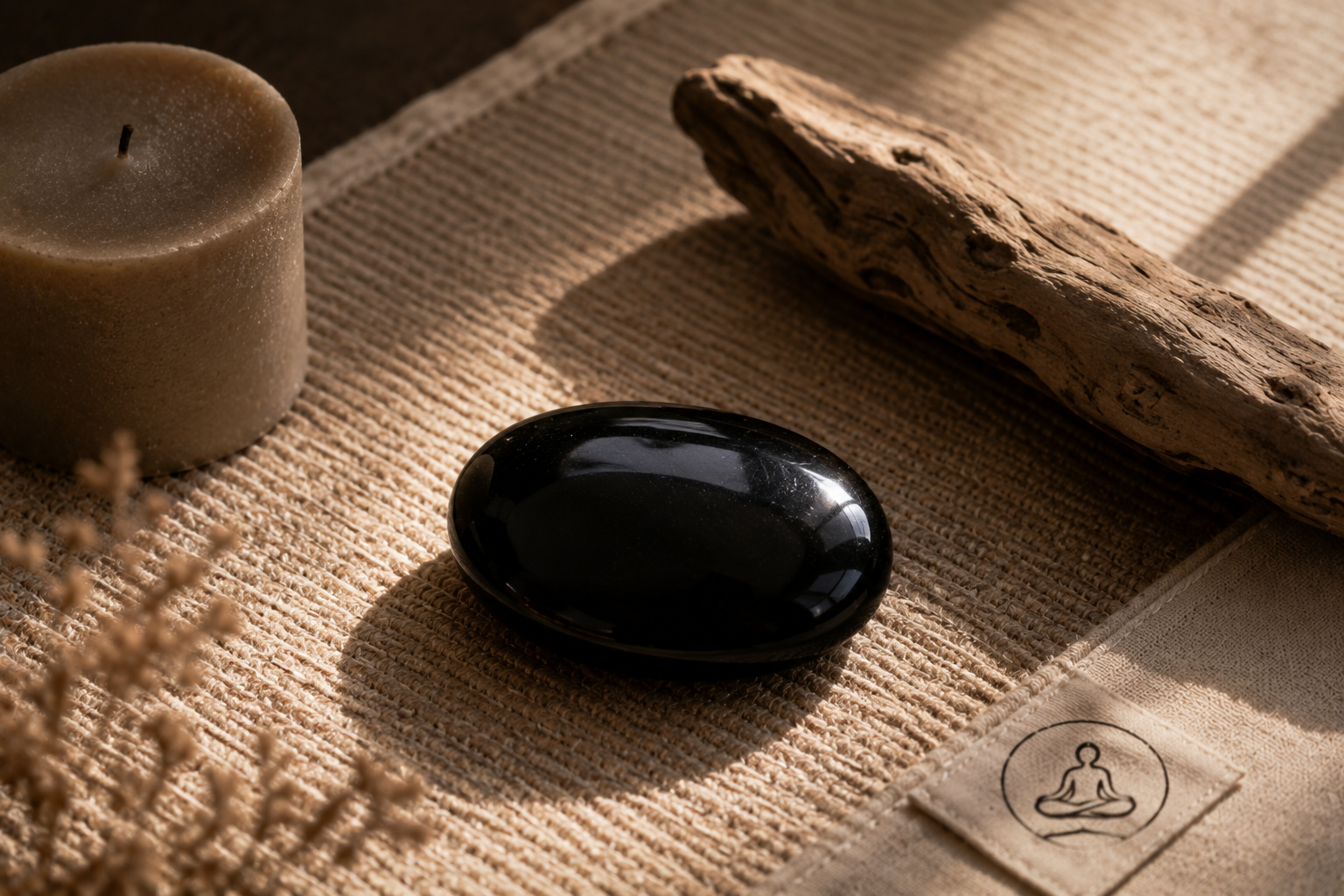
The root chakra (Muladhara) sits at the base of the spine, between the perineum and the tailbone. Its color is red, its element is Earth. It governs the sense of safety, stability, and the connection to body and matter, the feeling of having a place and standing on solid ground.
When it's out of balance, tradition describes restlessness, free-floating anxiety, a sense of being "beside" yourself, trouble settling. That's exactly black obsidian's territory: dark, dense, of the earth, it's said to act like a quiet weight that pulls you back down to ground level.
For the practice itself, guided meditation, root visualization, step-by-step placement, I've written a full article: meditating with obsidian for the root chakra. For the protection angle, see obsidian, protection and grounding.
Mahogany obsidian, marbled red-brown by iron and hematite, is the second stone of this center: a little warmer, a little less blunt than black, and a good fit if you find black obsidian too intense.
If root work is where you want to start, here's what I make for it.
The other chakras, variety by variety
Above the root, it's the variety that makes the difference. Here are the correspondences I actually stand behind, and the ones I'm wary of.
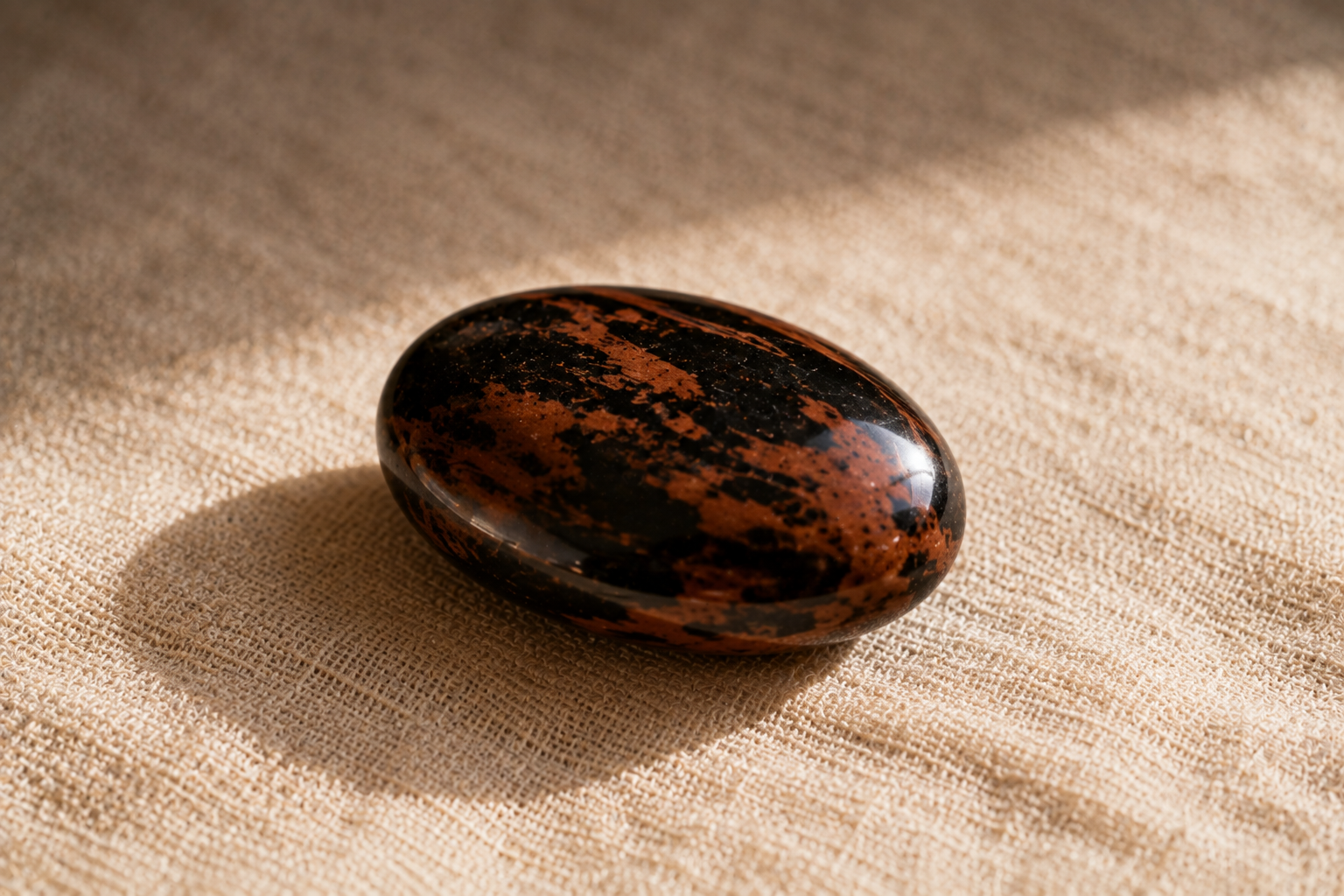
Sacral · Mahogany
Vitality, creative drive, coming back into the body.
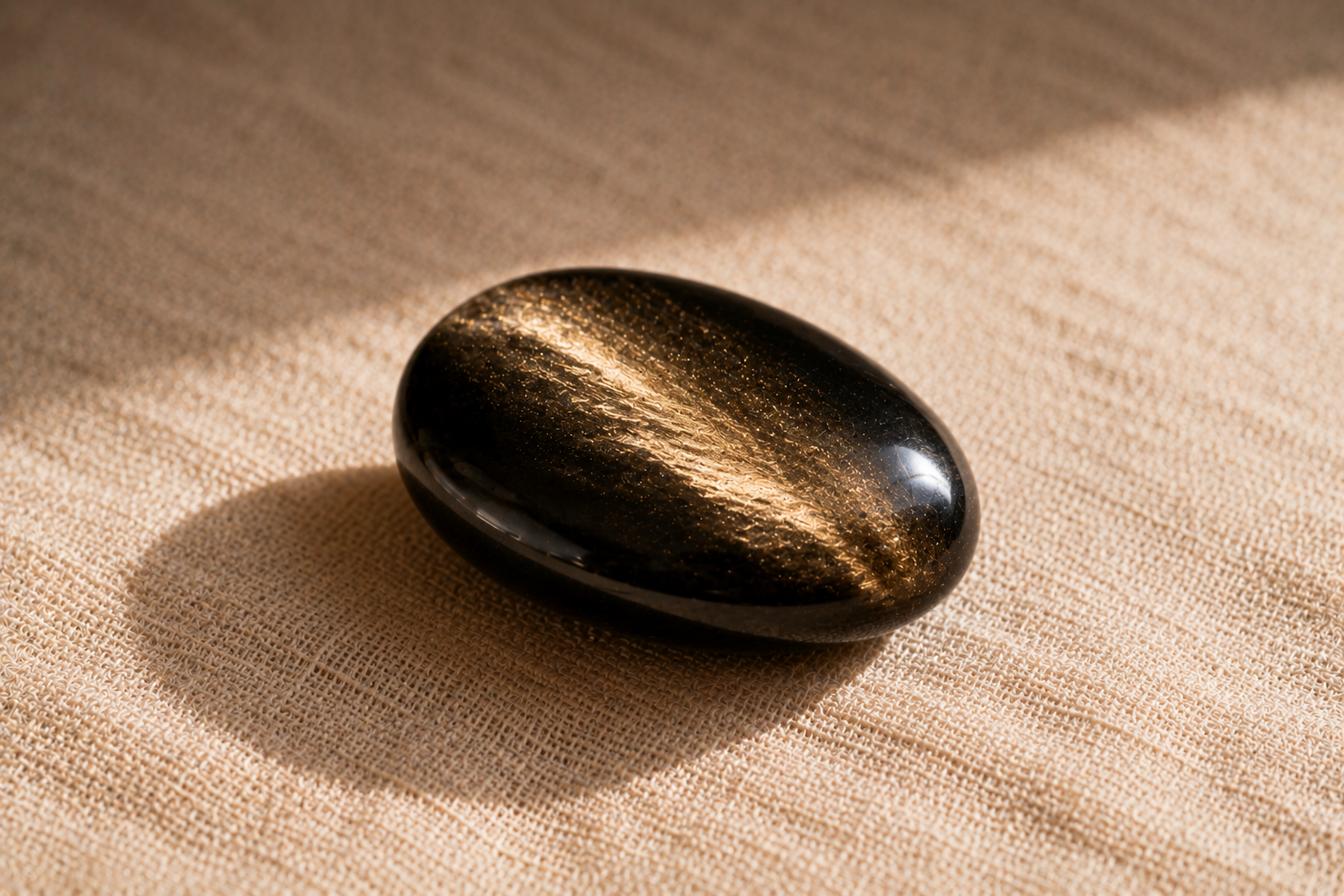
Solar plexus · Gold sheen
Self-confidence, will, the ability to decide.
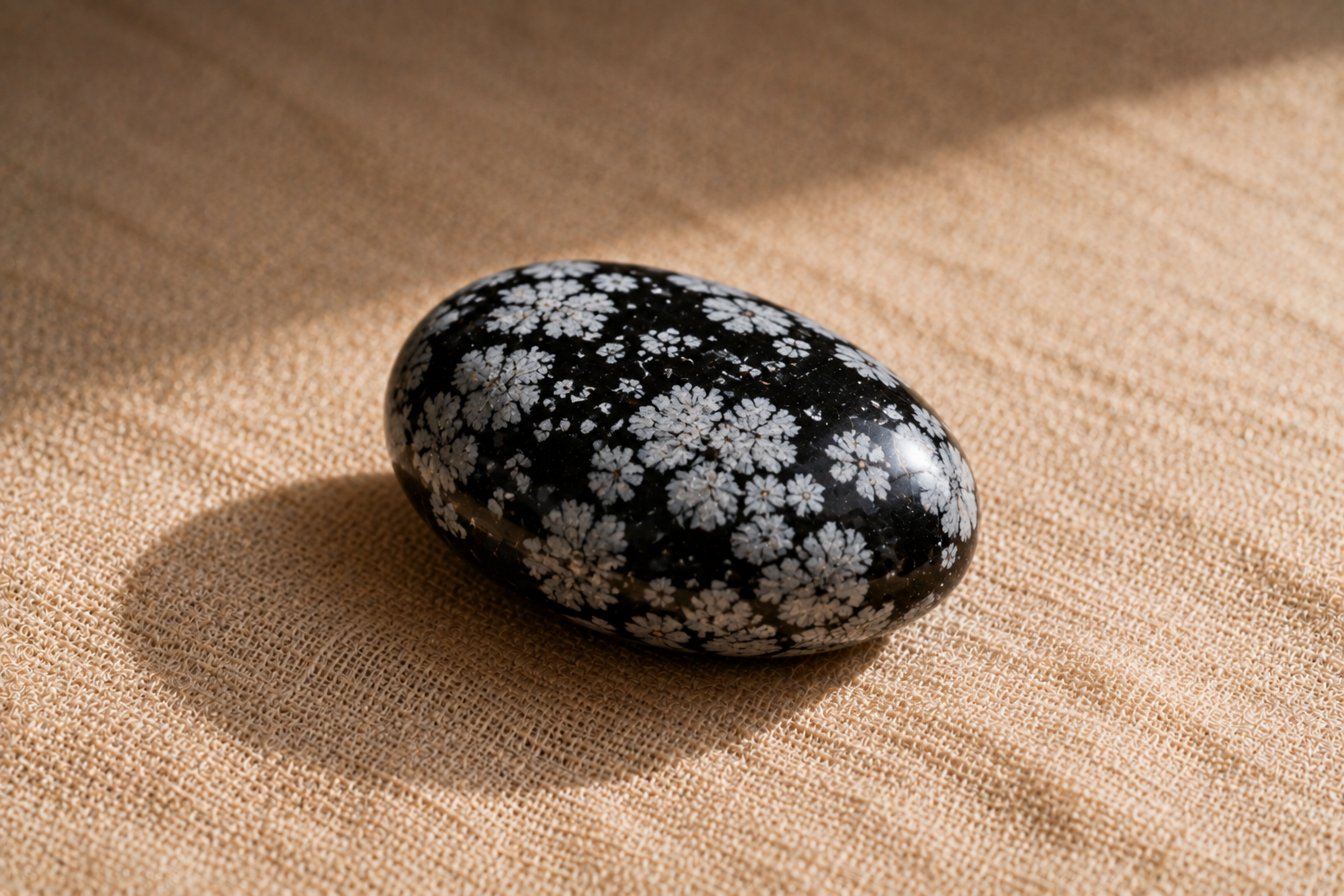
Heart · Snowflake
Calm, balance, inner reconciliation.
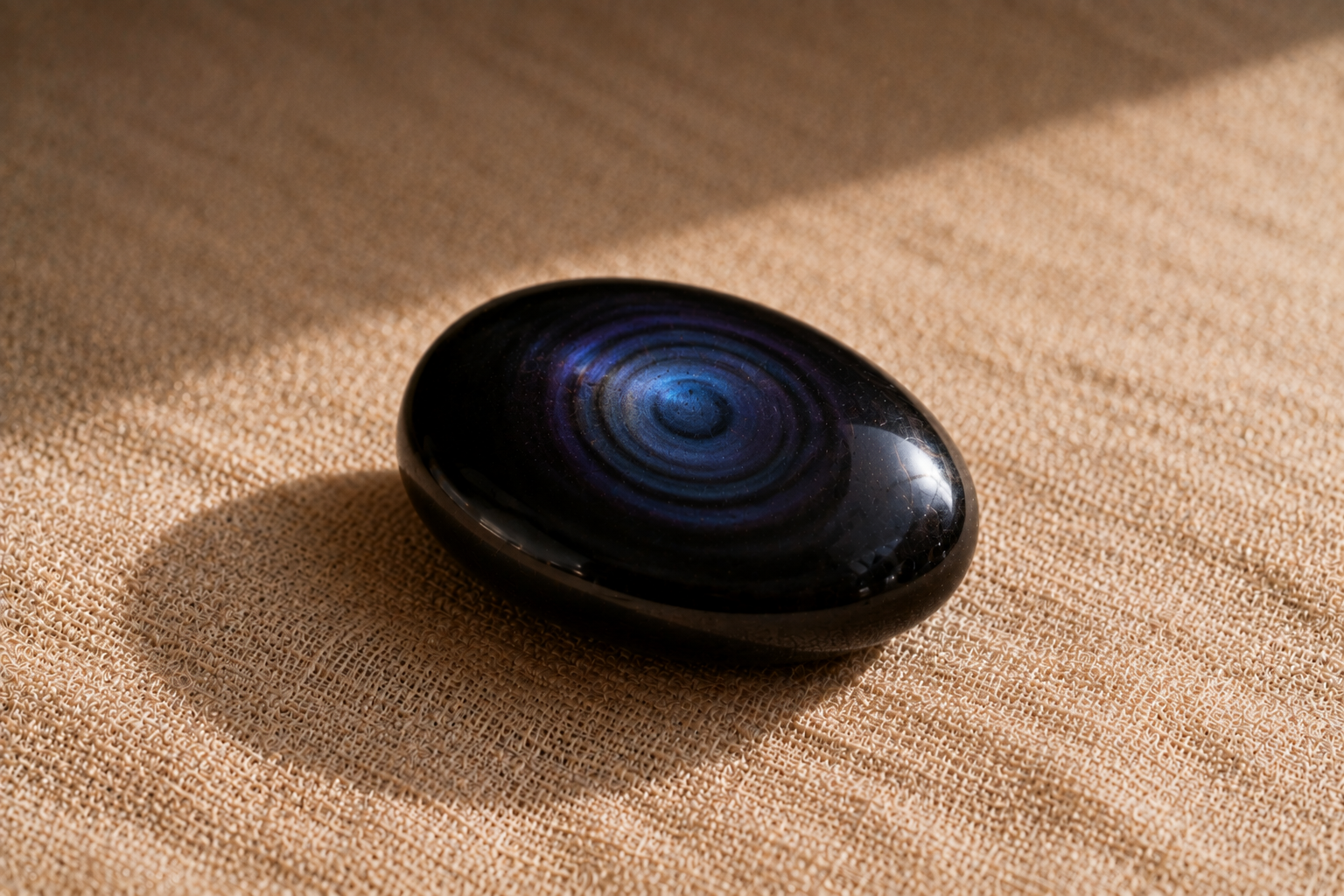
Third eye · Rainbow
Intuition, clarity, inner sight.
Sacral chakra (Svadhisthana), mahogany obsidian
Below the navel, orange, tied to water, the sacral chakra carries creativity, pleasure and vital drive. Mahogany obsidian, with its red-brown veining, comes closest. Tradition credits it with a warm, earthy energy that helps you get moving again after a stretch of apathy. It's a natural next step after root work: settle first, then get moving.
Solar plexus (Manipura), gold sheen obsidian
Yellow, centered at the stomach, Manipura is the seat of self-confidence, will and self-assertion. Gold sheen obsidian matches it naturally: its golden veil, created by aligned gas bubbles trapped in the glass, reads exactly like that solar warmth. It's the variety I suggest most often to people who struggle to say no, or to take up space.
Heart (Anahata), snowflake obsidian, indirectly
Let's be honest: the heart chakra, green, calls more naturally for rose quartz or aventurine. Obsidian isn't its natural stone. Snowflake obsidian is the exception in practice: black speckled with white, it symbolizes shadow and light coexisting, and it's used to soothe and settle. Preparatory work, more than an opening of the heart itself.
Throat (Vishuddha), watch out for false promises
This is the point I want to be very clear about. The throat chakra is blue, and you'll see "blue obsidian" marketed as its ideal stone. Those translucent, electric-blue pieces are almost always manufactured glass, not natural obsidian. Real obsidian stays dark. If the throat is your focus, look at lapis lazuli or aquamarine instead, and to avoid getting fooled while shopping, see my obsidian pricing and value guide.
Third eye (Ajna), rainbow obsidian
Indigo, centered on the forehead, Ajna governs intuition and clarity. Rainbow obsidian is the variety most often linked to it: that blue-violet veil, visible at the right angle, reads like an eye opening. It's also the gentlest stone in the family, a good choice if black obsidian feels too intense.
Crown (Sahasrara), rainbow obsidian, again
Violet, at the very top of the skull, the crown chakra connects to something larger than the self. Rainbow obsidian, with its multicolored iridescence from magnetite nanoparticles, is sometimes tied to this center too, for the sheer range of its spectrum. It's the most symbolic association on this list, I read it mainly as a stone of transformation and hope, a reminder that light moves through even the darkest material.
Keep in mind, rainbow obsidian shows up at both the third eye and the crown. That's not a mistake: it's the same stone, the same phenomenon, read two different ways depending on which quality of the shimmer you're focused on. There's no second variety hiding behind the name.
My way of seeing it: obsidian works from the bottom up. It doesn't "climb" the chakras, it lays the foundation the others need to function. A solar plexus built on shaky ground doesn't hold for long. That's the whole logic of obsidian and the chakras: build upward from the base.
Obsidian and chakras: where to place the stones
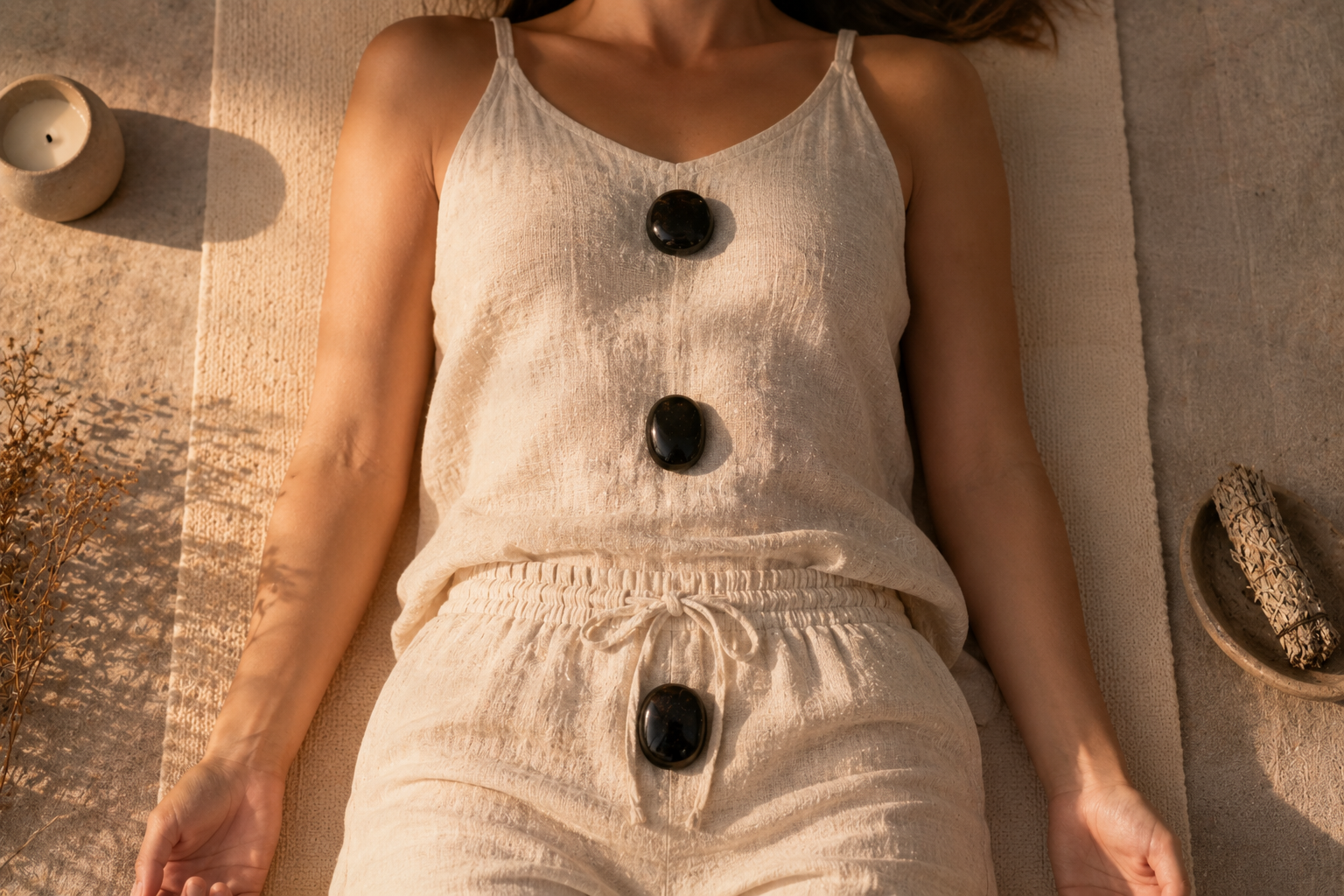
The most common practice is to lie on your back and set the stone over the relevant area for a few minutes, breathing slowly:
- Root, at the base of the spine, near the tailbone, or on the floor between your feet;
- Sacral, on the lower belly, two fingers below the navel;
- Solar plexus, at the pit of the stomach;
- Heart, center of the chest, over the breastbone;
- Third eye, center of the forehead, lying down;
- Crown, placed on the floor just above the top of the head.
Five to ten minutes is enough to start. Regularity matters more than length. The full session walkthrough is in my article on obsidian meditation.
Cleanse your stones after these sessions: smoke, a brief rinse under cool water, or a rest on a quartz cluster, then recharge under moonlight. Everything's in my guides to cleaning obsidian and cleansing and charging.
Which piece for which chakra
Jewelry has one advantage over a stone laid on the body: it works all day, without you having to think about it. The rule is simple, wear the stone as close as possible to the center it's meant for.
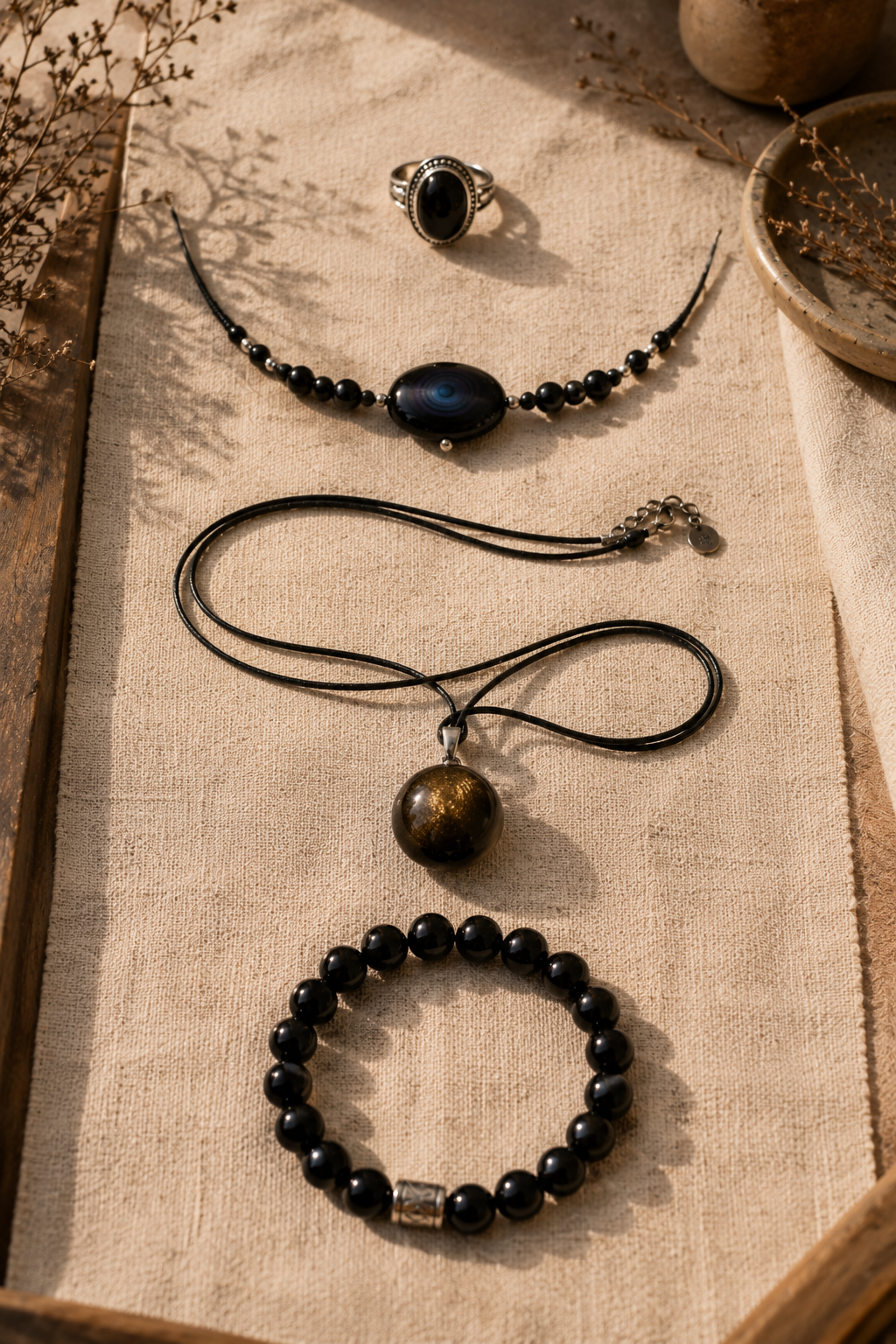
- A bracelet or ring stays close to the body and hands, ideal for grounding and everyday wear;
- a long pendant falls toward the solar plexus;
- a short necklace sits at heart and throat height;
- for the third eye, hold a stone in hand during a session rather than wearing it.
If you're unsure on sizing, the jewelry size guide will help. And to support a specific center, obsidian pairs beautifully with other stones: see my guide to crystal pairings with obsidian, including the obsidian and tiger's eye duo, which works especially well across the root-to-solar-plexus axis.
Precautions & good practice
Obsidian is a direct stone. Tradition describes it as a mirror that can surface what we'd rather not look at. In practice: go slowly, keep sessions short, and if a strong emotion comes up, let it be there and stop if you need to. I've given this its own article: obsidian safety and precautions.
If you're drawn to chakra work because of something heavy, anxiety, grief, a health concern, please treat the stone as company, not care. It sits alongside a conversation with a doctor or therapist; it doesn't replace one.
Keep in mind, the chakras and properties described here come from spiritual tradition and crystal healing, a wellness approach based on belief. They are not medical claims, they cure no disease, and they never replace the advice of a healthcare professional. More on this in our medical disclaimer.
Frequently asked questions
Which chakra is obsidian for?
Does obsidian work on all seven chakras?
Which obsidian is best for the solar plexus?
Is there an obsidian for the throat chakra?
Which obsidian is best for the third eye?
Can you work on several chakras at once?
How do you know if your root chakra is unbalanced?
Your obsidian, chakra by chakra
Bracelets, necklaces, pendants and rings in natural obsidian, handmade in France, a variety for every center.