
Description
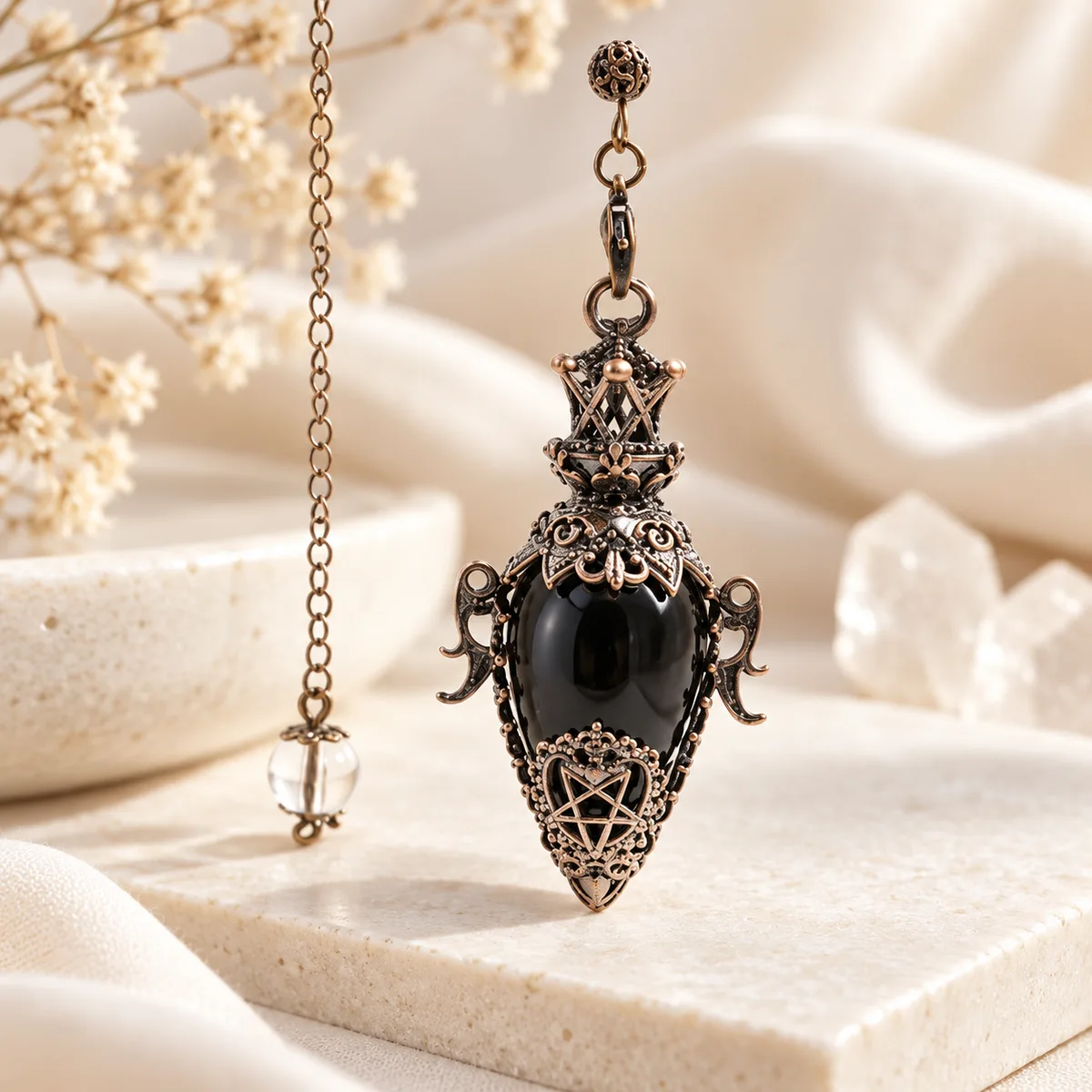
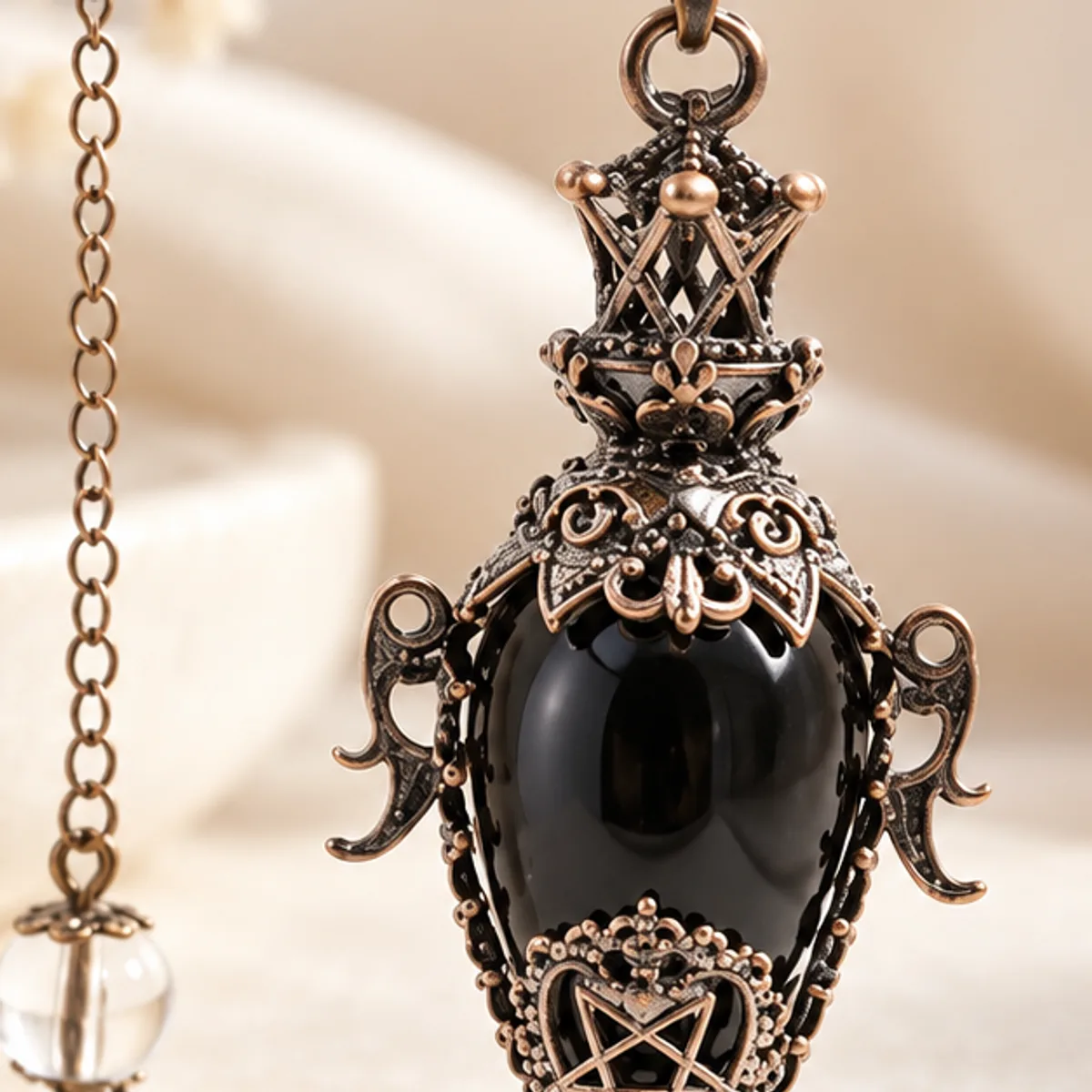
An obsidian pendulum, capped with an openwork bronze setting and hung from a chain ending in a holding bead. It is not a pendant: it is a dowsing object, and it is not worn at the neck.
Dowsing is a divinatory practice. Its effects are explained by the ideomotor effect, a mechanism documented since the nineteenth century: involuntary micro-movements of the muscles, produced by the expectation of whoever holds the thread, are enough to start and sustain an oscillation. That takes nothing away from the object, it simply states what is happening. I am not selling a measuring instrument and I do not claim otherwise.
What a good pendulum genuinely has is three mechanical qualities. It must be symmetrical about its axis, otherwise it always sets off in the same direction. It must weigh between fifteen and thirty grams: below that it is too sensitive to drafts, above it damps out too fast. And its chain must be supple, with no stiff point. This one meets all three, and that is all I can guarantee. The pendants meant to be worn are here.
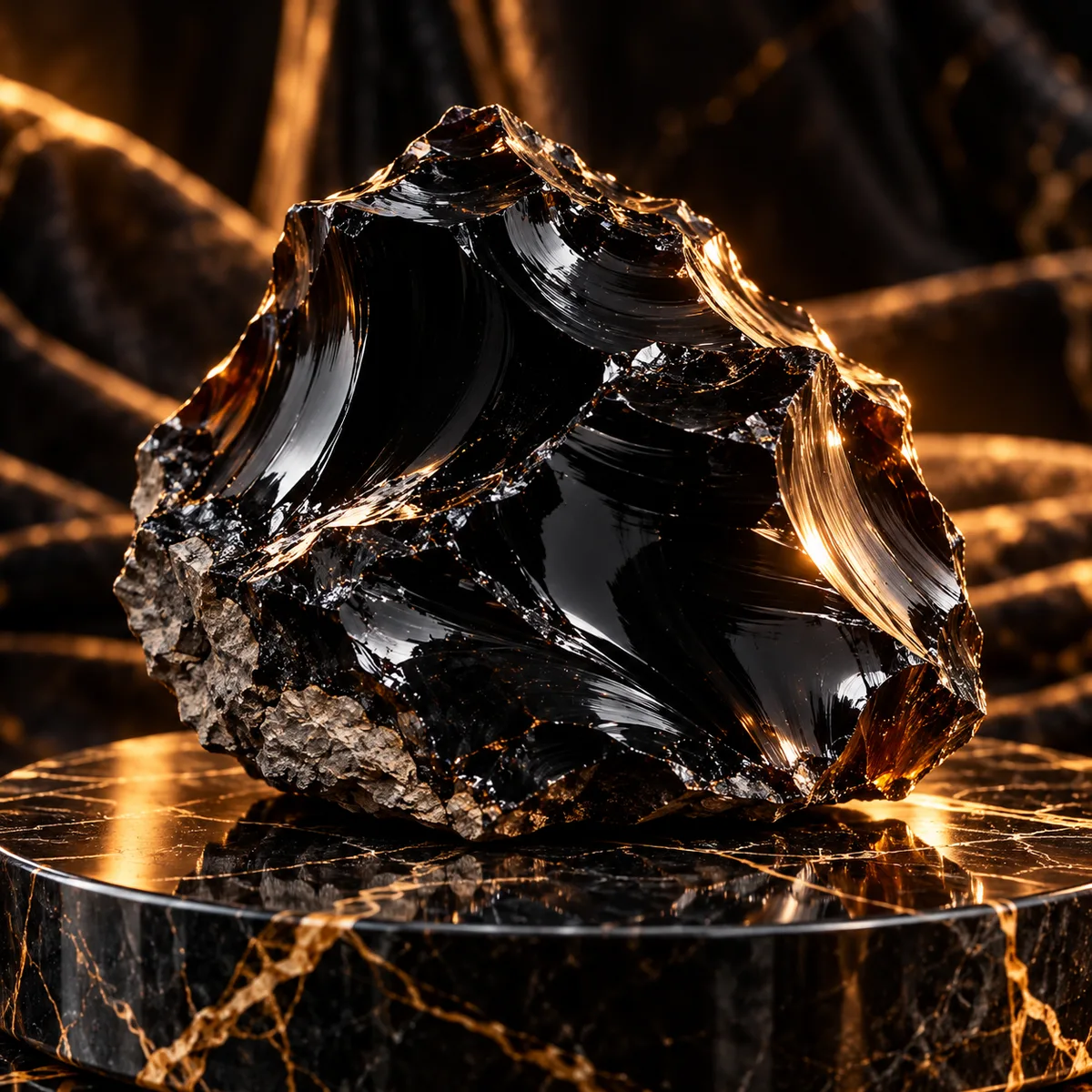
The reservation is the obsidian itself. A pendulum falls, that is in its nature: it slips from the fingers, it knocks the edge of a table. Obsidian is a volcanic glass that shatters on impact, and the lower tip is what lands first. It is the most fragile material you could choose for this use, and I say so before the purchase rather than on the first return. Use it over a table, not standing in the middle of a tiled room.
Crystal lore ties obsidian to grounding. Dowsing, for its part, has no scientific validation, and blind trials have never shown a result better than chance. An object like this heals nothing and detects nothing. I have gathered separately what tradition attributes to obsidian, in the conditional from start to finish.
- Genuine black obsidian, openwork bronze setting.
- Symmetrical about its axis, about 25 g: the two mechanical qualities that count.
- Supple chain with a holding bead.
- Obsidian shatters on impact: use it over a table, never standing.
What to know before you use it
 |  |  |
The specifications
- Stone
- Black obsidian, volcanic glass
- Setting
- Openwork bronze
- Stone length
- About 45 mm / 1 3/4 in
- Total weight
- About 25 g / 0.9 oz
- Chain
- Fine chain with a holding bead
- Use
- A dowsing object, not worn at the neck
- Brand
- Bijoux Obsidienne

A pendulum is judged on three measurements, and none is magic
The only thing you can really adjust on a pendulum is its balance, and that is checked with no instrument at all. You hang it still and wait thirty seconds: if it starts turning on its own, always the same way, the stone is not symmetrical about its axis of suspension. A setting off centre by half a millimetre is enough. You unglue it and set it back. It is an ordinary mechanical adjustment, and it is the only one I make on this object.
This pendulum is in the catalogue because people ask me for it, and because there is no reason to refuse to sell an object people want, as long as I promise nothing about it. I simply insisted on writing down what it is and what it is not. The pieces meant to be worn are here and the obsidian guide explains the stone.
You hang it and wait thirty seconds. If it turns on its own, the setting is off centre by half a millimetre.
Obsidian does not mind water, but bronze tarnishes and leaves a green mark on damp skin. Wipe the setting after use. The stone shatters on impact: keep the pendulum in its pouch and do not leave it hanging from a hook. Never an ultrasonic bath. Cleaning an obsidian piece covers the rest.