What Crystals Should You Not Pair With Obsidian?
None, if we're talking energy: there's no crystal that's "forbidden" with obsidian, and the incompatibility lists floating around online are conventions, not laws. There is, however, one real and perfectly measurable incompatibility, hardness. Here are the crystals not to pair with obsidian for actual reasons, the ones rarely mentioned, and the false rules worth forgetting.
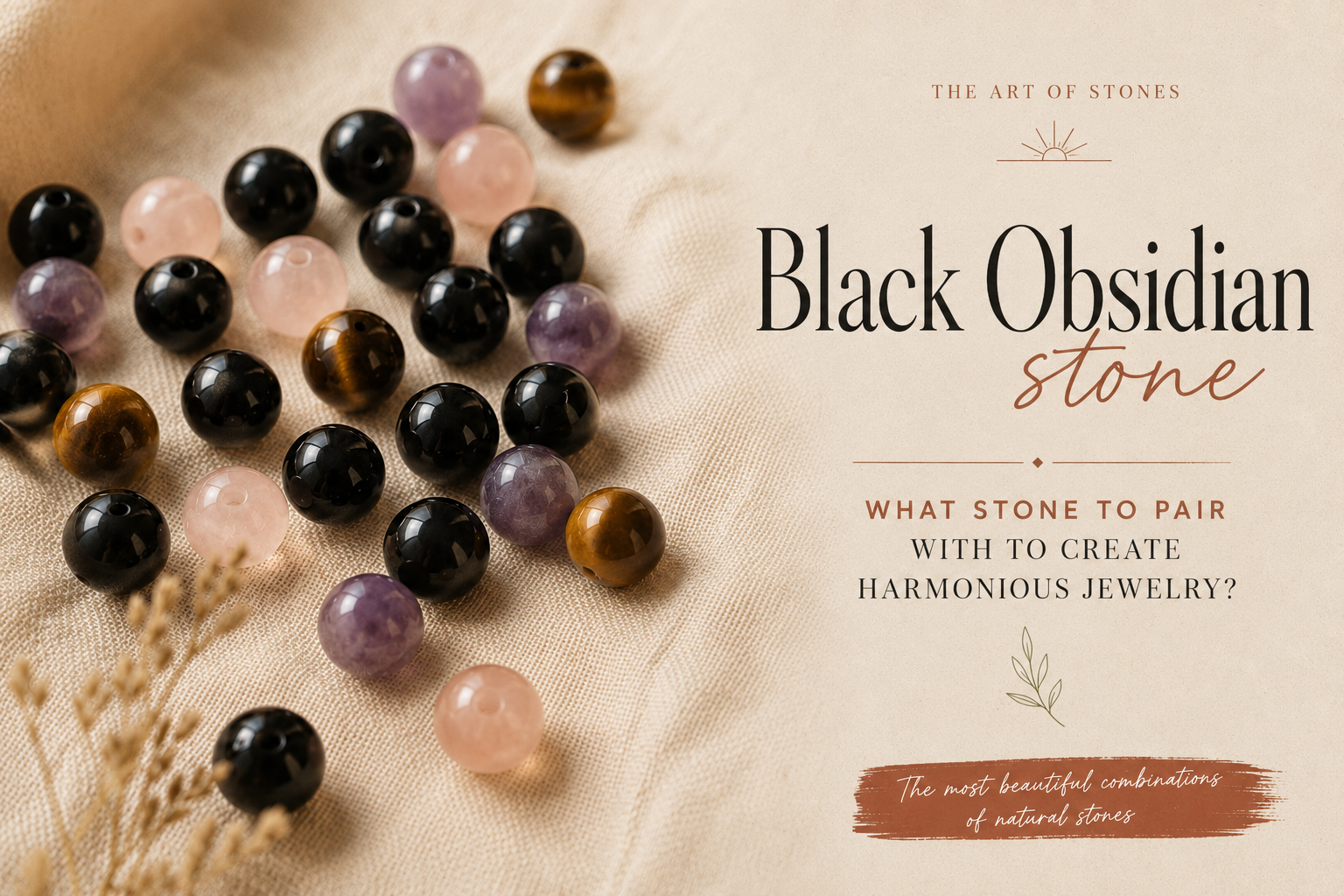
The question worth asking
Search "crystals incompatible with obsidian" and you'll find confident lists, often contradicting one another from site to site. On one page, amethyst is off-limits; on the next, it's the recommended pairing. That contradiction alone should be a signal.
Let's be direct: no energetic incompatibility between two crystals has ever been demonstrated, for the simple reason that the properties themselves come from belief rather than measurement. Crystal healing's "forbidden pairings" are conventions passed between practitioners, sometimes useful as guideposts, never laws of nature.
What does exist, and what almost nobody mentions, is that a harder stone scratches a softer one. Since obsidian is one of the softer stones sold commercially, the interesting question isn't "which crystal would cancel its energy" but "which crystal will actually damage mine." That's the right place to start.
I hesitated for a while before writing this article, because it would have been easier to copy the lists everyone else publishes. But I'd rather give you a rule you can verify yourself than a prohibition I couldn't explain if you asked me why.
The one real incompatibility: hardness
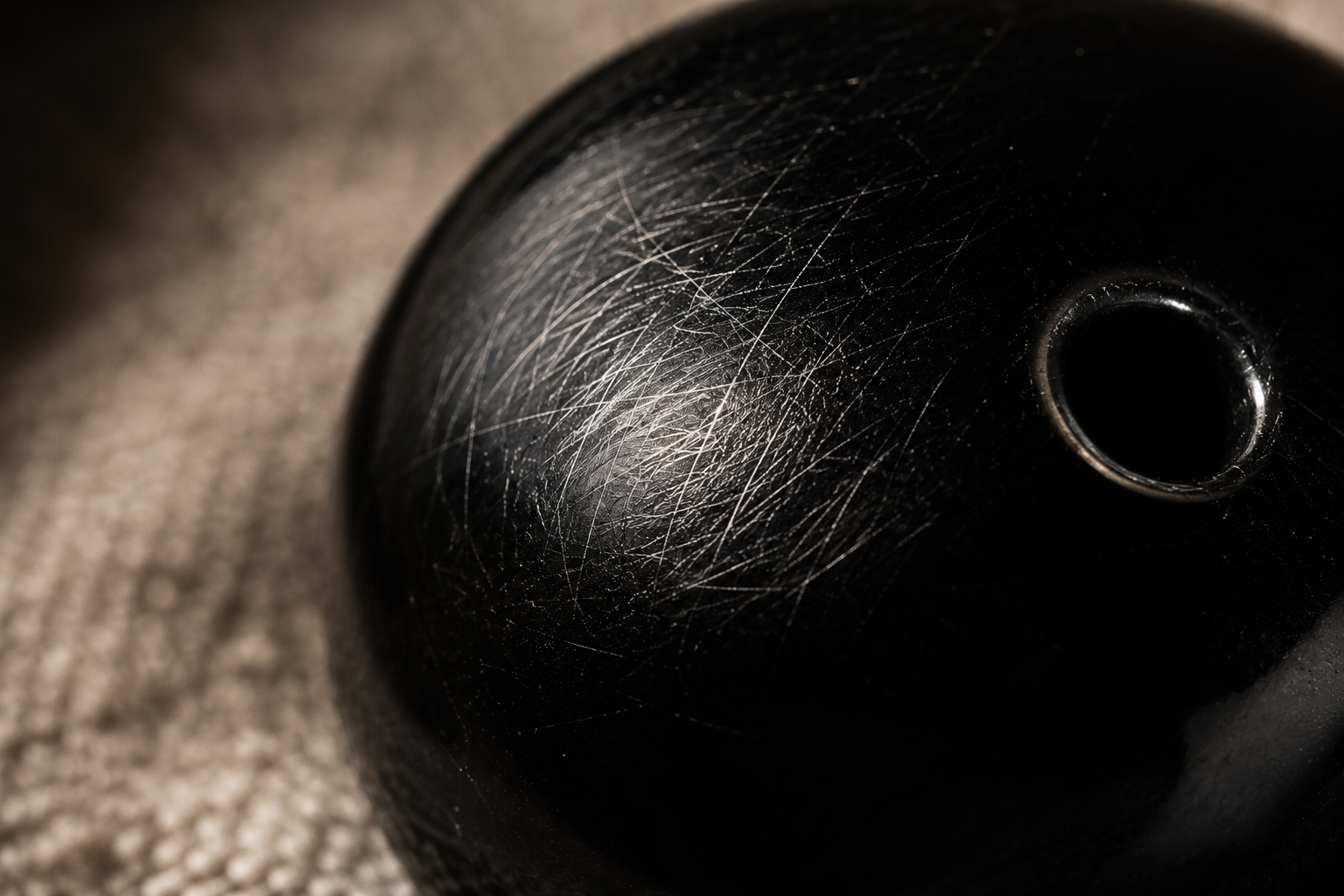
Obsidian is a volcanic glass, and glass scratches. It sits between 5 and 5.5 on the Mohs scale, about the same as a knife blade. Any stone higher on that scale will mark it eventually, just from ordinary friction. Here's where the most common companion stones fall:
| Stone | Hardness (Mohs) | Risk to obsidian |
|---|---|---|
| Obsidian | 5 to 5.5 | - |
| Lapis lazuli | 5 to 6 | Low |
| Hematite | 5 to 6 | Low |
| Turquoise | 5 to 6 | Low |
| Labradorite | 6 to 6.5 | Moderate |
| Tiger eye | 6.5 to 7 | Real |
| Amethyst, rose quartz, clear quartz | 7 | Real |
| Garnet | 6.5 to 7.5 | Real |
| Black tourmaline | 7 to 7.5 | High |
| Black spinel | 7.5 to 8 | High |
Don't over-read this table. On a well-made bracelet, beads are round and polished: they touch at a single point, roll against each other, and wear takes years to become visible. The risk is real but slow, and it doesn't rule out any pairing.
I'll just say it: I string tiger eye with obsidian myself, and tiger eye is the harder of the two. Over a decade, my black beads will show wear before the gold ones do. That's a trade-off I accept because the pairing works, but it is a trade-off, and I'd rather tell you than let you discover it.
The actual danger: your jewelry box
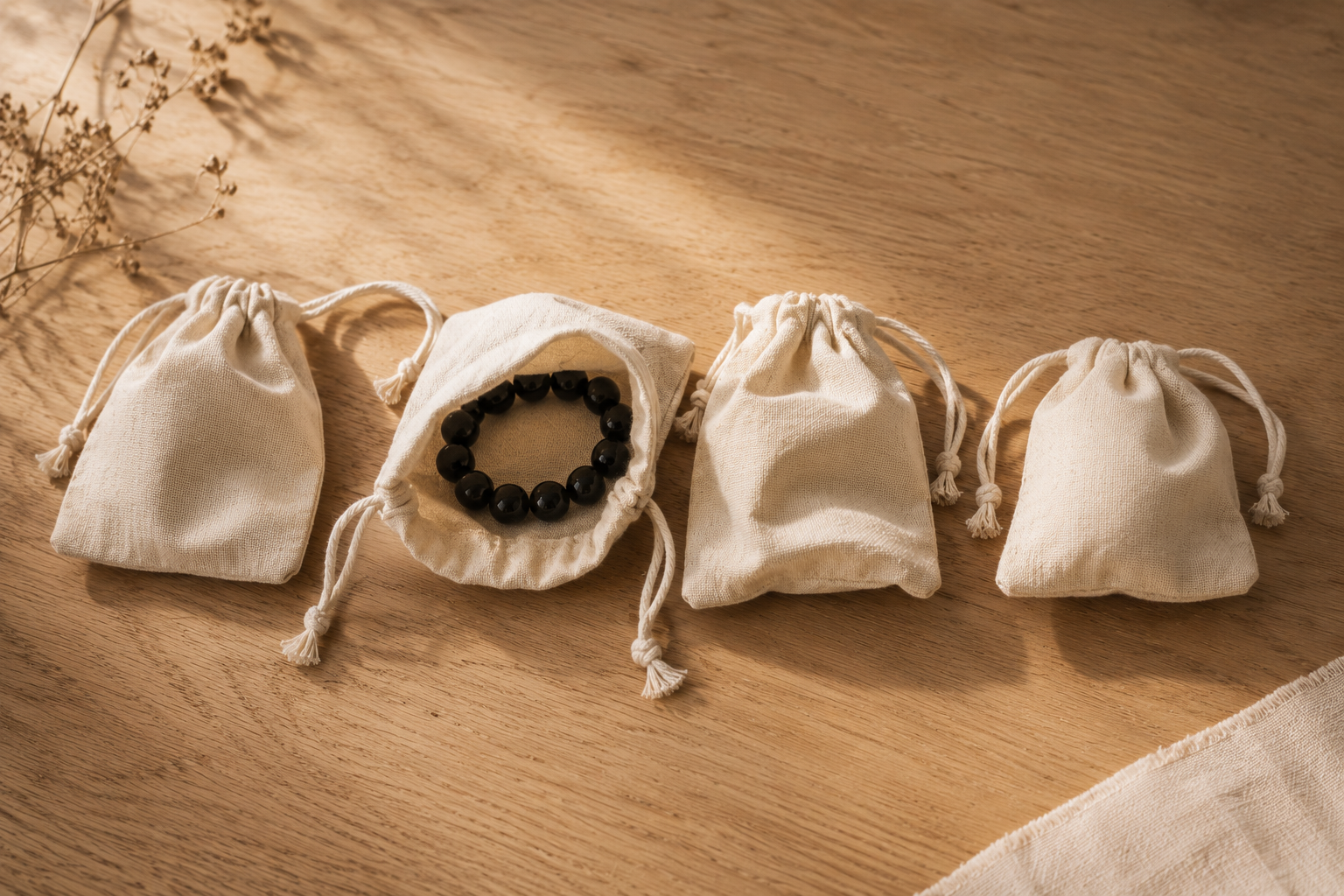
This is the point I really want to land. Storage damages stones more than wearing them ever will.
A bracelet worn on the wrist experiences gentle, predictable contact. The same bracelet tossed into a drawer with six other pieces takes hits, cross-friction, and metal clasp edges. A silver chain, a set ring, a quartz pendant, all of these scratch obsidian far faster than a full year of wear ever would.
The rule is simple and costs the price of a few fabric pouches: one piece, one compartment. Store flat, away from direct light and heat. If you take just one thing from this article, take this, it does more good than every energetic incompatibility list combined. Full care steps are in my guide to cleaning and caring for obsidian.
In short, you can wear almost any two stones together. What you shouldn't do is store them together. The distinction is small, but the difference over ten years is enormous.
What tradition advises against
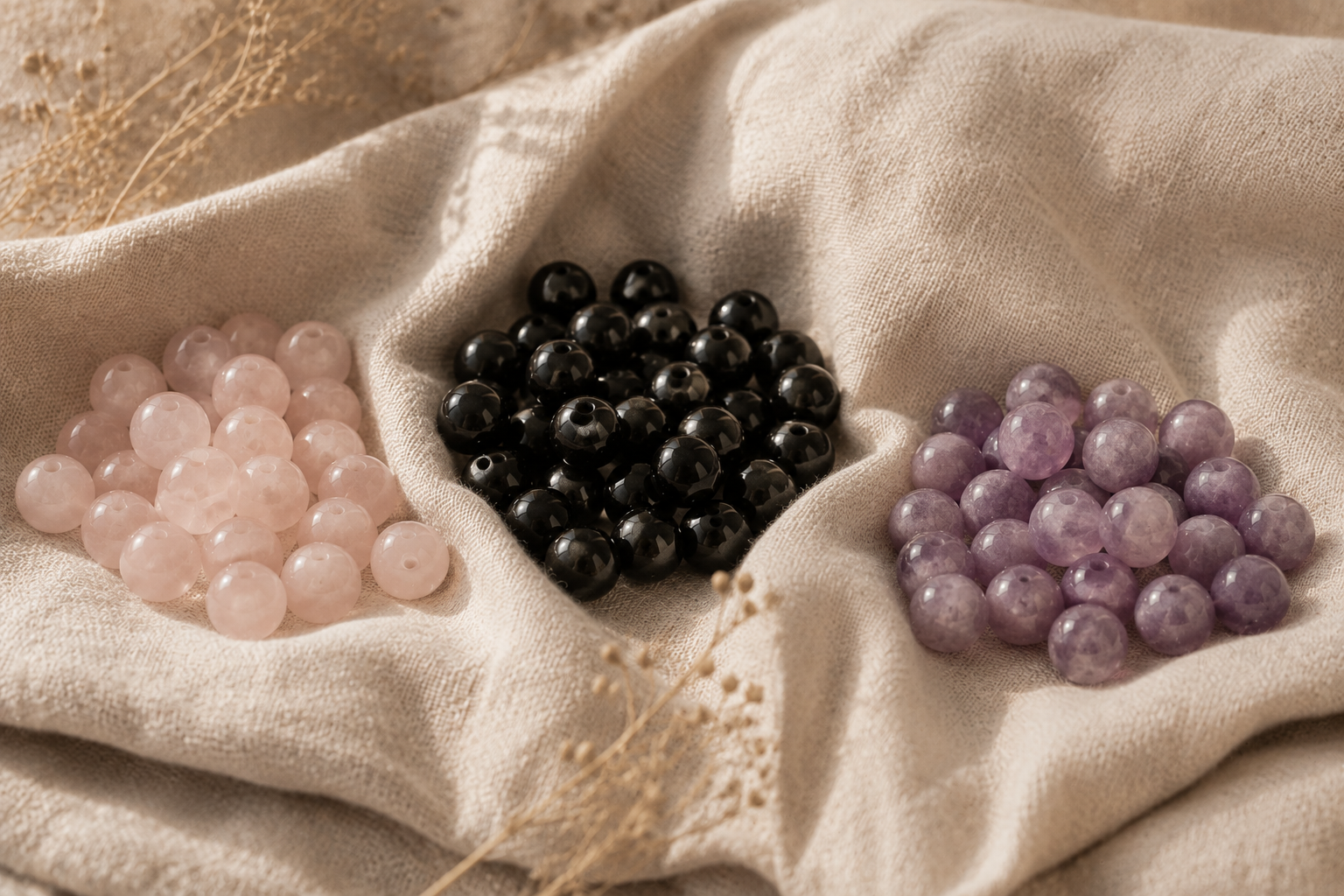
That said, practitioners aren't making things up out of nothing. Some cautions have an internal logic worth taking seriously, as long as you treat them as practice guidelines rather than hard prohibitions.
Stacking too many intense stones
Black obsidian, black tourmaline, hematite, red jasper, all described as intense and grounding. Piling them on doesn't multiply the effect; it just adds weight. Most practitioners suggest keeping it to one or two, especially for beginners.
Highly stimulating stones, in the evening
Carnelian, garnet, tiger eye, associated with drive and action. Nothing stops you from wearing them with obsidian, but if your focus is sleep or calm, the combination works against you. It's a question of timing more than compatibility.
Too many stones at once
The most consistent rule across schools of thought: no more than two or three stones for a single intention. Beyond that, it becomes unclear what's producing what, true whether you're meditating or wearing a bracelet.
None of these guidelines are mysterious: they all amount to saying a clear intention beats a pile of stones. I go deeper on the subject in my guide to crystal pairings with obsidian.
✦ One stone is often enough
My obsidians, variety by variety
Loading pieces…
The false rules that circulate
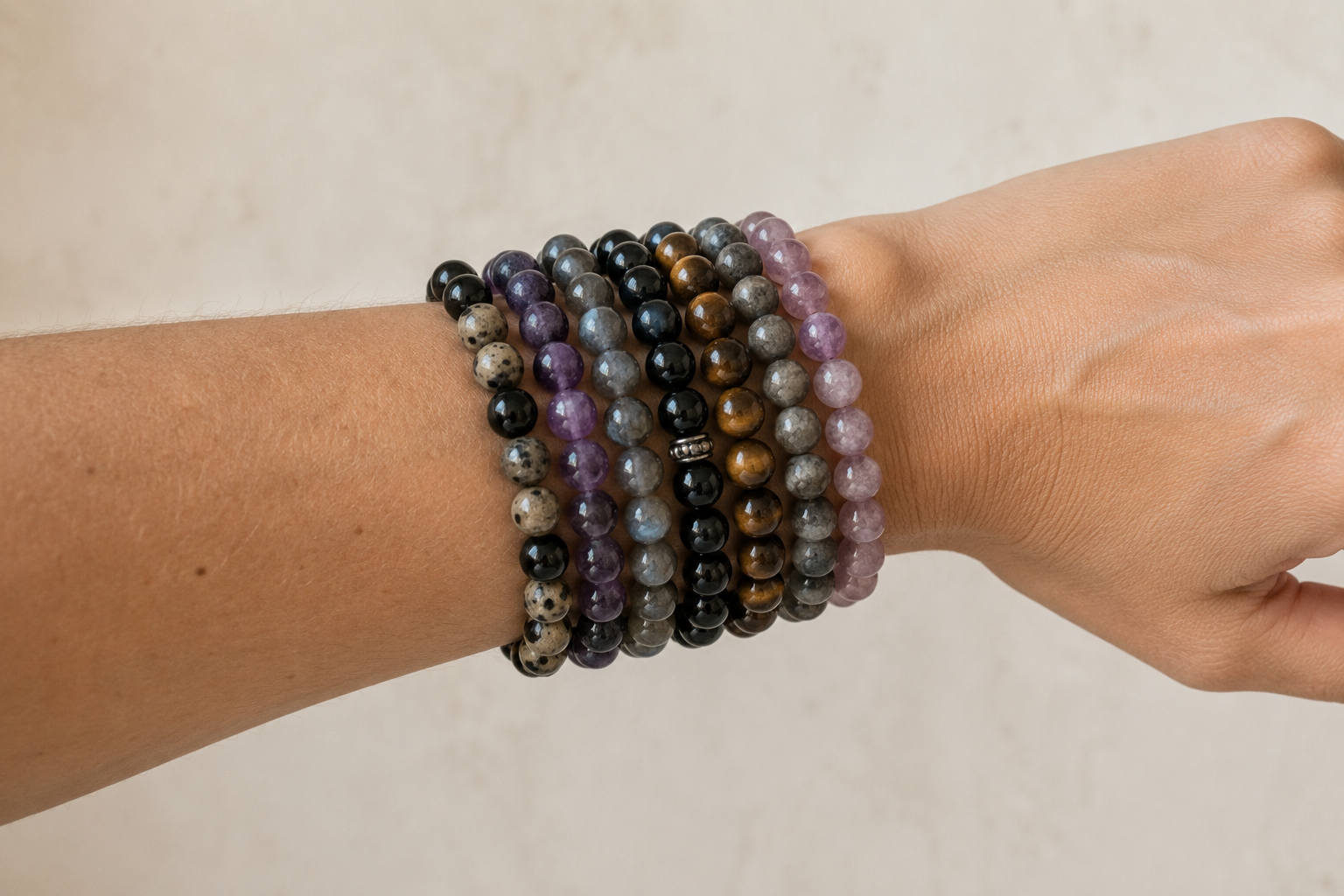
Four claims keep resurfacing and deserve to be put in their place:
- "Obsidian cancels out other crystals' energy." Nothing in tradition actually says this. Obsidian is described as a mirror turned inward, not a vacuum. This idea seems to come from confusing it with cleansing, where certain stones are indeed used to "clear" others;
- "You shouldn't mix crystals from different chakras." Chakra correspondences are meant to guide a practice, not forbid combinations. The most common approach is actually to work from the base upward, which means pairing different centers by design;
- "Obsidian and amethyst are incompatible." This is the exact opposite of what most practitioners suggest: amethyst, rose quartz, and labradorite are traditionally paired with obsidian precisely to soften its directness;
- "Black stones cancel each other out." Color isn't an energetic category. Obsidian and black tourmaline are, in fact, often worn together, with roles described as complementary, a shield on one side, a mirror on the other.
Good instinct, when a rule is presented without explanation, ask where it came from. A serious practitioner will be able to say "in this tradition, it's believed that..." A claim with no source is rarely more than a copy-paste.
Pairings that actually work
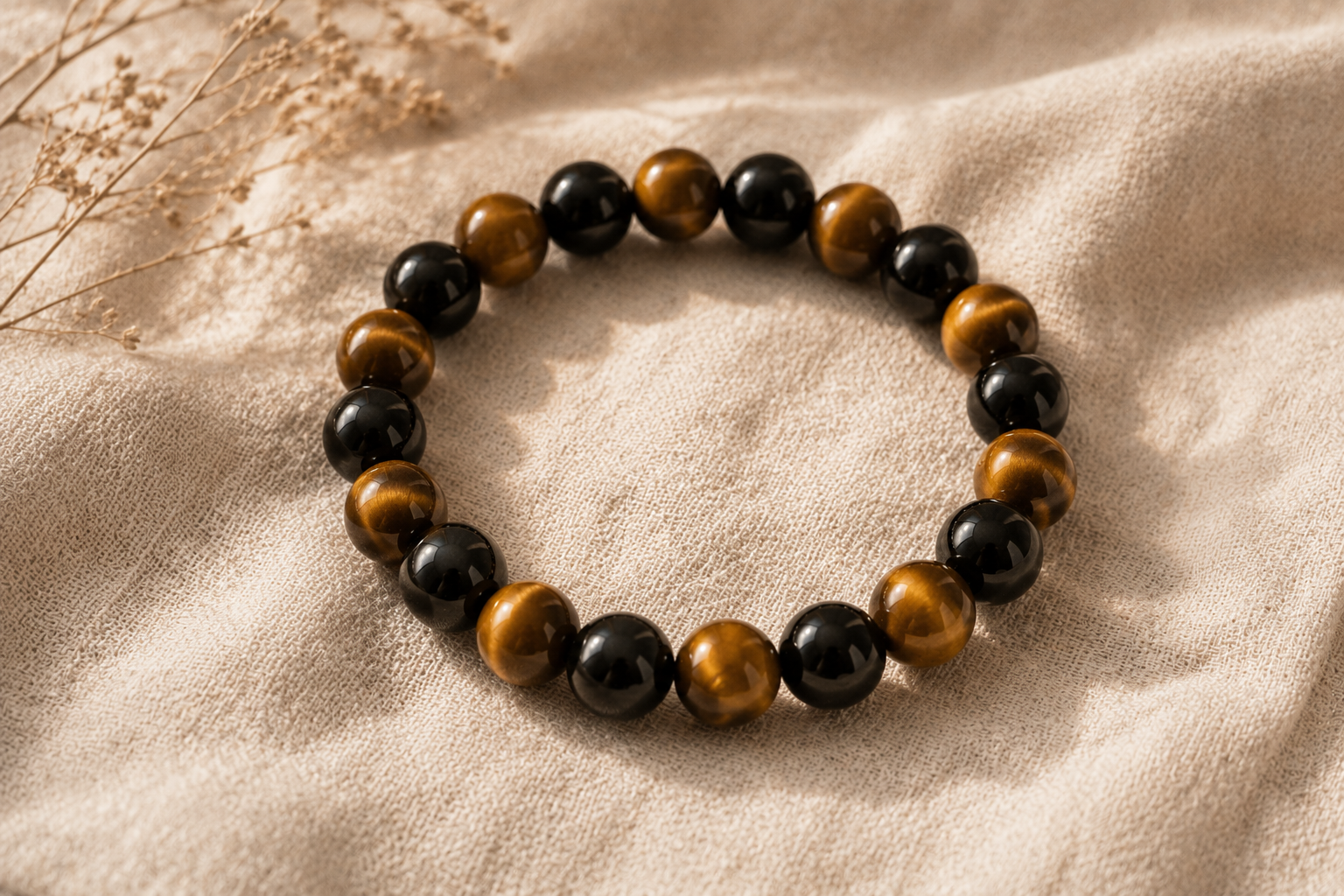
Rather than focusing on what to avoid, here's what actually works. Three groups keep coming up, each with its own logic:
To soften
Rose quartz, amethyst, labradorite. Tradition credits them with a gentler, more enveloping quality that tempers obsidian's directness. This is the pairing to reach for if obsidian feels too intense on its own.
To ground
Hematite, red jasper, tiger eye. All very "earth," they reinforce the grounding and protection work rather than working against it.
The most requested duo remains obsidian and tiger eye, especially strong along the root-to-solar-plexus axis. Black tourmaline comes next, for anyone looking for a more defensive kind of protection. Full details are in my guide to crystal pairings.
If you're new to the stone, the full picture, origin, varieties, properties, care, is covered in the complete obsidian guide.
Precautions & good practice
Three rules are enough, and two of them are purely physical. Store separately, the single most useful habit. Limit yourself to two or three stones for any one intention, whether meditating or wearing jewelry. And go slowly: obsidian is described as a direct, unfiltered stone, one you get used to over time. If a pairing feels uncomfortable, remove a stone rather than adding a third to compensate.
Remember to cleanse and charge your stones regularly, especially after purchase. And if obsidian feels too intense, the subject is addressed directly in obsidian safety and precautions.
Good to know, the hardness values cited here are measurable data. The properties and energetic compatibilities attributed to crystals, on the other hand, come from spiritual traditions and crystal healing, a wellness practice grounded in belief rather than science. They are not medical claims, do not treat any condition, and never replace advice from a healthcare professional.
Frequently asked questions
What crystals should you not pair with obsidian?
Are there really incompatible crystals?
Can you pair obsidian and amethyst?
Can you wear obsidian and black tourmaline together?
How many crystals can you pair together?
Does obsidian cancel out other crystals' effects?
How should you store crystals to avoid scratches?
Your obsidian, no false promises
Bracelets, necklaces, pendants, and rings in natural obsidian, handmade in France, delivered with honest care advice.