Description
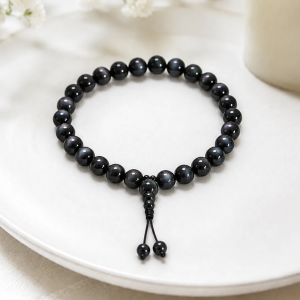
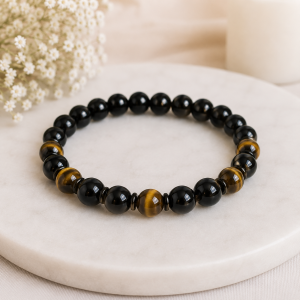
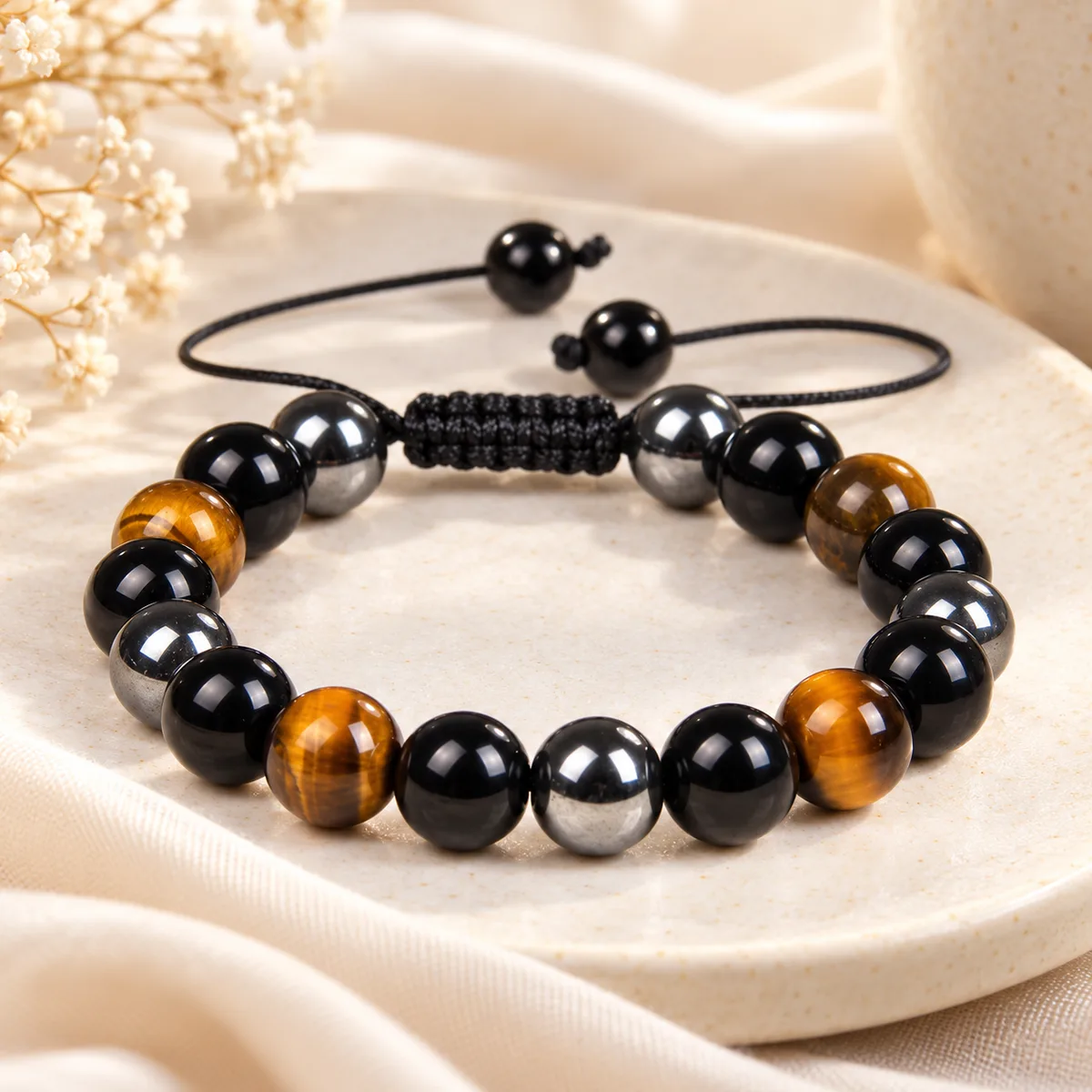
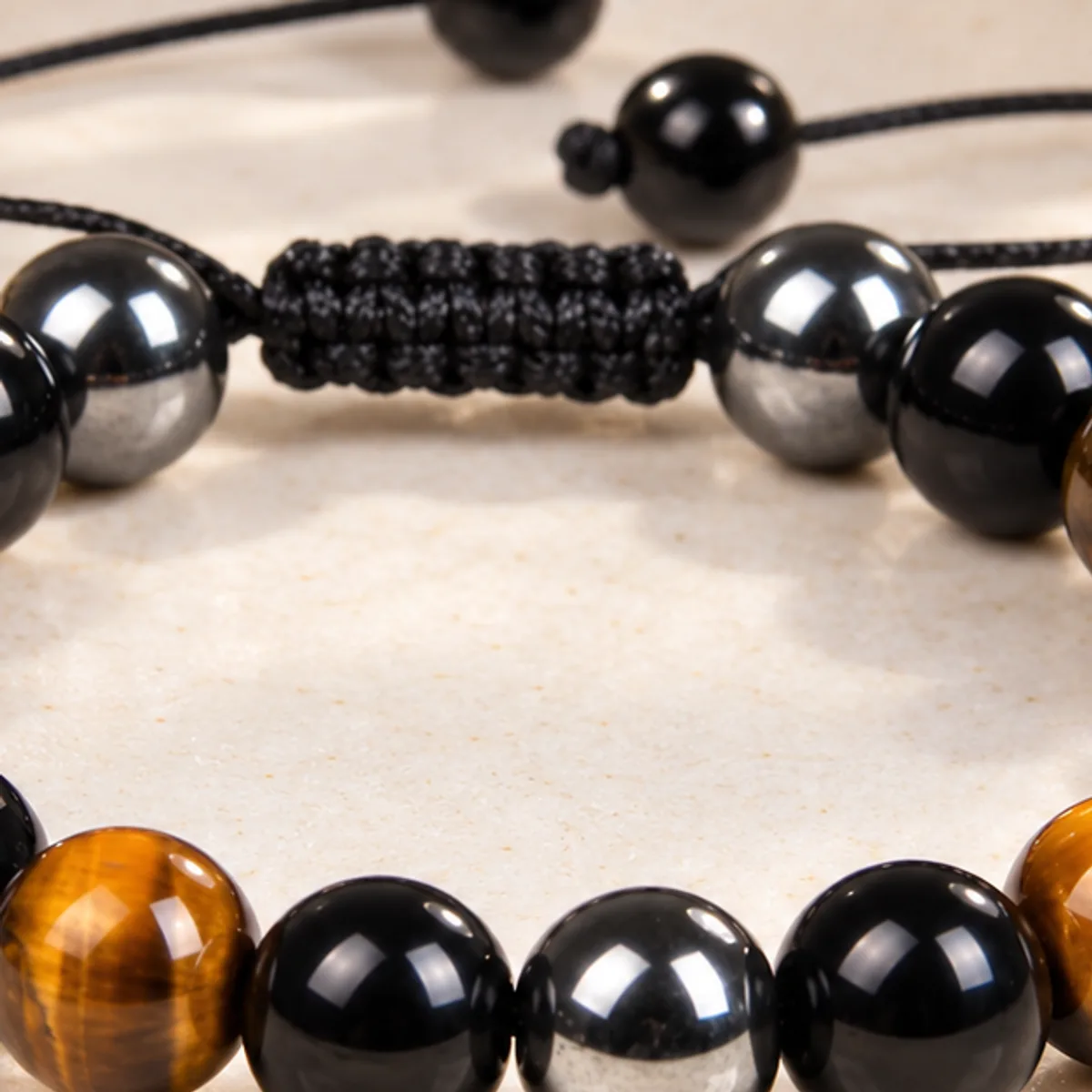
Three stones in 10 millimeter beads, black obsidian, grey hematite and brown tiger’s eye, strung on a cord with a sliding knot. You pull the two ends to open it and close it one-handed. No elastic to replace.
The trio is not a decorative assembly: each of the three stones belongs to a different family. Obsidian is a volcanic glass with no crystal structure. Hematite is an iron oxide, hence its density and metallic glint, and it is the heaviest of the three. Tiger’s eye is a quartz that replaced fibres of blue asbestos, and those fossil fibres, left parallel, are what produce the moving band of light. Three materials, three hardnesses, three behaviors. Pairing obsidian with other stones covers those mixtures.
This model solves a problem elastic does not. An elastic strand has one fixed wrist size and you have to pick it right; a little large and it turns, a little small and it marks. The sliding knot adjusts from fifteen to twenty-two centimeters, which covers almost every wrist and lets you wear it tight by day and looser in the evening. Braided cord does not slacken the way elastic does. The other bracelets are here.
The cost of a sliding knot has to be stated. It loosens by itself if you never tighten it, exactly like a shoelace, and you have to think of it once a week. And the cord is braided thread, not leather: it frays if you keep sliding it over the edge of a table. Reckon on three to four years before it needs remaking, which I do free of charge.
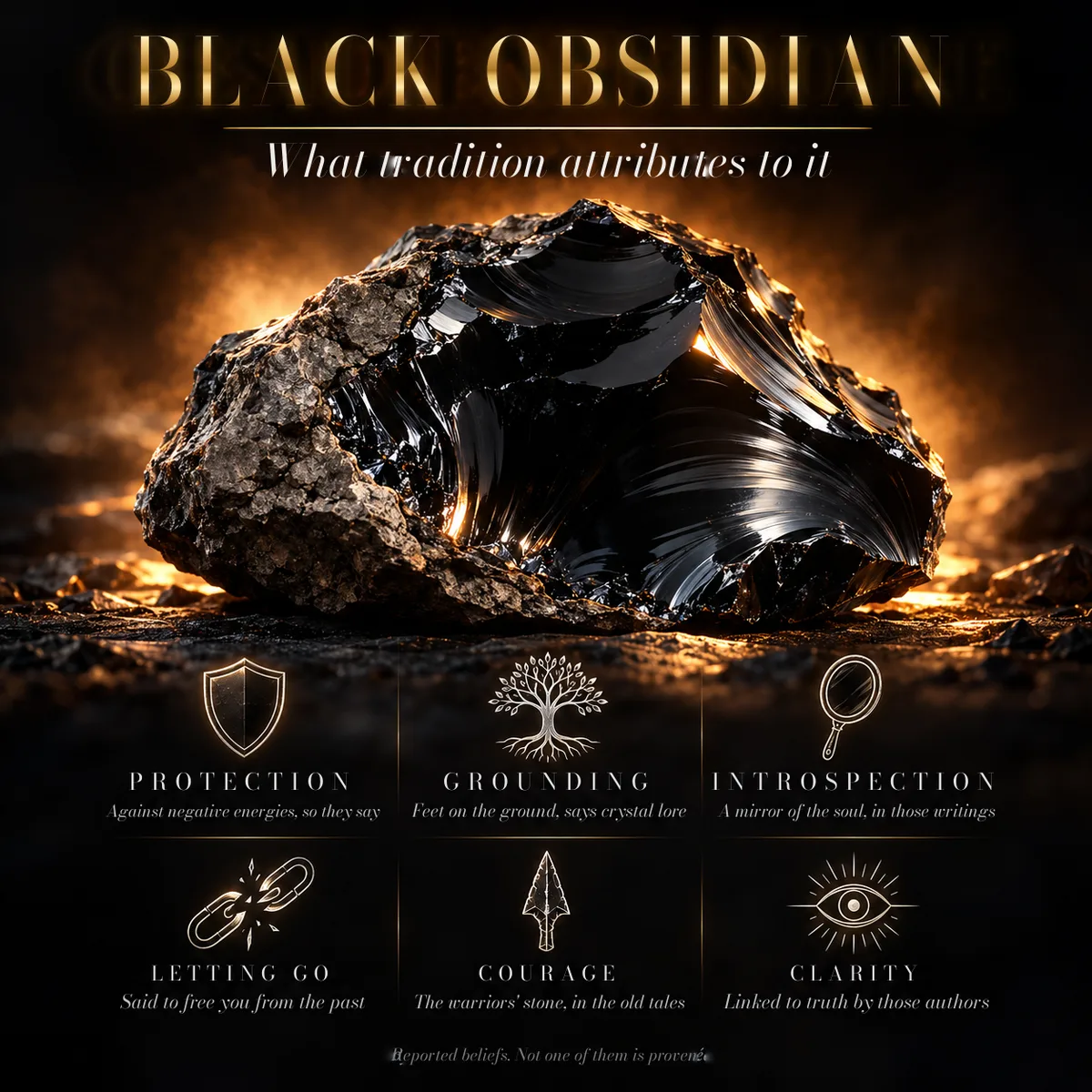
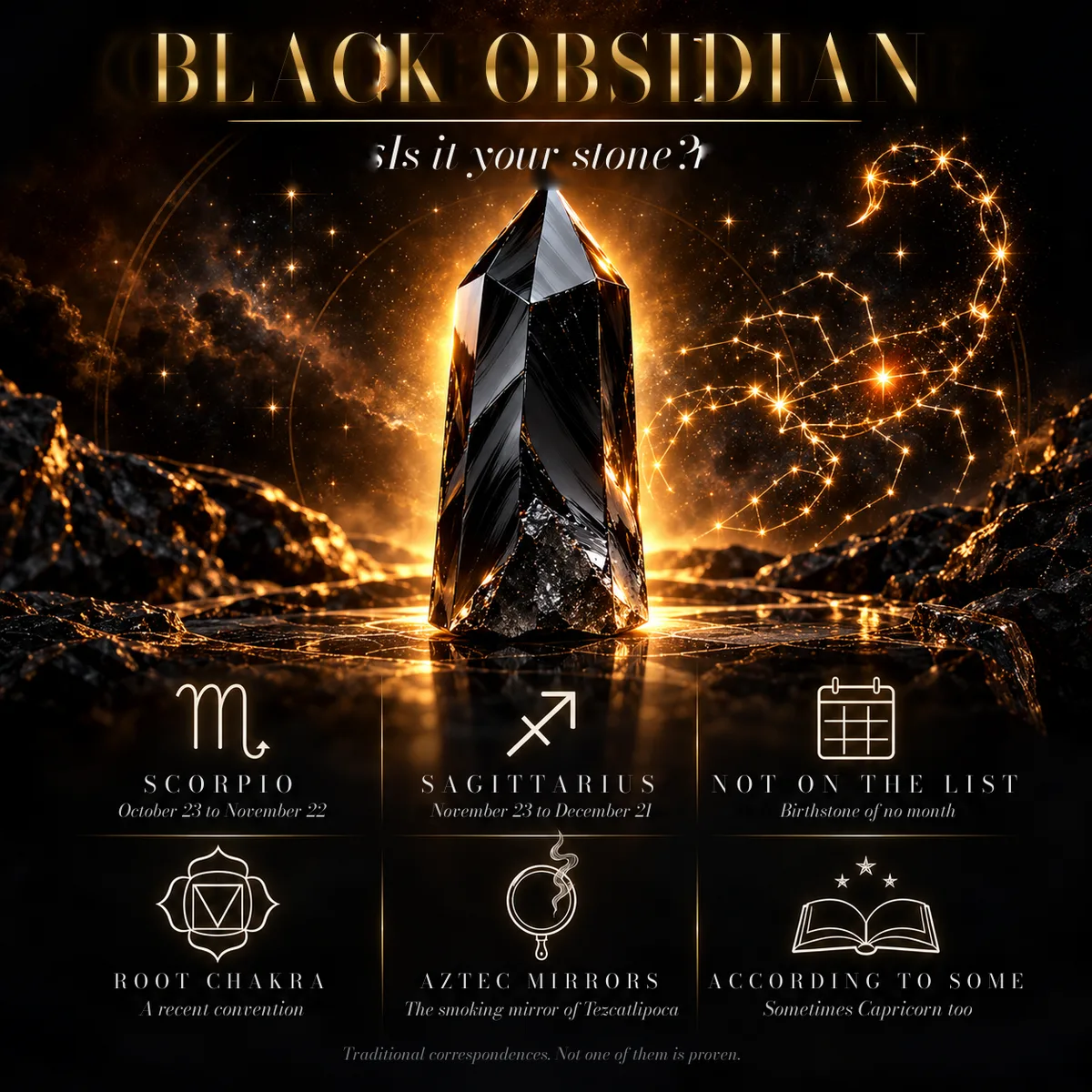
Crystal lore speaks of triple protection for this assembly and gives each stone a distinct role. None of that is proven, and no piece of jewelry heals anything. I have gathered separately what tradition attributes to obsidian and what it says about pairings, in the conditional from start to finish.
- Three real stones in 10 mm beads: black obsidian, hematite, tiger’s eye.
- Sliding knot adjustable from 15 to 22 cm, no elastic to replace.
- Hand-strung in France on braided cord.
- Tightens one-handed, like a shoelace, and needs a thought once a week.
What to know before you wear it
 |  |  |
The specifications
- Stones
- Black obsidian, hematite, tiger’s eye
- Bead diameter
- 10 mm
- Wrist size
- Adjustable from 6 to 8 3/4 in (15 to 22 cm)
- Stringing
- Braided cord with a sliding knot, no metal clasp
- Weight
- About 1 oz (28 g)
- Stone origins
- Mexico, Brazil, South Africa
- Gender
- Unisex
- Brand
- Bijoux Obsidienne

The sliding knot, and why it beats elastic
A sliding knot that holds is a square knot worked over two parallel strands, not a simple rolling hitch. The difference is the number of passes: at four it slides too freely and loosens within the day, at eight it no longer moves but no longer slides either. Six passes is the point where it sets with the fingertips and stays put. I redo it when it is not right, and that happens.
The catalog already holds a triple protection bracelet, strung on elastic. This one is the same trio on an adjustable cord, and that is the only change. Take the elastic one if you want to slip it on without thinking, this one if your wrist falls between two sizes or if you have already broken one. Both are here, and the obsidian guide explains the main stone.
Four passes and the knot slips, eight and it no longer slides. Six is the right point.
Obsidian does not mind water, but hematite rusts at the surface if it stays wet, and braided cord takes a long time to dry. Take the bracelet off before the shower and before the pool. A soft cloth is enough, never an ultrasonic bath. Cleaning an obsidian piece covers the rest.