
Description
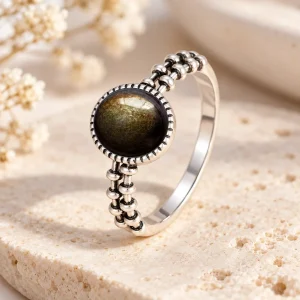
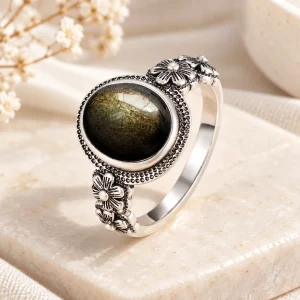
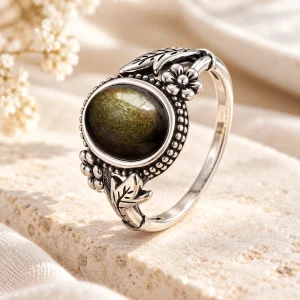
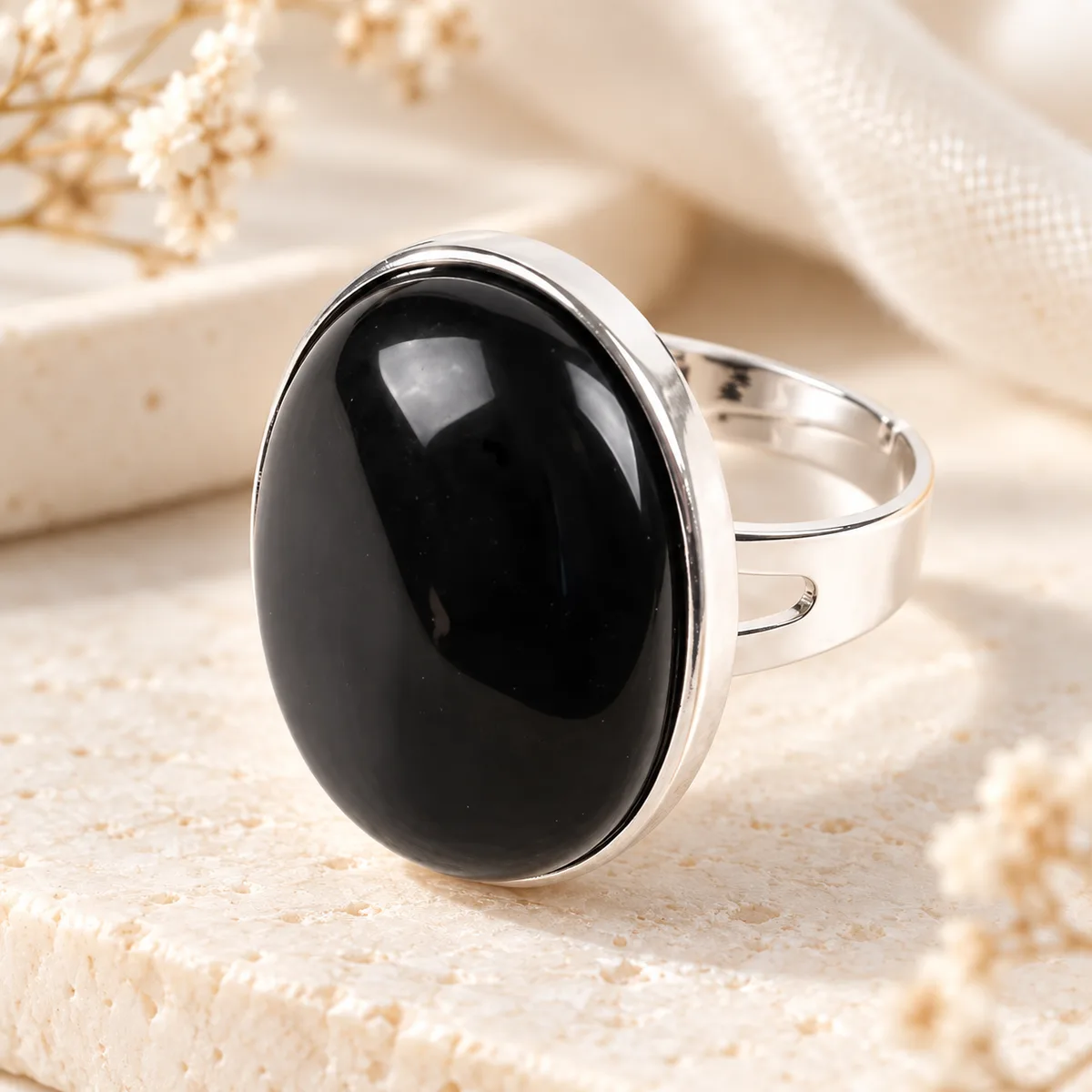
An oval black obsidian cabochon about an inch (25 mm) tall, closed-bezel set in a plain silver frame, on an adjustable band. It is the largest stone mounted as a ring in the whole catalogue.
A stone this size changes the nature of the piece. It is no longer a ring you add to an outfit, it is the one you wear on its own, with nothing else on the hand. The setting acknowledges that: no decoration, no engraving, no surround, just a band of silver running around the cabochon. Anything added would compete with the stone and make it look smaller.
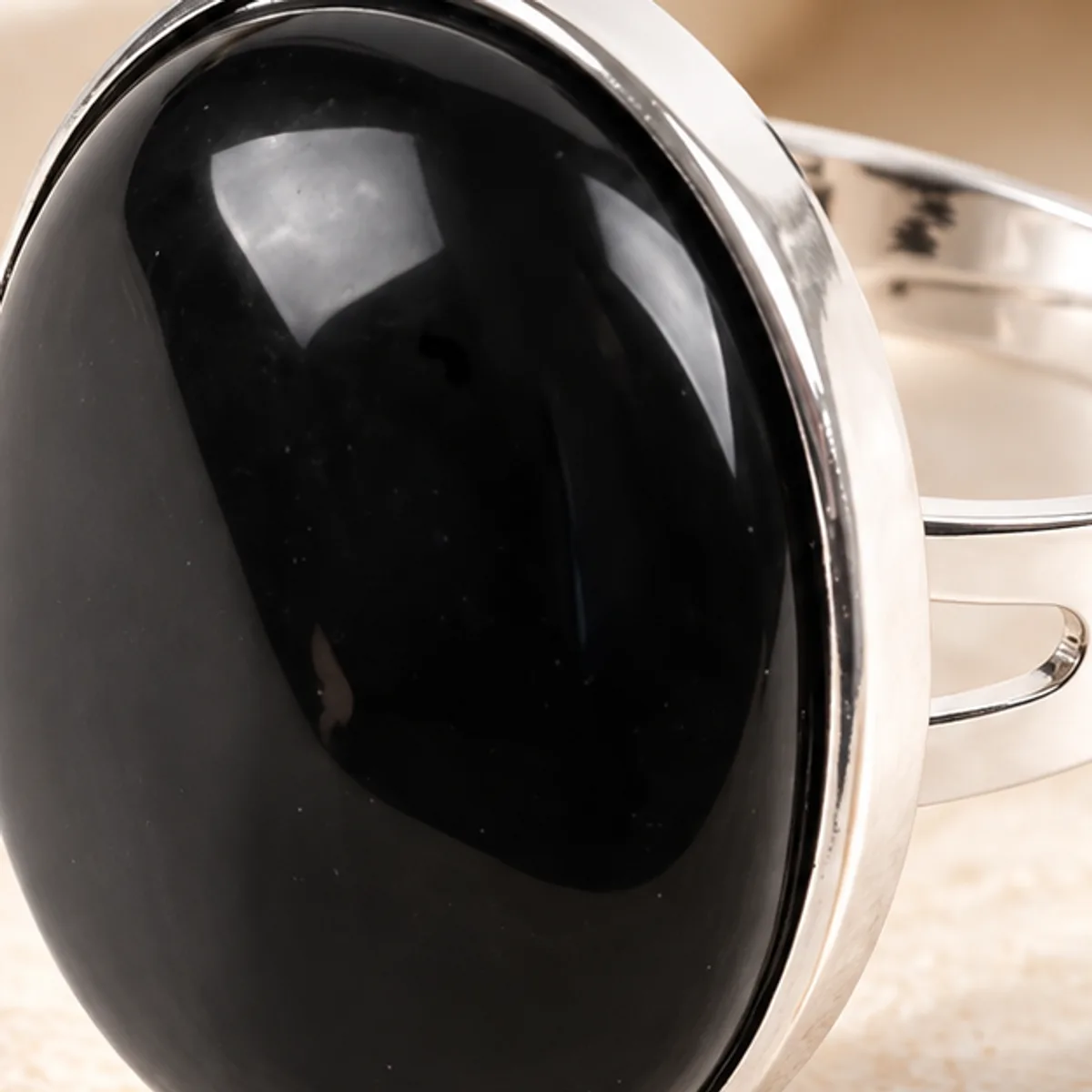
Obsidian suits this format well because it is a glass: its surface is perfectly continuous, with no grain and no vein, and a large cabochon produces a single reflection on it that slides as the hand moves. On a veined stone, a surface this size would mostly show its irregularities. Here it shows a mirror. The other rings are here.
Two reservations. A large head on a fine band turns around the finger, and I set out below why and what prevents it. And a stone that overhangs this much catches everywhere, on pockets, on sleeves, on door handles: every catch is a potential knock on volcanic glass. This is not a working ring. The size guide saves a return.
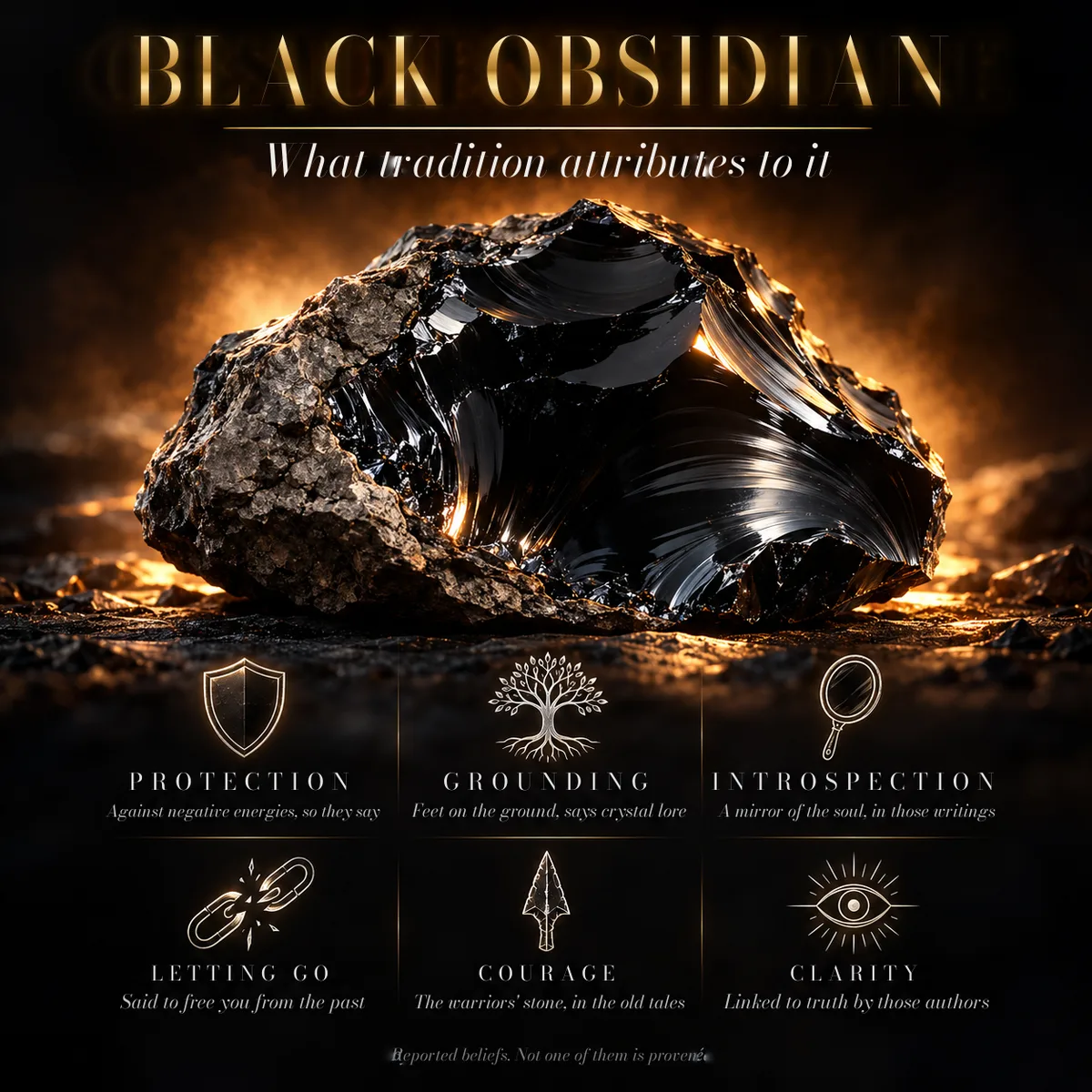
Crystal lore ties obsidian to grounding. None of that is proven, and no piece of jewellery heals anything. I have gathered separately what tradition attributes to obsidian, in the conditional from start to finish.
- Genuine black obsidian, oval cabochon about 25 mm, closed-bezel set with no glue.
- Sterling silver 925, adjustable band, setting with no decoration at all.
- The largest stone mounted as a ring in the catalogue.
- A wide head catches: take it off for any handling.
What to know before you wear it
 |  |  |
The specifications
- Stone
- Black obsidian, volcanic glass, large oval cabochon
- Height of the stone
- About 25 mm / 1 in
- Metal
- Sterling silver 925, S925 hallmark
- Setting
- Closed bezel, no glue
- Adjustment
- Adjustable band
- Gender
- Women
- Brand
- Bijoux Obsidienne

Why a large stone turns around the finger
A ring with a large head turns because the centre of gravity is above the finger and not inside it: as soon as the hand hangs down, the stone tips toward the palm. No well-chosen size corrects that, it is mechanics. What corrects it is the shape of the bottom of the band. A round band rolls; a band flattened under the finger, even slightly, bears on a surface and not on a line, and the ring stays put. That is why the arms of this one widen and become flat as they pass under the finger.
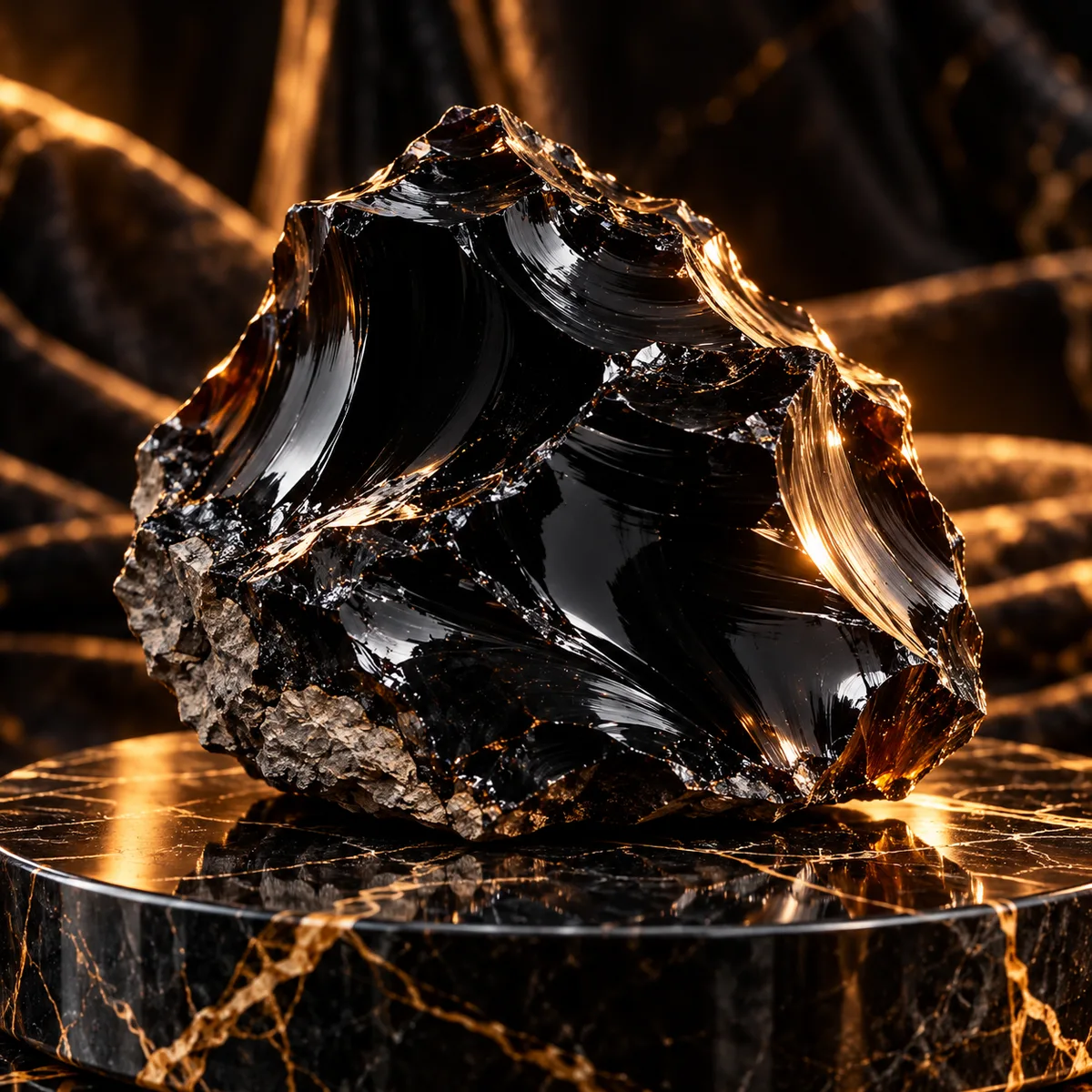
Large obsidian cabochons are harder to obtain free of flaws than you would think. Volcanic glass often contains minute gas bubbles, invisible in a small stone because you rarely land on one, statistically present as soon as you increase the volume. In this format a third of the stones go to scrap for a bubble that surfaces during polishing. The obsidian guide explains how it forms.
A round band rolls under the finger. Flattened, even a little, it bears down and the stone stays on top.
Obsidian does not mind water, but it shatters on impact and this stone overhangs a great deal. Take the ring off before any manual work, and store it on its own: a large polished surface scratches against another piece of jewellery. Cleaning an obsidian piece covers the rest.