Description
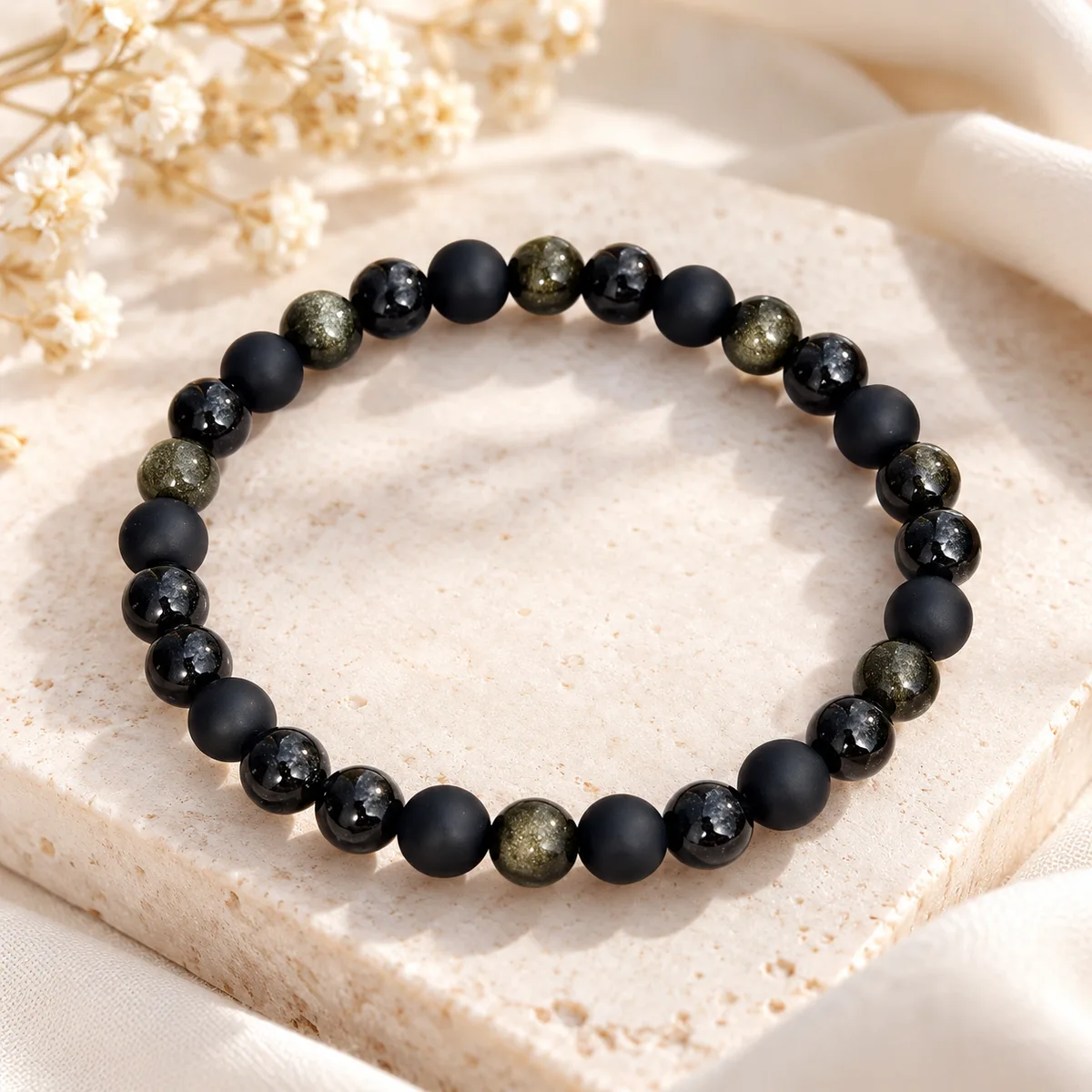
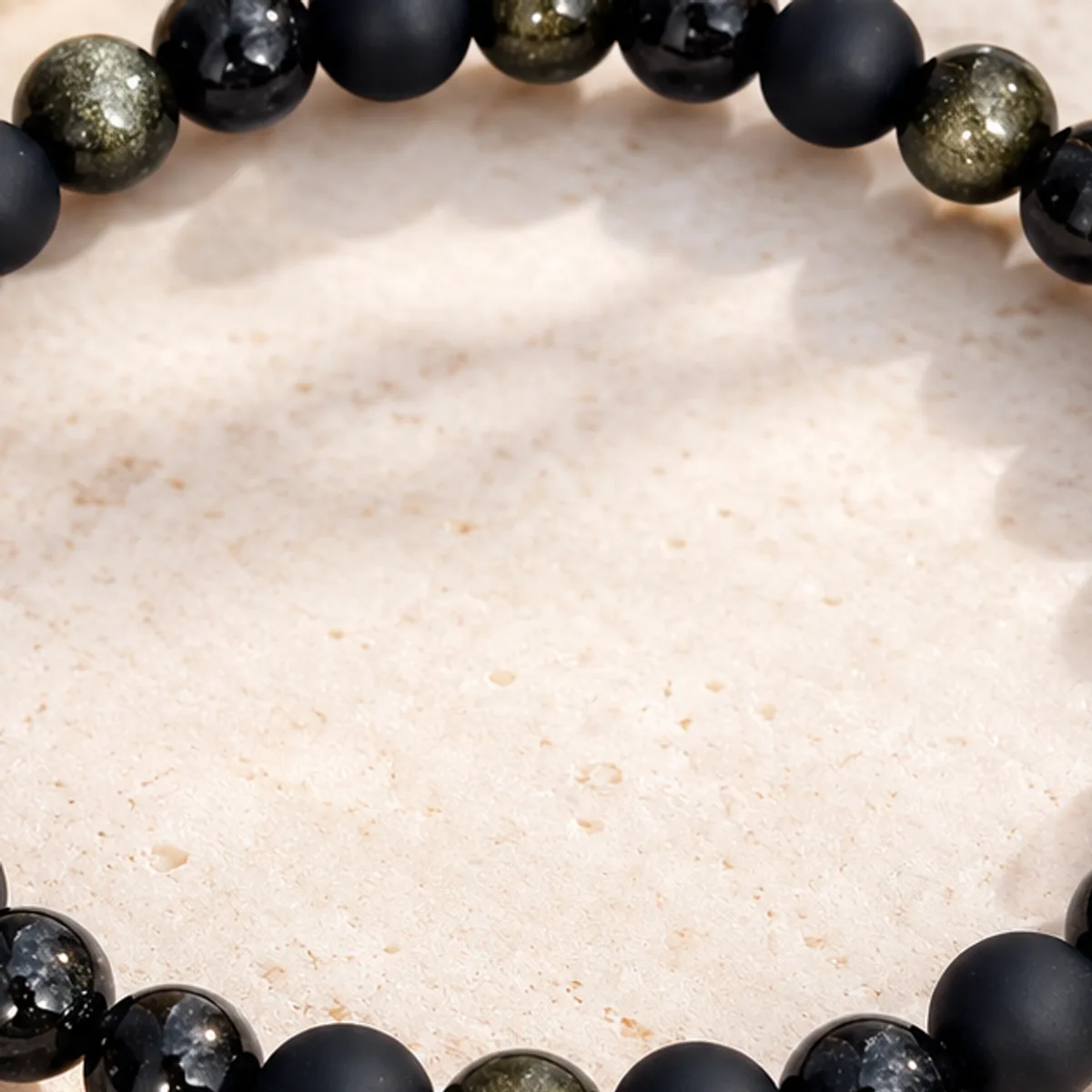
Three obsidians on the same 8 millimetre strand: the matte one, sanded and without sheen, the golden one with its coppery veil, and the snowflake dotted with pale patches. No other stone. It is the catalogue of the material, worn on the wrist.
All three come from the same rock, a volcanic glass, and their differences rest on three distinct mechanisms. The matte one is a black obsidian sanded at the surface: light scatters on it instead of reflecting. The golden one owes its veil to gas bubbles laid in a plane. The snowflake carries cristobalite, small white crystal clusters formed during cooling, the only true crystallization of the three. The obsidian varieties cover each one.
It is the only bracelet in the catalogue that shows side by side what obsidian can do. The other strands pick a variety and stay with it; this one serves as a comparison, and it helps those hesitating between several models: you have all three on the wrist before choosing. The other bracelets, each in its own variety, are here.
The reservation concerns the matte finish. A sanded surface holds finger grease and dust far more than a mirror polish, and it takes on a shiny look in places after a few months. Warm water and mild soap put that right, but you have to think of it two or three times a year, whereas polished beads need nothing.
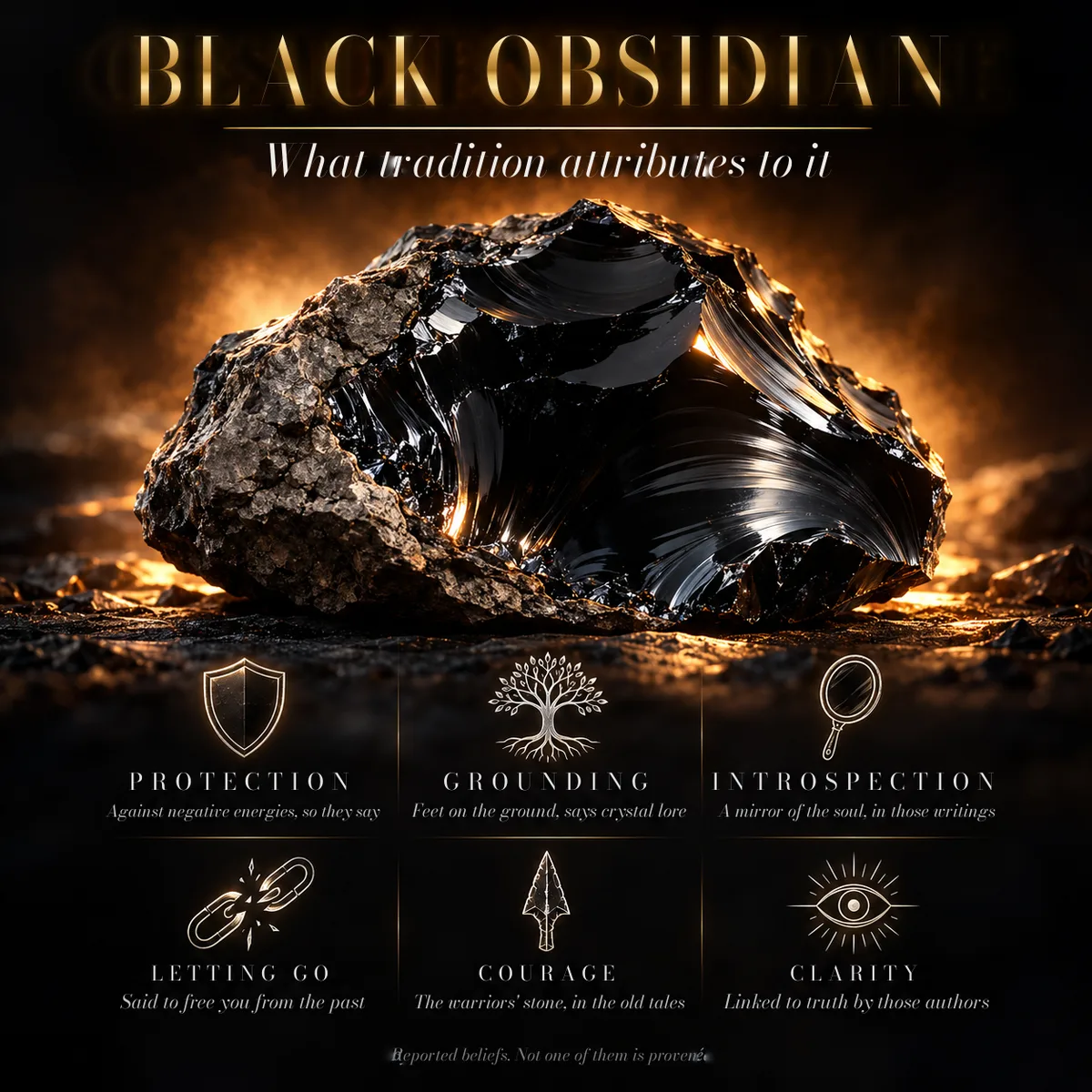
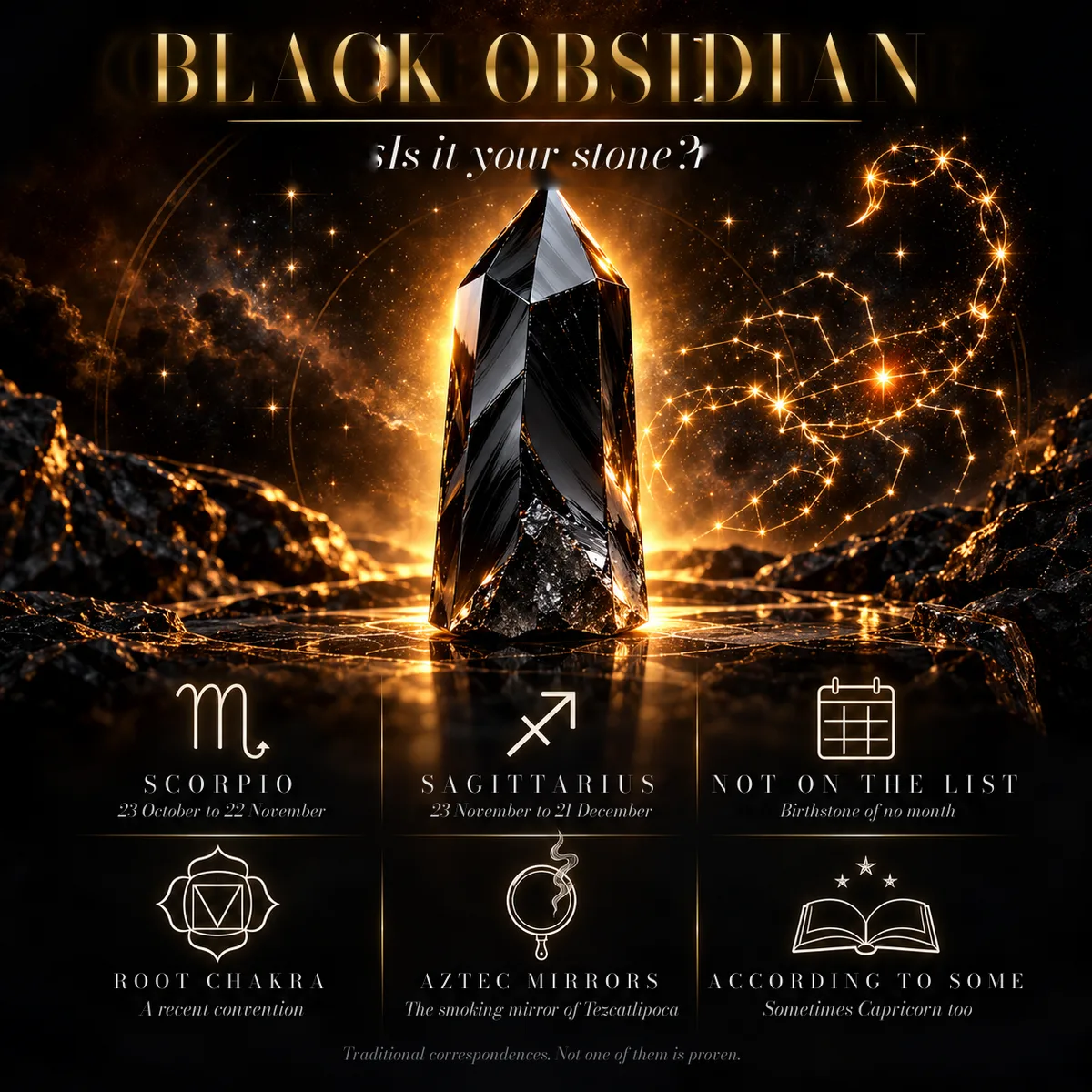
Crystal lore gives each variety a distinct role, and obsidian in general the role of grounding. None of that is proven, and no piece of jewellery heals anything. I have gathered separately what tradition attributes to obsidian and what it says about snowflake obsidian, in the conditional from start to finish.
- Three real obsidians on one strand, 8 mm beads: matte, golden, snowflake.
- No other stone: it is the same volcanic glass under three looks.
- The matte finish wants a wash in warm water two or three times a year.
- Hand-strung in France on braided elastic cord, no clasp.
What to know before you wear it
 |  |  |
The specifications
- Stones
- Matte obsidian, golden obsidian, snowflake obsidian
- Bead diameter
- 8 mm
- Finishes
- Sanded, polished, polished
- Wrist size
- 17 to 19 cm / 6 3/4 to 7 1/2 in, elastic
- Stringing
- Braided elastic cord, no clasp
- Weight
- About 19 g / 0.7 oz
- Stone origin
- Mexico
- Gender
- Unisex
- Brand
- Bijoux Obsidienne

Three looks, one mineral
Stringing three finishes on one strand raises a problem you only see once the bracelet is finished: matte and polished beads do not have the same apparent diameter. Sanding takes off a few hundredths of a millimetre, and at 8 mm that is enough for the matte one to look smaller although it is calibrated the same. The only way not to see the step is never to put two matte beads side by side. It is a stringing rule, and it cannot be guessed.
This strand came out of a question asked in the online shop, always the same one: what is the difference between your obsidians. A page explains it in words, a bracelet explains it in a second. The obsidian guide remains the reference text, and the other bracelets are here.
Two matte beads side by side and the strand steps. You do not guess that, you learn it by getting it wrong.
Obsidian does not mind water, but it chips on impact. The matte beads hold finger grease: a pass under warm water with mild soap two or three times a year is enough. Never an ultrasonic bath. Cleaning an obsidian piece covers the rest.