
Description
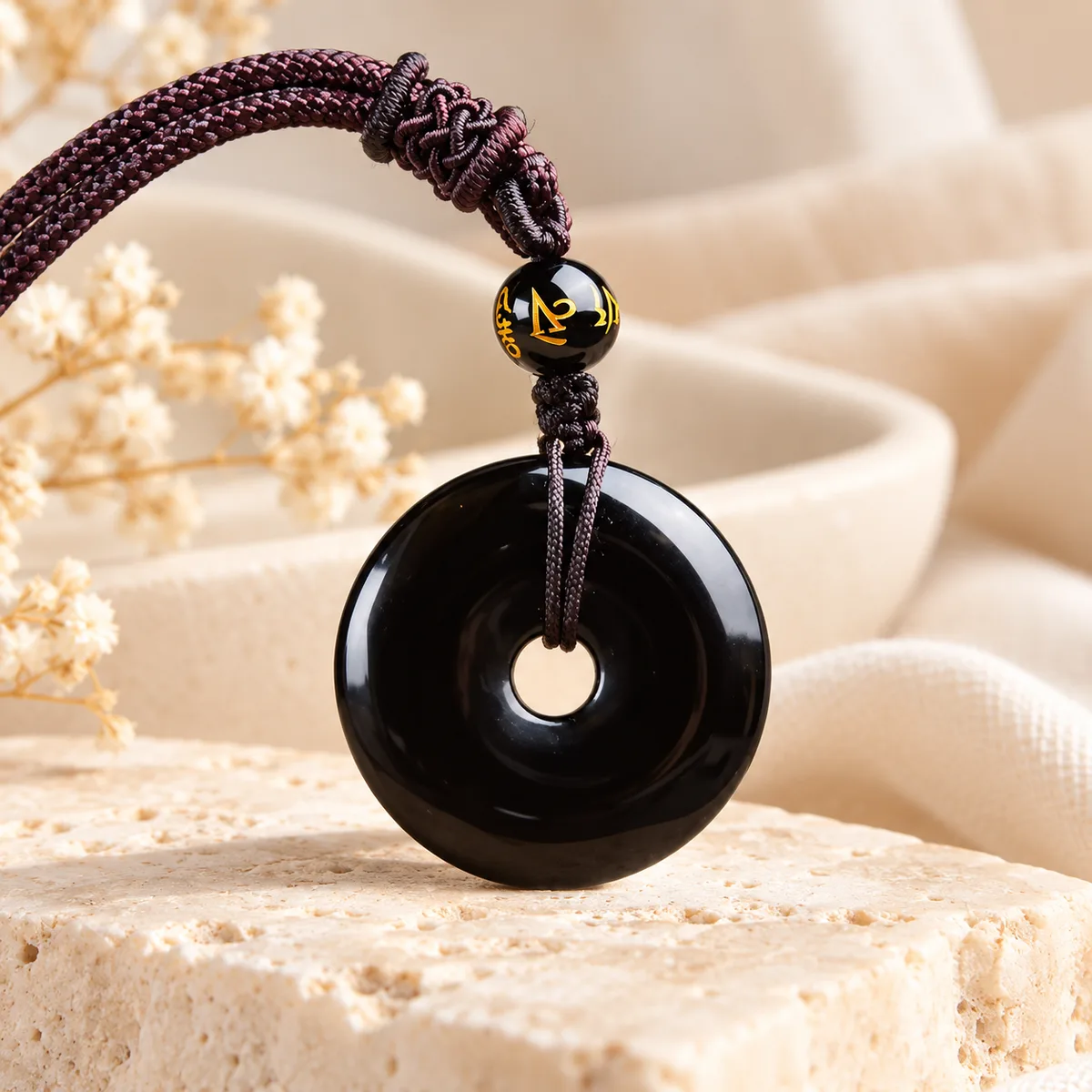
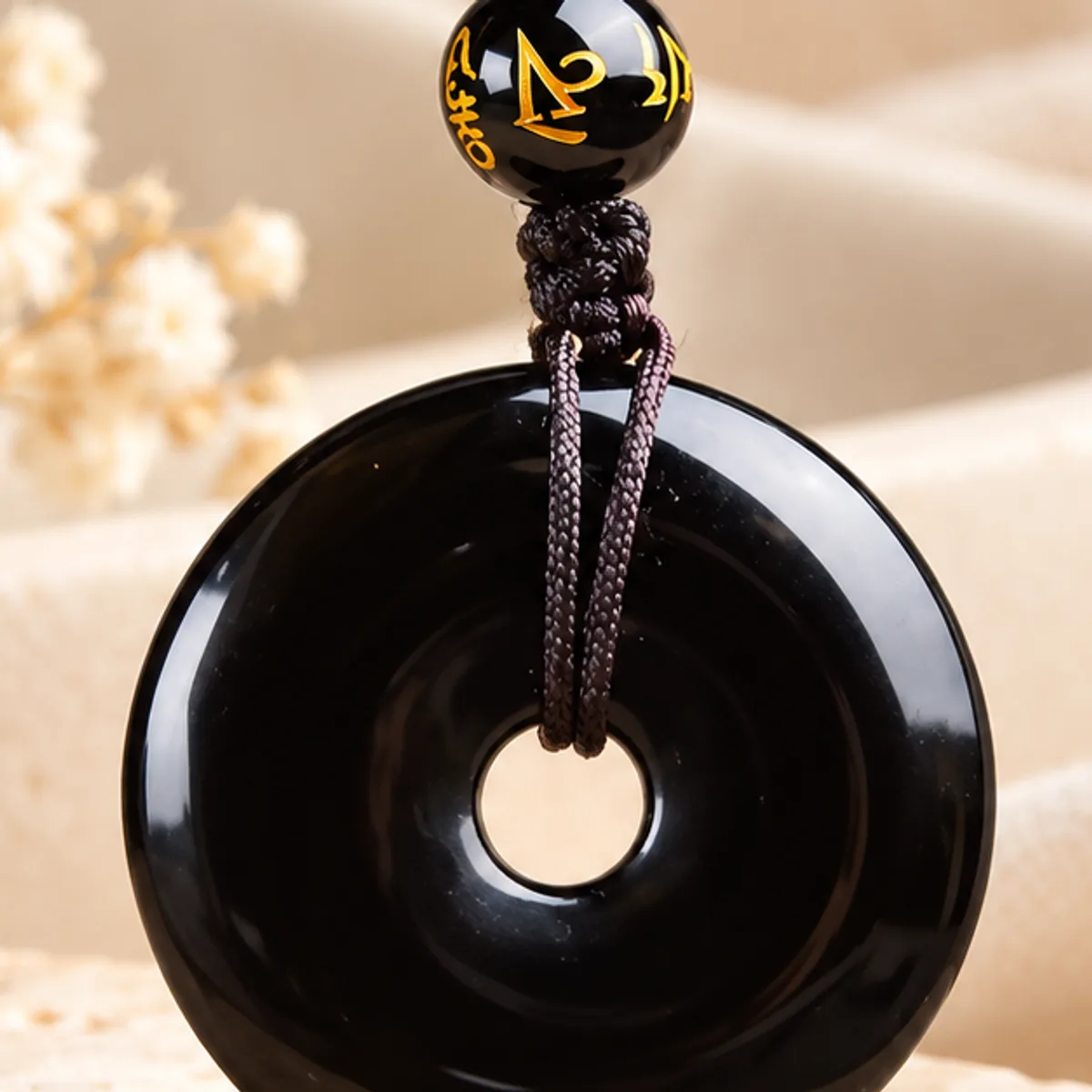
A black obsidian disc pierced with a central hole, what is called a donut, hung from a brown cord by a bead engraved with the mantra. It is probably the oldest form of stone pendant in existence.
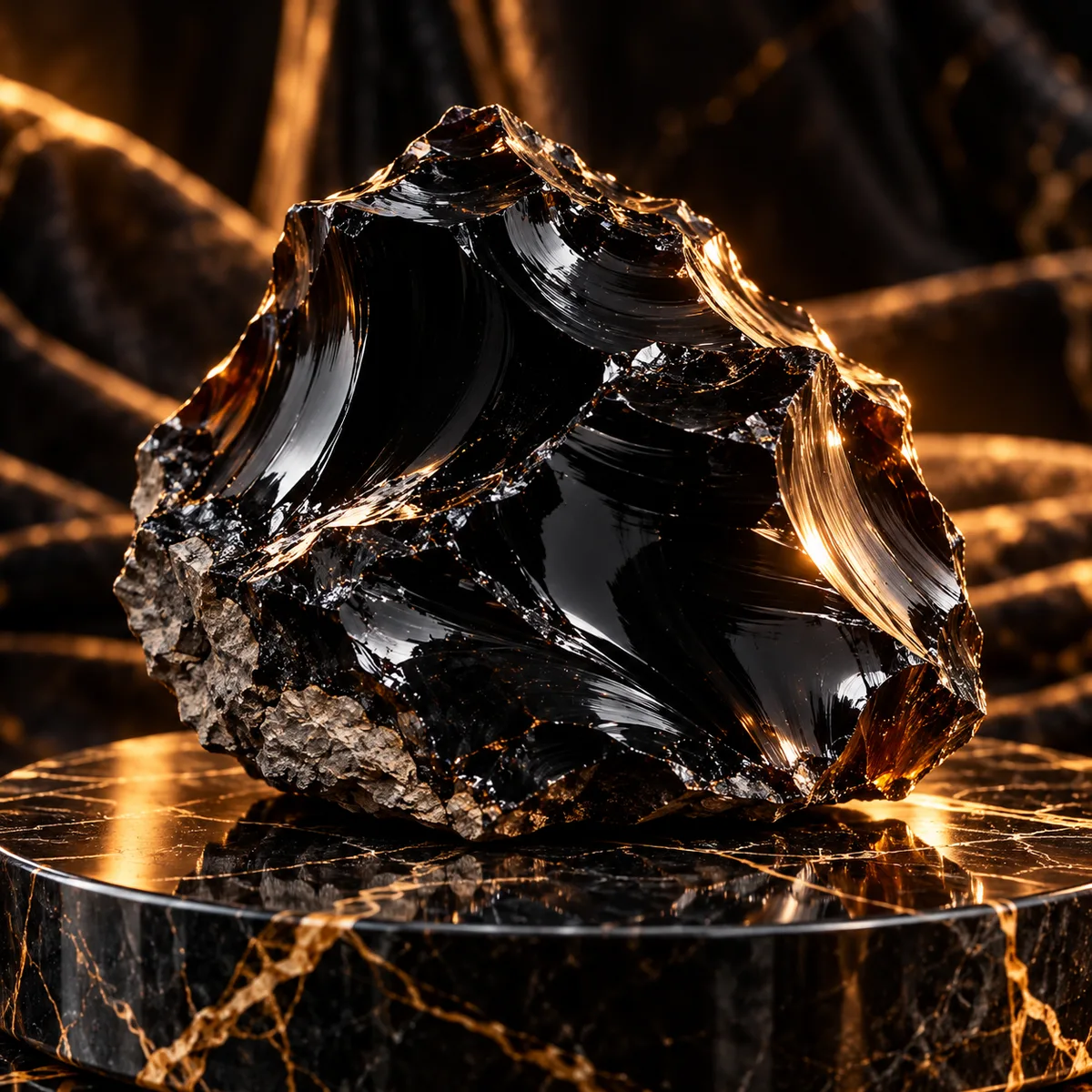
The pierced disc crosses eras and continents that have no connection to one another: it turns up in the European Neolithic, in ancient China under the name bi, and in pre-Columbian America. You should not conclude a shared meaning from that, only that it is the simplest shape to obtain with a drill and a wheel. The coincidence is technical before it is symbolic. The obsidian guide covers the material.
The central hole is not just a motif: it changes how the pendant behaves. The cord passes through it and comes back up, which hangs the disc from its centre of gravity and keeps it from tipping. A pendant drilled at its edge, by contrast, hangs askew as soon as you move. That is why this shape wears so well and never needs straightening. The other pendants are here.
The reservation is the one every hollowed stone carries. The rim around the hole works in bending, and if it is too thin, a fall breaks it in two. This one is nearly four tenths of an inch wide, which is comfortable, but a donut stays more vulnerable than a solid disc. Store it flat, not hanging from a hook where it can beat against a wall.
Crystal lore ties obsidian to grounding. None of that is proven, and no piece of jewellery heals anything. I have gathered separately what tradition attributes to obsidian, in the conditional from start to finish.
- Genuine black obsidian, disc pierced at its centre, polished on both sides.
- The cord passes through the hole: the disc hangs from its centre of gravity and does not tip.
- A rim about four tenths of an inch wide: stronger than the thin donuts on the market.
- Bead engraved with the mantra on the brown cord, adjustable length.
What to know before you wear it
 |  |  |
The specifications
- Stone
- Black obsidian, volcanic glass
- Shape
- Pierced disc, polished both faces
- Diameter
- About 40 mm / 1 1/2 in
- Rim width
- About 10 mm / 3/8 in
- Setting
- None, cord passed through the central hole
- Cord
- Braided brown cord, adjustable length
- Gender
- Unisex
- Brand
- Bijoux Obsidienne

Piercing the centre without splitting the rim
A donut’s hole is not drilled from one side only. A bit that goes all the way through blows out the exit face in a shell, and the chip forms a rough collar impossible to recover from without enlarging the hole. So you drill to mid-thickness from one face, then turn the piece over and drill from the other until the two holes meet in the middle. If the two axes do not coincide, the hole has a step, invisible head-on and very much felt by the cord.
This model exists because it is the shape people ask me for without knowing its name, described as a round thing with a hole. There is nothing original about it, and that is precisely its strength: it goes with everything and does not go out of fashion. The other pendants are here.
You drill to mid-thickness from both sides. Going through in one go blows out the exit face into a collar.
Obsidian does not mind water, but a pierced disc breaks in a fall more easily than a solid stone. Store it flat in its pouch. A soft cloth is enough, never an ultrasonic bath. Cleaning an obsidian piece covers the rest.