
Description
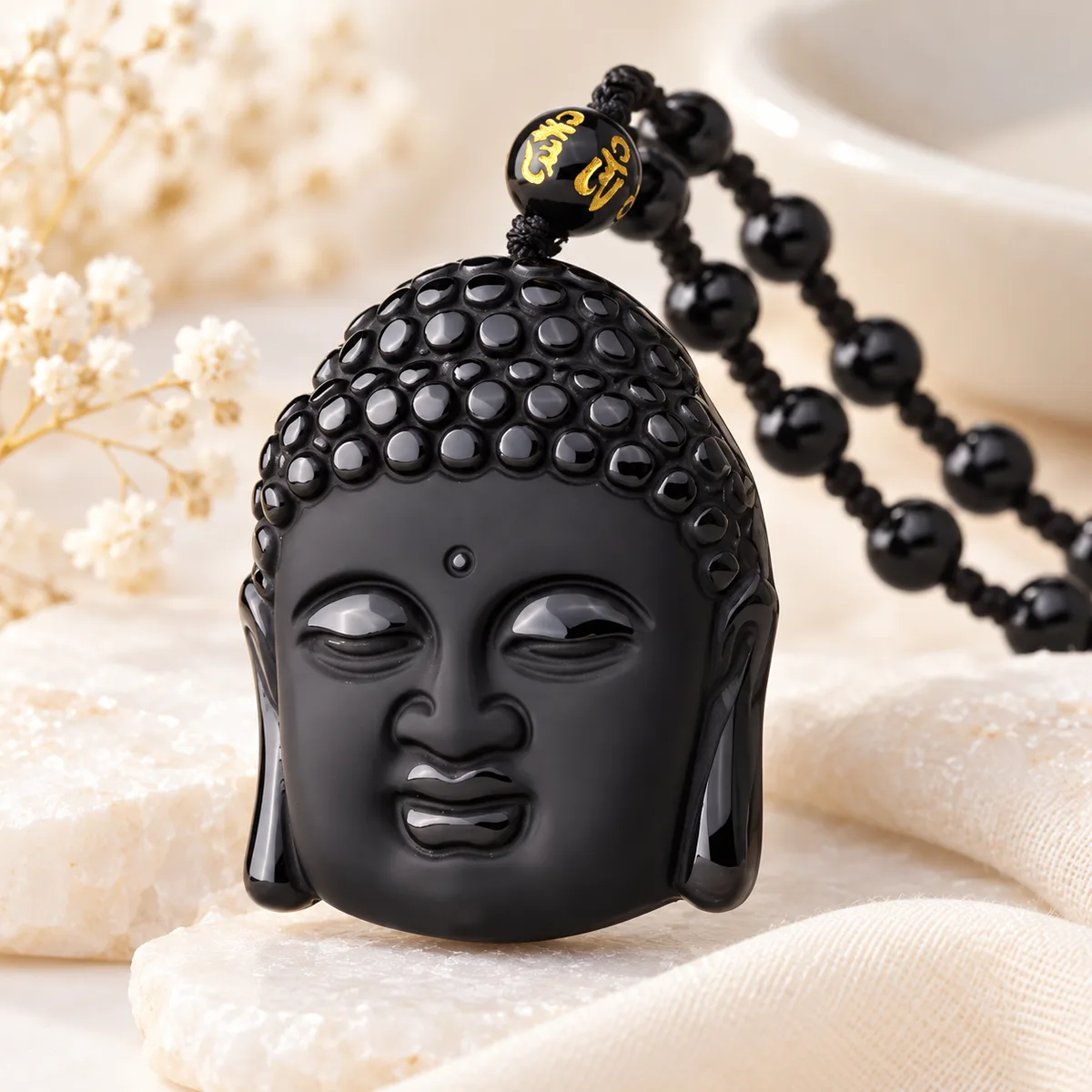
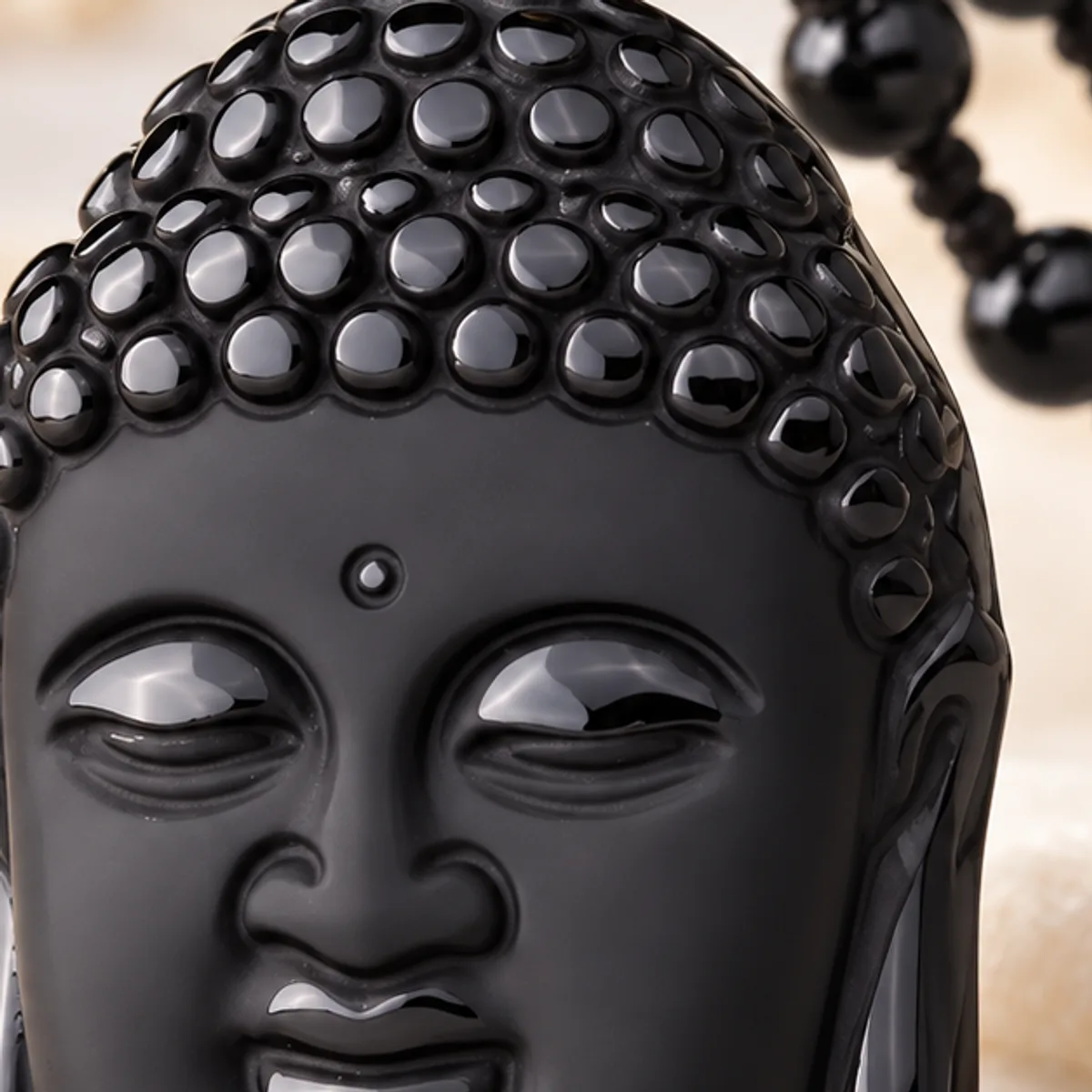
A Buddha head carved in the round from a block of obsidian: a real three-dimensional face, with a back of the skull, detached ears and a profile. It is not a relief on a plaque.
The distinction between relief and carving in the round is not school vocabulary. A relief is cut into a plaque and is only looked at from the front; a carving in the round is a complete sculpture, which you can turn in your hand and look at from every angle. The catalogue sells a Buddha seated in meditation, carved in relief on a plaque. This is another object, and the price reflects the difference in work. Both are here.
The bumps on the skull are not hair but a very old iconographic convention of Buddhism, present on statues since the early centuries. In the same way, the elongation of the earlobes recalls the heavy earrings the prince wore before renouncing his condition. I describe what the carving shows, I do not interpret it: that belongs to a living religious tradition.
The reservation is volume and weight. A carving in the round this size weighs nearly an ounce, against half that for an equivalent plaque, and it shows under a thin garment. And being round, it turns at the end of its cord: unlike a plaque, it does not come back face forward on its own. Some people like the profile appearing, others straighten it twenty times a day.
Crystal lore ties obsidian to grounding. The figure of the Buddha belongs, for its part, to a religious tradition and not to crystal lore. None of the above is proven, and no piece of jewellery heals anything. I have gathered separately what tradition attributes to obsidian, in the conditional.
- Genuine black obsidian, head carved in the round, not in relief on a plaque.
- A complete face: back of the skull, detached ears, profile.
- It turns at the end of the cord and does not come back face forward on its own.
- A chain of obsidian beads, not a metal chain.
What to know before you wear it
 |  |  |
The specifications
- Stone
- Black obsidian, volcanic glass
- Shape
- Carved in the round, sculpture in volume
- Height
- About 40 mm / 1 1/2 in
- Weight
- About 30 g / 1 oz
- Setting
- None, stone drilled and knotted
- Chain
- Obsidian beads strung on cord
- Gender
- Unisex
- Brand
- Bijoux Obsidienne

Carving in the round, and why it costs more
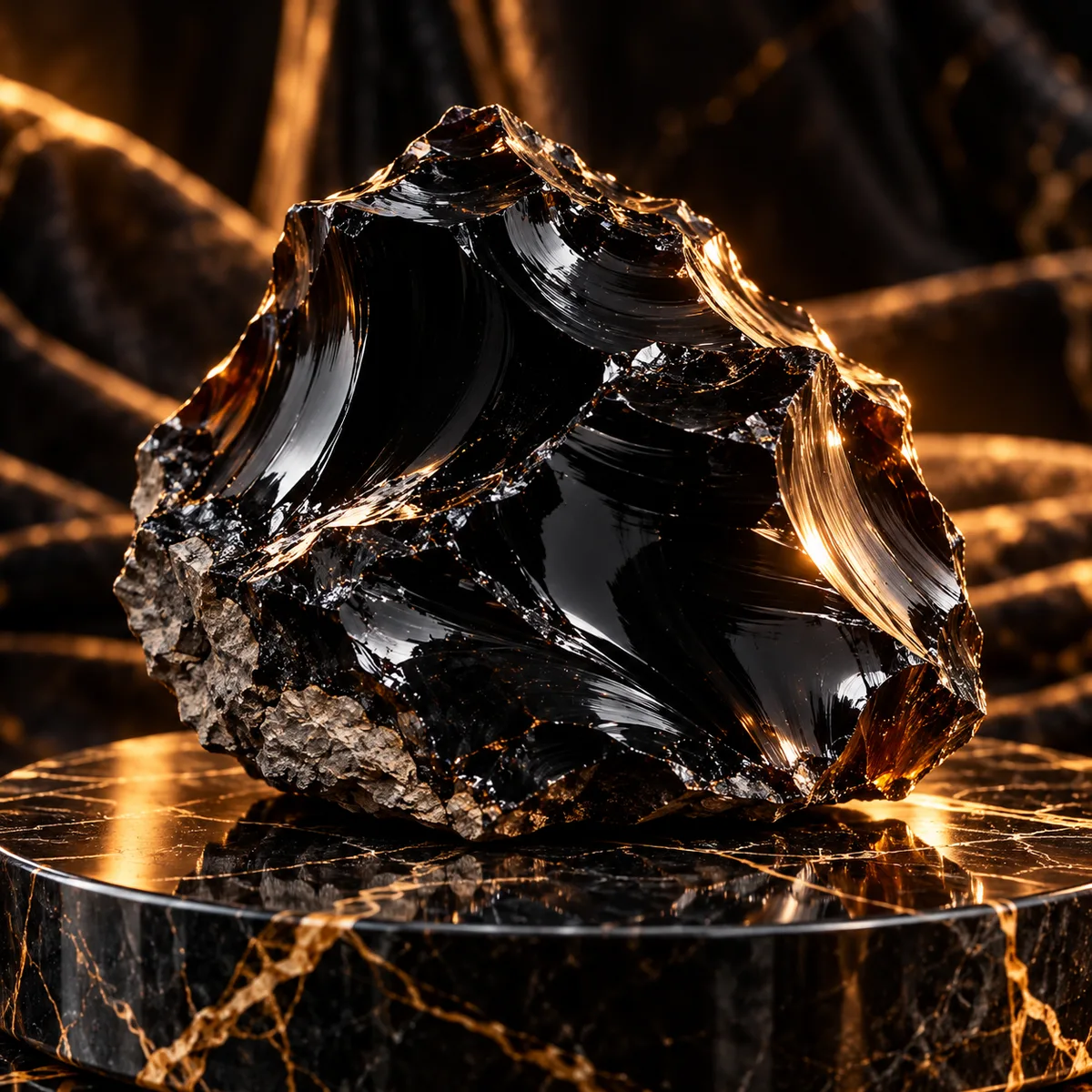
Carving in the round costs more for a reason that has nothing to do with carving time, even though that is longer. It is the starting block. A relief is cut from a plaque a little over an inch thick; a head in volume calls for a block an inch and a half in all three dimensions, and an obsidian block that size with no internal crack is distinctly rarer than a plaque. You check for cracks by lighting the block through its edge before starting: an arc of shadow, and the block goes somewhere else.
This head is in the catalogue because the Buddha in relief, however carefully done, remains an image. A sculpture in volume is an object you take in your hand, and that is a different relationship. Both are here and the obsidian guide explains the material.
You light the block through its edge before starting. An arc of shadow, and it goes to something other than a carving in the round.
Obsidian does not mind water, but a sculpture in volume has projections that chip on impact, the nose and the ears first. Keep it in its pouch. A soft brush under lukewarm water twice a year for the hollows, never an ultrasonic bath. Cleaning an obsidian piece covers the rest.