
Description
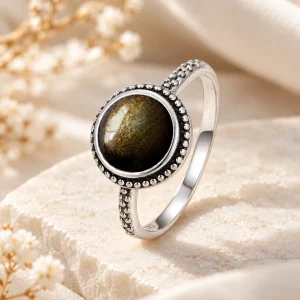
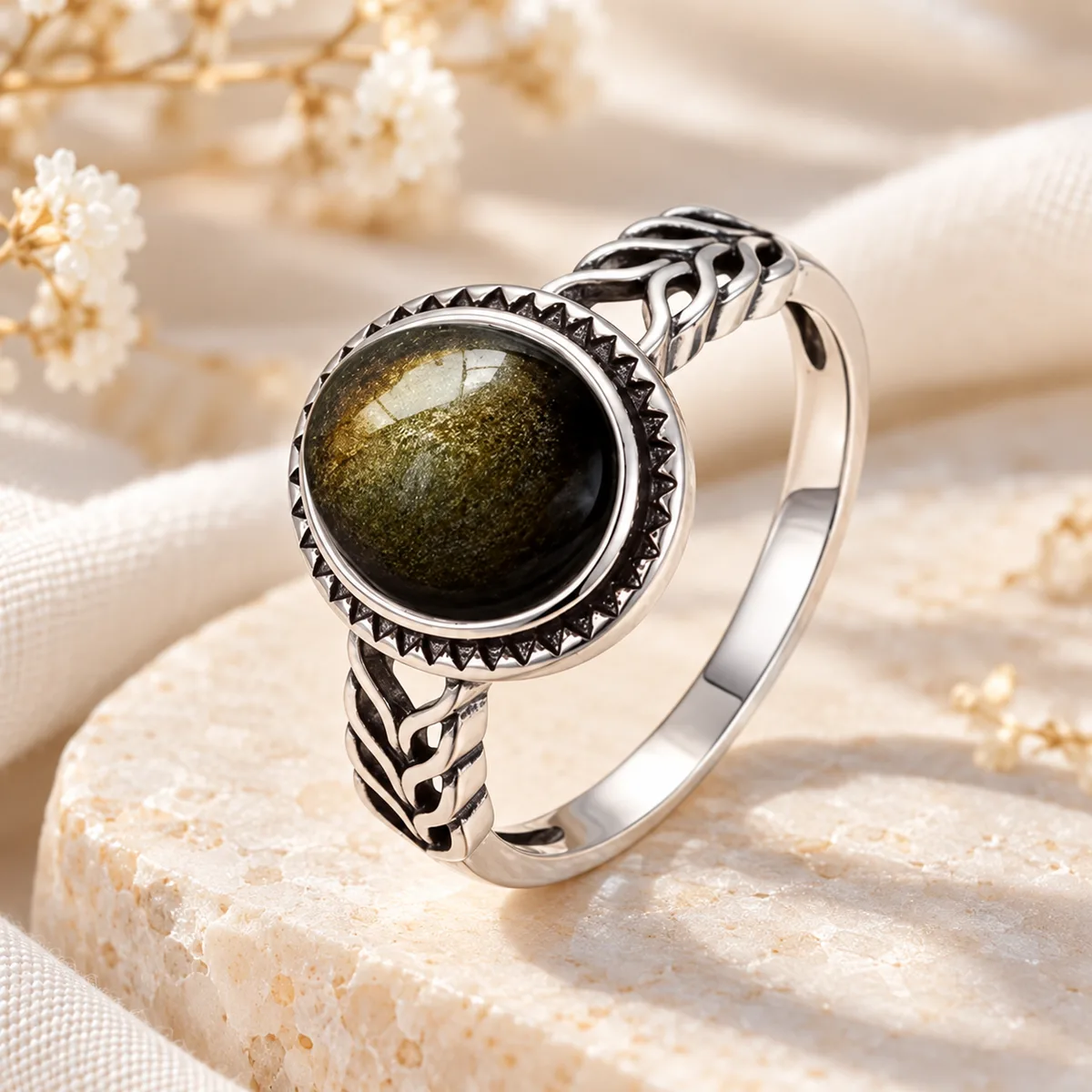
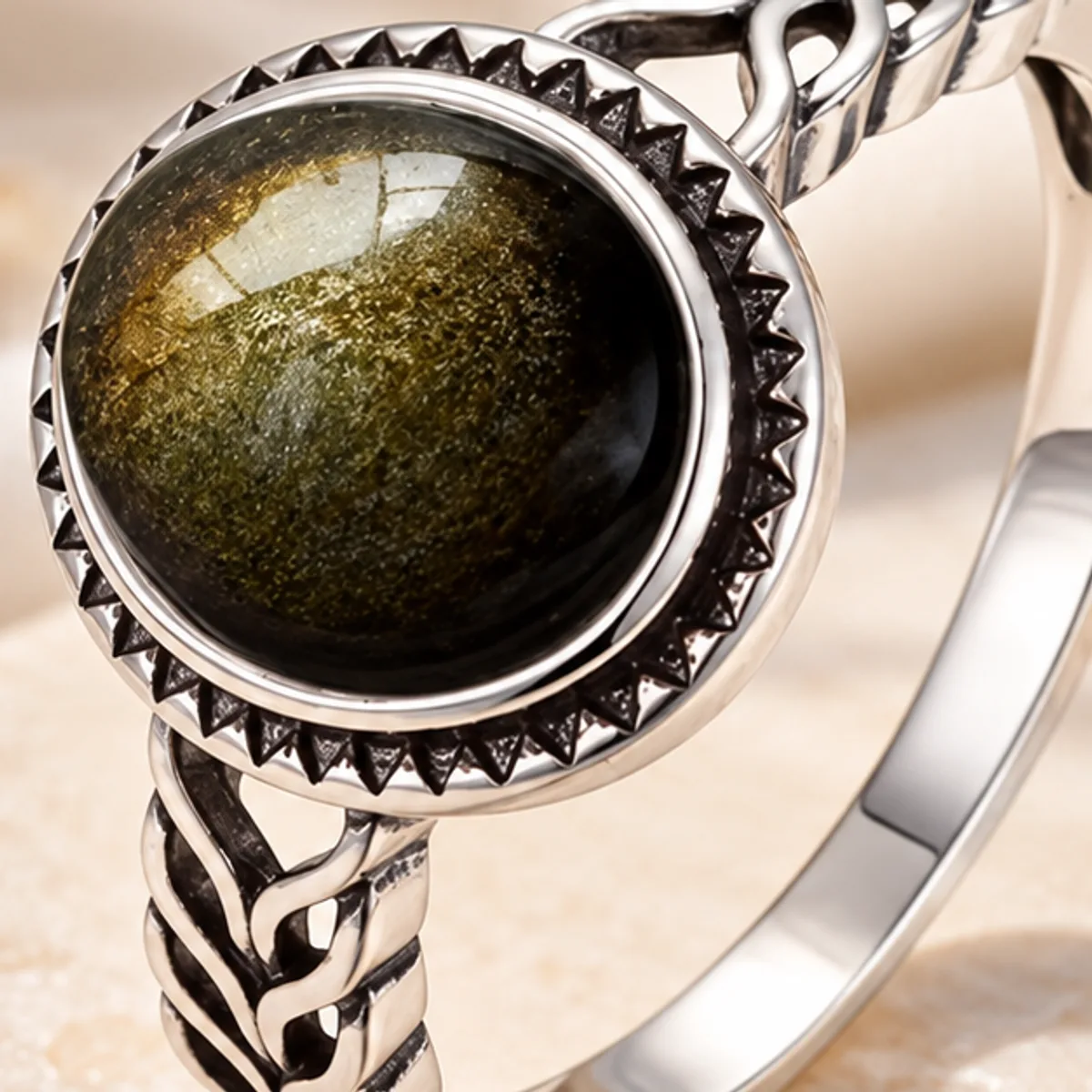
A silver band worked as a wheat plait, two strands crossing in chevrons all the way around the finger, carrying a round gold sheen obsidian cabochon ringed by a beaded border. The pattern is in the metal, not laid on top of it.
The difference from the engraved settings in the series is real: here the relief is not cut into a smooth surface but obtained by the very shape of the band, which is twisted and sheared. You can see it at the edge: an engraved pattern leaves a flat back, a worked plait has a wavy back. It takes longer to make and it does not wear the same way, because there is no hollow to fill with black.
A direct consequence: it is the only setting in the series that calls for no cleaning precautions. The other fourteen have blackened hollows that polishing wipes out; this one owes its design to its geometry, and you can rub it with a silver cloth as much as you like, the plait will stay visible. For anyone who dislikes care instructions, this is the model. The other rings are here.
The reservation is the comfort. A plaited band is not smooth inside: the crossings leave a slight waviness on the face that touches the finger, and some people feel it, especially at first. It is usually forgotten within a few days, but not always. If you are sensitive to that kind of detail, take a smooth-band setting from the series. The size guide saves a return.
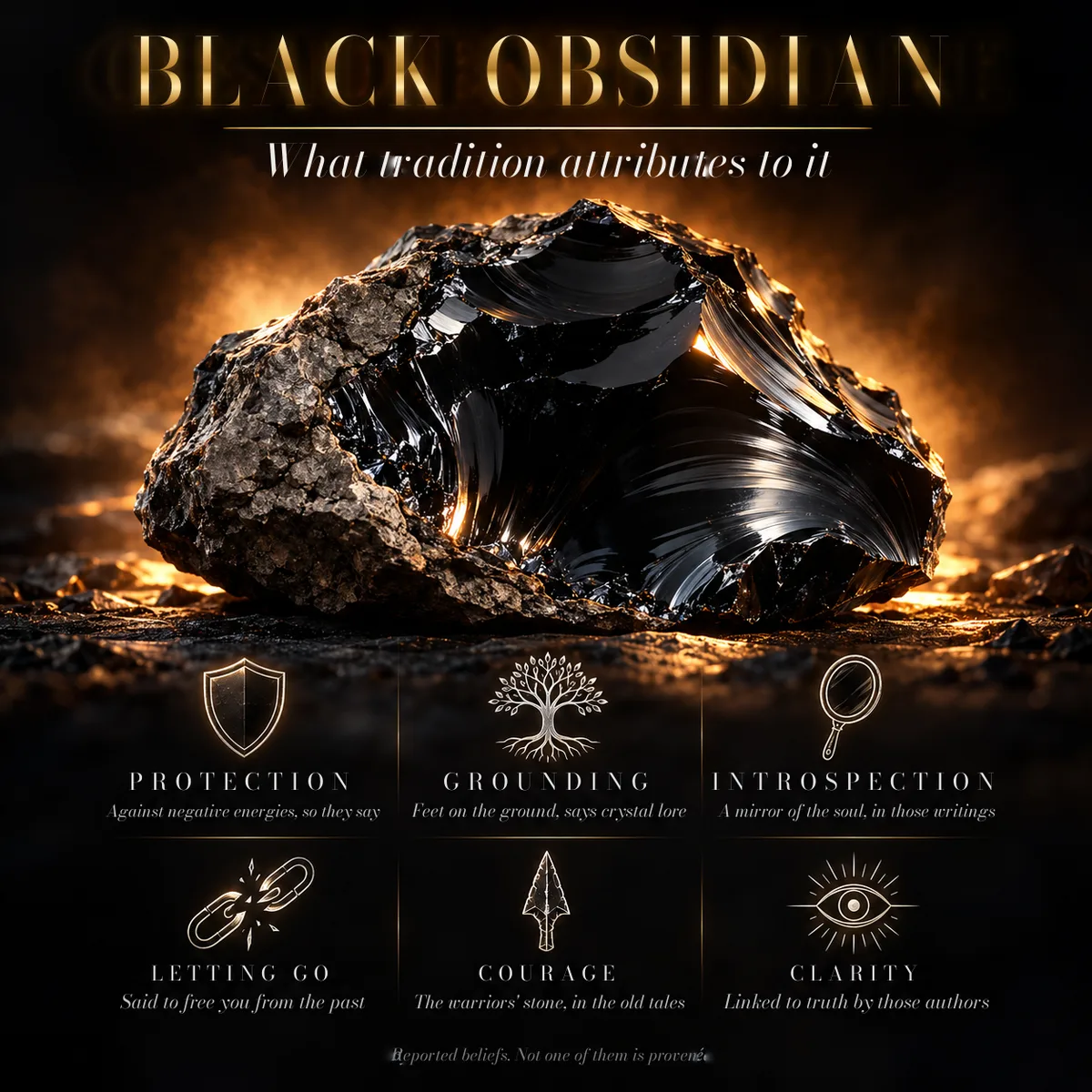
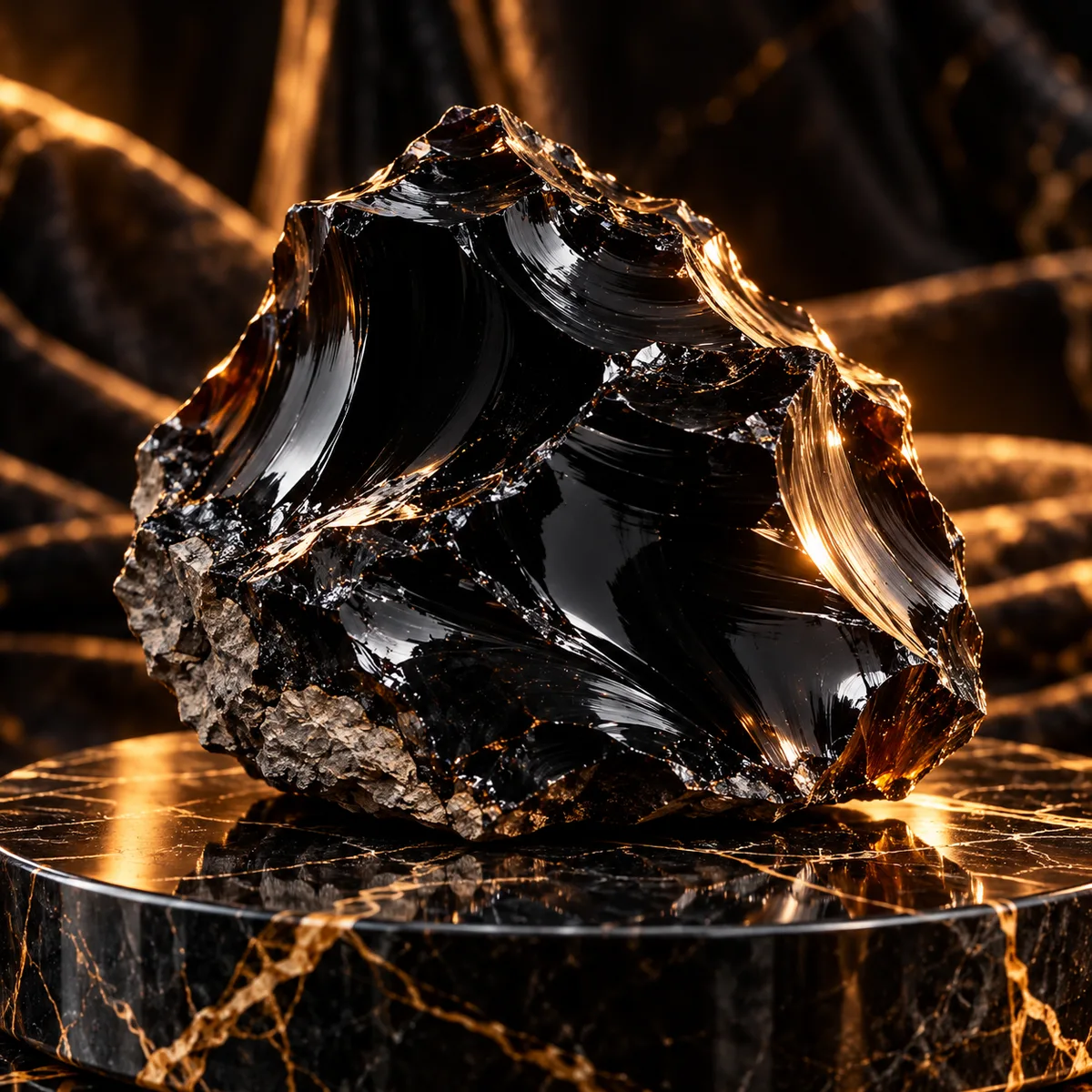
Crystal lore ties obsidian to grounding, and gold sheen in particular to self-confidence. None of that is proven, and no piece of jewellery heals anything. I have gathered separately what tradition attributes to obsidian, in the conditional from start to finish.
- Genuine gold sheen obsidian, round cabochon in a closed bezel, ringed by a beaded border.
- Sterling silver 925, band worked as a plait: the pattern is in the metal, not engraved on it.
- The only setting in the series you can polish without wiping out its design.
- The inside of the band is slightly wavy: some people feel it in the first few days.
What to know before you wear it
 |  |  |
The specifications
- Stone
- Gold sheen obsidian, volcanic glass, round cabochon
- Metal
- Sterling silver 925, S925 hallmark
- Setting
- Closed bezel ringed by a beaded border, no glue
- Band
- Worked as a braided plait, about 5 mm
- Sizes
- 52 to 62 (inner circumference in mm)
- Gender
- Unisex
- Brand
- Bijoux Obsidienne

A plait that has to close on itself
A plaited band has to close on itself without the join showing, and that is where everything is decided. The pattern has a pitch, that is, a distance between two chevrons, and the circumference of the band must be an exact multiple of that pitch. Since the circumference changes with the size, the pitch changes too: a size 52 and a size 62 do not have the same number of chevrons nor the same chevron width. So a plaited ring cannot be resized afterwards, it has to be remade.
This setting closes the series of fifteen, and it is the only one with no decoration in the usual sense. It is there for those who want metalwork without a motif, and because a series made only of ornamented rings would be incomplete. The other rings are here and the obsidian guide explains the stone.
A plaited ring cannot be resized. The pitch of the pattern depends on the size, it has to be remade.
Obsidian does not mind water, but it shatters on impact and scratches against a hard metal. Take the ring off before DIY and sport. Unlike the other settings in the series, this one can be polished without risk: its design does not depend on a blackening. Cleaning an obsidian piece covers the rest.