
Description
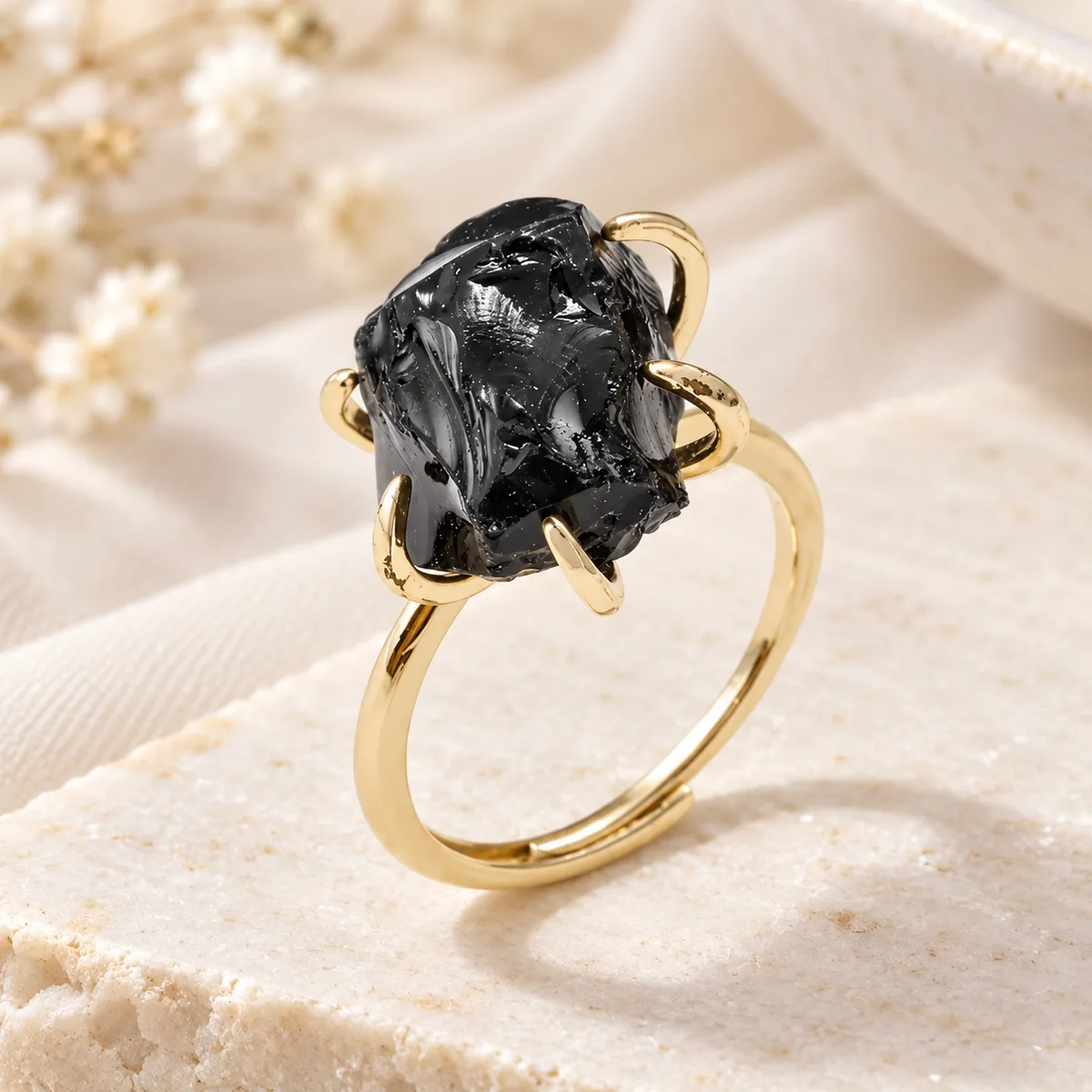
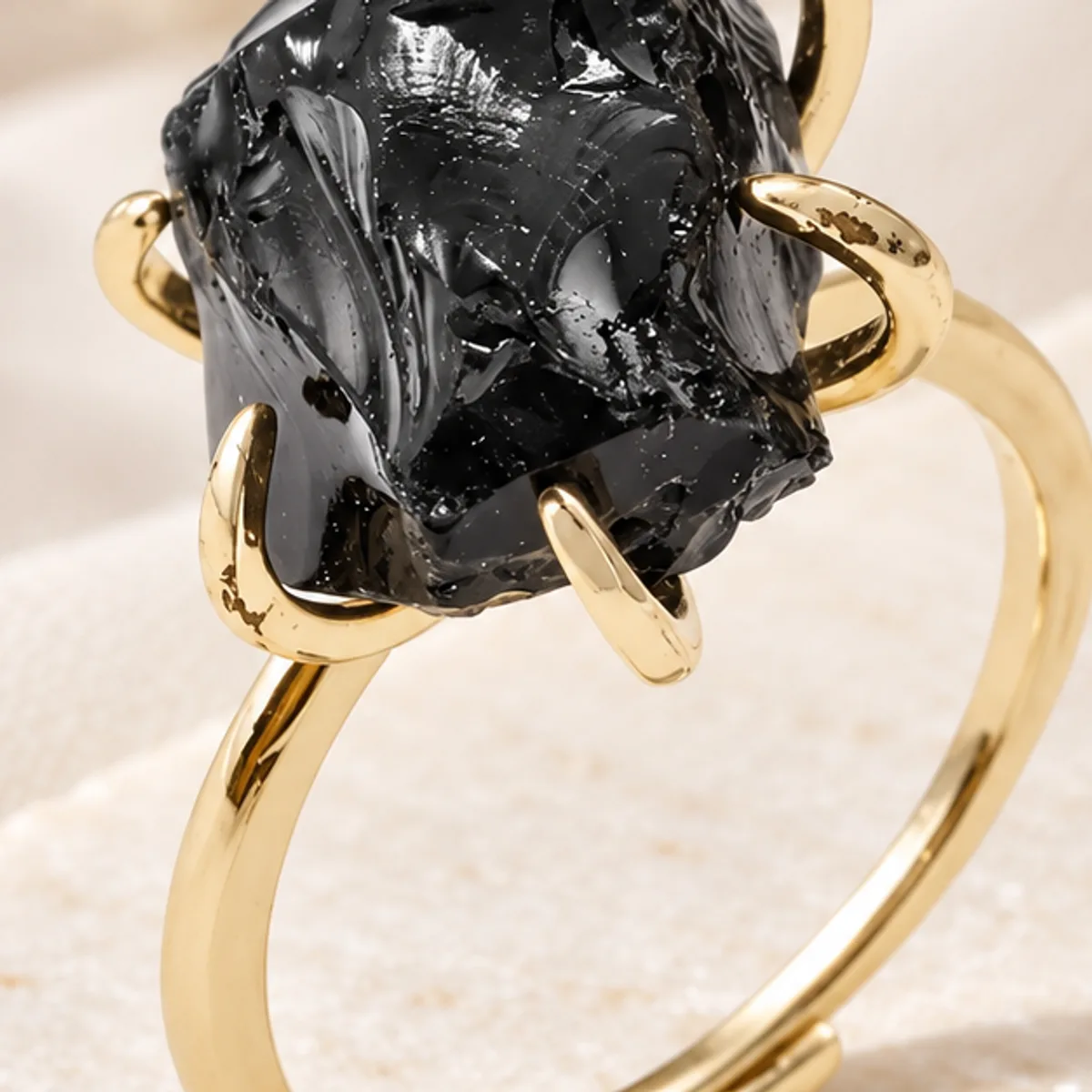
A single block of raw obsidian, kept just as the rock gave it, held by four gold-tone prongs coiled into scrolls on an adjustable band. The stone is close to 15 mm / 5/8 in and no two are alike.
The catalogue holds one other raw-stone ring, but it carries two small shards on straight prongs. This one is the opposite: a single bulky stone, and prongs that coil instead of folding over. The scroll wraps the block instead of biting into it, which covers more surface and takes up the hollows of an irregular shape. It is the old settings’ answer for uncut stones.
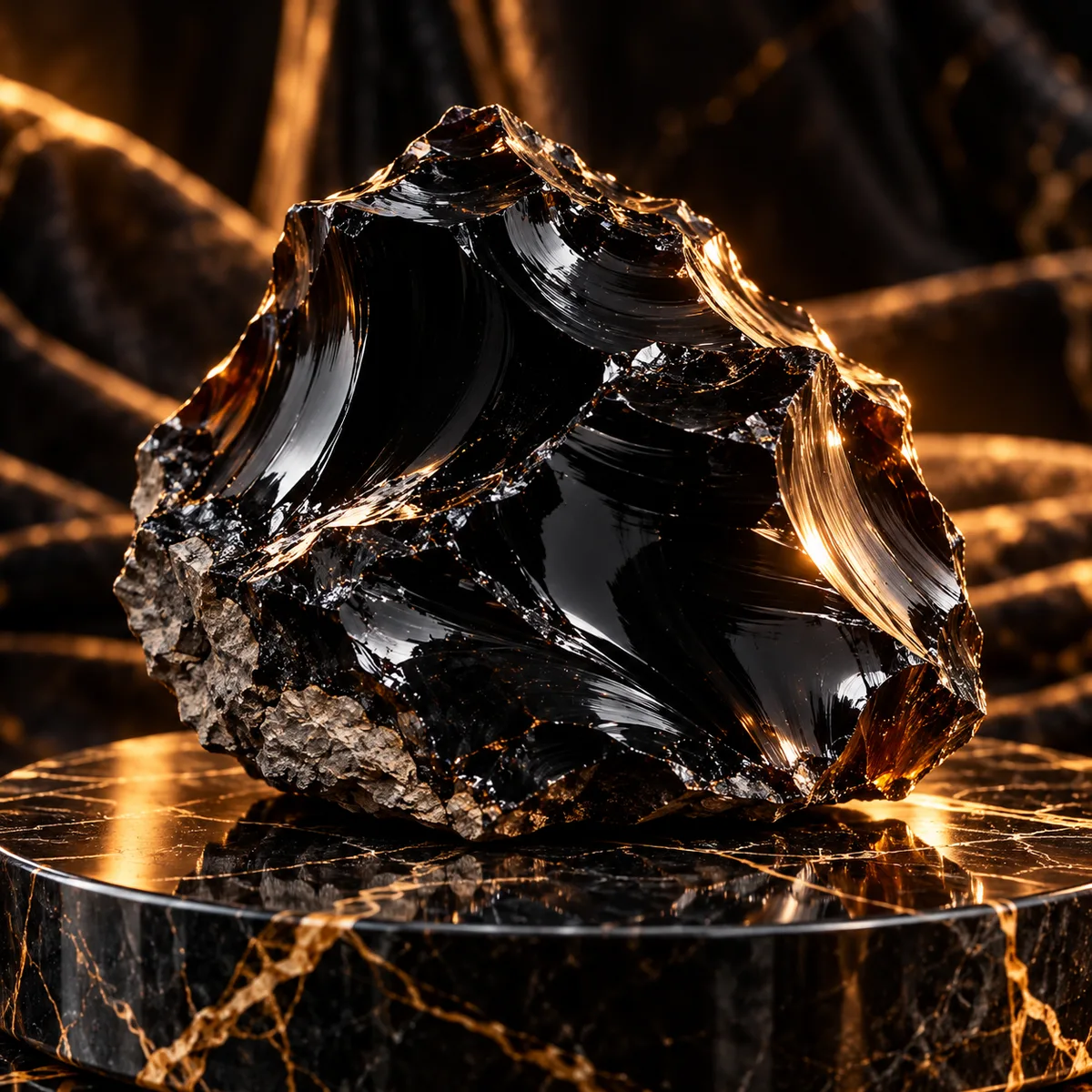
Since the stone is neither polished nor calibrated, every piece differs from the photograph: the volume and the price are the same, the faces are not. Raw obsidian shows its fracture surfaces, slightly hollow and bright as broken glass, with reflections that change completely with the angle. It is what polishing erases everywhere else. The other rings are here.
Two reservations. A raw stone of this bulk overhangs a great deal and catches on knitwear: a wool sweater snags on it, and so do tights. And the prongs hold an irregular shape, so over less surface than a calibrated cabochon: push the stone with a finger once a year, it must not move. I tighten them free of charge. The size guide saves a return.
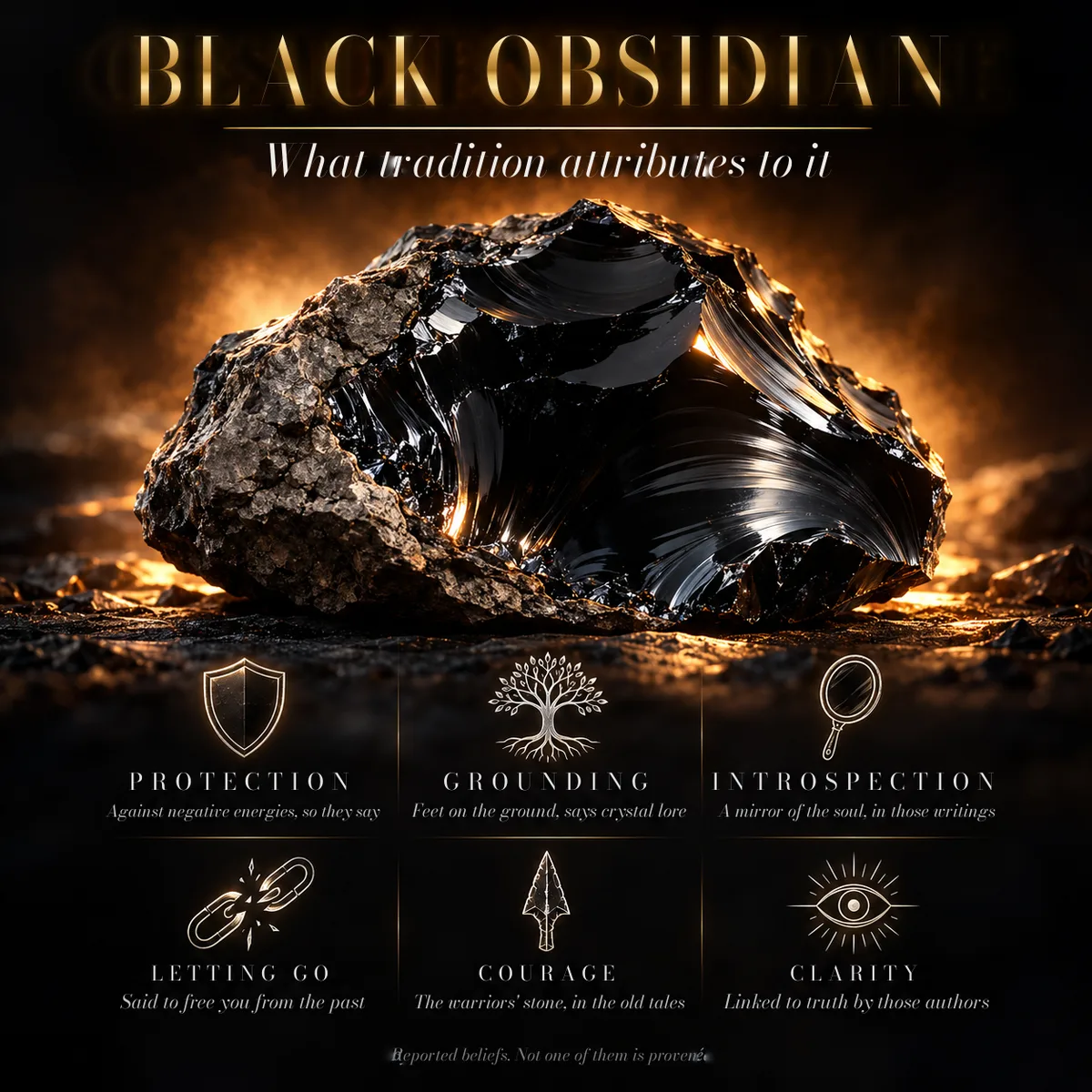
Crystal lore ties obsidian to grounding, and credits raw stones with a quality polished stones supposedly lack. None of that is proven, and no piece of jewellery heals anything. I have gathered separately what tradition attributes to obsidian, in the conditional from start to finish.
- A block of genuine raw obsidian about 15 mm, original fracture faces.
- Four scrolled prongs that wrap the stone instead of biting into it.
- Gold-plated brass, adjustable band.
- Each stone differs from the photograph: the volume is the same, the faces are not.
What to know before you wear it
 |  |  |
The specifications
- Stone
- Raw black obsidian, a single unpolished block
- Size of the stone
- About 15 mm
- Metal
- Gold-plated brass
- Setting
- Four scrolled prongs
- Adjustment
- Adjustable band
- Gender
- Women
- Brand
- Bijoux Obsidienne

Four prongs that are not at right angles
On a cabochon the four prongs go at right angles to one another without a second thought: the stone is regular, every point is as good as the next. On a raw block that is impossible. You first look for the four places where the stone offers a hollow or a re-entrant edge, and you put the prongs there, whatever the angles. The result is asymmetric, and that asymmetry shows: look at the ring head on and then from the side, the prongs do not answer each other. It is not a flaw in the setting, it is the stone that decided.
The absolute rule with a raw stone is never to rest a prong on a sharp edge. Volcanic glass is very hard but it takes no point load on a corner: the prong sinks in by nothing at all and the chip flakes off. You always press on a surface, however small, however sloped. The obsidian guide explains that break.
You look for the four hollows the stone is willing to give. The prongs do not answer each other, and that is normal.
Obsidian does not mind water, but gold plating wears with soap and perfume, and a raw stone catches on everything that goes past. Take the ring off before the shower and before getting dressed. Check the prongs once a year. Cleaning an obsidian piece covers the rest.