
Description
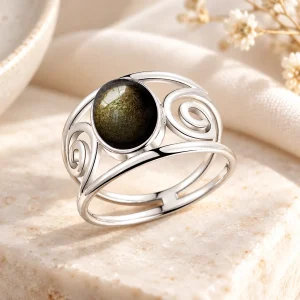
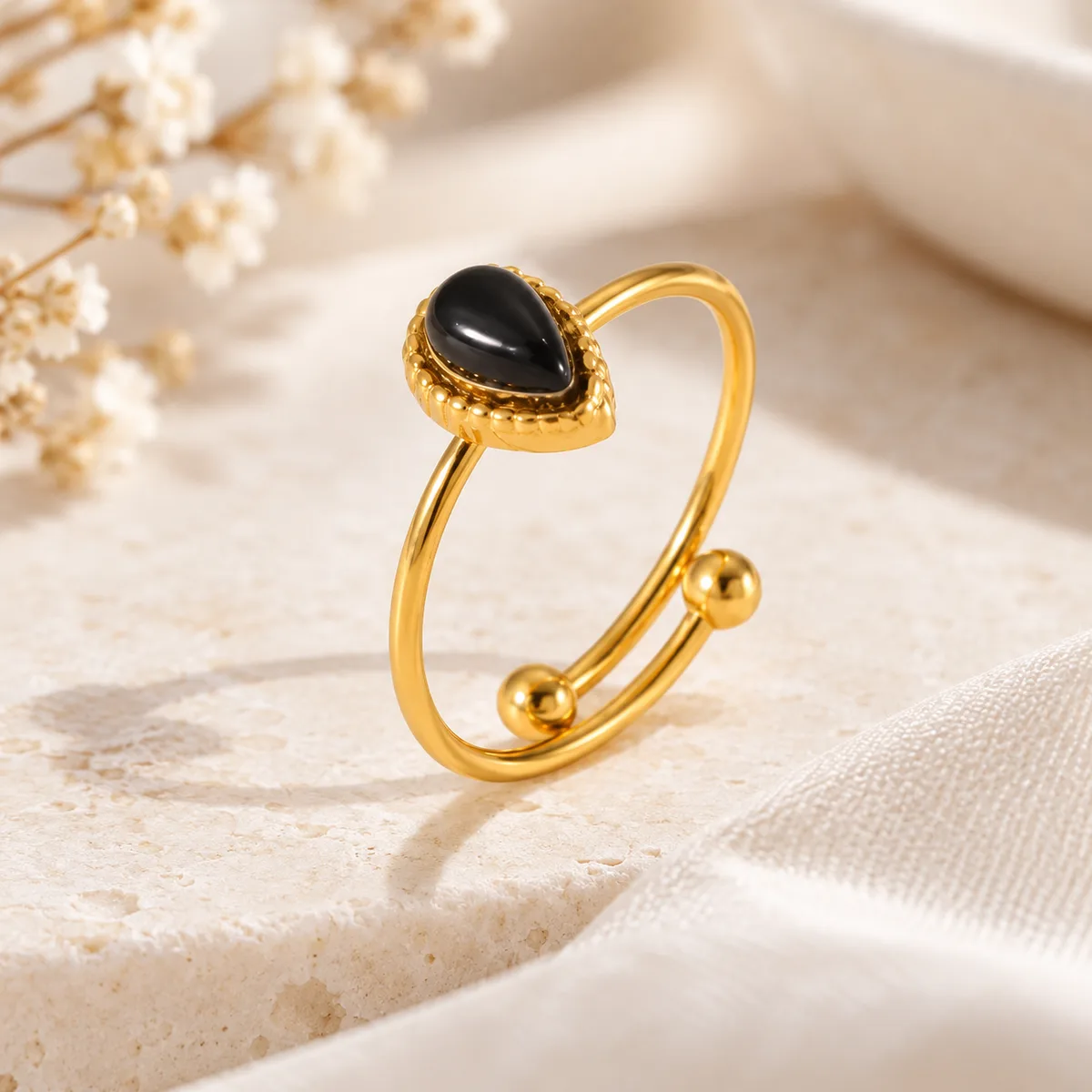
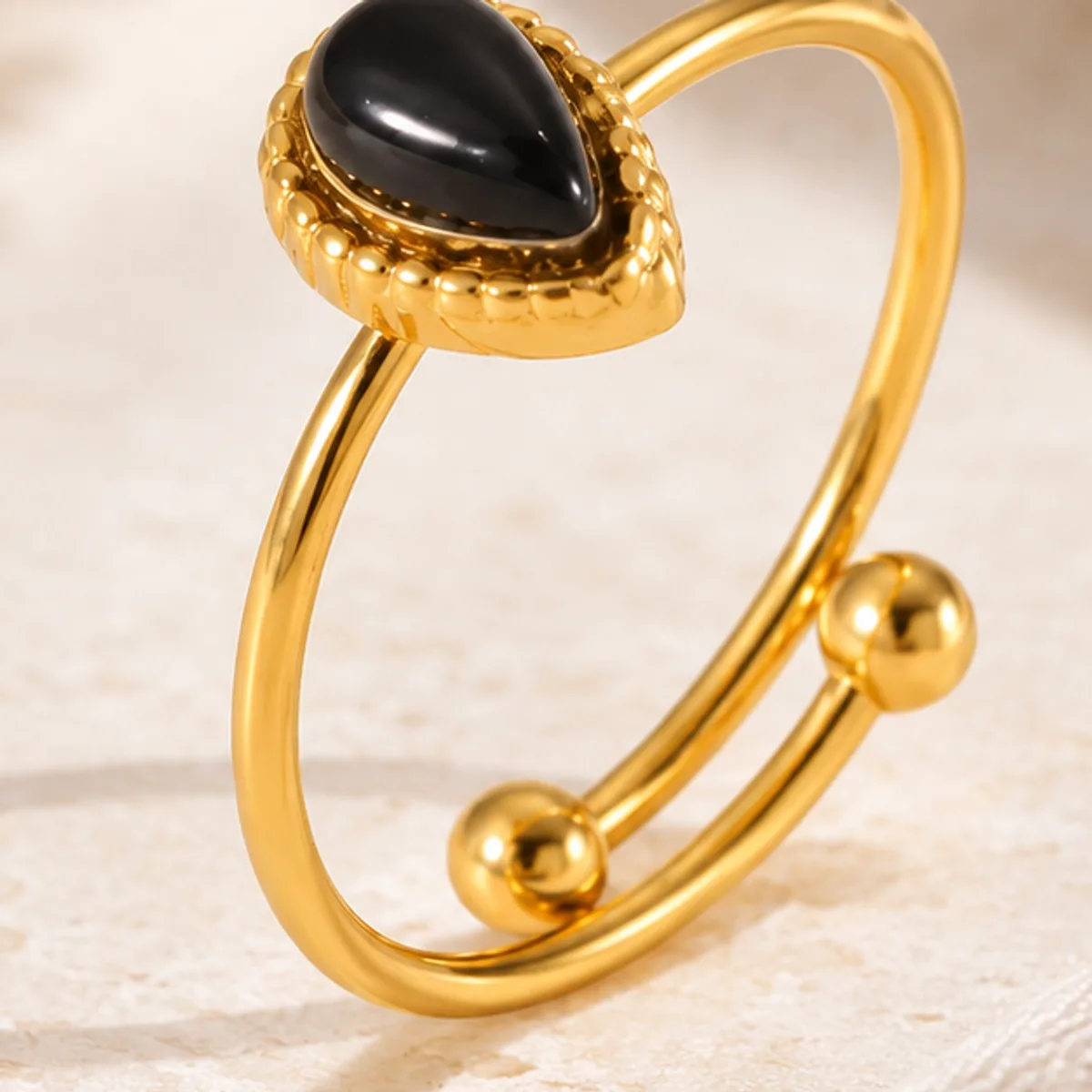
A gold-tone wire about a millimetre across, open at the back and finished with two small beads, carrying an obsidian drop under half an inch ringed by a beaded border. It is the finest ring in the catalogue, and it is made to be stacked.
Everything else in the range is a solid setting, bands of three to six millimetres that occupy the finger. This one does the opposite: it almost disappears, and its whole point is that you can wear two or three of them, or slip it next to a wedding band without the whole becoming heavy. The small drop is enough to make it visible.
The two beads at the ends are not decorative. They close off the wire, which keeps a cut edge from catching the skin or a garment, and they give the grip for adjusting the ring. You push one past the other, and the band opens or closes by about two sizes. The other rings are here.
Two reservations, and they matter on a piece this fine. A one-millimetre wire in plated brass deforms if you trap it, in a car door or under a heavy object: this is not a piece to keep on for moving day. And plating wears faster on a small surface rubbing against the neighboring fingers than on a wide ring. Count on a pleasant piece, not on a lifetime one.
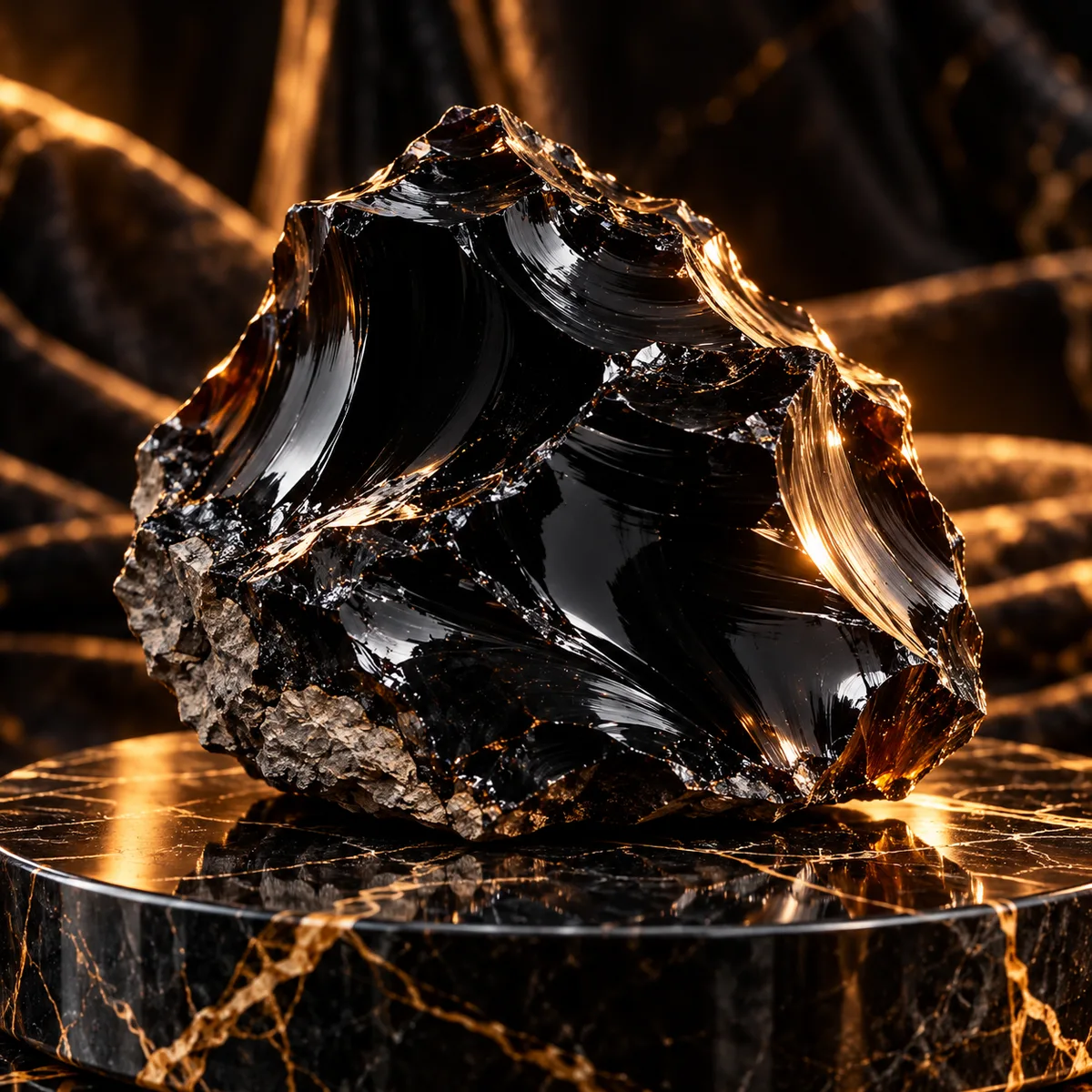
Crystal lore ties obsidian to grounding. None of that is proven, and no piece of jewellery heals anything. I have gathered separately what tradition attributes to obsidian, in the conditional from start to finish.
- Genuine black obsidian, small drop cabochon, closed-bezel set in a beaded border.
- Gold-plated brass, wire about 1 mm, the finest ring in the catalogue.
- Open band with two beads: adjustable over about two sizes.
- A fine wire deforms if trapped: a pleasant piece, not a working one.
What to know before you wear it
 |  |  |
The specifications
- Stone
- Black obsidian, volcanic glass, small drop cabochon
- Metal
- Gold-plated brass
- Band
- Round wire about 1 mm, open, two beads at the ends
- Setting
- Closed bezel ringed by a beaded border
- Adjustment
- Adjustable over about two sizes
- Gender
- Women
- Brand
- Bijoux Obsidienne

A fine ring is opened by twisting, never by pulling apart
There is a right and a wrong way to widen an open band, and almost everyone uses the wrong one. Pulling the two ends apart bends the wire always in the same place, opposite the opening: the metal work-hardens there with every flex, loses its spring, then snaps clean, often at the fifth or sixth adjustment. The right method is to twist, that is, to bring one end past the other by turning, without ever spreading them in the plane of the band. The wire then works in torsion, along its whole length instead of at one point, and it lasts indefinitely.
This ring is in the catalogue because people regularly asked me for something to wear with the others, and all my settings were too wide to sit side by side. A three-millimetre ring next to a six-millimetre one makes a centimetre of metal on one finger. A millimetre fits anywhere. The other rings are here.
You do not pull on an open band, you twist it. Pulled, it snaps at the sixth adjustment; twisted, it does not snap.
Obsidian does not mind water, but gold plating wears with soap, perfume and rubbing. Take the ring off before the shower. Adjust it by twisting the two ends past each other, never by pulling them apart. Cleaning an obsidian piece covers the rest.