
Description
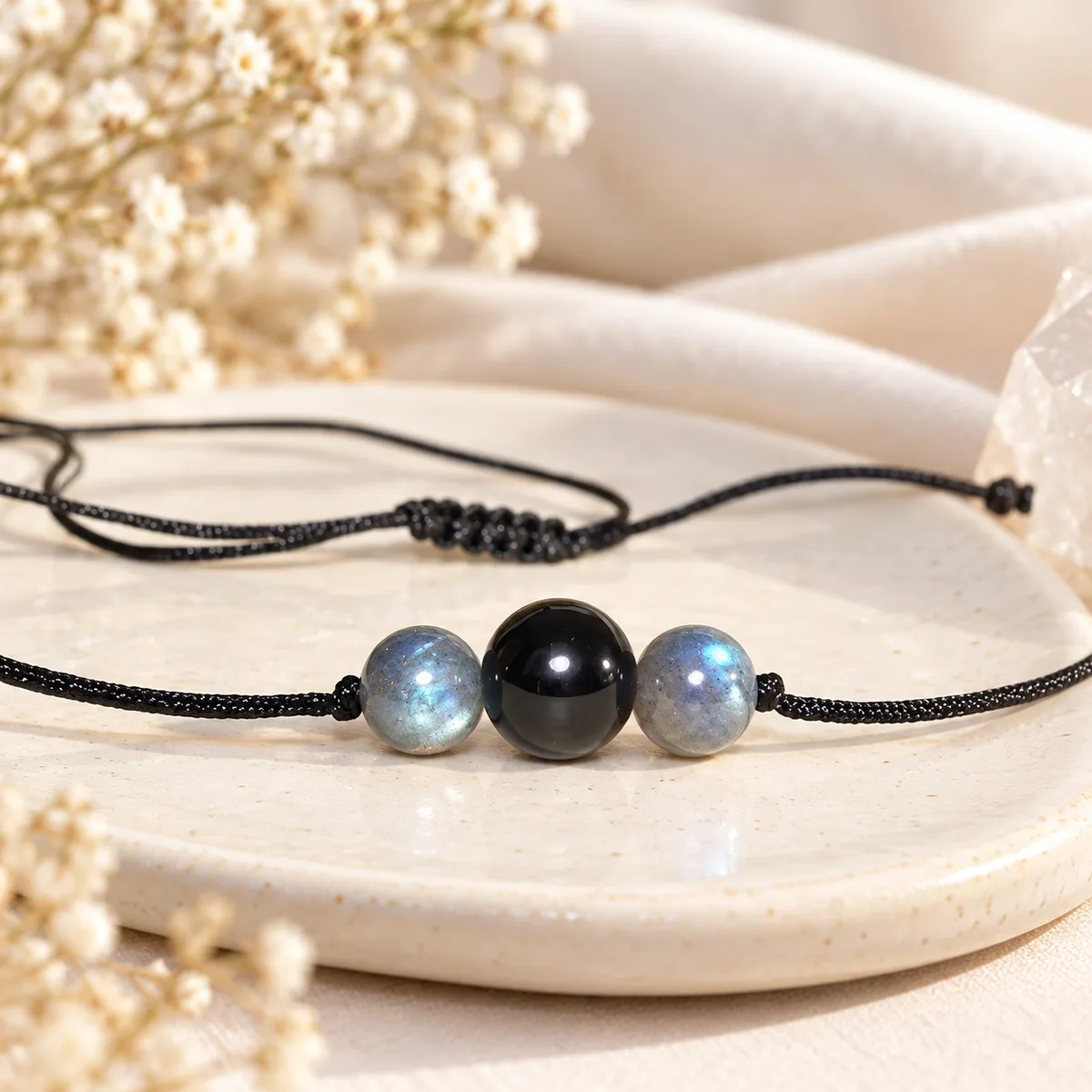
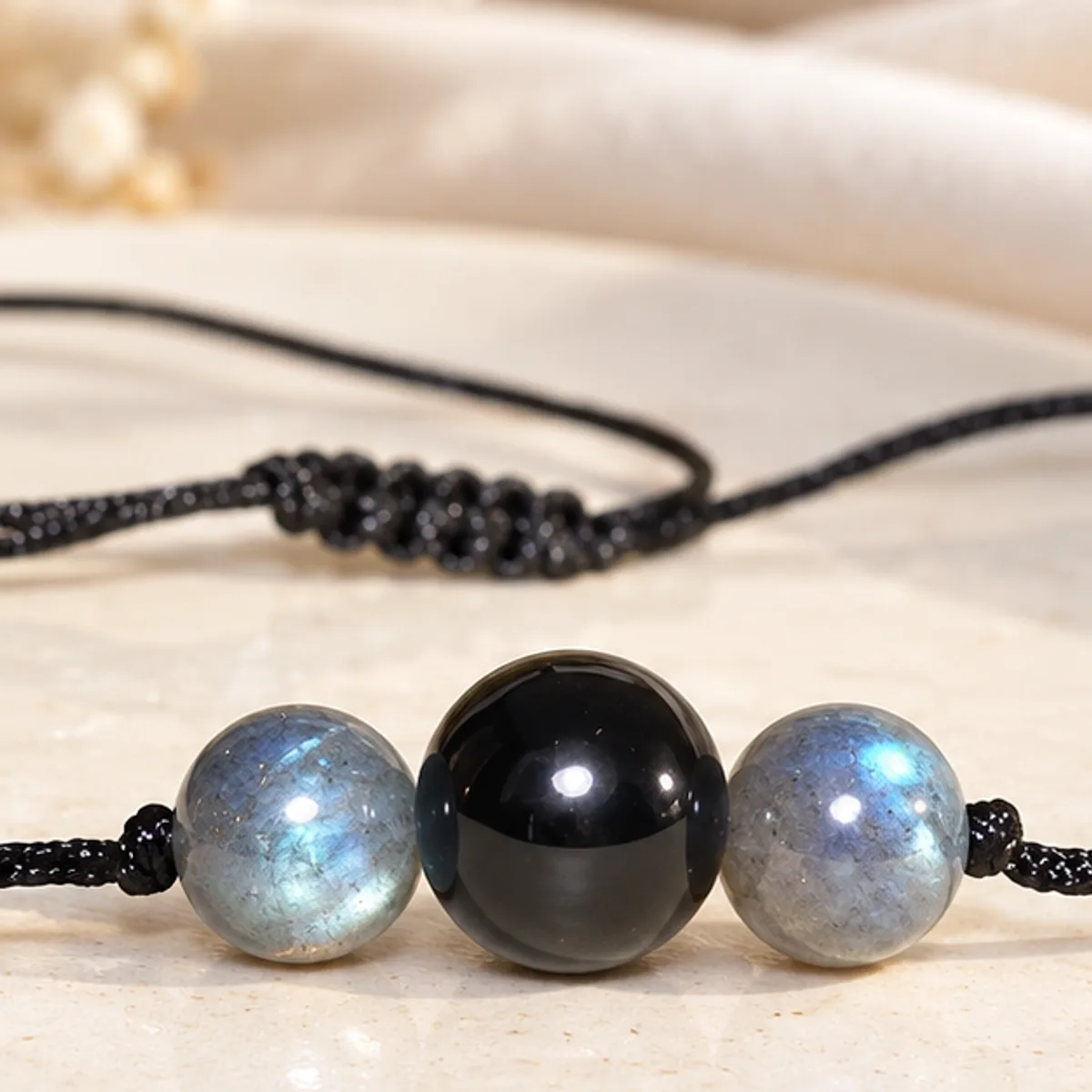
Three beads on a fine black cord, and nothing else: a black obsidian at the centre, a blue labradorite on either side. It is the most stripped-down bracelet in the catalogue, and the hardest to build correctly.
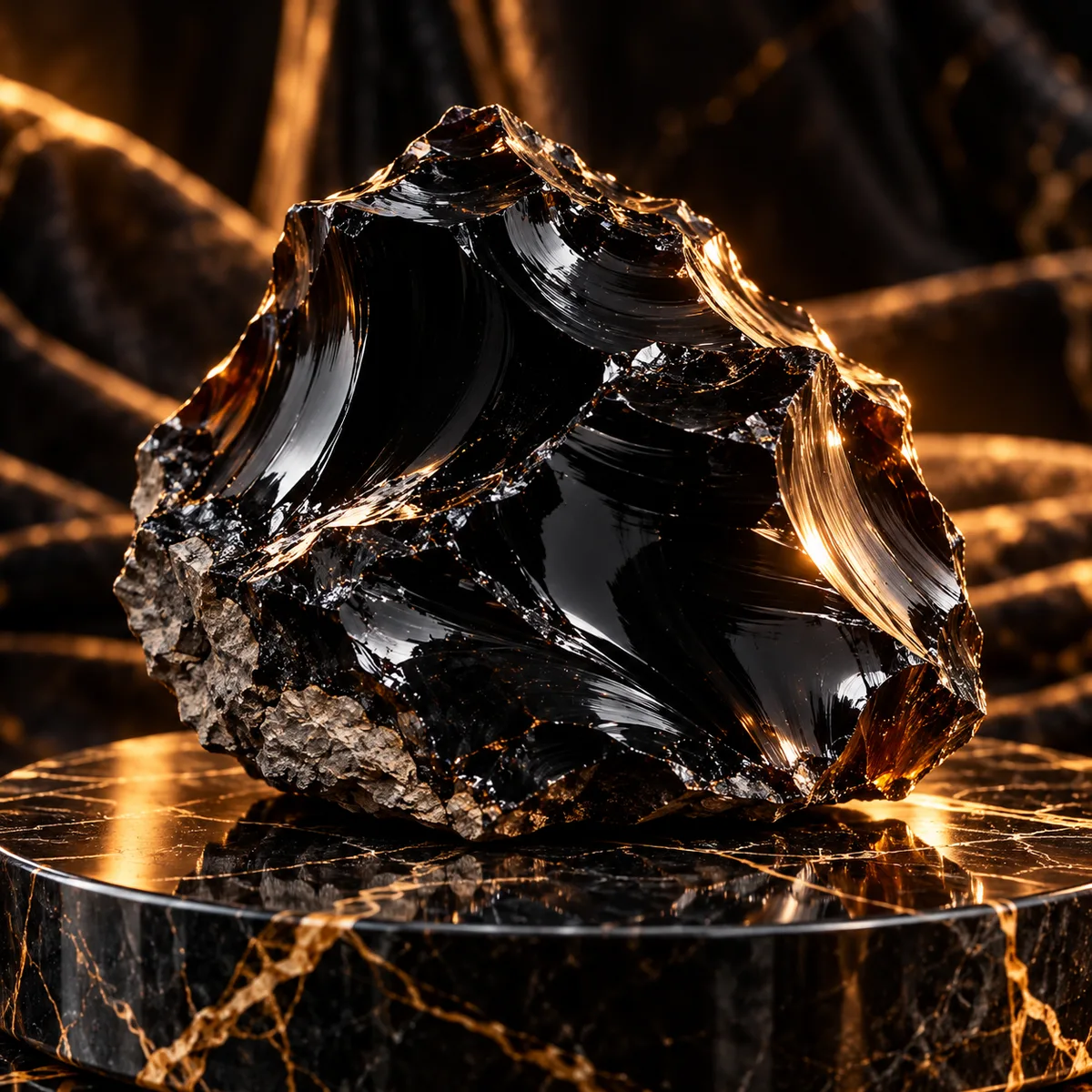
Labradorite is a feldspar, as obsidian is a glass formed from a felsic lava: both come from the same register of rocks, which is not why they are paired here. The real reason is optical. Labradorite shows a blue flash that appears at one angle only, exactly as gold sheen obsidian shows its veil at one angle only. The two stones light up and go dark together as the wrist turns. Pairing obsidian with other stones goes into these mixes.
Three beads on a cord is a decision that lets nothing pass. On a strand of twenty beads, a mediocre stone drowns among the others; here each one is visible at all times, and a dull blue flash on either labradorite is enough to spoil the bracelet. So the sorting is stricter than on any other piece in the catalogue, for three beads. The other bracelets are here.
The reservation concerns labradorite, which is distinctly softer than obsidian. It scratches against a worktop where volcanic glass resists, and its blue flash fades if the surface loses its polish. On a bracelet worn on the writing hand, count on three or four years before a repolish is called for. I do it at no charge.
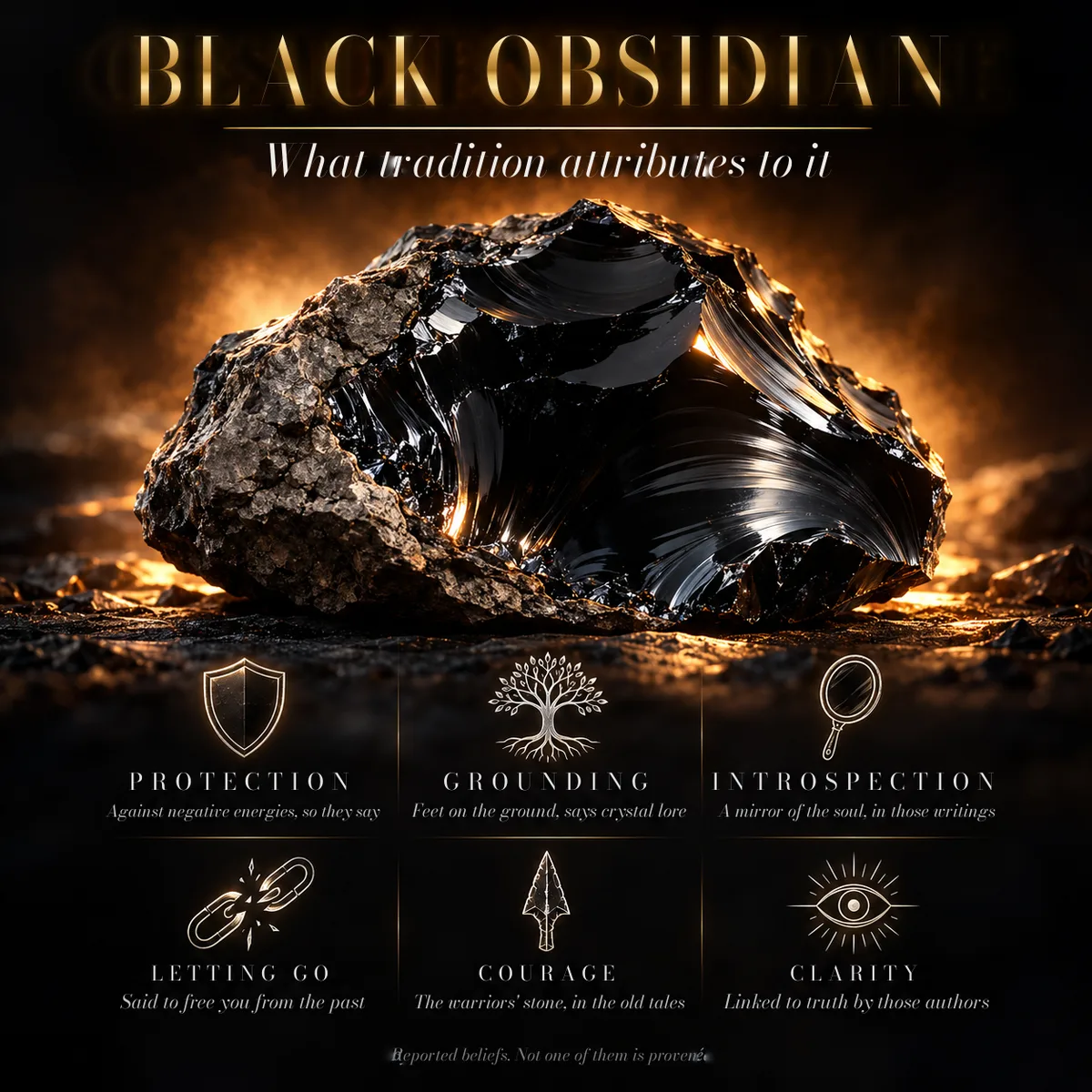
Crystal lore ties obsidian to grounding and labradorite to protection. None of that is proven, and no piece of jewellery heals anything. I have gathered separately what tradition attributes to obsidian, in the conditional from start to finish.
- Three beads only: one black obsidian between two blue labradorites.
- Both stones light up at the same angle: they react to movement together.
- Fine black cord with a sliding knot, adjustable from 15 to 22 cm.
- Labradorite is softer than obsidian: a repolish every three or four years.
What to know before you wear it
 |  |  |
The specifications
- Stones
- Black obsidian, labradorite
- Bead diameter
- 8 mm
- Number of beads
- 3
- Wrist size
- Adjustable from 15 to 22 cm / 6 to 8 3/4 in
- Stringing
- Braided black cord with a sliding knot
- Stone origins
- Mexico, Madagascar
- Gender
- Unisex
- Brand
- Bijoux Obsidienne

Three beads, and nowhere to hide
On a three-bead bracelet, the adjustment that counts is the spacing. Too close, the three stones form a block and the bracelet looks like an unfinished strand; too far apart, they look placed at random and the cord becomes the subject. The right gap comes down to a stopper knot on each side, set about a centimetre out. It is settled to the millimetre and there is no recovering it: a tightened stopper knot cannot be moved without redoing the cord.
This bracelet exists for those who find a full strand too much. Three beads is enough to show a stone and not enough to make a crystal-lore piece, and many people are looking for exactly that line. The other bracelets are here and the obsidian guide explains the stone.
A centimetre between the beads. Too close and it is a failed strand, too loose and it is chance, and the stopper knot no longer moves.
Obsidian does not mind water, but labradorite is softer and scratches, and the cord takes a long time to dry. Take the bracelet off before the shower and before any manual work. A soft cloth is enough, never an ultrasonic bath. Cleaning an obsidian piece covers the rest.