Description
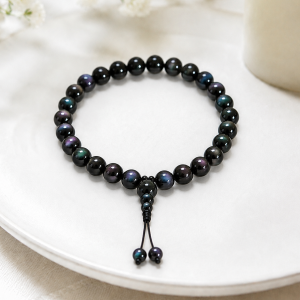
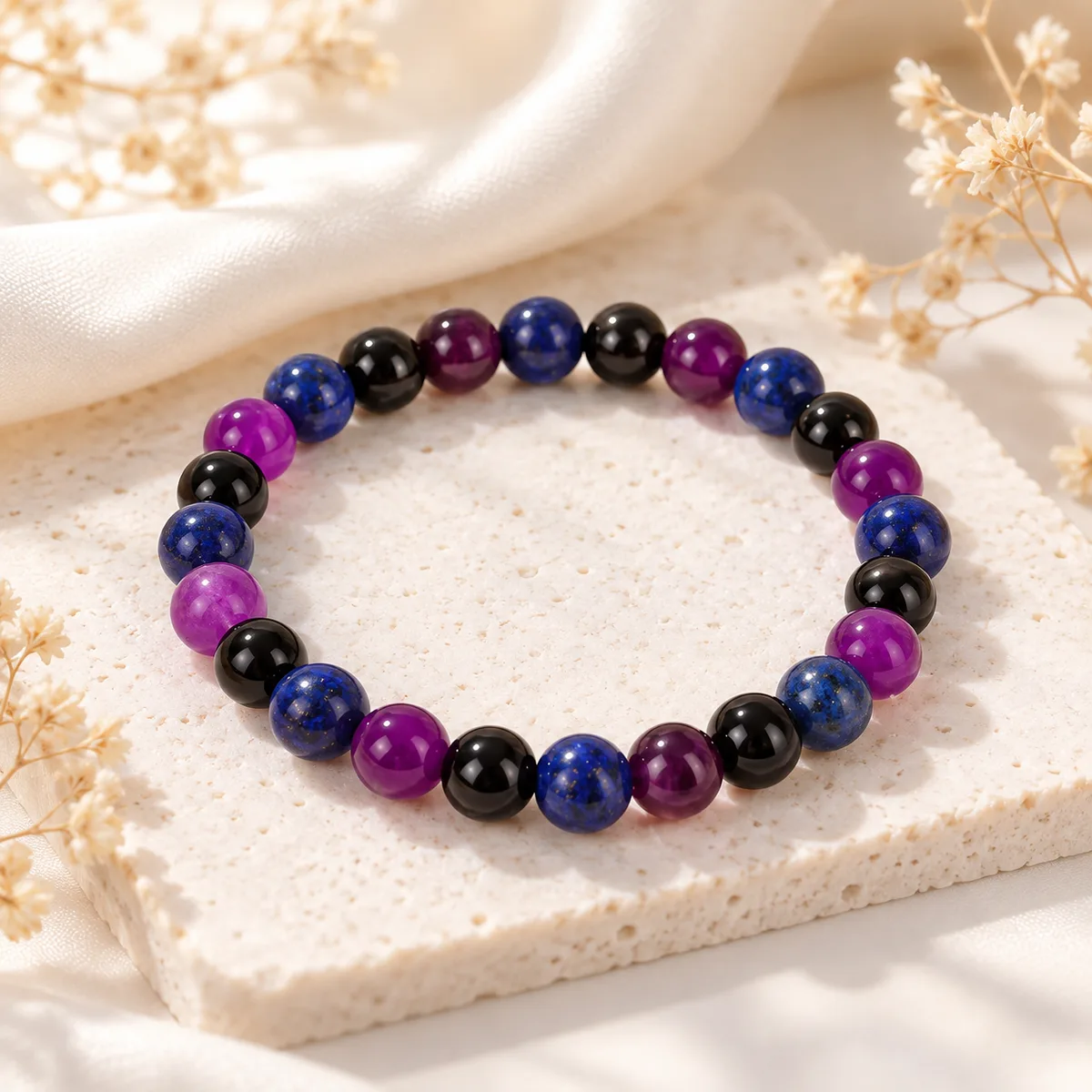
Three colours on an 8 millimetre strand: the black of obsidian, the deep blue of lapis lazuli flecked with pyrite, and a frank fuchsia that comes from a dyed agate. It is the most colorful bracelet in the range, by a long way.
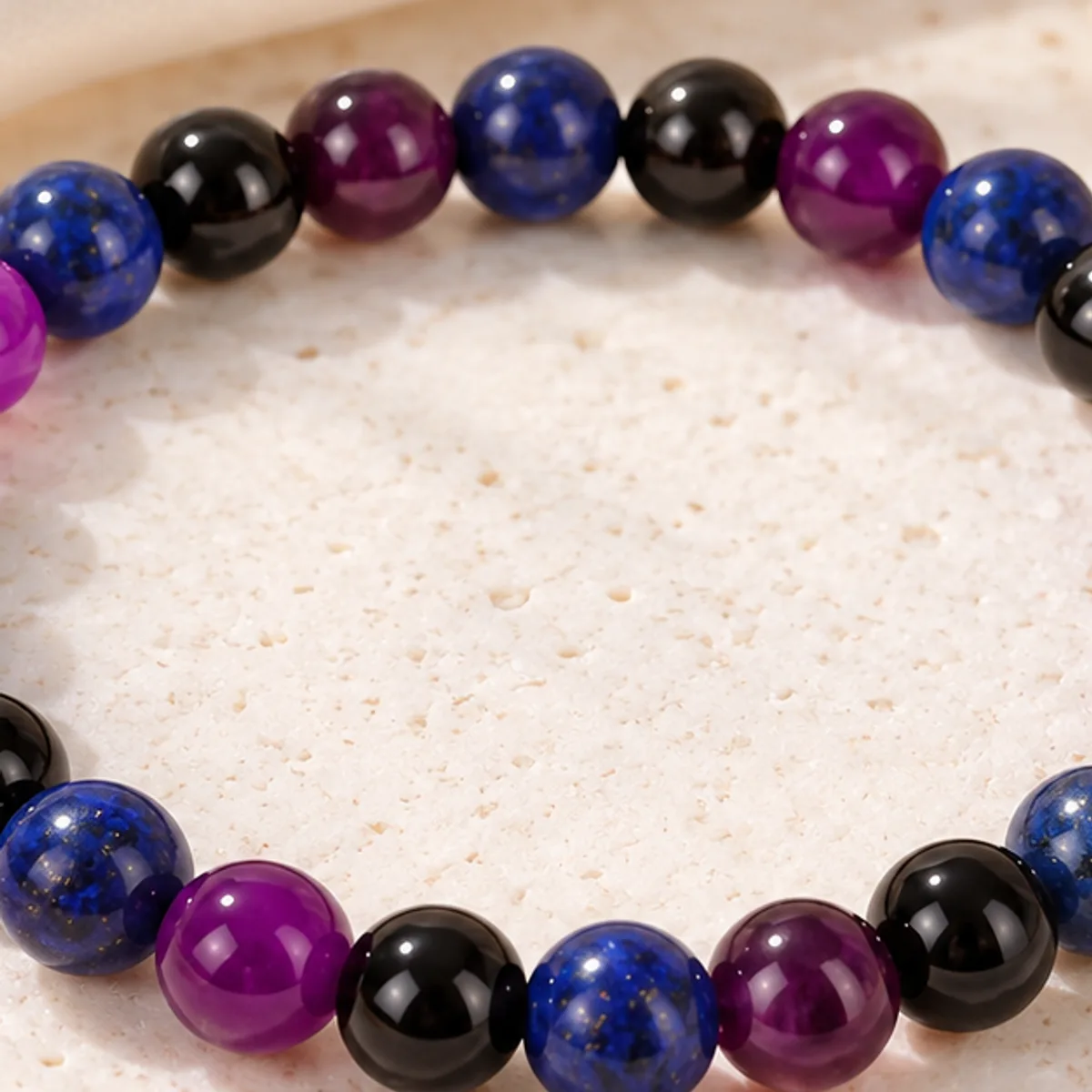
Lapis lazuli is not a mineral but a rock, a mixture dominated by blue lazurite, with white calcite and golden pyrite. The little gold dots you see on the beads are pyrite, not an added inclusion: that is the signature of lapis, and its complete absence from a very uniform bead should give you pause instead. Pairing obsidian with other stones covers those mixtures.
Here obsidian plays the part black plays in painting: it separates the colours and keeps them from dirtying one another. Without the black beads between the blue and the fuchsia, the two would clash. That is also why this strand holds together visually although it mixes three stones, which fails half the time. The other bracelets are here.
Fuchsia agate is a dyed agate. No agate comes out of the ground in that bright pink: the stone is porous, it takes a dye, and the trade has done it since the nineteenth century. It is neither a fraud nor a fault as long as it is said, and I say it. Practical consequence: that colour fades under prolonged direct sunlight, which neither obsidian nor lapis does.
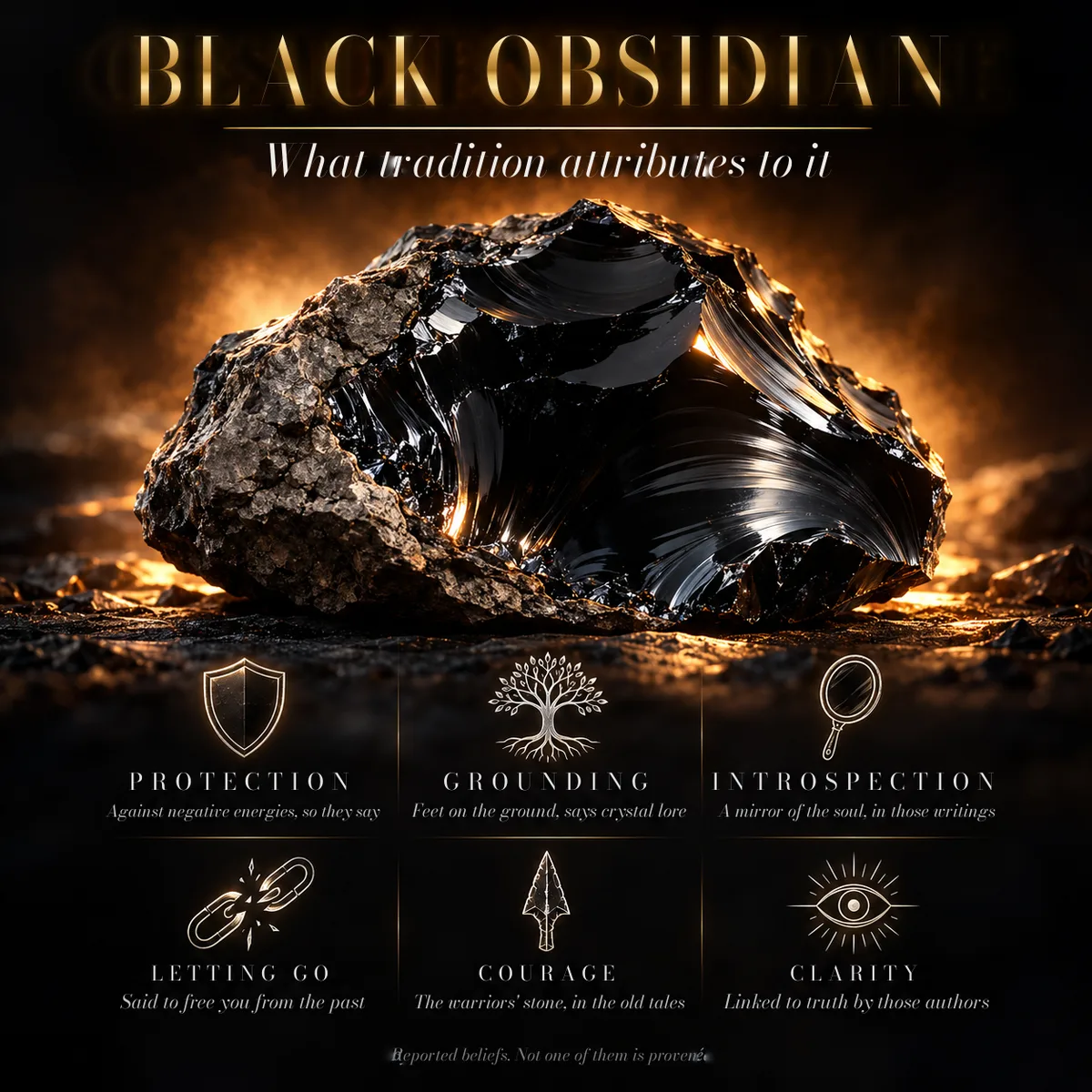
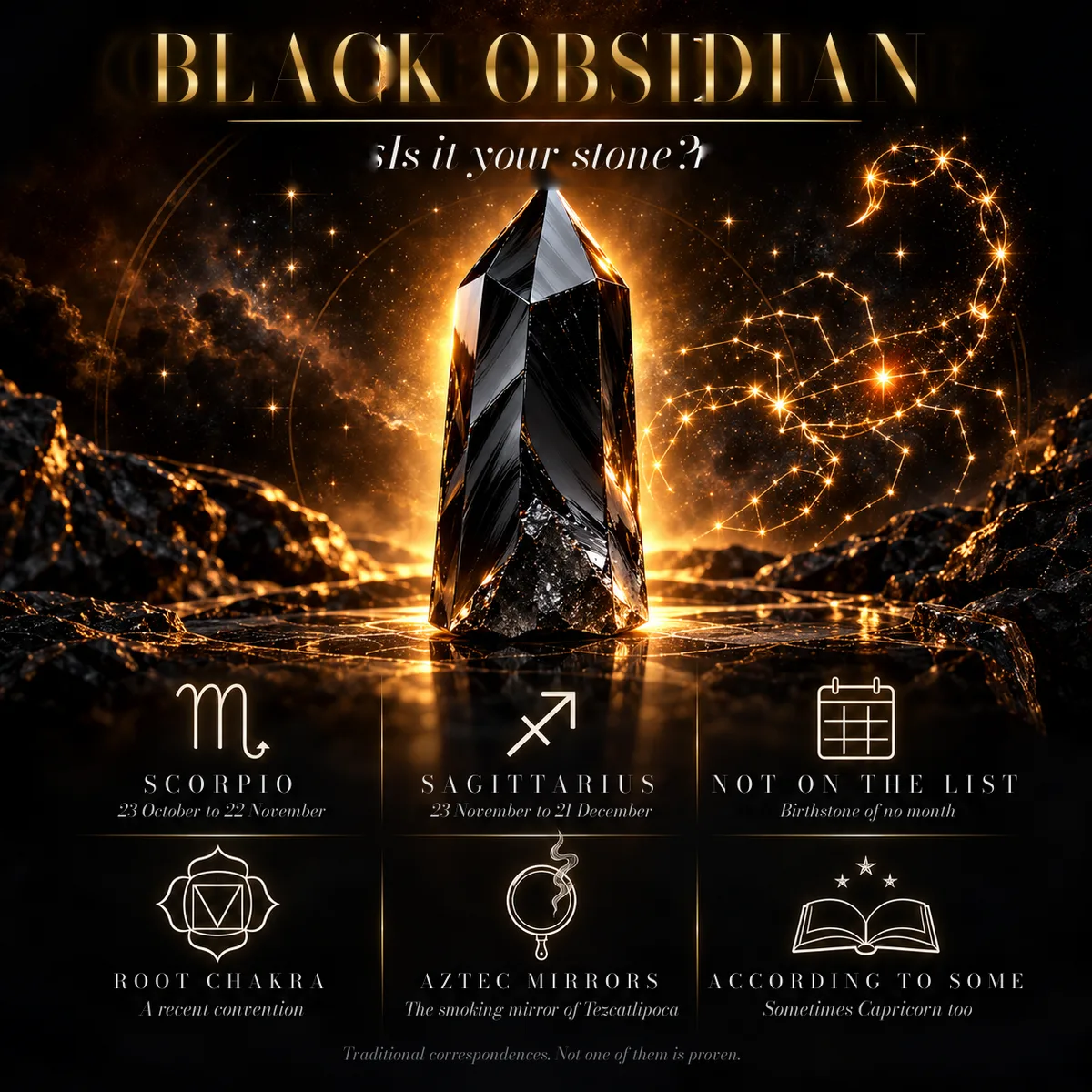
Crystal lore ties obsidian to grounding and lapis lazuli to speech. None of that is proven, and no piece of jewellery heals anything. I have gathered separately what tradition attributes to obsidian and what it says about pairings, in the conditional from start to finish.
- Three stones in 8 mm beads: black obsidian, lapis lazuli, fuchsia dyed agate.
- The agate is dyed, like every agate of that colour, and its shade fades in direct sun.
- The gold dots in the lapis are pyrite, the signature of that rock.
- Hand-strung in France on braided elastic cord, no clasp.
What to know before you wear it
 |  |  |
The specifications
- Stones
- Black obsidian, lapis lazuli, dyed agate
- Bead diameter
- 8 mm
- Treatment
- Dyed agate, obsidian and lapis untreated
- Wrist size
- 17 to 19 cm / 6 3/4 to 7 1/2 in, elastic
- Stringing
- Braided elastic cord, no clasp
- Weight
- About 19 g / 0.7 oz
- Stone origins
- Mexico, Afghanistan, Brazil
- Gender
- Women
- Brand
- Bijoux Obsidienne
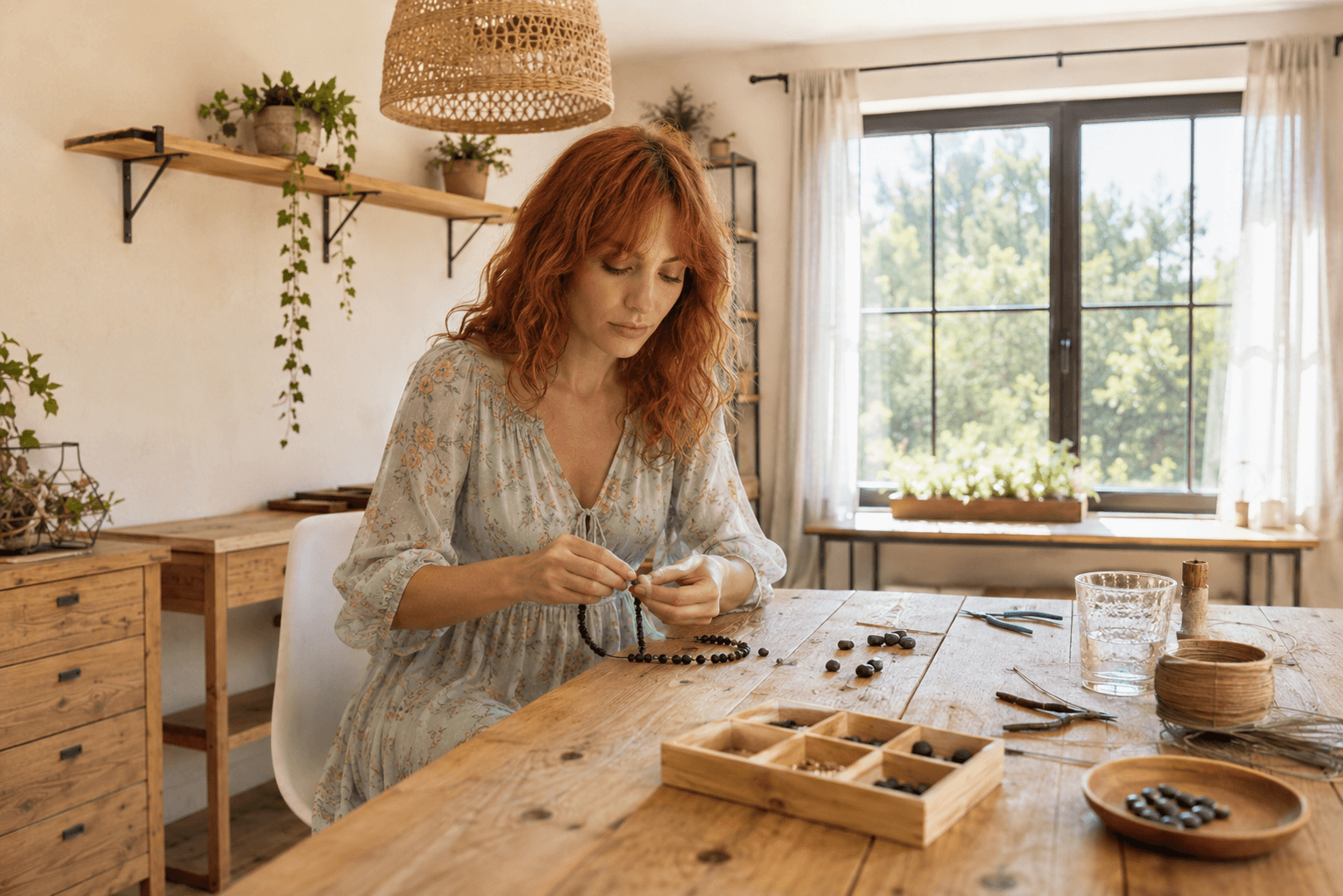
The agate is dyed, and I would rather write it down
You recognize a dyed agate at the edge of the drill hole. The dye enters through the pores, and since the layers of an agate do not all have the same porosity, it stops dead on some of them: looking into the hole of a bead you see paler rings, sometimes almost white, where the dye did not reach. On a naturally colored stone the colour is the same from edge to centre. That is the check I make, and it takes ten seconds a bead.
This strand exists because people asked me for colour, and obsidian has none. Rather than dye the obsidian, which does not take on a glass, I preferred to pair it with stones that already have some. The obsidian varieties show how few shades the stone offers on its own, and the other bracelets are here.
A dyed agate reads in the hole of the bead. The colour stops where the pores stop.
Obsidian does not mind water, but dyed agate fades in prolonged direct sun: do not leave the bracelet on a windowsill. Take it off before exercising, a soft cloth is enough, never an ultrasonic bath. Cleaning an obsidian piece covers the rest.