
Description
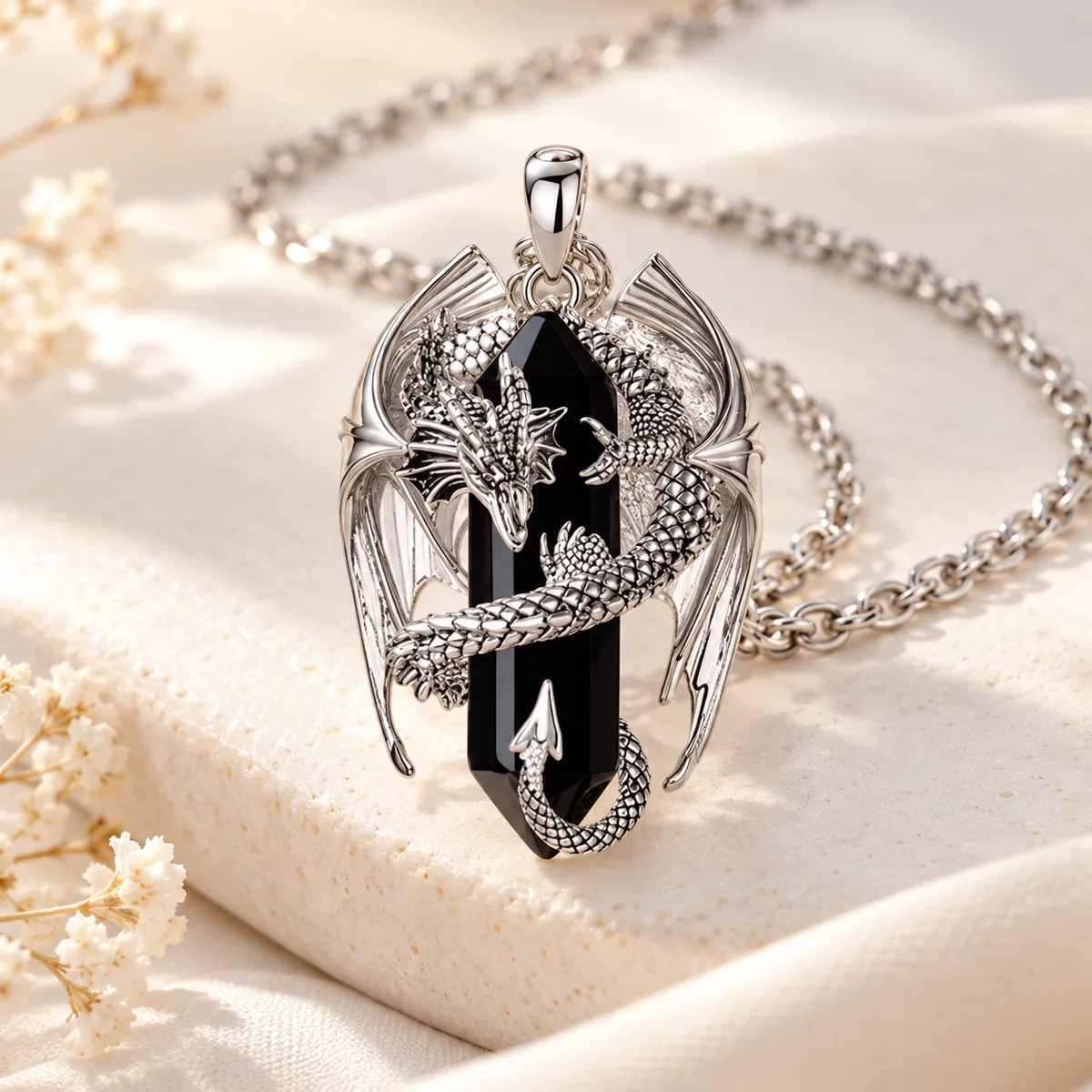
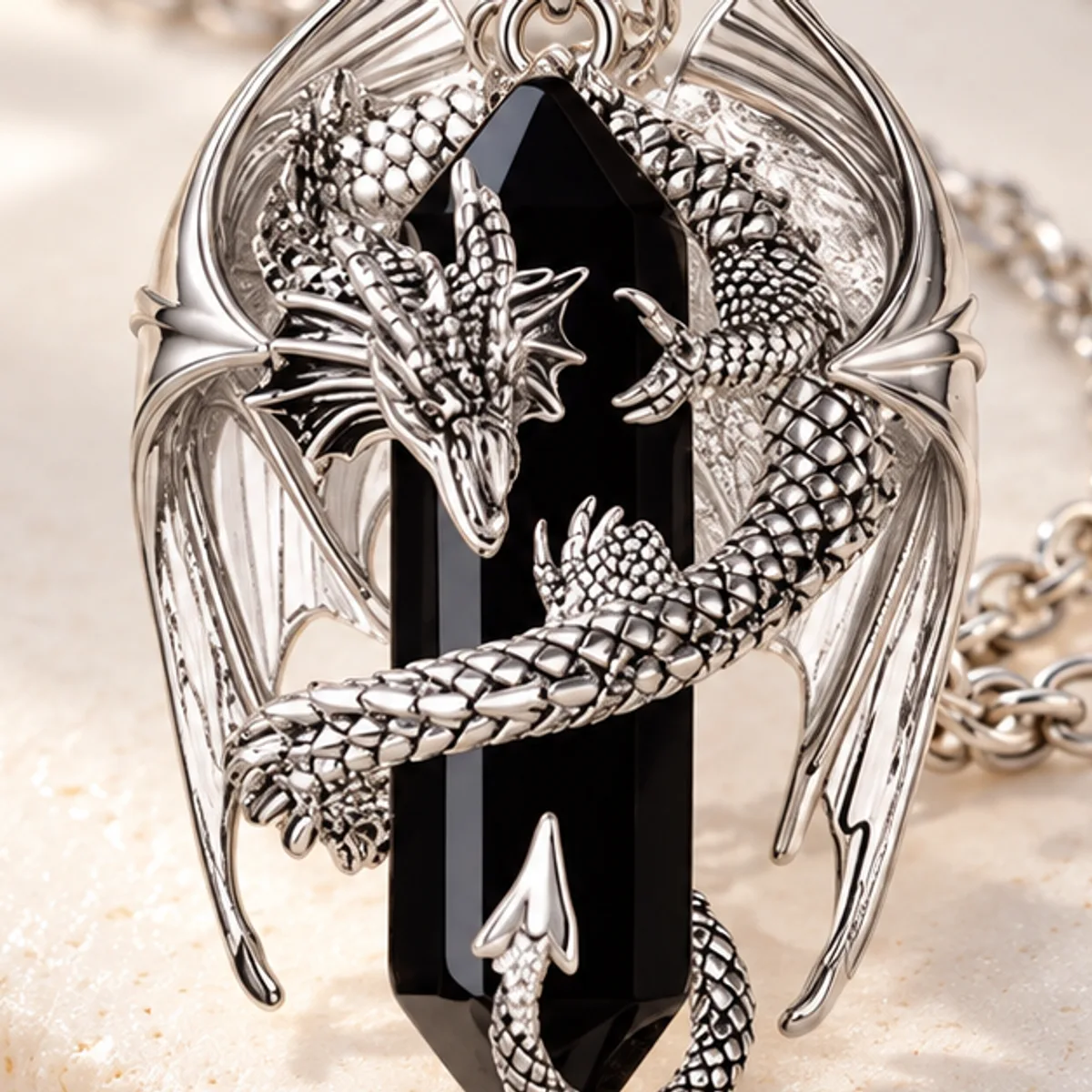
A silver-toned metal dragon, wings spread, coiled around an obsidian prism it holds in its claws. It is the most worked piece in the catalogue, and the most expensive, and I would rather explain why than let the price speak for itself.
The dragon is not an appliqué laid on the stone: it wraps around it. The legs pass in front, the tail behind, and the wings close over the flanks of the prism. It is a three-dimensional setting, cast in several parts and then assembled, whereas an appliqué is cut in one piece from a sheet. The difference in making time between the two is a factor of five, and that accounts for most of the price gap.
The catalogue already sells a dragon, but carved into the obsidian itself: there, the creature and the stone are the same material. Here they are two materials answering each other, the pale metal and the black glass. They are not two variants of the same piece but two opposite objects, and this one is three times the price. Both are here.
Two reservations, and the second matters. The first is the silver-toned metal: it is a plating, and it will wear on the edges of the wings and along the dragon’s back. The second is the stone: it is held by claws, so by a few bearing points, and a fall puts those points to work. On a stone as brittle as obsidian, a claw pressing too hard is the start of a crack. I check the tension of every claw under a loupe before shipping, and I advise having it checked every two years.
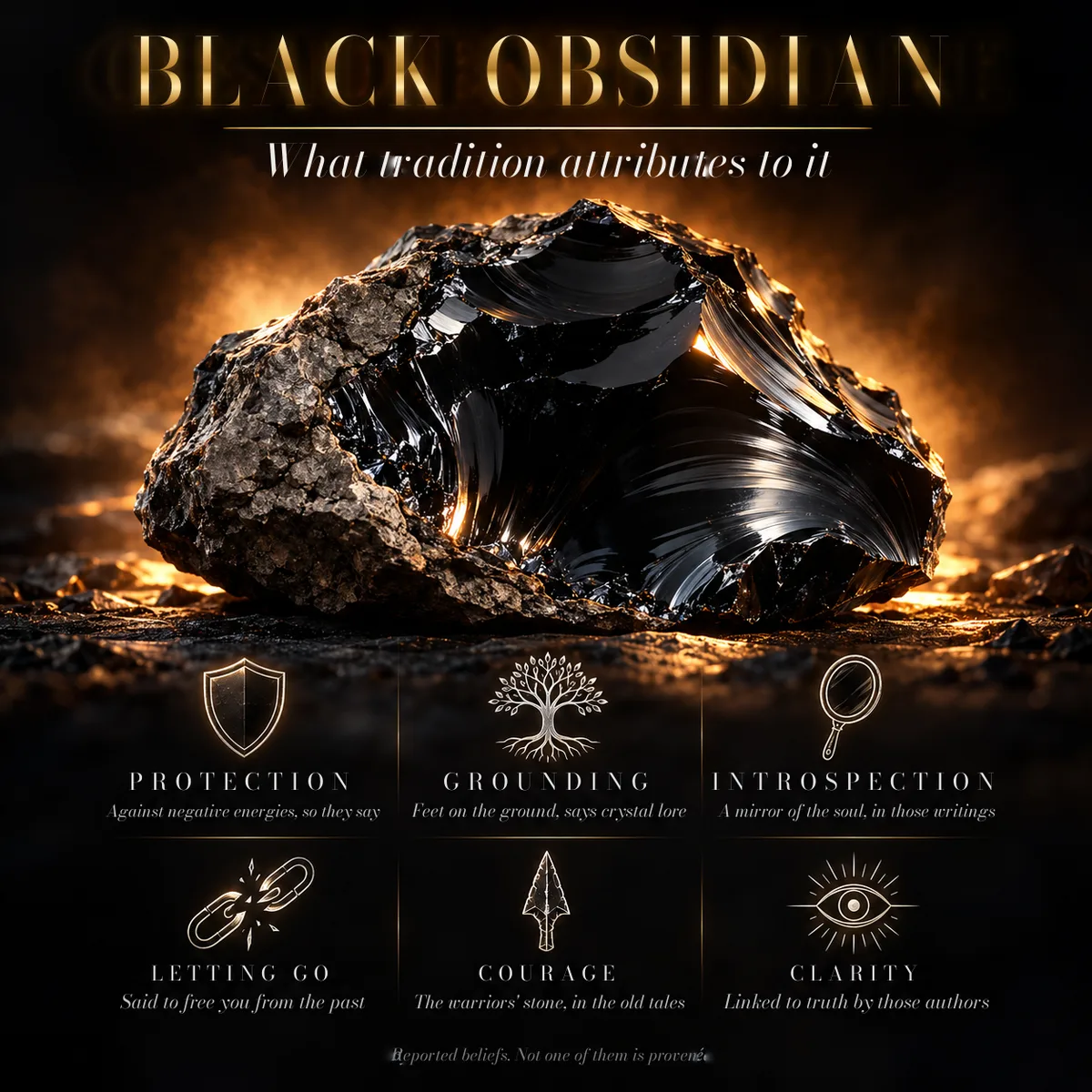
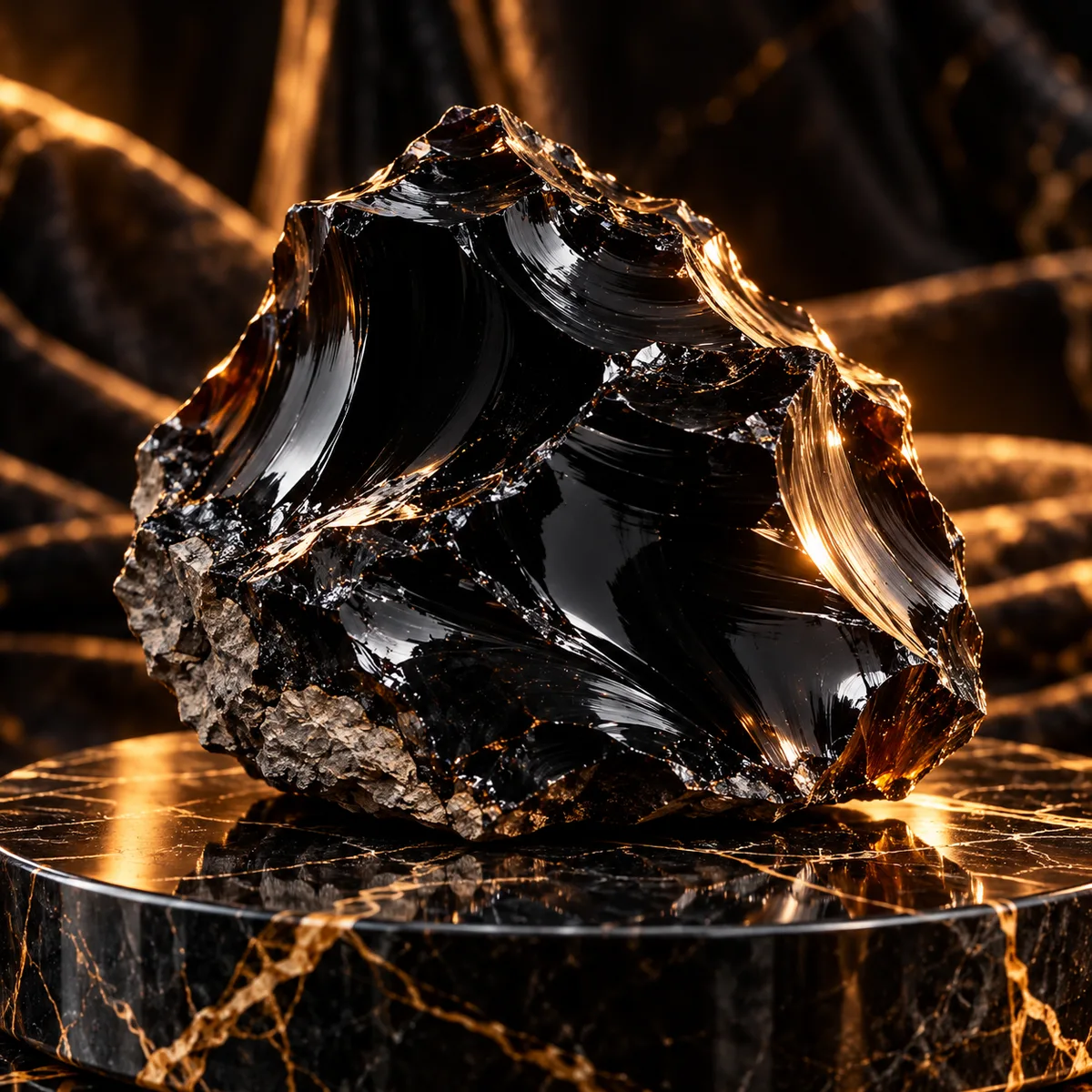
Crystal lore ties obsidian to grounding, and the dragon to strength in several unconnected cultures. None of that is proven, and no piece of jewellery heals anything. I have gathered separately what tradition attributes to obsidian, in the conditional from start to finish.
- Genuine black obsidian, cut prism, held by the claws of a silver-toned metal dragon.
- Three-dimensional setting, cast in several parts and assembled, not a cut appliqué.
- The most expensive piece in the catalogue, and the longest to make.
- Claw tension checked under a loupe before shipping, to be rechecked every two years.
What to know before you wear it
 |  |  |
The specifications
- Stone
- Black obsidian, volcanic glass, cut prism
- Setting
- Silver-toned metal dragon, cast and assembled, claw set
- Height
- About 55 mm / 2 1/4 in with the setting
- Chain
- Stainless steel cable link
- Gender
- Unisex
- Brand
- Bijoux Obsidienne

Why this piece costs three times the others
The real risk of a claw setting on a volcanic glass is not that the stone falls out, it is that it splits. A claw tightened too far exerts permanent pressure on a few tenths of a square millimetre, and obsidian accepts that pressure for months before giving way all at once, often with no impact at all. The right adjustment is the one where the stone does not move when you push it with a finger but where you can still see a hair of daylight under the claw. It is that daylight that saves the stone.
This piece is in the catalogue because a high-end object was missing, and because the carved dragon, however well it comes out, stays discreet. This one is not discreet at all, and that is its reason for being. The other pendants are here and the obsidian guide explains the stone.
A claw tightened too far does not break the stone at once. It breaks it six months later, with no impact.
Obsidian does not mind water, but the silver-toned plating dulls in contact with perfume and sweat. Take the pendant off before the shower and before sport. Never rub the dragon with an abrasive cloth, and never an ultrasonic bath: the vibrations loosen the claws. Cleaning an obsidian piece covers the rest.