
Description
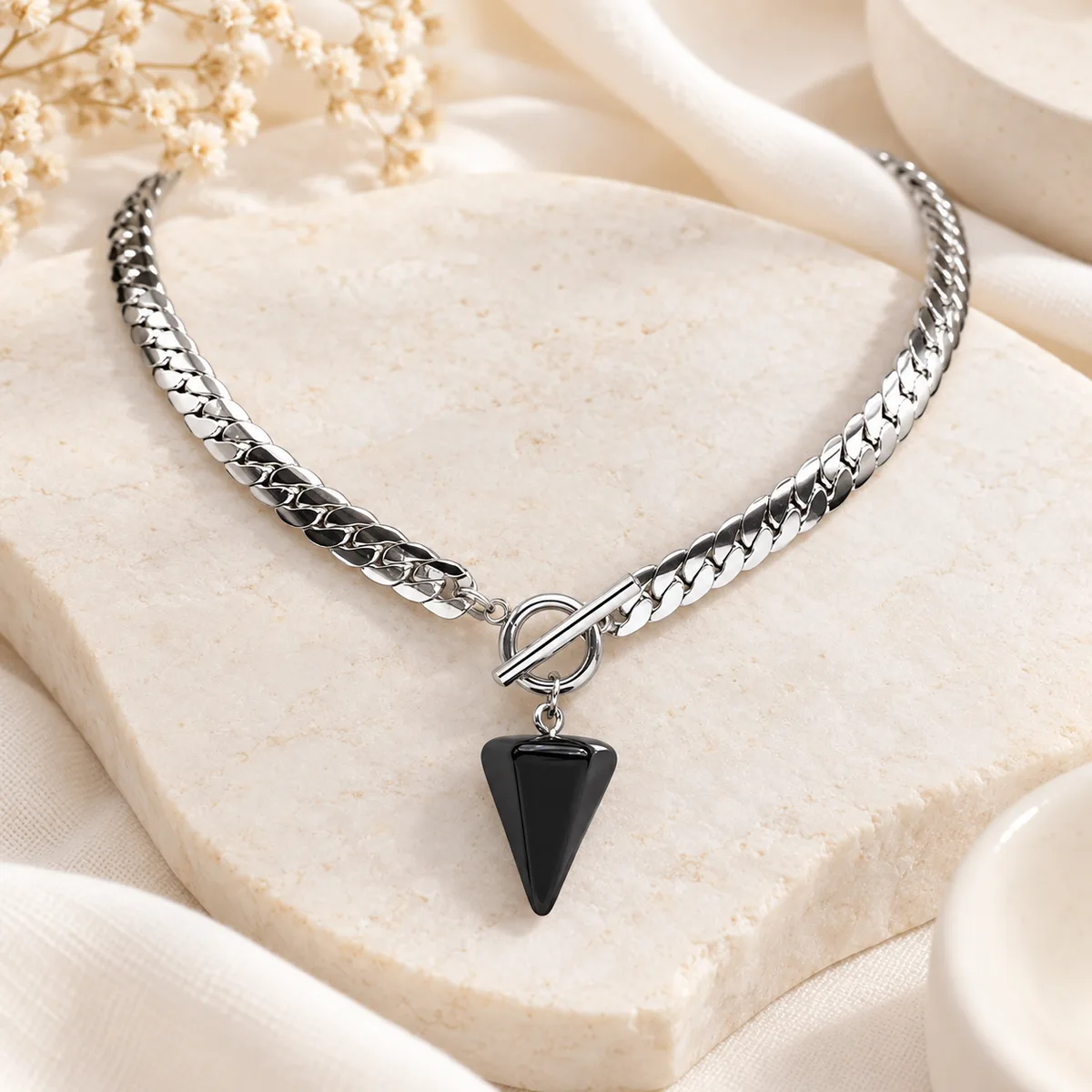
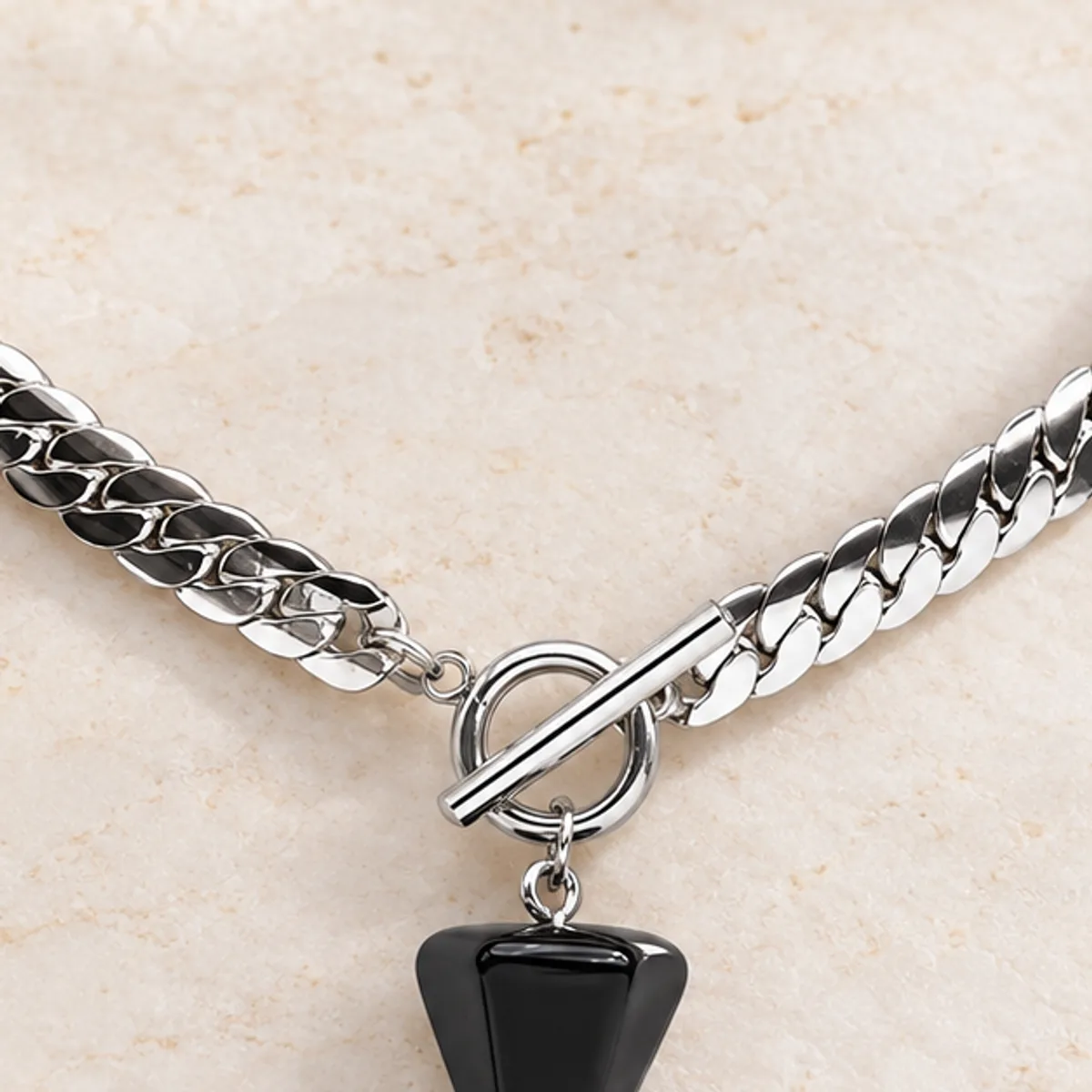
A flat Cuban link chain in stainless steel, closed by a toggle bar worn at the front, with an obsidian cone hanging from that closure. The clasp is not hidden at the nape: it is part of the design.
The toggle clasp is a bar that passes through a ring and locks by its own weight. It is the oldest necklace closure still in use, and the only one with no spring, no hinge and no moving part. Nothing on it can break. The trade-off is that it comes undone if the necklace is pulled sharply upward, which is exactly what you want from a piece worn close to the neck.
The obsidian cone hangs under the bar, in the hollow of the collarbone. That is an unusual position: a classic pendant falls lower, on the sternum. Here the stone stays high and shows under an open collar, which makes it a daytime necklace rather than an evening piece. The other necklaces are here.
The reservation concerns the steel and the stone together. The Cuban chain is heavy and stiff, and the obsidian cone hangs from a simple ring: in a sudden movement it is the stone that comes knocking against the metal, not the other way round. Obsidian chips on impact, steel does not. Over several years of daily wear, the tip of the cone will end up showing micro-chips.
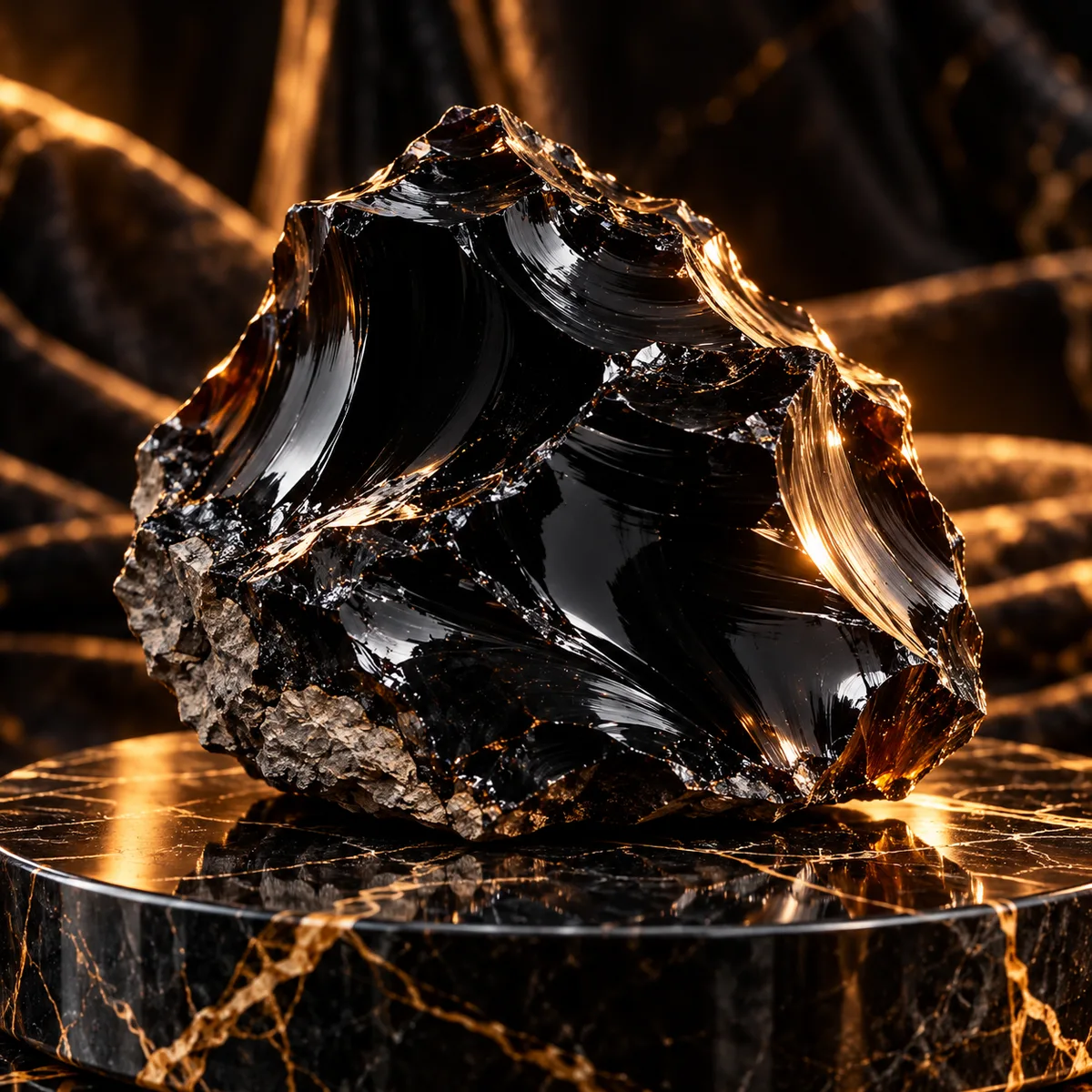
Crystal lore ties obsidian to grounding. None of that is proven, and no piece of jewelry heals anything. I have gathered separately what tradition attributes to obsidian, in the conditional from start to finish.
- Flat Cuban link chain in stainless steel, which does not blacken and does not kink.
- Toggle clasp worn at the front, with no spring or hinge: nothing on it can break.
- Genuine obsidian cone, hanging high, in the hollow of the collarbone.
- The stone knocks against the steel as you move: the tip will mark over the years.
What to know before you wear it
 |  |  |
The specifications
- Stone
- Black obsidian, volcanic glass, cut as a cone
- Chain
- Flat Cuban link in stainless steel
- Clasp
- Toggle bar, worn at the front
- Length
- About 17 3/4 in (45 cm)
- Gender
- Unisex
- Brand
- Bijoux Obsidienne

The toggle clasp, which shows instead of hiding
A toggle clasp holds by a proportion, not by a force. The bar must overhang the ring by at least a third of its length on each side, otherwise it pivots and comes out on its own at the first movement. Too long, and it no longer goes through the ring unless you present it perfectly straight, and the necklace becomes a nuisance to close. The gap between the two is about two millimeters, and that is the whole adjustment on this piece.
This necklace exists because a clasp hidden at the nape is a part you put up with. Bring it to the front and it becomes an element of the design, and you stop hunting for the catch blind. The other necklaces are here and the obsidian guide explains the stone.
Two millimeters separate a bar that comes out on its own from a bar you can no longer get through.
Obsidian and stainless steel do not mind water. Avoid letting the stone beat against the chain while running, and take the necklace off before sport. A soft cloth is enough, never an ultrasonic bath. Cleaning an obsidian piece covers the rest.