
Description
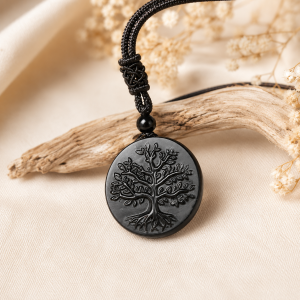
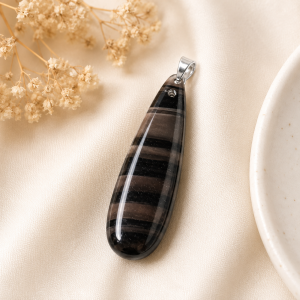
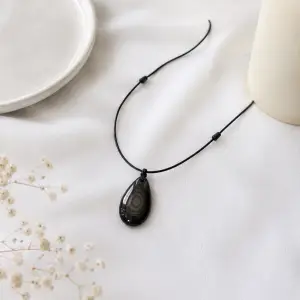
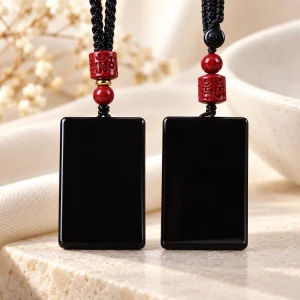
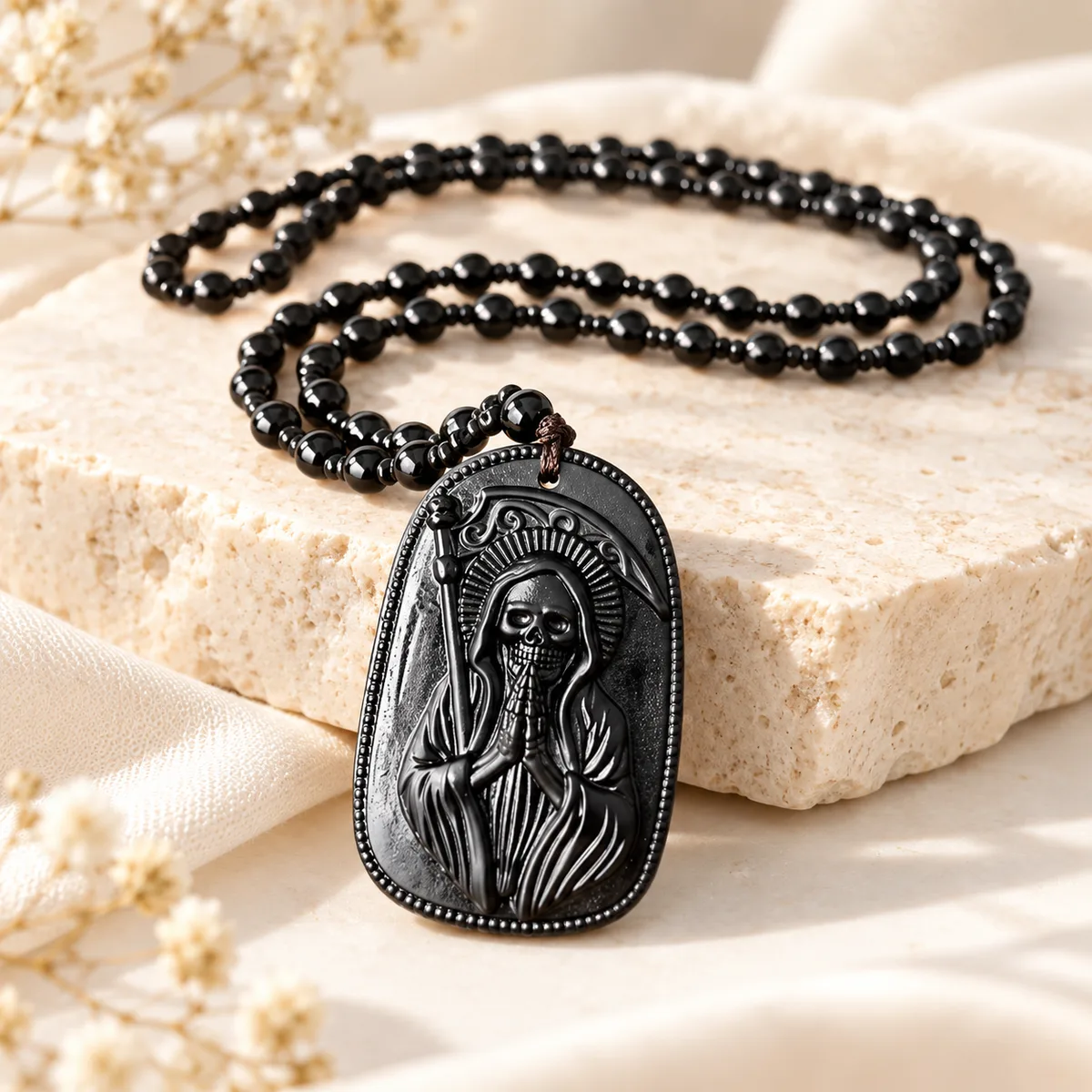
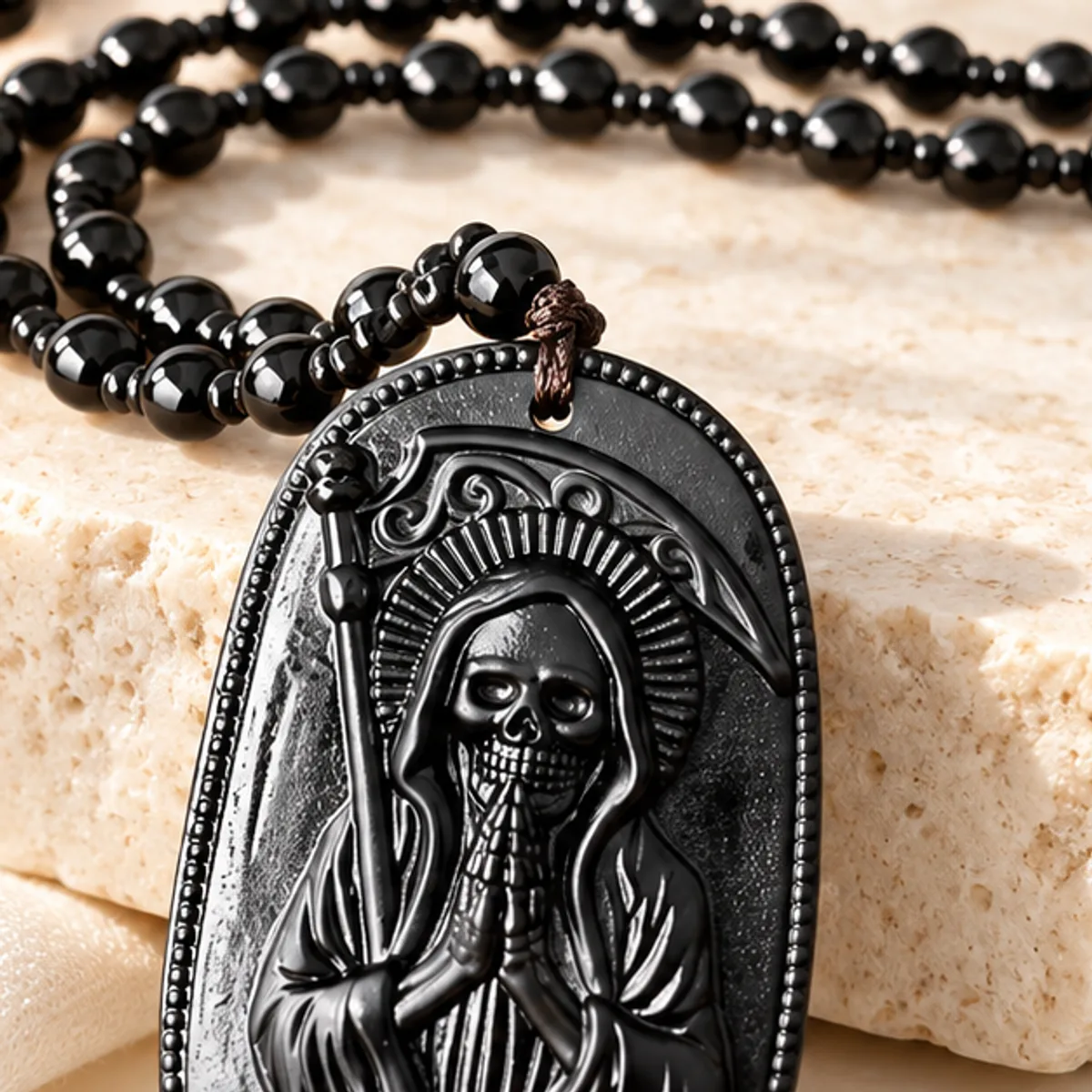
Santa Muerte carved in relief in an oval obsidian plaque, framed by a beaded border, hung from a chain of beads of the same stone. It is the only piece in the catalogue where the figure and the stone come from the same country.
Santa Muerte is a figure of Mexican folk Catholicism, which appeared in its present form in the twentieth century and spread widely from the two thousands on. She is shown as a draped skeleton, haloed, often with hands joined as here. She is recognized by no Church and her devotion remains debated in Mexico itself. I describe her, I do not comment on her: she is an object of devotion for many people, and that deserves accuracy rather than local colour.
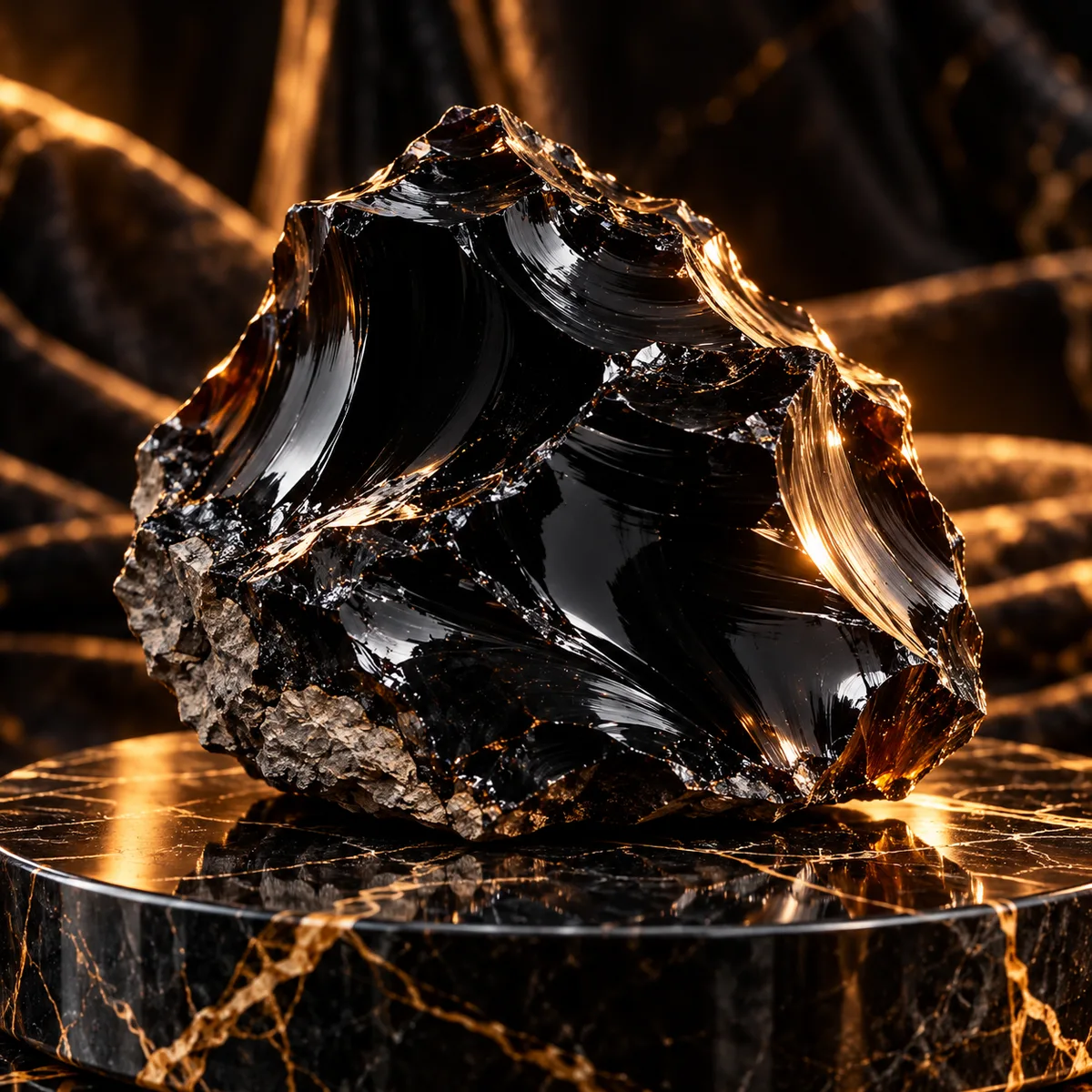
The obsidian comes from Mexico, as all the stones in this shop do, and the coincidence is not quite one. The deposits of the Trans-Mexican Volcanic Belt were already supplying Mesoamerican workshops three thousand years ago, and the stone has never stopped being worked on the spot. A Mexican figure carved in a Mexican stone is the only object in the catalogue where the two meet. The obsidian guide tells about those deposits.
The reservation is practical. The relief is fine, the folds of the drapery are cut deep, and those hollows hold dust and grease: after a few months the ground turns grey and the figure loses its contrast. A pass under lukewarm water with a soft toothbrush brings it all back, two or three times a year. It is more upkeep than a smooth cabochon, and it is the price of a detailed carving.
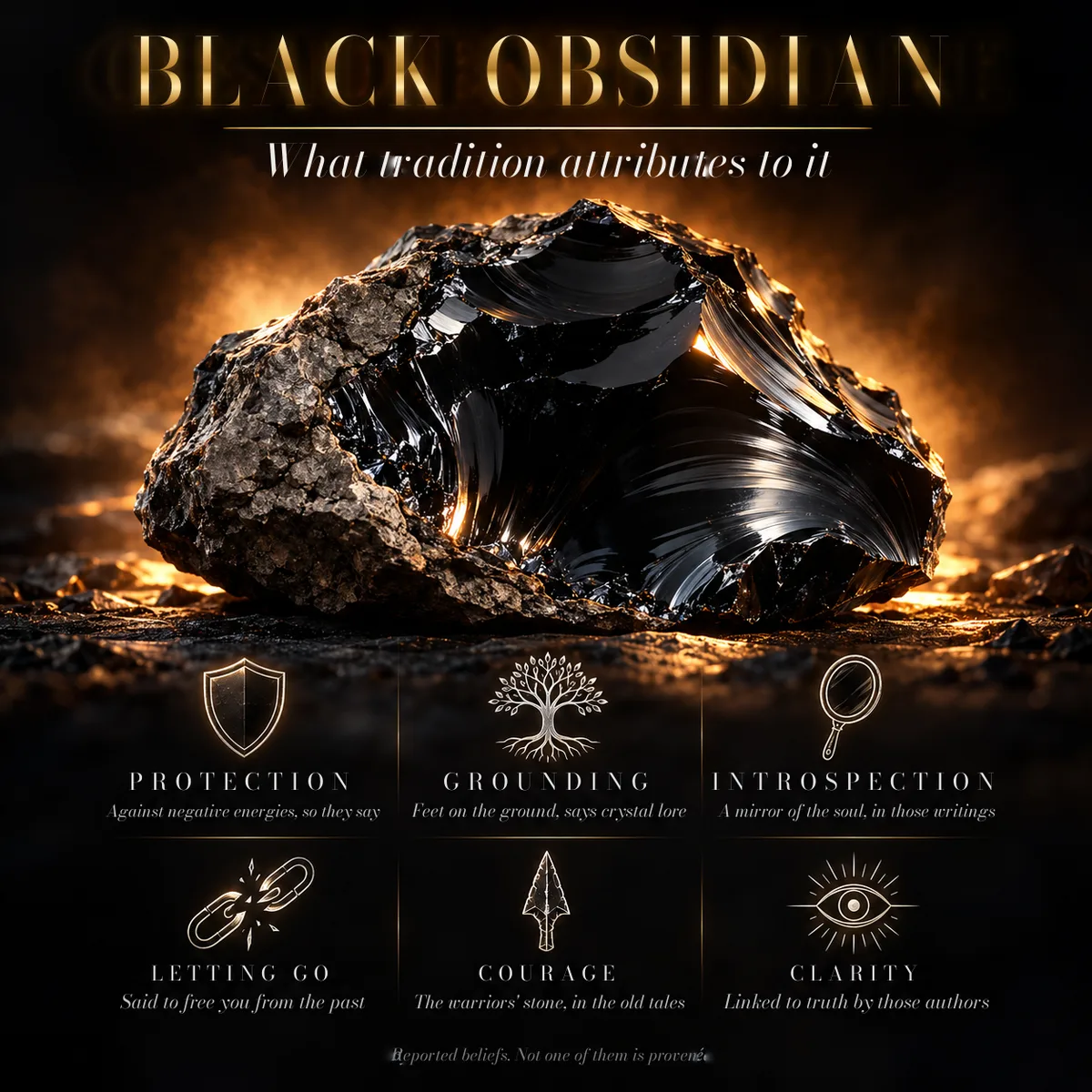
Crystal lore ties obsidian to grounding. Santa Muerte, for her part, belongs to religious devotion and not to crystal lore, and it is not for a French jeweller to interpret her. None of the above is proven, and no piece of jewellery heals anything. I have gathered separately what tradition attributes to obsidian, in the conditional.
- Genuine black Mexican obsidian, oval plaque with carved relief.
- A chain of beads of the same obsidian, not a metal chain.
- The detailed relief needs cleaning with a soft brush two or three times a year.
- A figure of Mexican folk Catholicism, described and placed, without comment.
What to know before you wear it
 |  |  |
The specifications
- Stone
- Black Mexican obsidian, volcanic glass
- Shape
- Oval plaque, carved relief, beaded border
- Dimensions
- About 50 x 35 mm / 2 x 1 3/8 in
- Chain
- Obsidian beads strung on cord
- Setting
- None, stone drilled and knotted
- Gender
- Unisex
- Brand
- Bijoux Obsidienne

A Mexican figure on a Mexican stone
A relief framed by a beaded border, that row of small spheres running around the plaque, is harder to bring off than the figure itself. Each bead is a tiny dome, and on a volcanic glass the slightest excess of pressure pops one off. A border missing two beads shows immediately, because the eye follows regular rhythms, whereas an awkward fold of drapery goes unnoticed. So I check the beaded border before the face.
This piece is in the catalogue because people ask me for it, above all from Spain and Mexico, and there was no reason to refuse. A shop that sells Mexican obsidian and turned away the most worn figure in Mexico would not stand up well. The other pendants are here.
A border missing two beads shows at once. A failed fold of drapery does not. You check the beaded border first.
Obsidian does not mind water. The hollows of the relief hold dust: a pass under lukewarm water with a soft toothbrush two or three times a year brings the contrast back. Never an ultrasonic bath. Cleaning an obsidian piece covers the rest.