Description
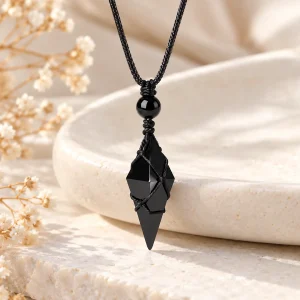
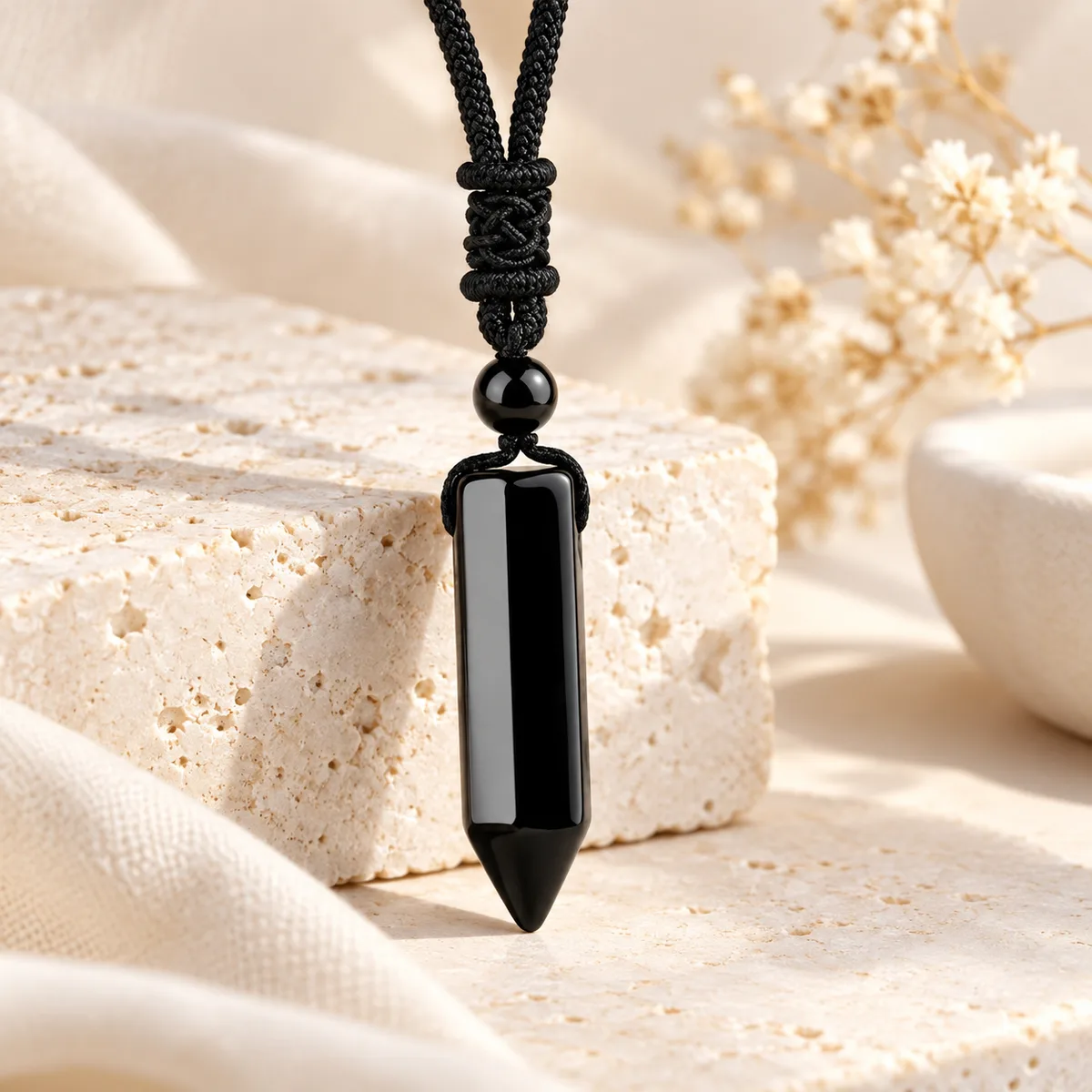
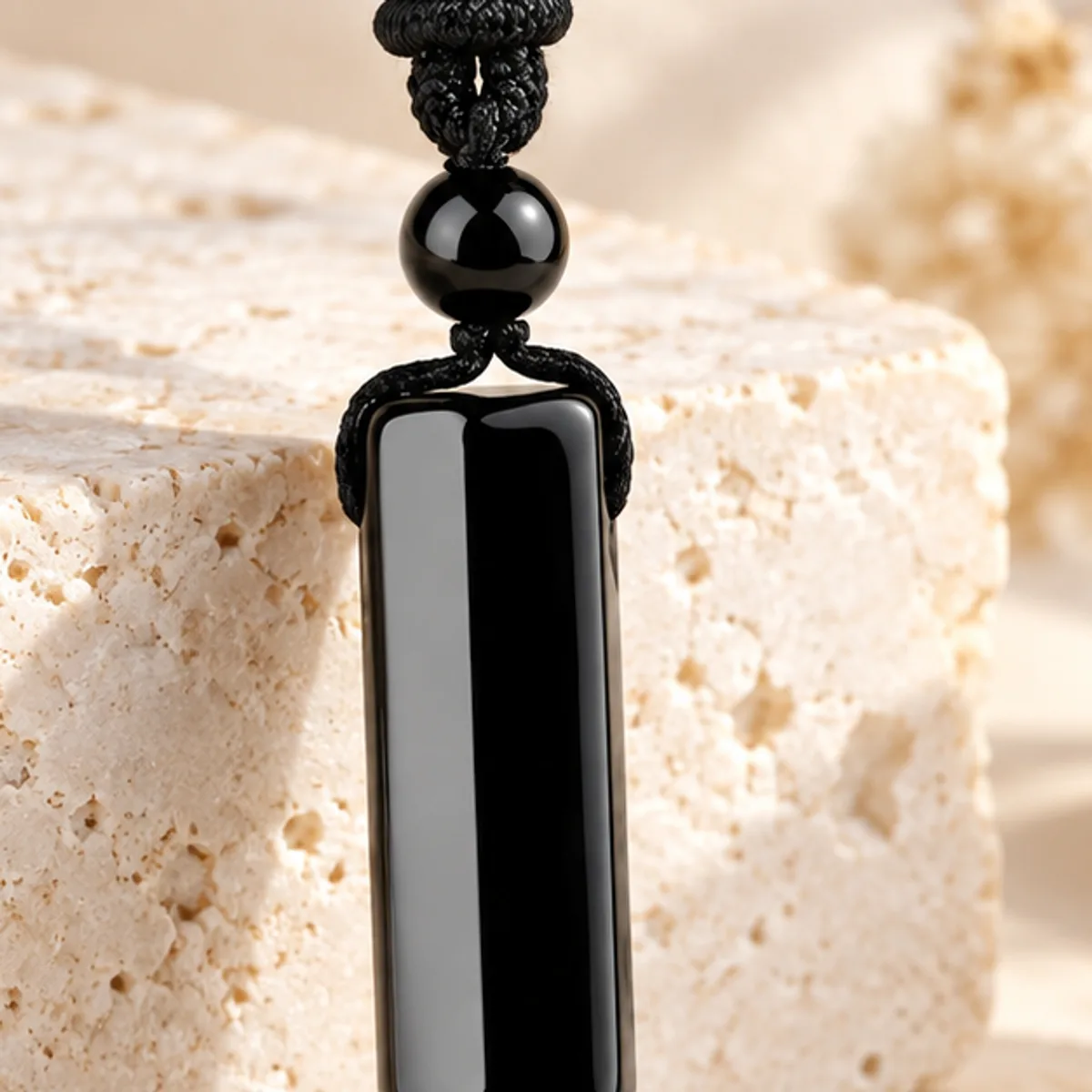
A six-sided obsidian prism, ending in a six-facet point, hung from a black cord. It is the most requested shape in crystal lore, and it deserves a precision few pages give.
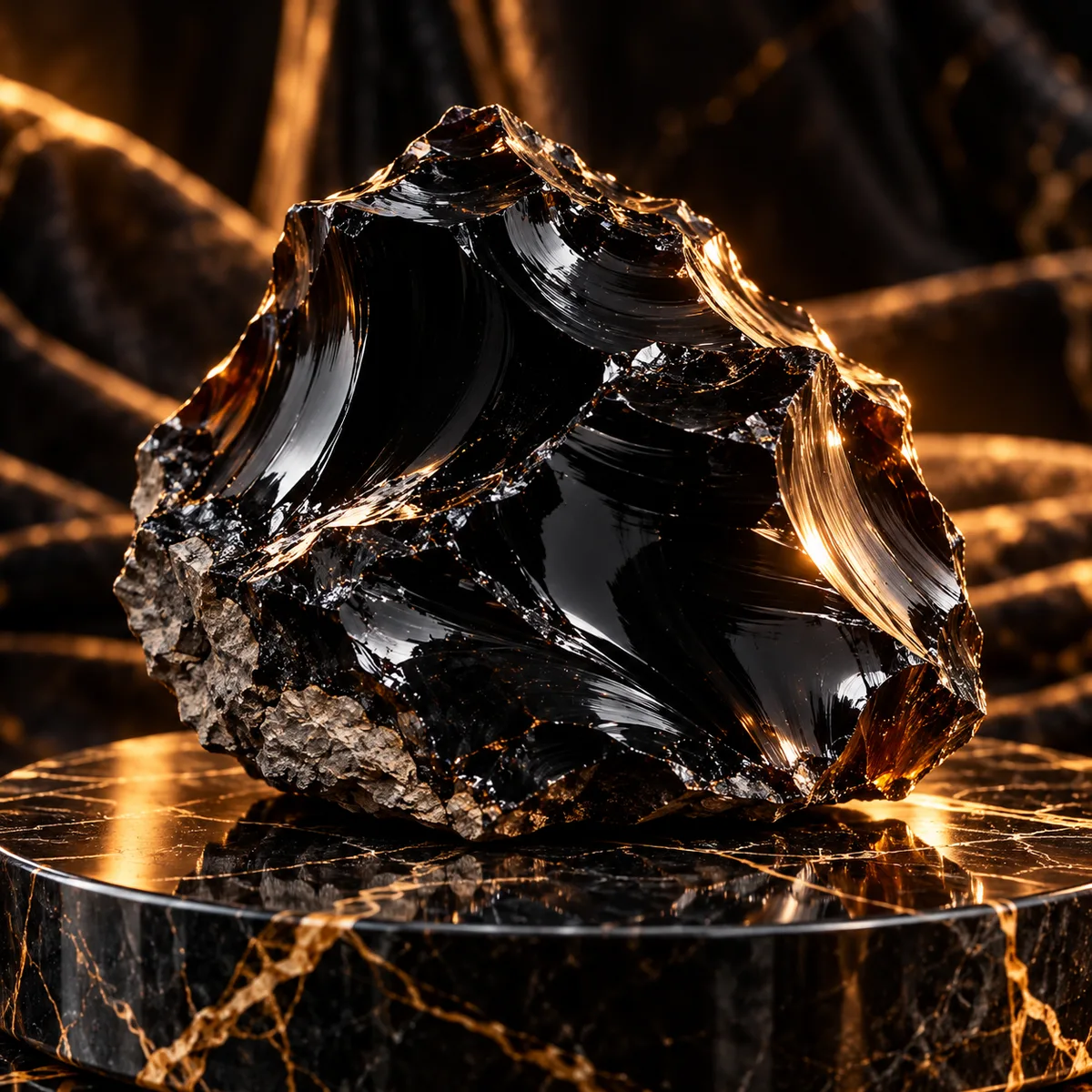
This shape is that of a quartz crystal, and obsidian has never had it naturally. A quartz grows as a hexagonal prism because its atoms organise along a lattice; obsidian is a glass, a lava cooled too fast for the least lattice to form, and it therefore has no prism, no point and no natural face. This pendant is entirely cut. I say so because you often read the opposite, and because it is verifiable. The obsidian guide explains that formation.
The fact that the shape is cut takes nothing away from the piece, quite the contrary. A natural crystal has irregular faces, growth striations and often a broken base; a cut prism has six identical faces and a centered point, which no crystal gives you. If you are after regularity, that is a quality; if you are after a rough stone, the other pendants are here and none of these is rough.
The reservation is the point. Six edges converge on a single spot, and that is the most fragile place you can manufacture in a glass: a knock against a belt buckle chips it, and the chip shows all the more for the shape being regular. The point is slightly softened in the making, which protects it without visibly blunting it, but it will remain the weak spot of the pendant.
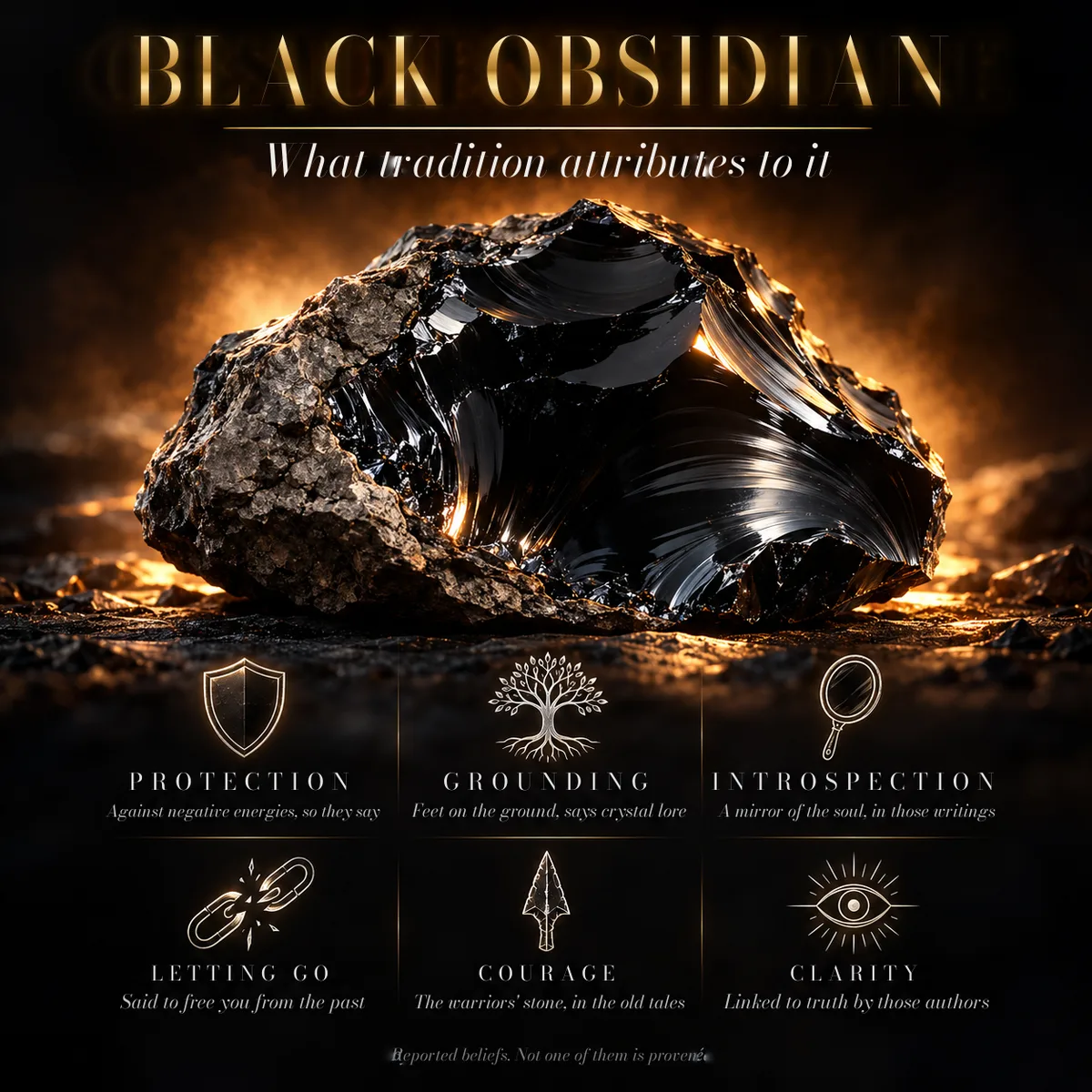
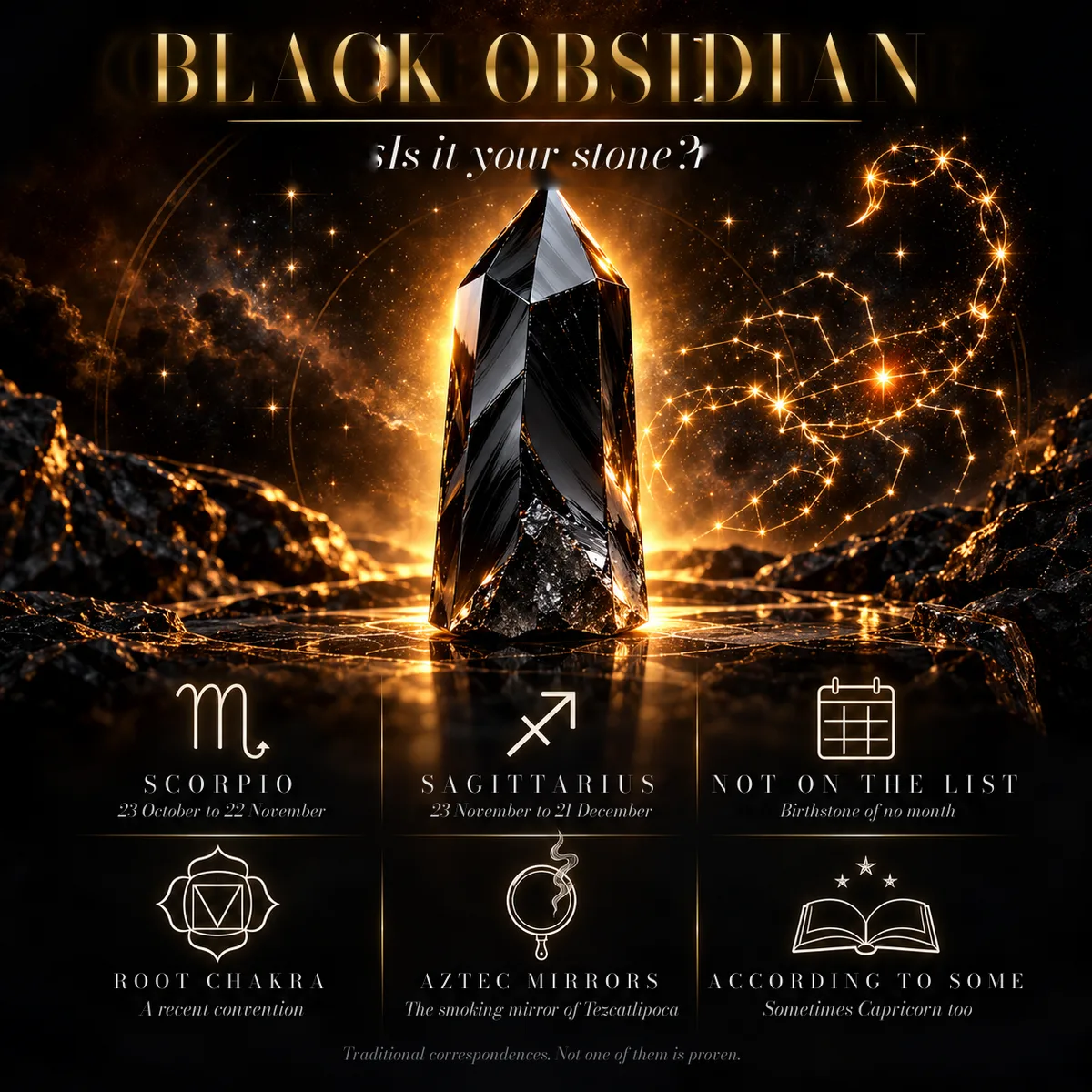
Crystal lore ties obsidian to grounding, and pointed shapes to a given direction. None of that is proven, and no piece of jewellery heals anything. I have gathered separately what tradition attributes to obsidian, in the conditional from start to finish.
- Genuine black obsidian, six-sided prism ending in a point.
- The shape is cut, not natural: obsidian is a glass and does not crystallise.
- Six identical faces and a centered point, which no natural crystal gives.
- Adjustable braided black cord, no metal clasp.
What to know before you wear it
 |  |  |
The specifications
- Stone
- Black obsidian, volcanic glass
- Shape
- Cut hexagonal prism, six-facet point
- Length
- About 45 mm / 1 3/4 in
- Setting
- None, stone drilled and knotted
- Cord
- Braided black cord, adjustable length
- Gender
- Unisex
- Brand
- Bijoux Obsidienne

Six faces that must all be the same width
On a prism, the flaw that shows is not the point but the width of the faces. Six faces must be exactly the same width, otherwise the prism looks twisted even when it is perfectly straight, because the eye compares the reflections of two neighboring faces and reads the difference as a tilt. A tenth of a millimetre of discrepancy is enough. The check is done by rolling the piece on a table: it must stop six times, with the same effort each time.
This shape is in the catalogue because it is the most requested, and I hesitated a long time before offering it in obsidian, for the reason explained above. I settled it by deciding to write it down rather than keep quiet: the shape is beautiful, it is simply not natural on this stone. The other pendants are here.
You roll the prism on the table. It must stop six times, with the same effort each time.
Obsidian does not mind water, but the point chips on impact. Take the pendant off before sport and do not wear it under a belt. A soft cloth is enough, never an ultrasonic bath. Cleaning an obsidian piece covers the rest.