Description
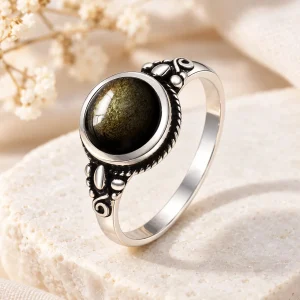
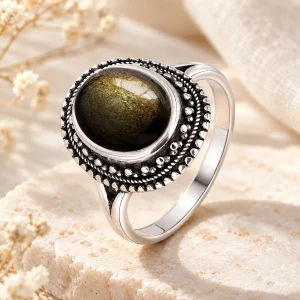
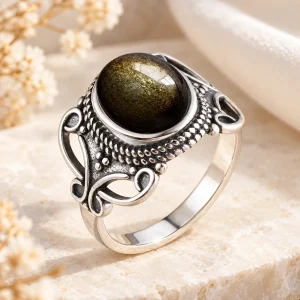
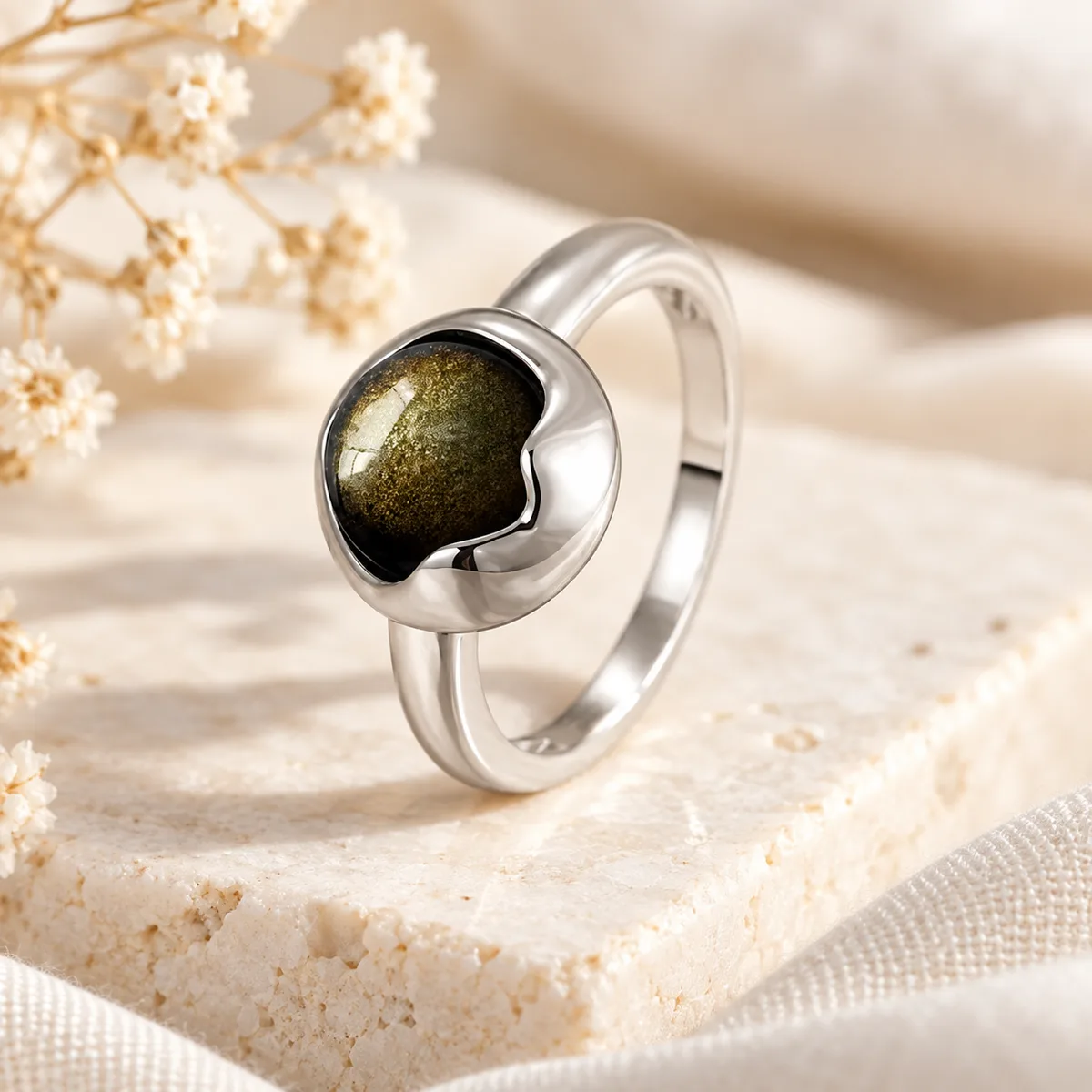
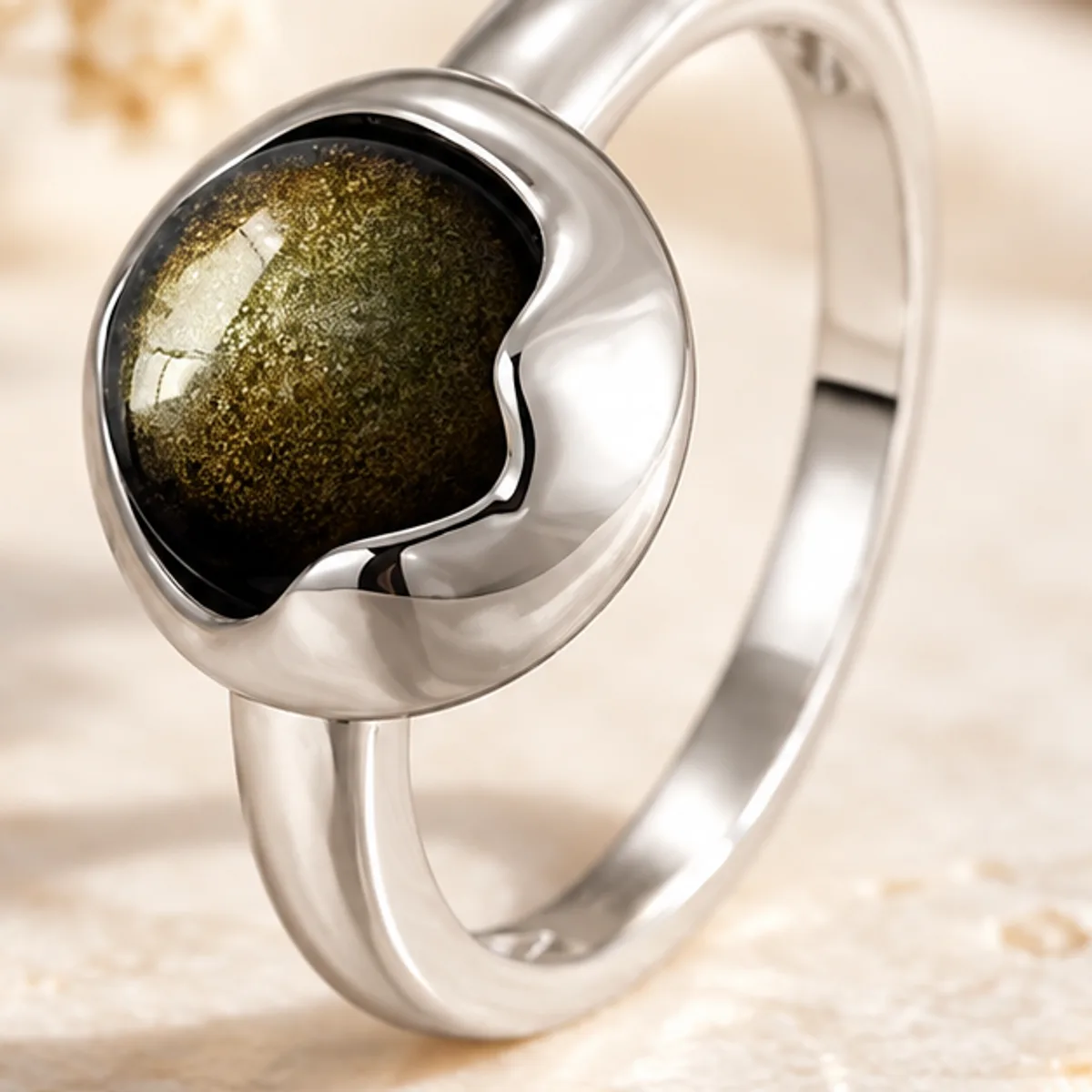
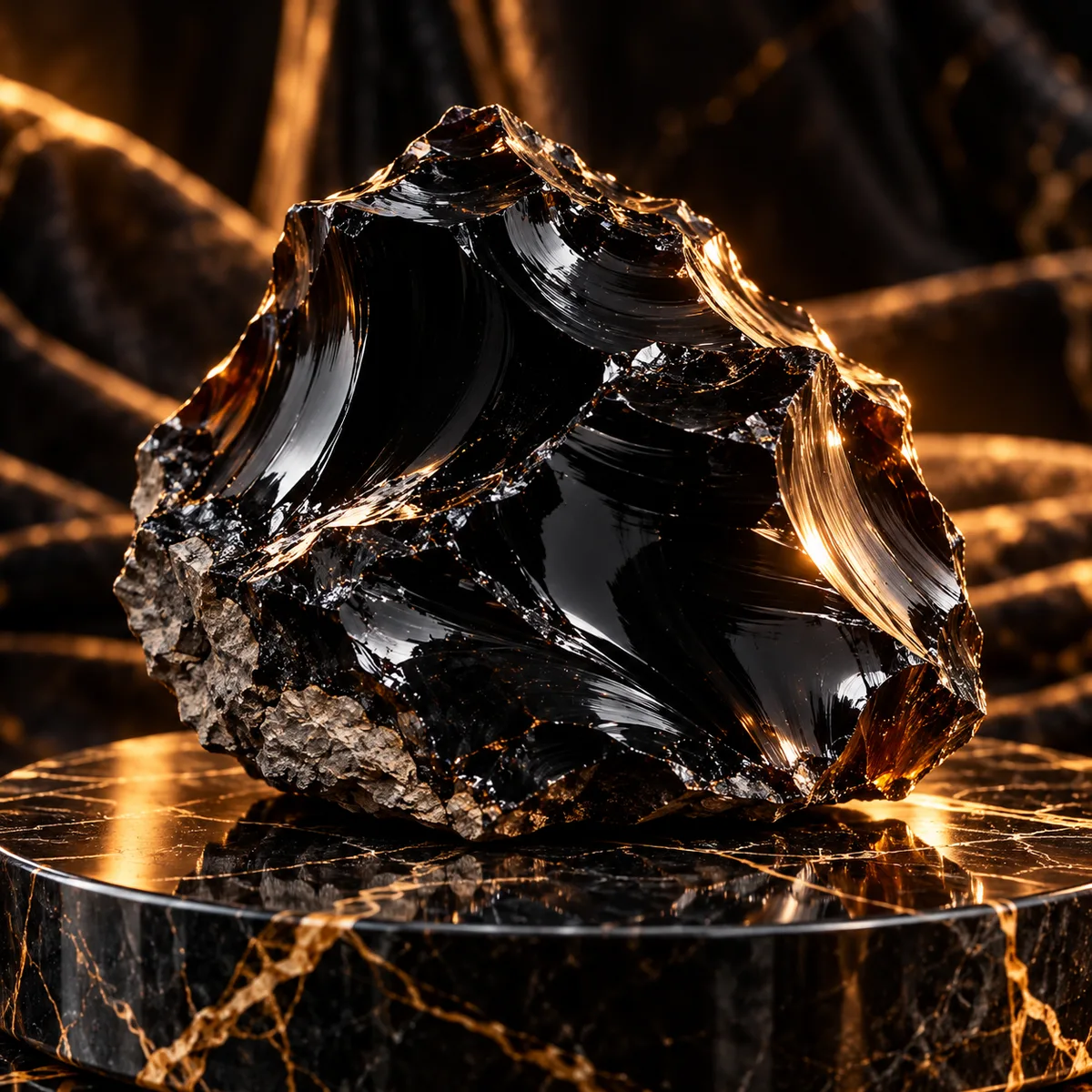
A small gold sheen obsidian cabochon, partly covered by a polished silver crescent that bites onto its edge. It is the smallest stone of the fifteen settings in the series, and the only one you do not see whole.
Hiding part of the stone is a device that looks absurd and works. The eye completes what it does not see: a cabochon with one edge disappearing under the metal is read as larger than it is, because nothing says where it stops. The same stone fully exposed would look small. It is an old goldsmith’s trick, and it is the reason this setting exists.
The crescent is mirror polished where the rest of the series plays on blackened hollows. That creates a relation of materials between two reflecting surfaces, bright silver and black glass, with no motif at all in between. It is the most contemporary of the fifteen settings, and the only one with no engraved decoration. The other rings are here.
The reservation is the apparent value for money, and I would rather say it. This ring costs the same as the others in the series although it holds the smallest stone. That is not a pricing mistake: the setting takes more work, because fitting a crescent over a cabochon without leaving a visible gap takes longer than setting an exposed stone. You are paying for fitted metal, not for stone.
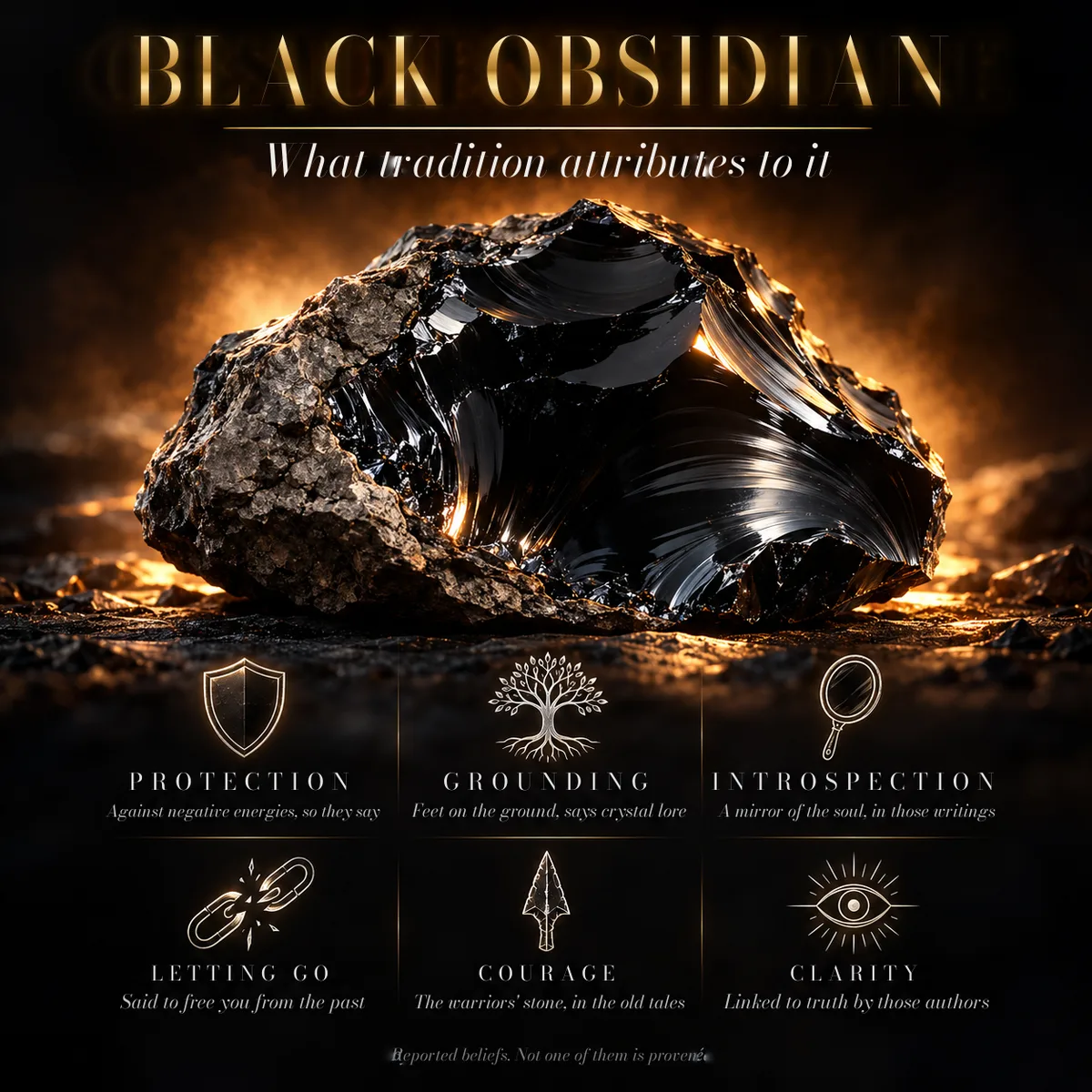
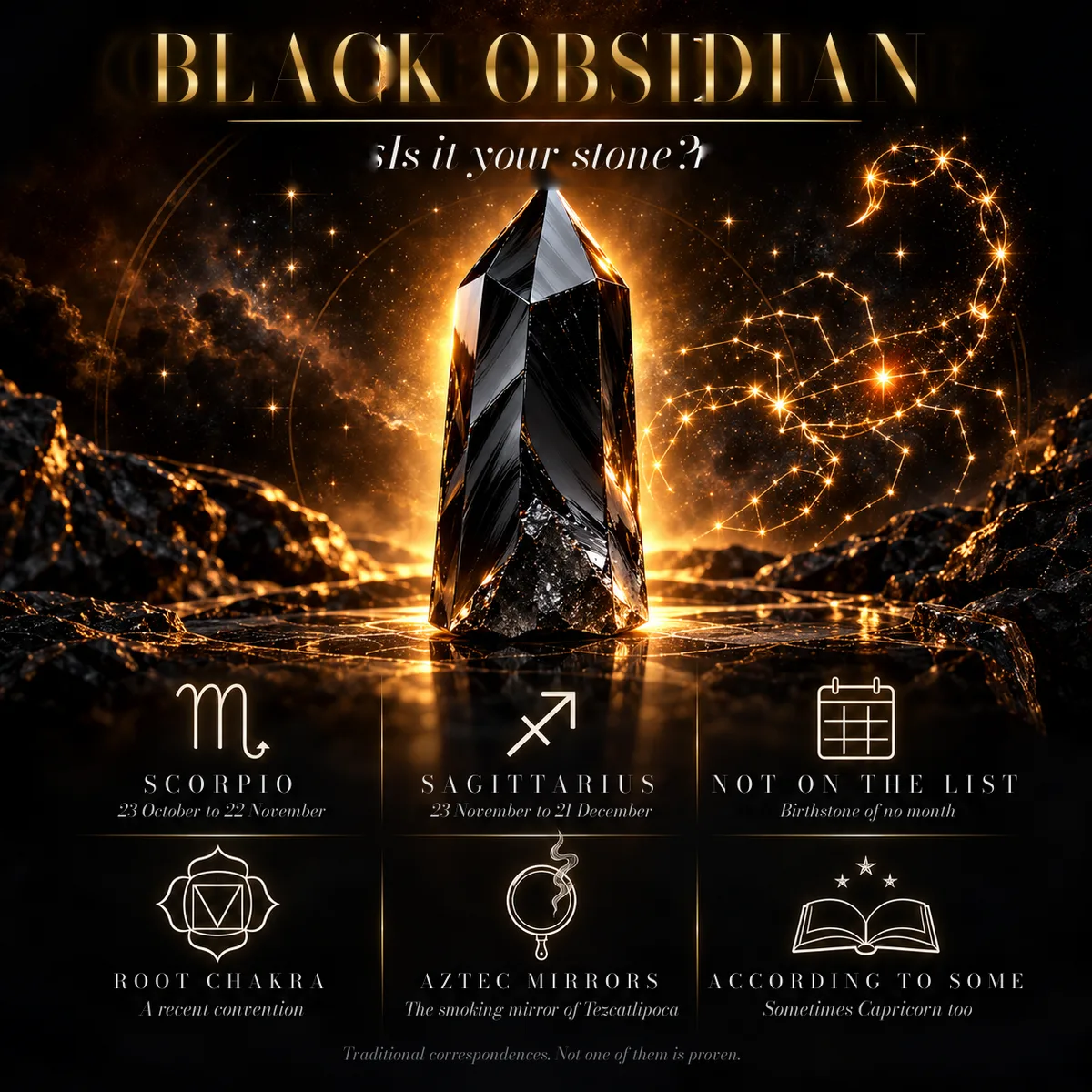
Crystal lore ties obsidian to grounding, and gold sheen in particular to self-confidence. None of that is proven, and no piece of jewellery heals anything. I have gathered separately what tradition attributes to obsidian, in the conditional from start to finish.
- Genuine gold sheen obsidian, small cabochon partly covered.
- Sterling silver 925, mirror polished, no engraved decoration: the only one in the series with no motif.
- The stone looks larger because you cannot see its edge.
- Same price as the others for a smaller stone: what you pay for is the fitting of the metal.
What to know before you wear it
 |  |  |
The specifications
- Stone
- Gold sheen obsidian, volcanic glass, small cabochon
- Metal
- Sterling silver 925, S925 hallmark, mirror polished
- Setting
- Crescent folded over the edge of the stone, no glue
- Decoration
- None, polished surfaces
- Sizes
- 52 to 62 (inner circumference in mm)
- Gender
- Women
- Brand
- Bijoux Obsidienne

A stone you half hide
Fitting a crescent over a cabochon means following a curve that is never perfectly regular. A hand-cut cabochon varies by a few hundredths along its outline, invisible while it is free, obvious as soon as polished metal comes to hug its edge: the slightest gap shows as a white line. So the crescent is filed to fit that particular stone, and it goes on no other. It is an assembly that cannot be standardized.
This setting is in the catalogue because fourteen rings in the series show off their stone, and one was needed that holds it back. It is for people who want obsidian without making it the argument of the piece. The other rings are here and the size guide saves a return.
The crescent is filed to that one stone and to no other. A gap of a few hundredths shows as a white line.
Obsidian does not mind water, but it shatters on impact. Take the ring off before DIY and sport. Mirror-polished silver shows scratches more than worked surfaces: a silver cloth is enough here, unlike the blackened settings in the series. Cleaning an obsidian piece covers the rest.