Obsidian Stone for Protection and Grounding
Of all the stones, black obsidian is easily the one most associated with protection and grounding. Here's what crystal healing says about it, and, more usefully, how to live with it day to day, gently and with a bit of common sense.
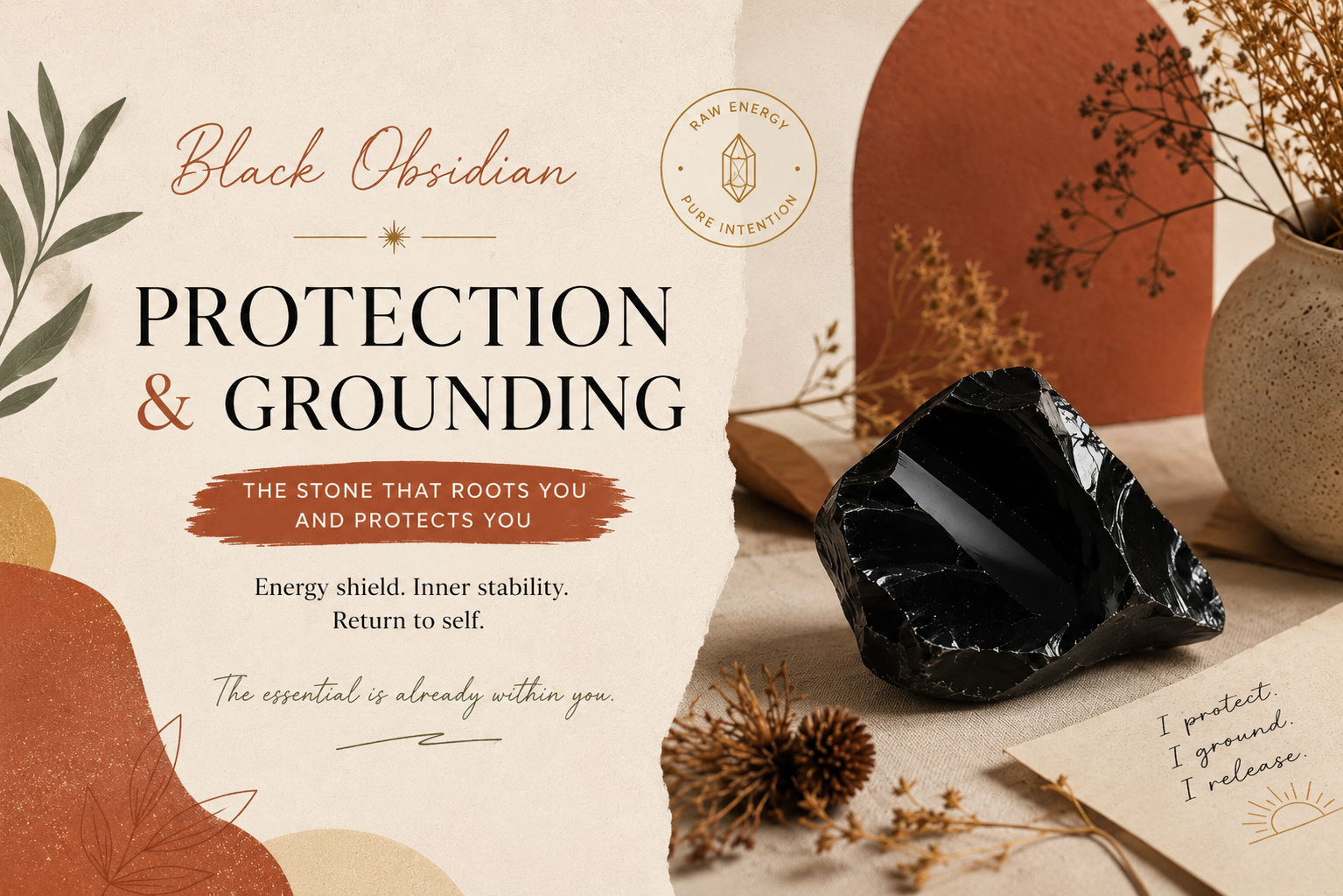
A stone of protection
In crystal healing traditions, black obsidian is held to be the protective stone par excellence. It's cast in the role of a shield: a dark mirror that sends back the energies you experience as negative, rather than letting them reach you.
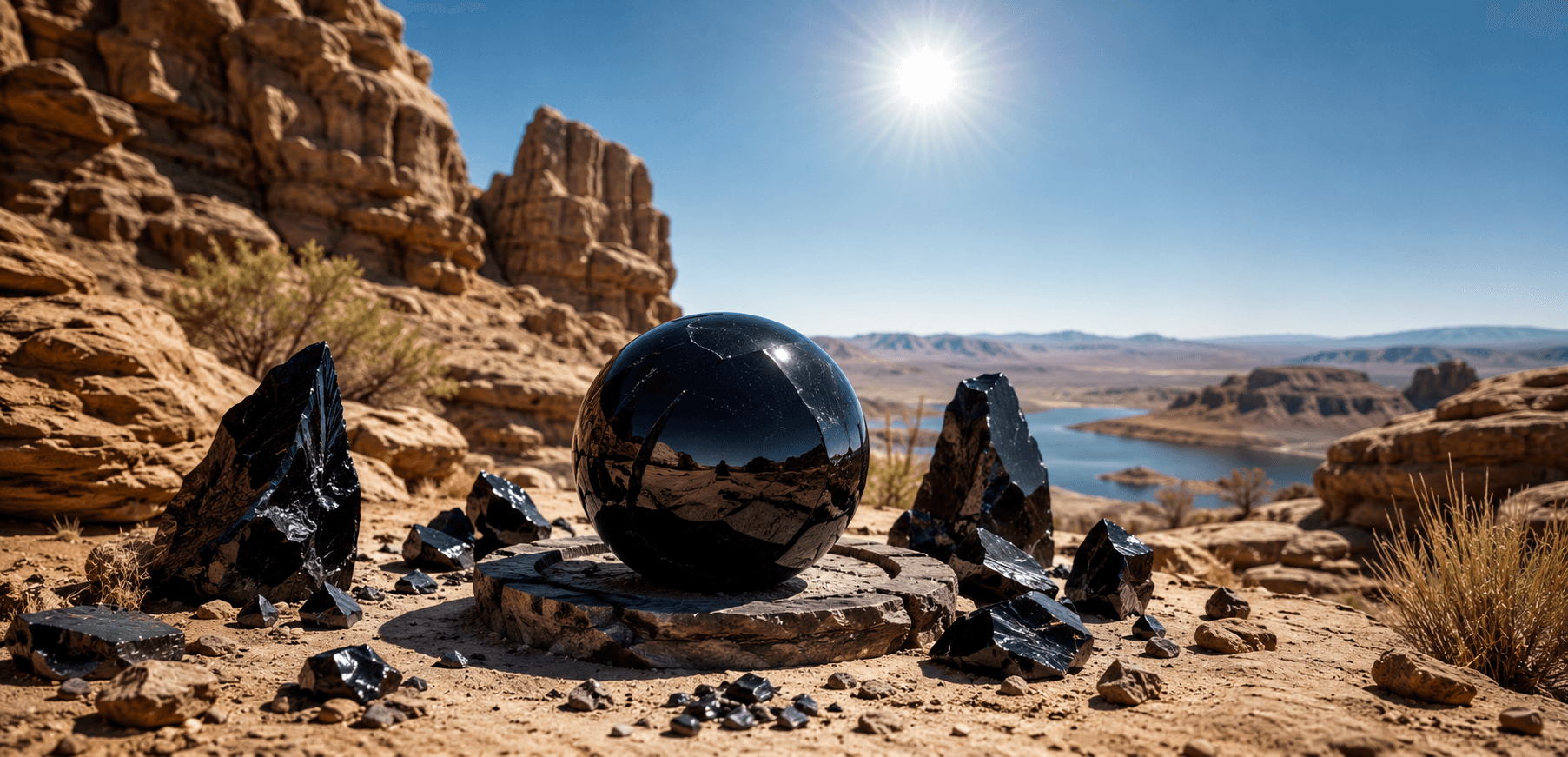
It's also called a "truth stone": because of that mirror quality, it's said to invite you to look at what you sometimes avoid, and so to protect you first from your own avoidance. A kind of protection that starts, in other words, with a little honesty towards yourself.
Grounding and the root chakra
Obsidian's other great reputation is grounding. In crystal healing language, to ground yourself is to reconnect with the earth, with the present, with your body: to find some stability when you feel scattered or stuck in your head.
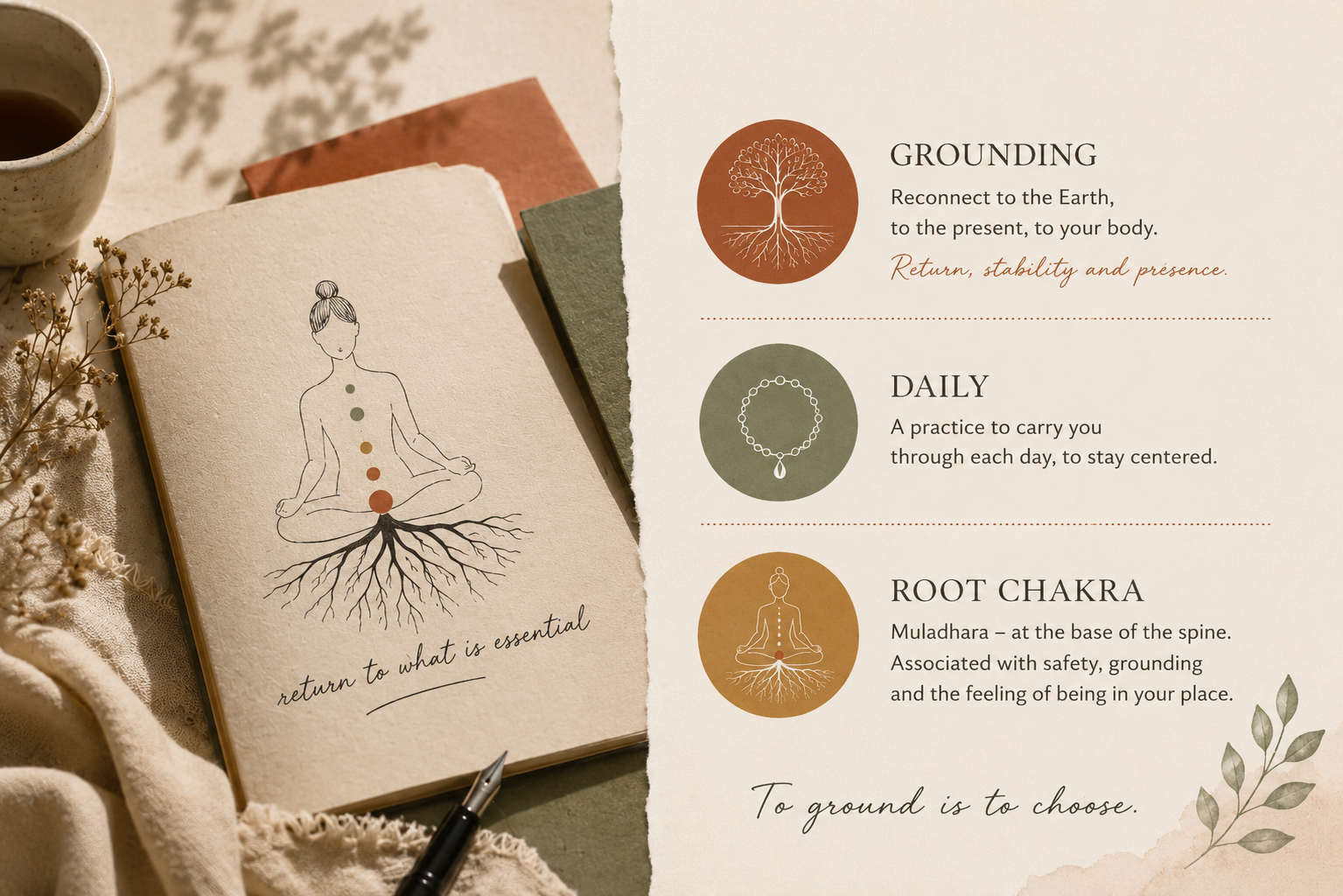
Energetically, black obsidian is traditionally linked to the root chakra (Muladhara), at the base of the spine. That's the centre associated with safety, being rooted, and the feeling of being in the right place. It's easy to see why this dark, dense stone gets attached to it so often.
Why protection and grounding go together
These two qualities always turn up as a pair because they answer each other: it's hard to feel protected when you're floating, and hard to ground yourself when you feel exposed. That's why obsidian is reached for in periods when you need to re-centre and feel solid, change, emotional tiredness, heavy environments.
I've got into the habit of wearing my obsidian bracelet on the rougher days, a meeting that intimidates me, a packed schedule. Feeling it on my wrist simply reminds me to breathe and keep my feet on the ground.
How to use obsidian for protection and grounding
The simplest way is to wear it, keeping it in contact with you through the day:
- as a bracelet, the most common choice: by a widespread convention, the stone goes on the left wrist to "receive", and on the right to shield outwards;
- as a pendant or necklace, to keep it near the solar plexus or the heart;
- as a tumbled stone slipped into a pocket, to hold in your hand in a stressful moment.
At home, people like to keep one near the front door or in a living space. And in a quiet moment or a meditation, resting it at the base of the body or holding it in your palm is said to help you re-centre. What matters most is the intention you bring to it.
Which crystals to pair it with
Obsidian sits happily alongside other stones, depending on what you want to lean into:
- for protection: black tourmaline, or tiger's eye (which adds a touch of grounding);
- for grounding: haematite, red jasper or garnet, all very earthy;
- to soften its intensity: rose quartz, amethyst, or labradorite, thought of as a gentler protection.
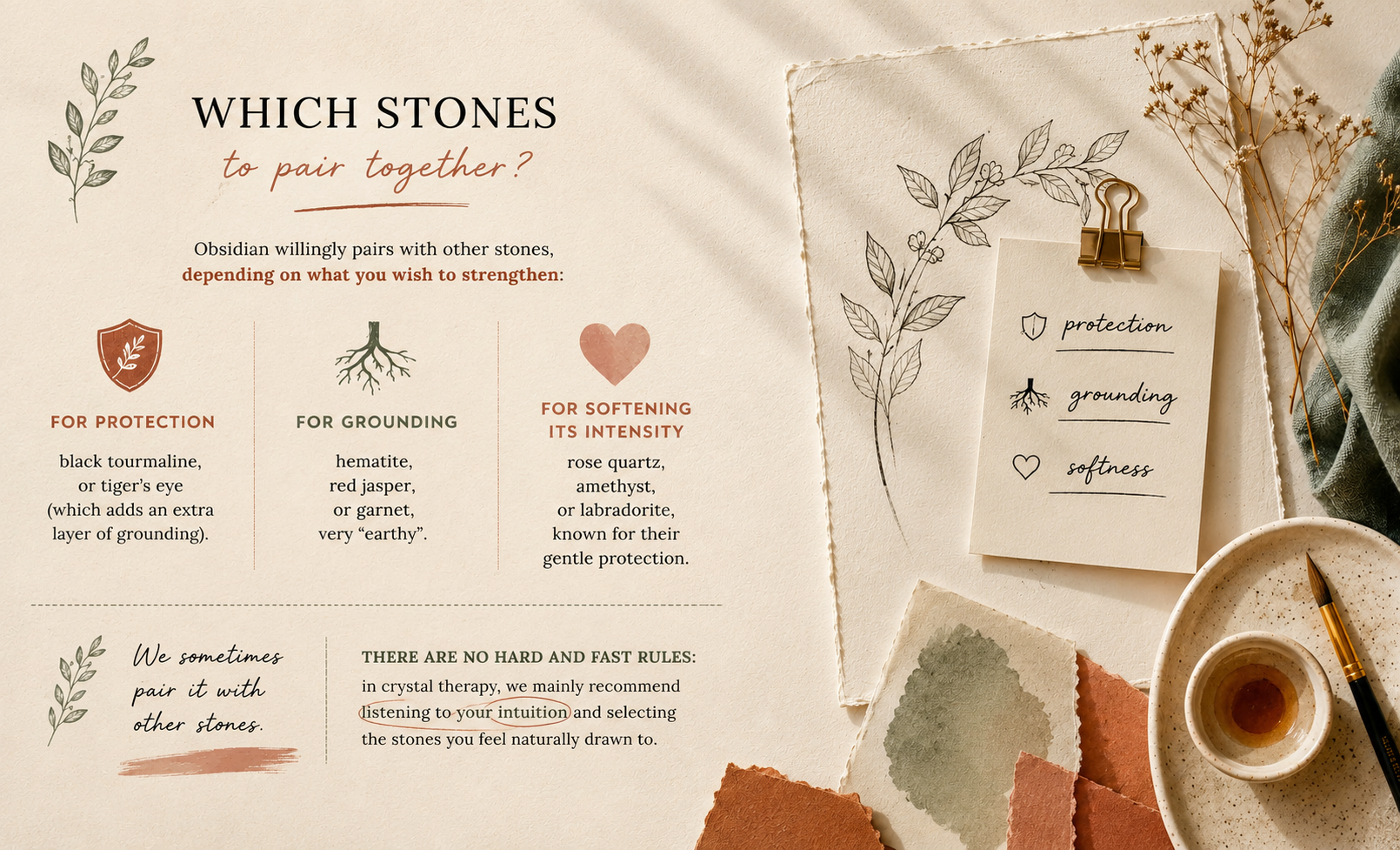
There's no hard rule: crystal healing mostly advises listening to how you feel and choosing the stones you're drawn to. I've set out more combinations in my guide to crystal pairings with obsidian.
Which obsidian piece should you choose?
For protection and grounding day to day, the simplest option is a black obsidian bracelet, discreet and easy to wear. If you'd rather keep the stone near your heart, look to a pendant or a necklace.

You'll find my obsidian bracelets and everything else I make in the shop, each piece made by hand, with natural stones chosen one at a time, and posted to Australia. To understand where this stone comes from, you can also read how obsidian is formed, and for the full picture of its properties, the properties section of my guide.
Precautions & common sense
Obsidian is often described as a powerful, direct stone. Many people suggest easing into it, and pairing it with something gentler if you find it too intense. It's also worth cleansing it regularly, especially after you first get it and if you wear it often.
Worth keeping in mind, the properties described here belong to crystal healing, a wellbeing practice grounded in tradition and belief. They are not a therapeutic claim, they treat no illness, and they are never a substitute for the advice or treatment of a health professional. If something about your health worries you, see a doctor.
I say it often to my customers: a stone isn't magic. It's a small support, a reminder, an intention you give yourself. That's already a lot, and it's plenty.
Frequently asked questions
Which wrist should you wear an obsidian bracelet on?
Is obsidian right for everyone?
Obsidian or black tourmaline for protection?
Do you need to cleanse obsidian?
Find your obsidian for protection
Bracelets, necklaces, pendants and rings in black obsidian, handmade with natural stones and posted to Australia.