
Description
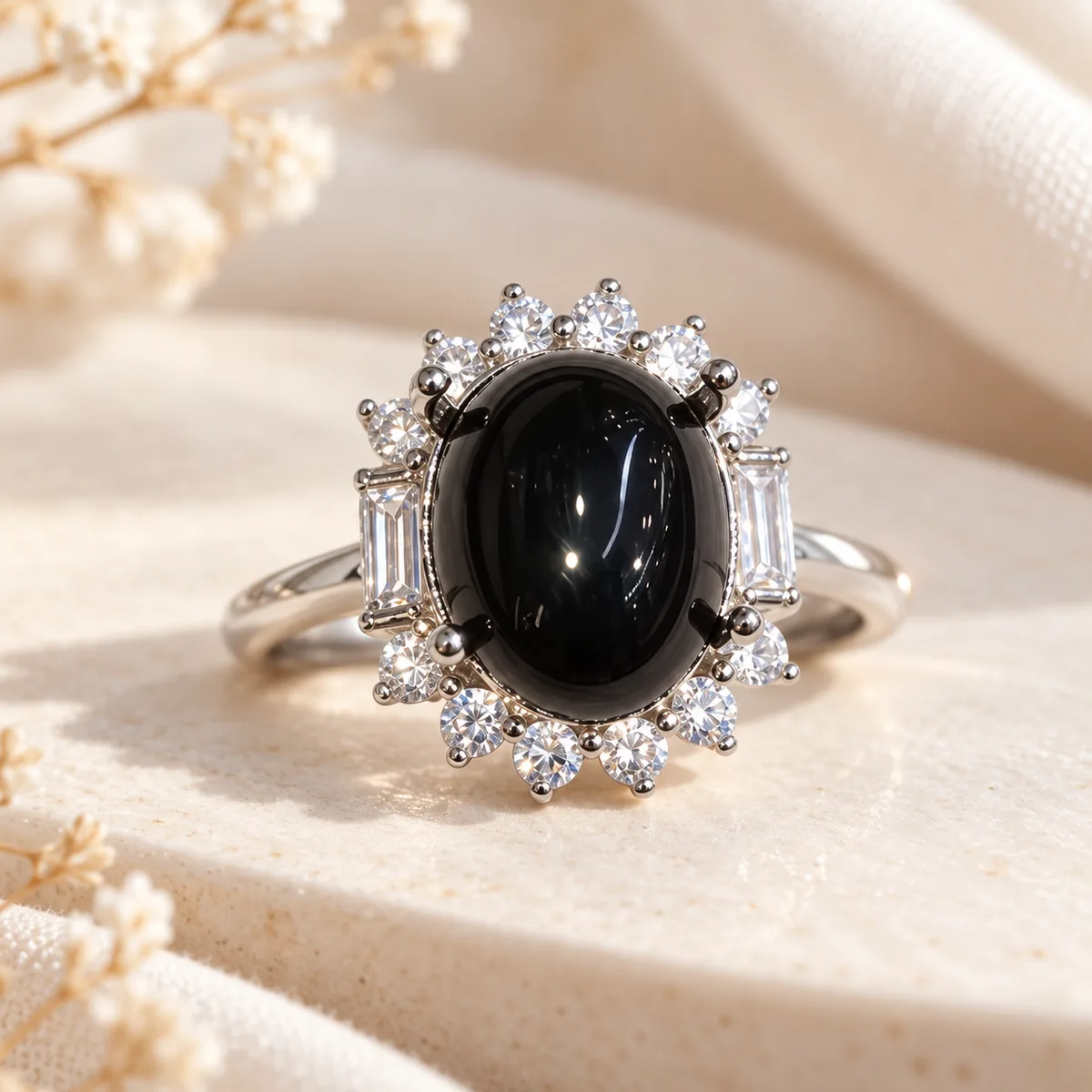
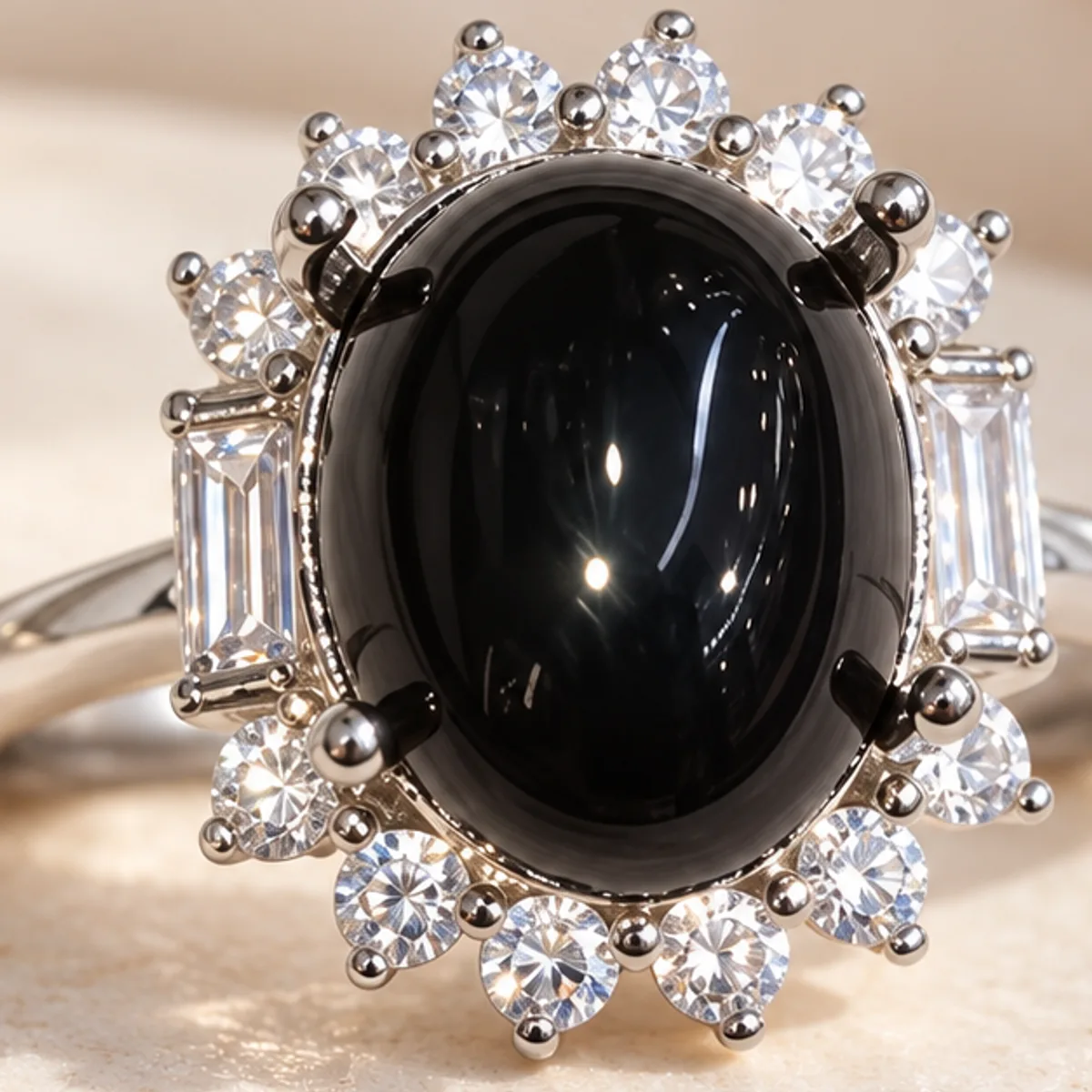
An oval black obsidian cabochon, surrounded by a halo of round zircons and flanked by two baguettes. It is the only ring in the catalogue with a pavé surround, and it is the hardest assembly to get right with this stone.
A brilliant halo around a dark stone is a risky bet. Zircons send back a sharp, broken light; obsidian sends back a soft sheet. Put side by side without care, the zircons win, the central stone looks dead and the piece becomes a surround around a black hole. What saves this assembly is the ratio of sizes: the cabochon is a good deal larger than the sum of the zircons, and it takes back the lead.
The two side baguettes, those small rectangular stones set on either side, are not filler. They lengthen the head of the ring along the axis of the finger, which visibly slims the hand, whereas a halo on its own makes a round patch that shortens it. It is an old principle of jewellery making and it works. The other rings are here.
Two reservations. The zircons are synthetic stones, and I say so rather than calling them something else: they are zirconium oxides, not diamonds and not natural stones. And a pavé surround calls for a yearly check, because small grain-set stones get lost over the years. I replace them free of charge, but they have to be watched. The size guide saves a return.
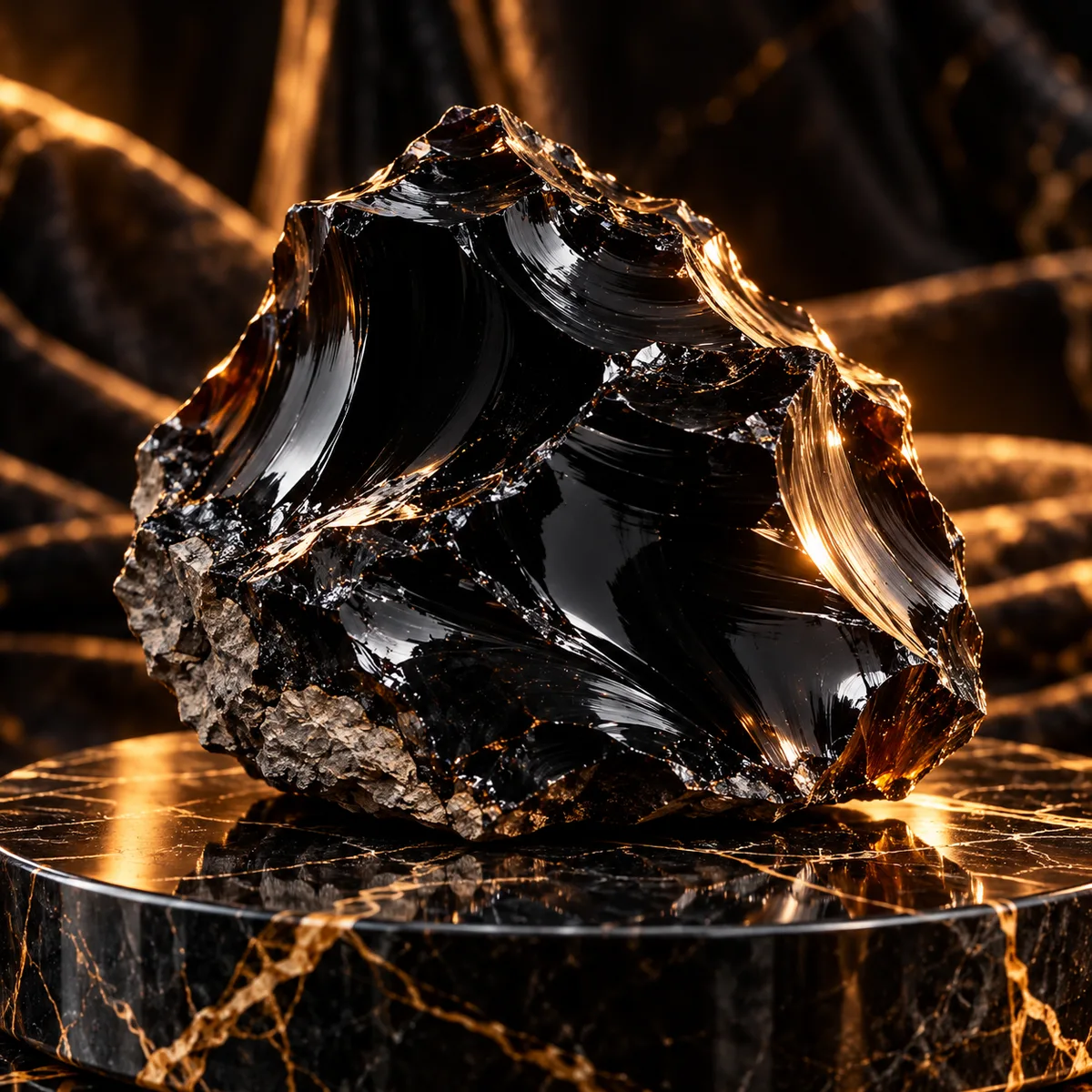
Crystal lore ties obsidian to grounding. None of that is proven, and no piece of jewellery heals anything. I have gathered separately what tradition attributes to obsidian, in the conditional from start to finish.
- Genuine black obsidian, oval cabochon in a closed bezel, no glue.
- Halo of synthetic zircons and two side baguettes, grain set.
- The baguettes lengthen the head along the axis of the finger and slim the hand.
- A pavé is checked once a year: small stones get lost.
What to know before you wear it
 |  |  |
The specifications
- Central stone
- Black obsidian, volcanic glass, oval cabochon
- Surround stones
- Synthetic zircons, zirconium oxide
- Metal
- Sterling silver 925, S925 hallmark
- Setting
- Closed bezel at the centre, grain set for the surround
- Sizes
- 52 to 62 (inner circumference in mm)
- Gender
- Women
- Brand
- Bijoux Obsidienne

Why a halo almost always kills the stone
The trap of a halo around a dark stone is the height. If the zircons are set level with the table of the cabochon, they dominate it visually because they shine more for the same surface. They have to go two or three tenths lower, so that the cabochon stands slightly above: the eye then reads a central stone resting on a bed of light, and not a circle of light around an emptiness. Two tenths, and the whole assembly tips one way or the other.
This ring is in the catalogue because there was no evening piece in the range. All the others are daytime jewellery, plain or worked but never brilliant. This one is, and that is its only reason to exist. The other rings are here and the obsidian guide explains the stone.
The zircons go two tenths lower than the table of the cabochon. Level with it, they put it out.
Obsidian does not mind water, but it shatters on impact. Take the ring off before DIY and sport. Check the pavé once a year by running a fingernail over it: no stone should catch. Never an ultrasonic bath, the vibrations loosen the grains. Cleaning an obsidian piece covers the rest.