
Description
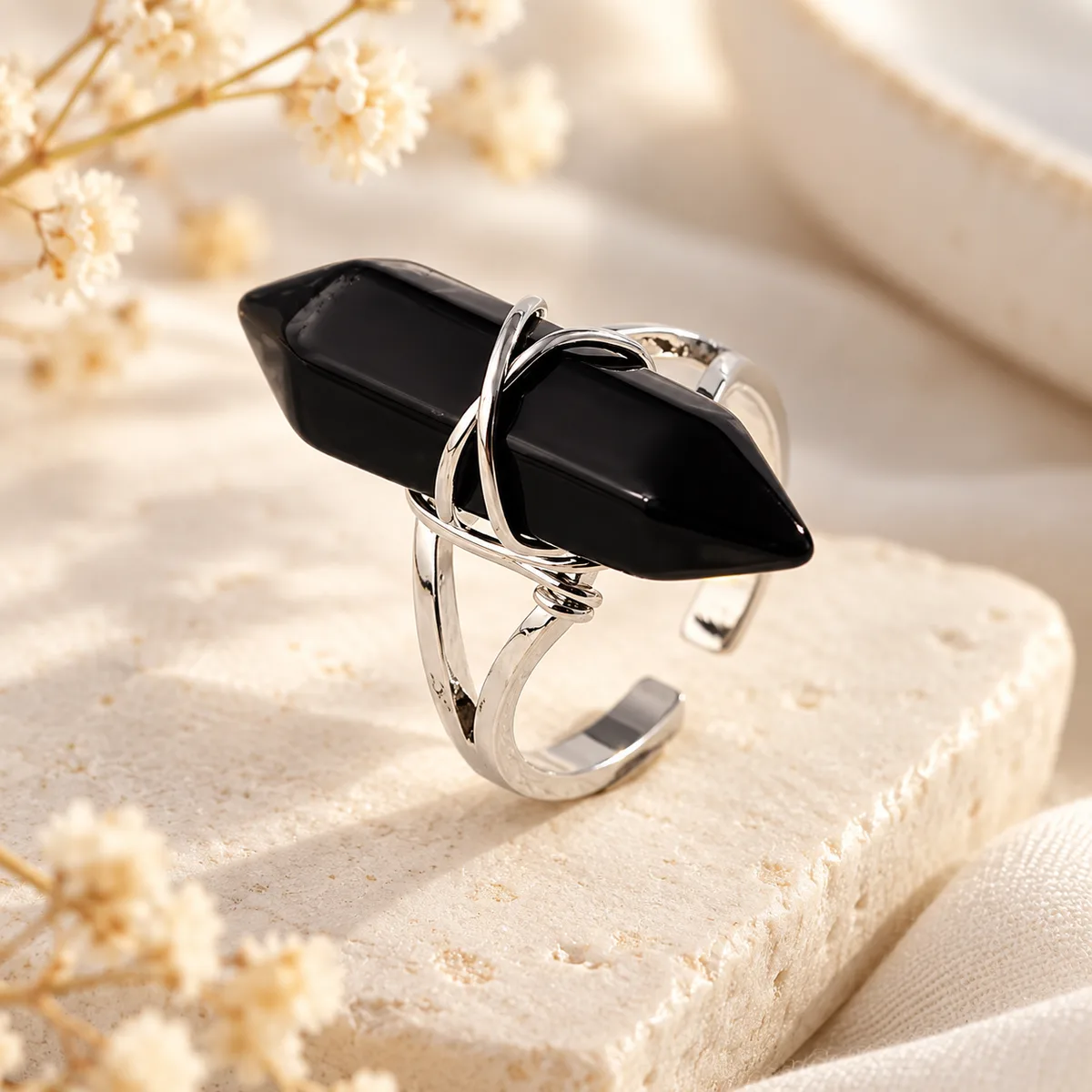
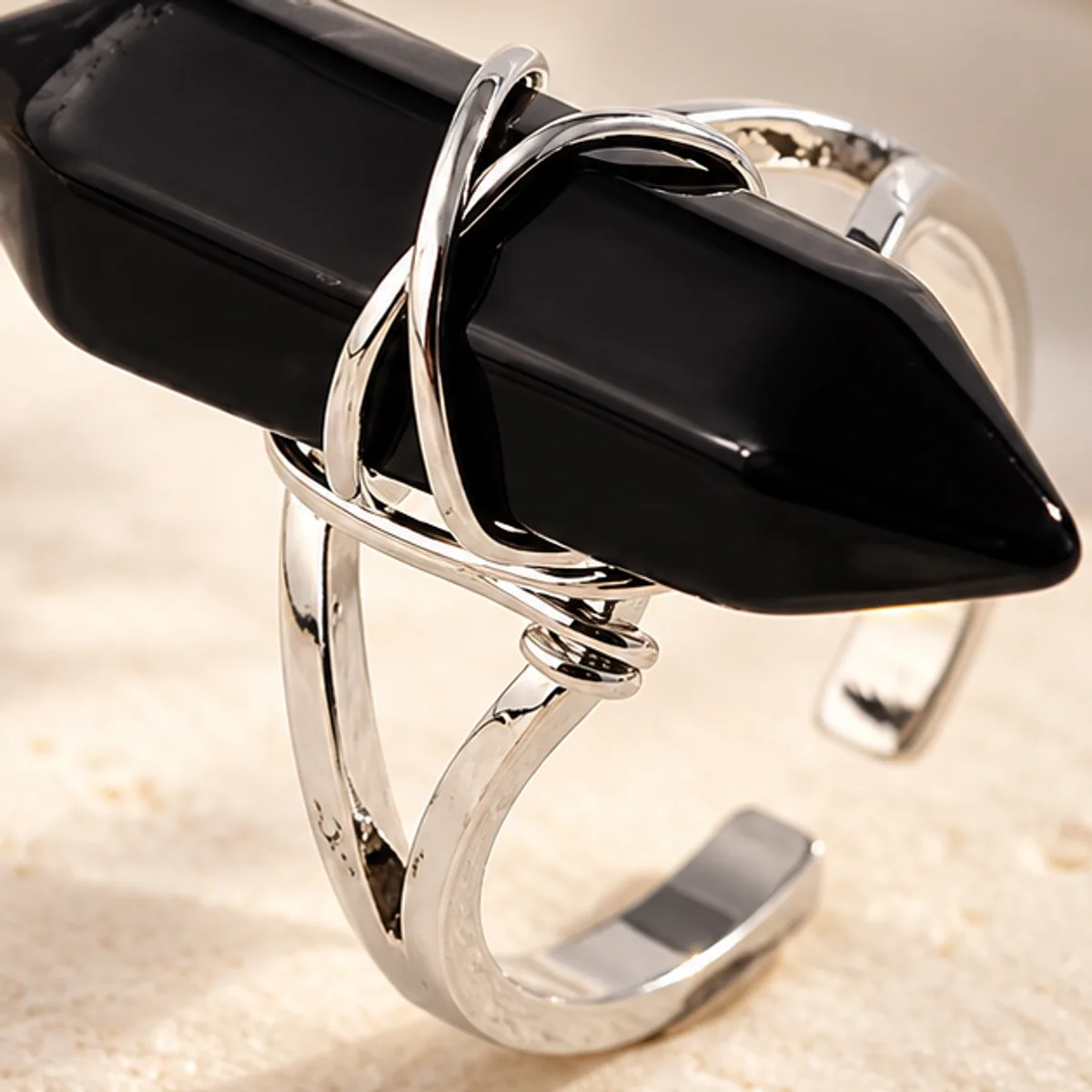
A six-sided obsidian point, set across the finger and held by a silver wire crossed over its middle. The band is open, the ring adjusts, and the stone is neither drilled nor glued.
The stone sits crosswise, which is unusual: most point rings stand it along the axis of the finger. Set across, the point occupies the width of the hand instead of its length, and the ring reads as a bar rather than as an arrow. It also overhangs on both sides, which changes a great deal about the way it is worn.
It is held by a wire crossed above and below the stone, not by prongs and not by glue. That means no point pressure bears on the glass: the wire holds through the geometry of the crossing. It is the same principle as on the catalogue’s wrapped point pendant, and it is the gentlest setting for a brittle stone. The other rings are here.
Two reservations. The ring overhangs on either side of the finger, and it touches the neighboring fingers: on a hand where they sit close, it is a nuisance. And the open band is in silver, a soft metal: adjusting it several times a week eventually tires the metal where it bends, and it then has to be reshaped. Set it once and leave it alone. I reshape it free of charge. The size guide saves a return.
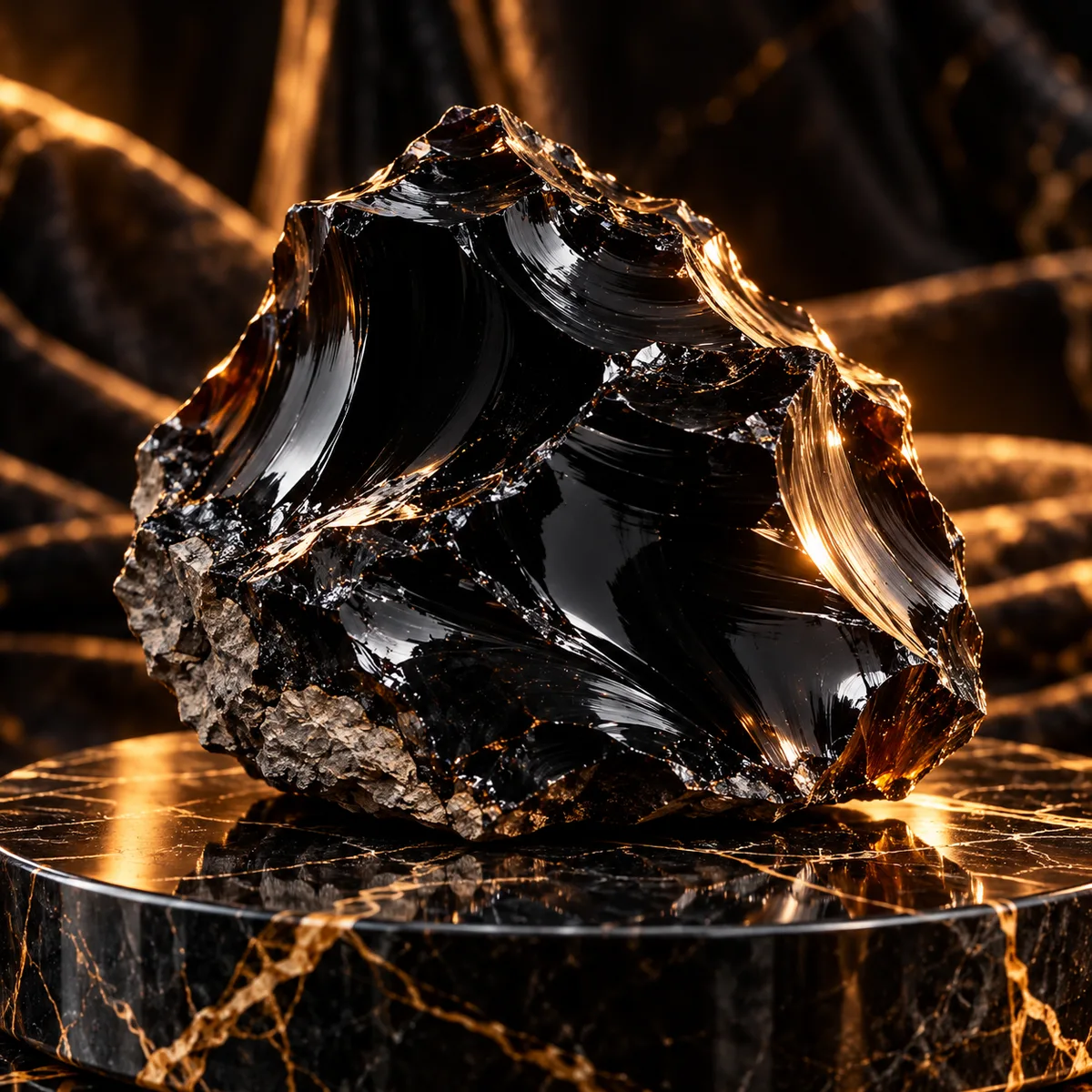
Crystal lore ties obsidian to grounding, and credits pointed shapes with a role of direction. None of that is proven, and no piece of jewellery heals anything. I have gathered separately what tradition attributes to obsidian, in the conditional from start to finish.
- Genuine black obsidian, six-sided point, neither drilled nor glued.
- Sterling silver 925, crossed wire that holds through geometry, with no point pressure.
- Open band, adjustable: to be set once, not every week.
- The stone sits crosswise and overhangs: it touches the neighboring fingers.
What to know before you wear it
 |  |  |
The specifications
- Stone
- Black obsidian, volcanic glass, hexagonal point
- Metal
- Sterling silver 925, S925 hallmark
- Setting
- Crossed wire, stone neither drilled nor glued
- Adjustment
- Open band, adjustable
- Length of the stone
- About 25 mm / 1 in
- Gender
- Unisex
- Brand
- Bijoux Obsidienne

Holding a point crosswise, without drilling it
On a wire setting the right tension is judged by sound and not by sight. You place the stone, cross the wire, and tap the ring gently against the edge of the bench: if the stone is loose you hear a dry click, two materials knocking together. If it is held, the sound is dull. Too tight, and the wire marks the glass with a white line visible under a loupe, and that line is the start of a crack. Between the click and the mark, the window is narrow.
This ring is in the catalogue because it is the only setting in the range where the stone can be taken out and replaced without breaking anything. The wire uncrosses, the point comes out, another takes its place. Nobody has ever asked me for that, but it is true and it is worth saying. The other rings are here.
You tap the ring against the bench. A click, the stone is loose. A dull sound, it is held. Between the two, the window is narrow.
Obsidian does not mind water, but the point chips on impact and overhangs the finger. Take the ring off before any manual work. Adjust the band only rarely: silver tires where it bends. Cleaning an obsidian piece covers the rest.