
Description
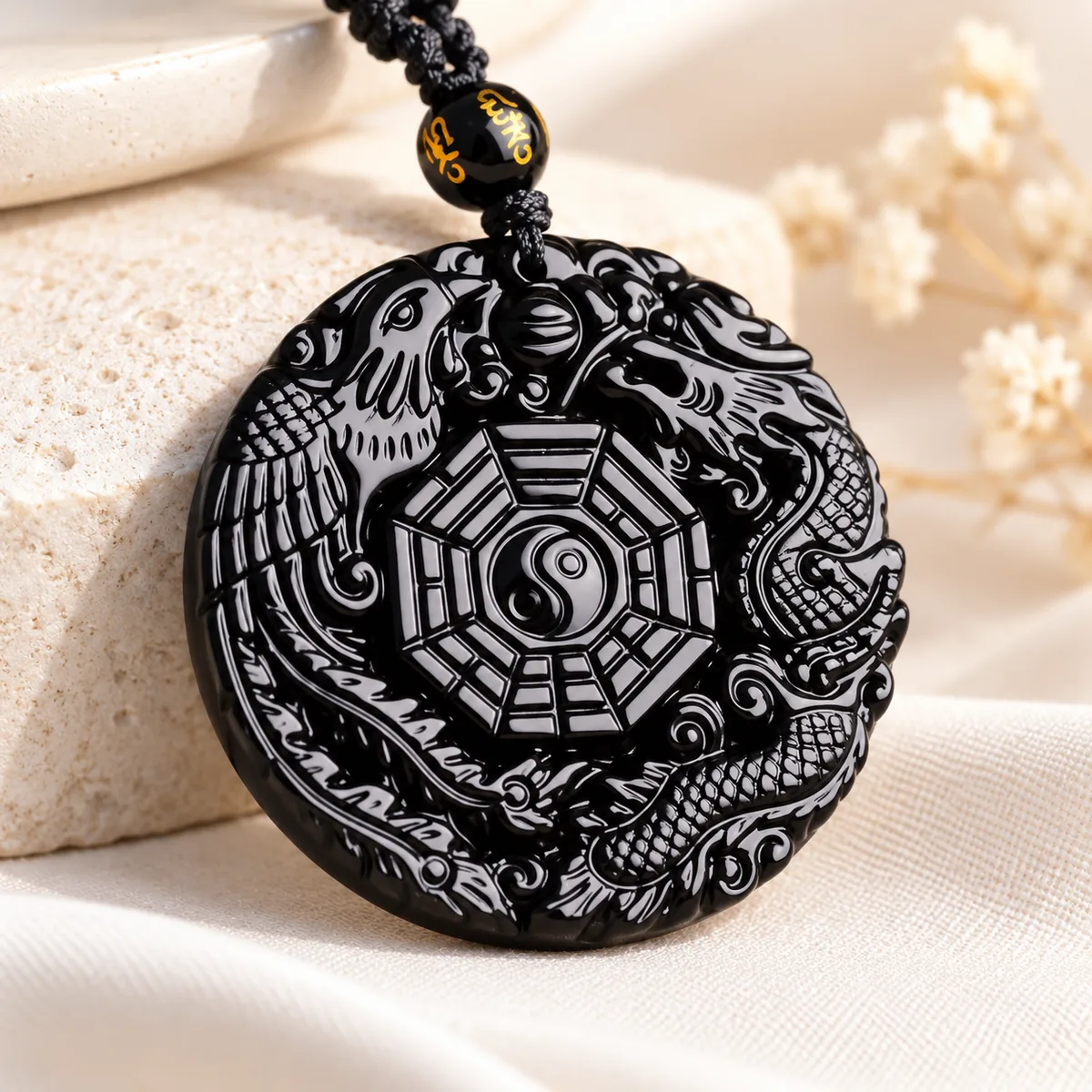
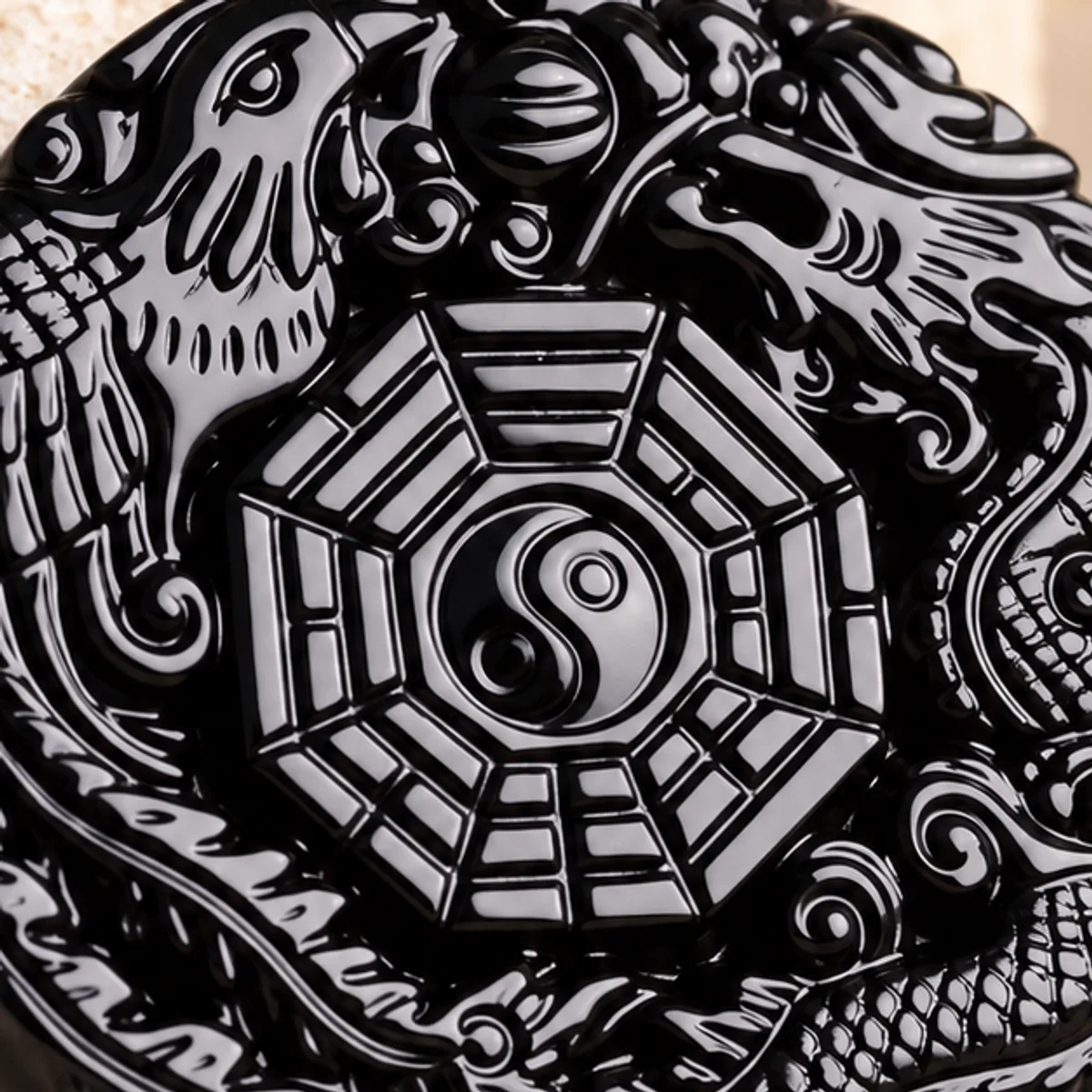
An obsidian disc carved over its entire surface: at the centre the eight trigrams around a yin yang, and all around a dragon and a phoenix facing each other. It is the densest piece in the catalogue, and not one millimetre of smooth surface is left on it.
The bagua is the diagram of the eight trigrams, a figure of Chinese cosmology attested since antiquity and taken up by feng shui. The eight groups of three lines, solid or broken, read in a defined order, and the yin yang occupies the centre. The dragon and the phoenix framing it form a classic pair of Chinese iconography. I describe the figure, I do not interpret it: that belongs to a living tradition.
The density of the carving is what sets this piece apart, and it has an optical consequence. On a smooth surface, obsidian returns a wide reflection; here every hollow and every edge breaks the light, and the disc looks silvery grey rather than black, although the stone is the same. It is the relief that makes the apparent colour. The other pendants are here.
The reservation is upkeep, and it is heavier than on the other pieces. A carving this intricate holds dust and grease in every one of its hollows, and the contrast drops fast: after a few months the disc turns uniformly dull and the figures stop standing out. A pass under lukewarm water with a soft toothbrush brings it all back, but it needs thinking about three or four times a year, not once.
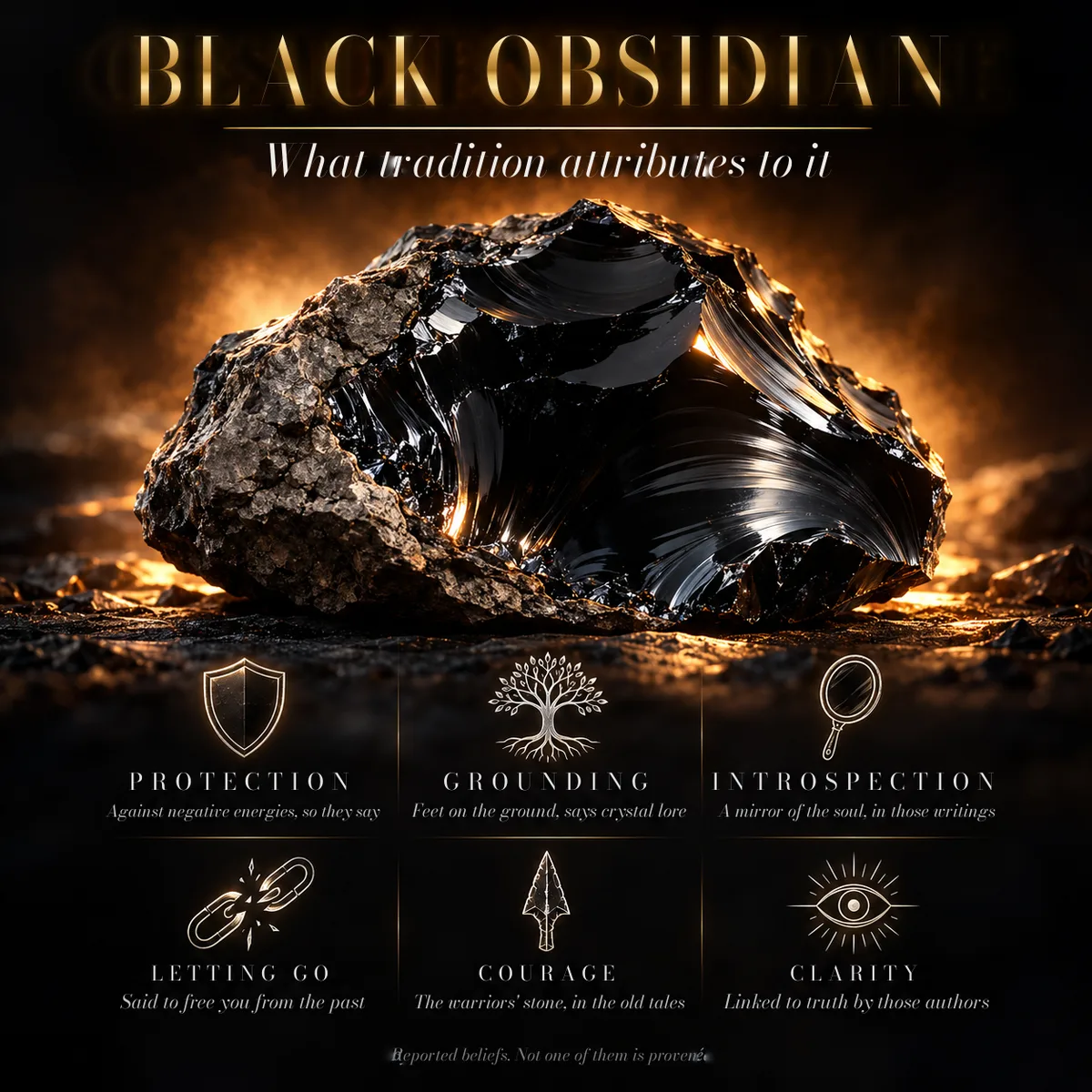
Crystal lore ties obsidian to grounding. The bagua, the dragon and the phoenix belong, for their part, to Chinese cosmology and not to crystal lore. None of the above is proven, and no piece of jewellery heals anything. I have gathered separately what tradition attributes to obsidian, in the conditional.
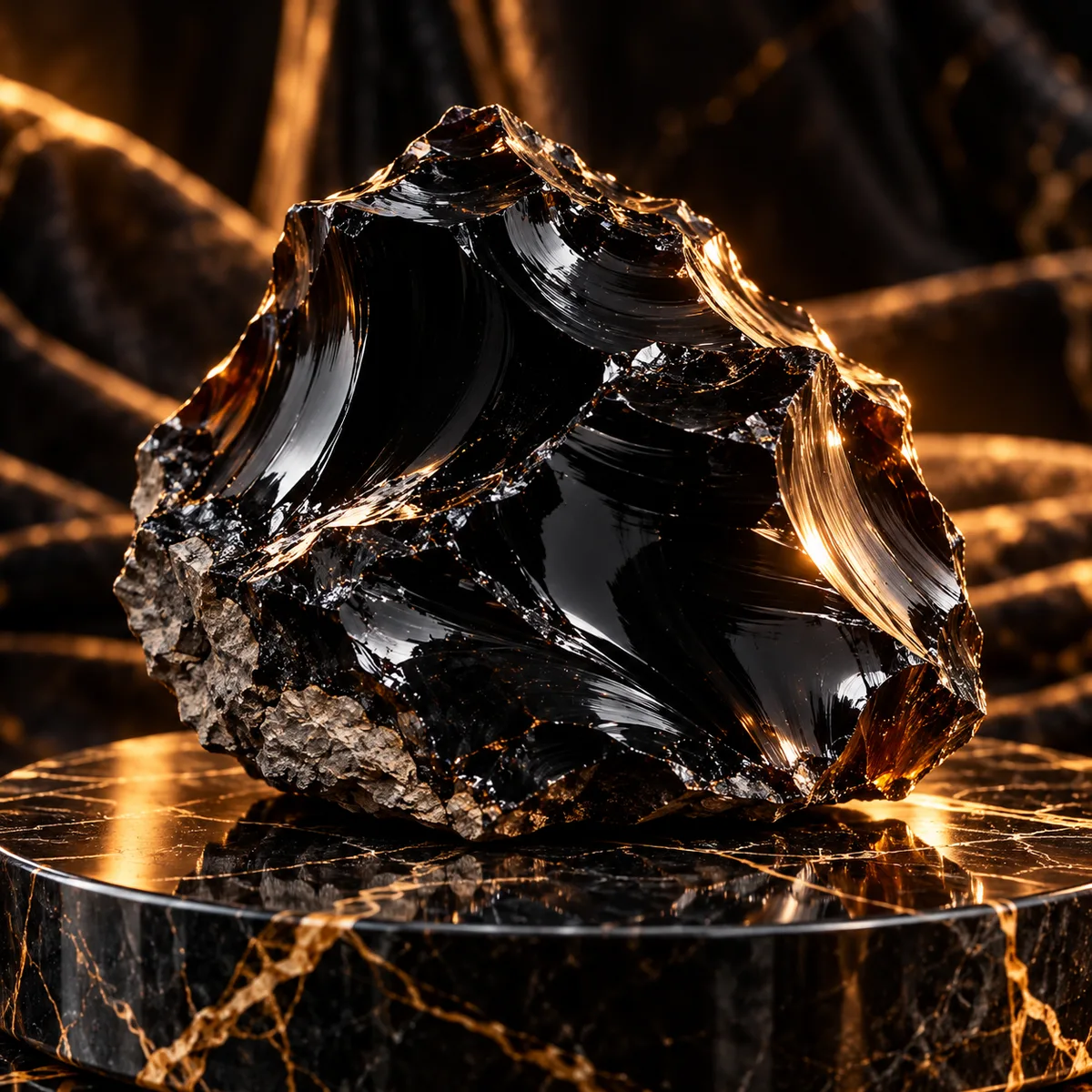
- Genuine black obsidian, disc carved in relief over its whole surface.
- Eight trigrams and yin yang at the centre, dragon and phoenix as a crown.
- The relief breaks the light: the disc looks silvery grey although the stone is black.
- Cleaning with a soft brush three or four times a year, not once.
What to know before you wear it
 |  |  |
The specifications
- Stone
- Black obsidian, volcanic glass
- Shape
- Round disc, relief carved over the whole surface
- Diameter
- About 45 mm / 1 3/4 in
- Setting
- None, stone drilled and knotted
- Cord
- Braided black cord with an engraved bead, adjustable length
- Gender
- Unisex
- Brand
- Bijoux Obsidienne

Carving dense on a stone that flakes away
On a dense carving, the danger is not the first stroke but the last. Every hollow removed weakens what surrounds it, and on a volcanic glass the vibrations add up: a piece that has survived three hundred passes can split on the three hundred and first, on a secondary motif and with no warning. That is why this kind of piece is worked from the centre outward, keeping as much material as possible around the working area until the end.
This piece is in the catalogue because it shows what the material allows, and because it answers a precise demand from the customers who are looking for the bagua. It is not discreet and does not try to be. The octagonal bagua, more geometric and quieter, is also in the catalogue.
A piece that has held for three hundred passes can split on the three hundred and first, on a secondary motif.
Obsidian does not mind water. The hollows of the relief hold dust: a pass under lukewarm water with a soft toothbrush three or four times a year brings the contrast back. Never an ultrasonic bath. Cleaning an obsidian piece covers the rest.