Description
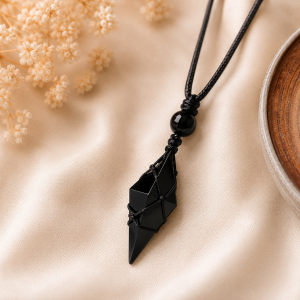
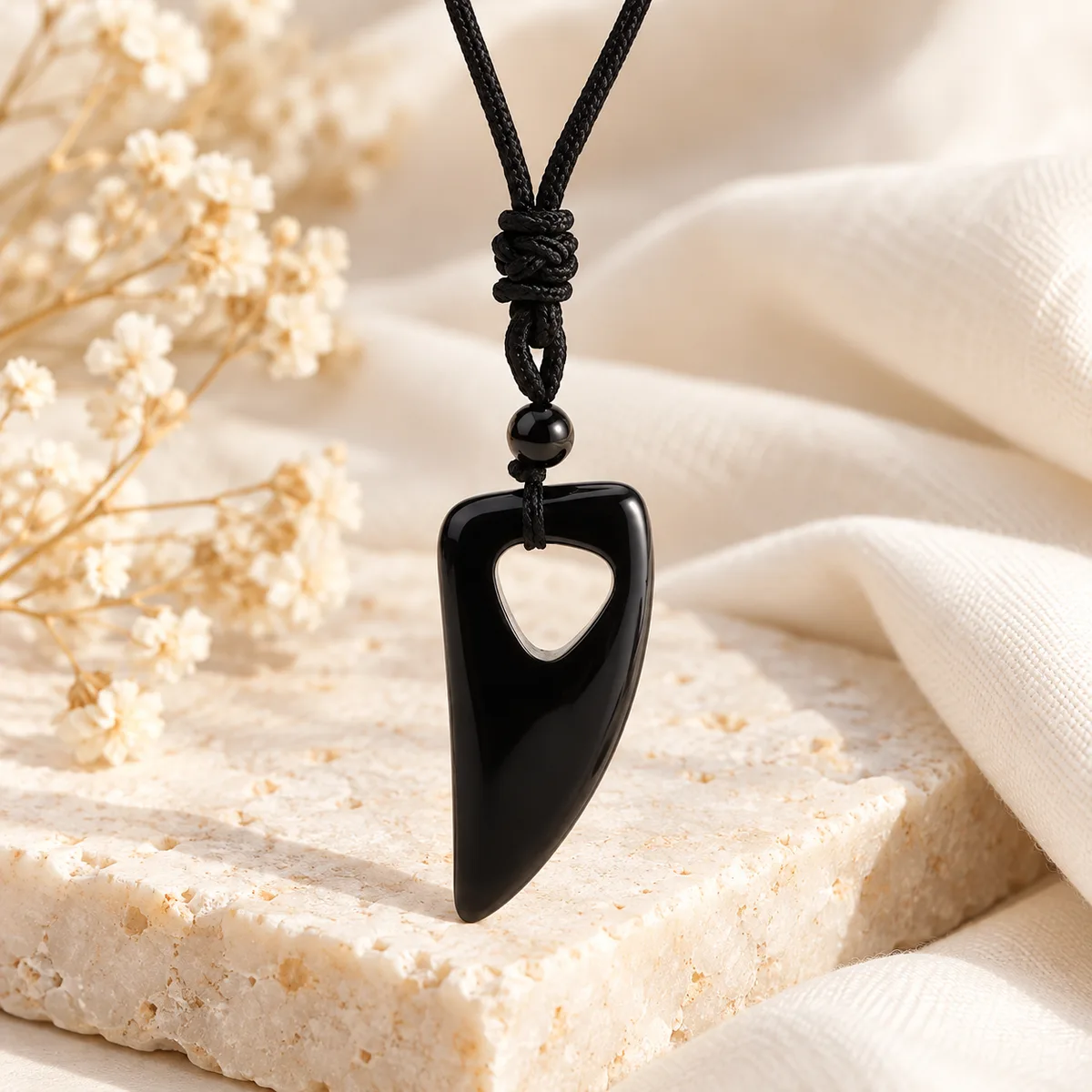
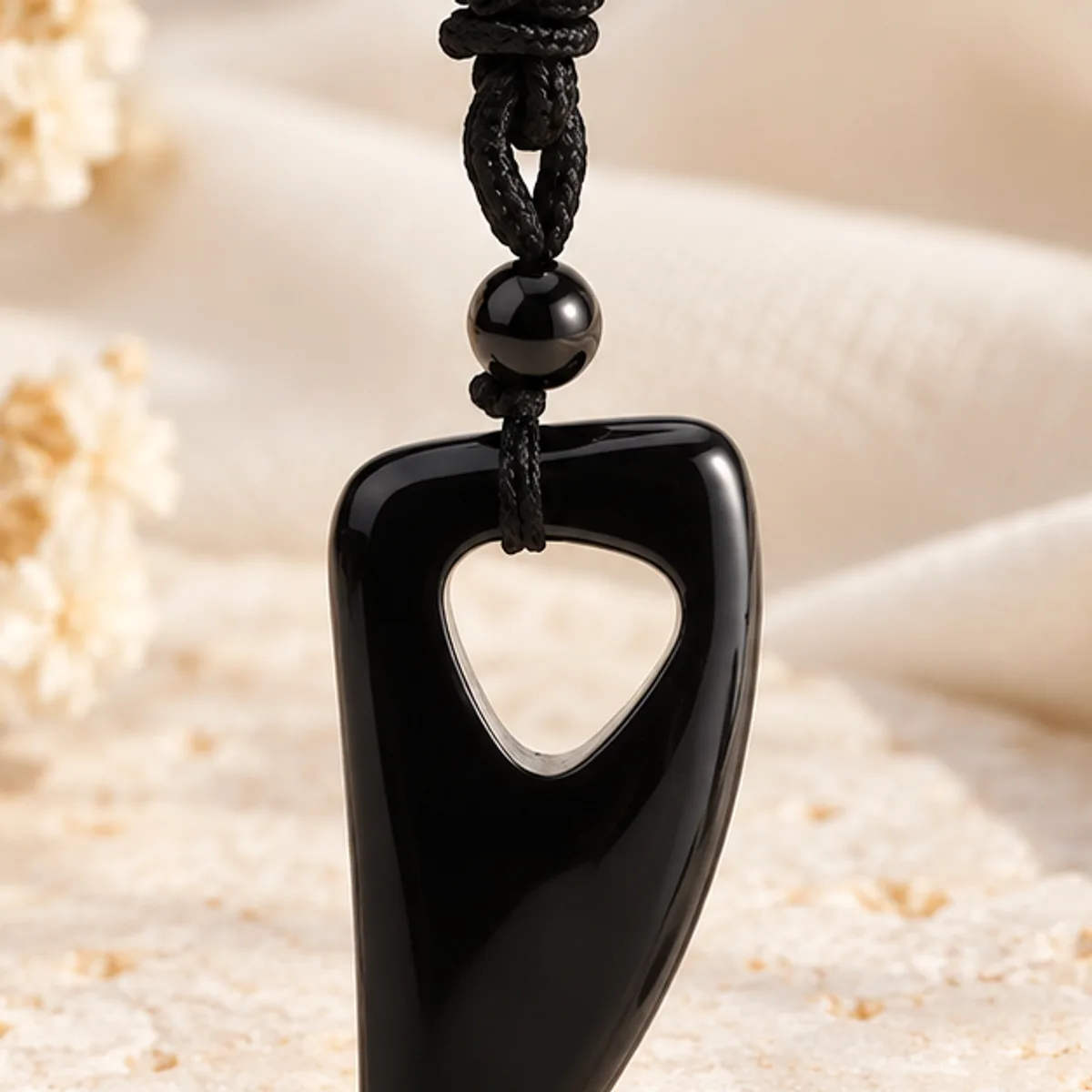
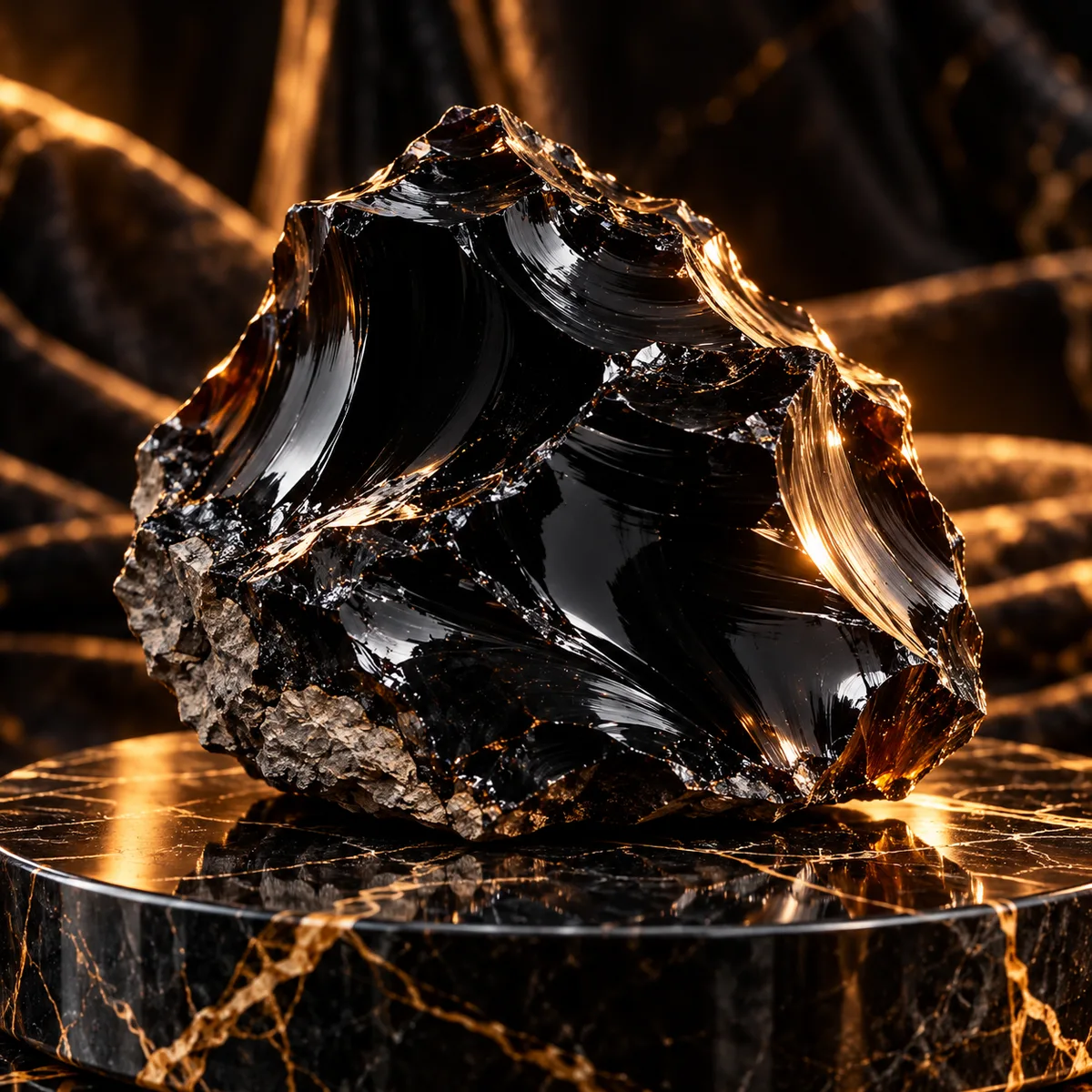
An obsidian fang pierced at its centre with a triangle whose angles are softened. The opening changes everything: the stone lightens, and whatever is behind it, skin or cloth, appears in the middle of the piece.
The void is not decorative, it makes the drawing. A solid black mass reads as a silhouette; the same mass pierced reads as an outline, and the eye follows the line instead of stopping on the surface. That is also what sets this model apart from the solid fang in the catalogue: same outer shape, opposite reading. Both are here.
The hollowing genuinely lightens the piece, by about a third of its weight, and you feel that on a pendant worn all day. A solid fang this size weighs about half an ounce and pulls slightly on the cord; this one weighs a third of an ounce and stays put. On a stone as heavy as obsidian, that is no detail.
The reservation is structural and I will say it without hedging: this is the most fragile piece in the catalogue. Hollowing a stone amounts to removing the material that held the rest, and obsidian being a glass, the two arms that frame the void work in bending. They will not break in wear, they will break in a fall. A solid fang dropped on tile chips; this one can snap in two. To be stored flat, not hanging from a hook.
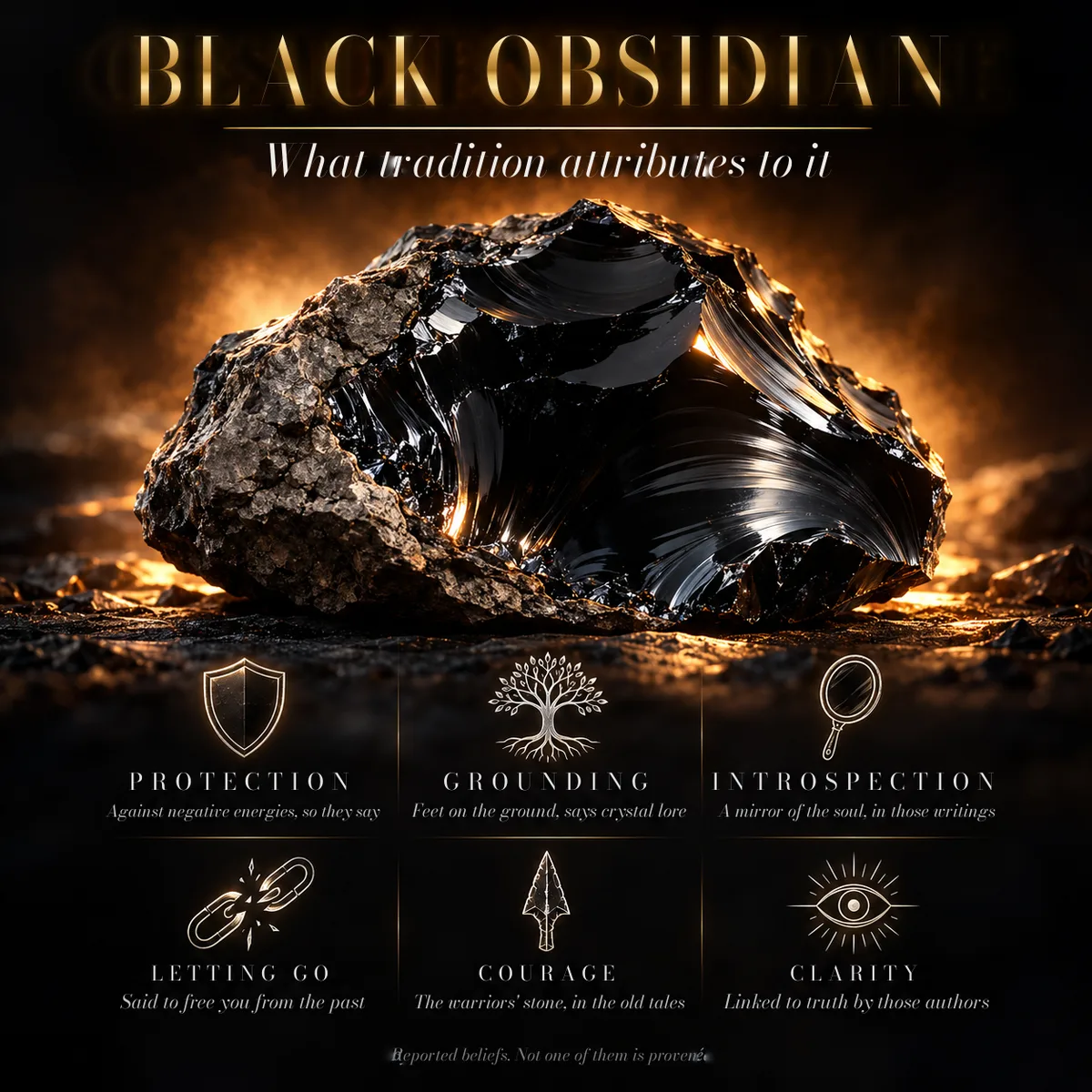
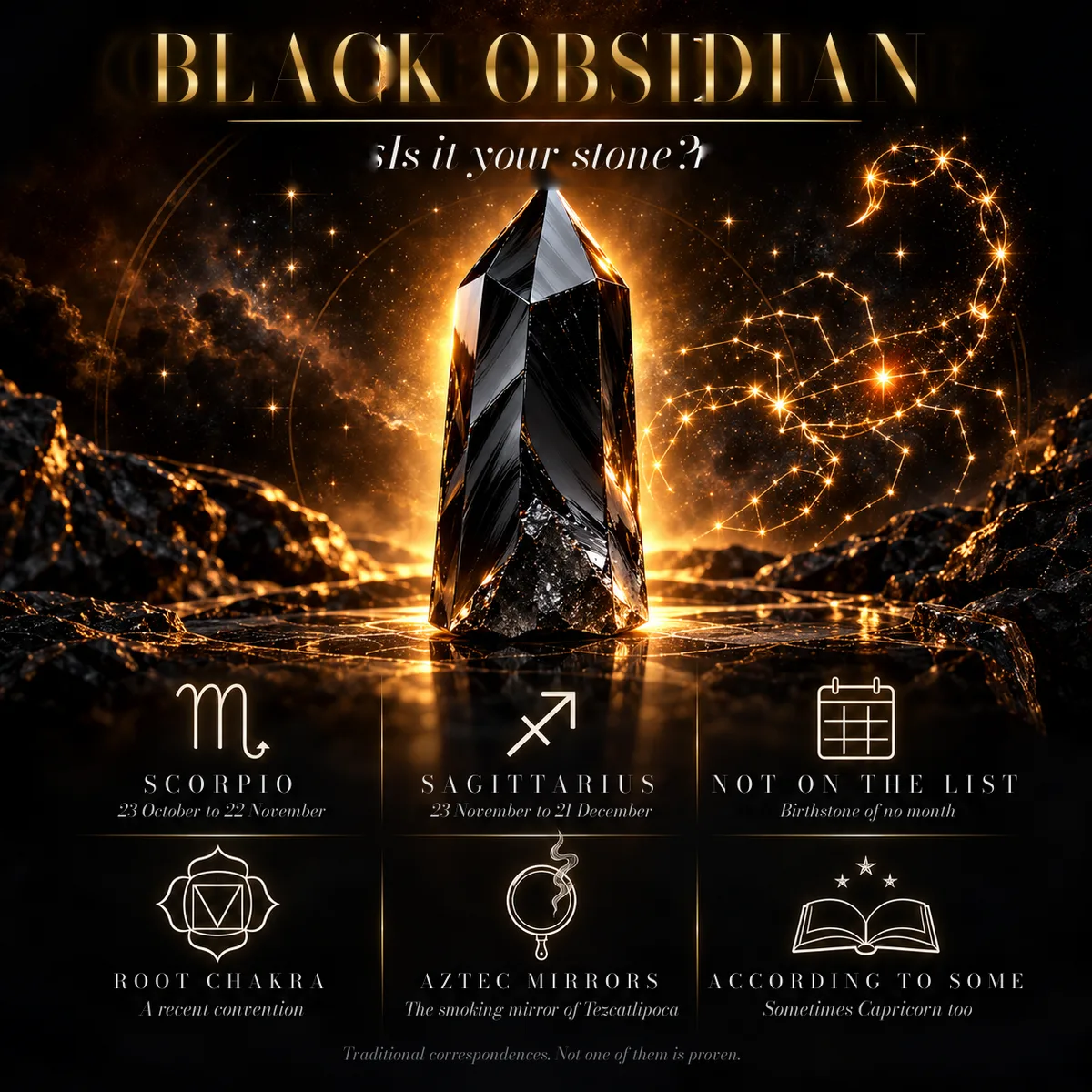
Crystal lore ties obsidian to grounding. None of that is proven, and no piece of jewellery heals anything. I have gathered separately what tradition attributes to obsidian, in the conditional from start to finish.
- Genuine black obsidian, fang hollowed with a triangle whose angles are softened.
- A third lighter than a solid fang of the same size.
- The most fragile piece in the catalogue: to be stored flat, never hanging.
- Adjustable braided black cord, no metal clasp.
What to know before you wear it
 |  |  |
The specifications
- Stone
- Black obsidian, volcanic glass
- Shape
- Hollowed fang, mirror polished
- Length
- About 45 mm / 1 3/4 in
- Weight
- About 10 g / 0.35 oz
- Setting
- None, stone drilled and knotted
- Cord
- Braided black cord, adjustable length
- Gender
- Unisex
- Brand
- Bijoux Obsidienne

Hollowing a volcanic glass, the riskiest operation in the catalogue
Hollowing is the operation that costs the workshop the most stones, and it is not the initial drilling that kills them. It is the widening: once the hole is started, it has to be opened out to the final shape, and every pass thins the two arms that frame the void. There comes a point where the piece no longer has enough material to absorb the vibration of the tool, and it splits all at once, without warning, usually on the last pass. The breakage rate on this model is over one piece in four.
This model exists because the solid fang, however well it comes out, remains a mass. Piercing it turns it into a drawing, and that is another object for the same price, or nearly: the difference in tariff does not even cover the rejects. Both are here and the obsidian guide explains the material.
It is not the drilling that kills the stone, it is the last widening pass. One in four splits on it.
Obsidian does not mind water, but this piece will not take a fall. Store it flat in its pouch, never hanging from a hook where it can swing against a wall. A soft cloth is enough, never an ultrasonic bath. Cleaning an obsidian piece covers the rest.