Description
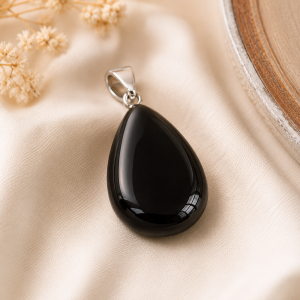
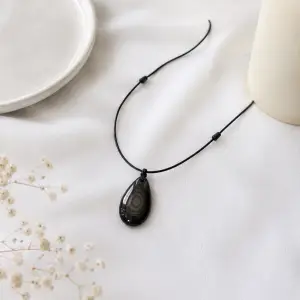
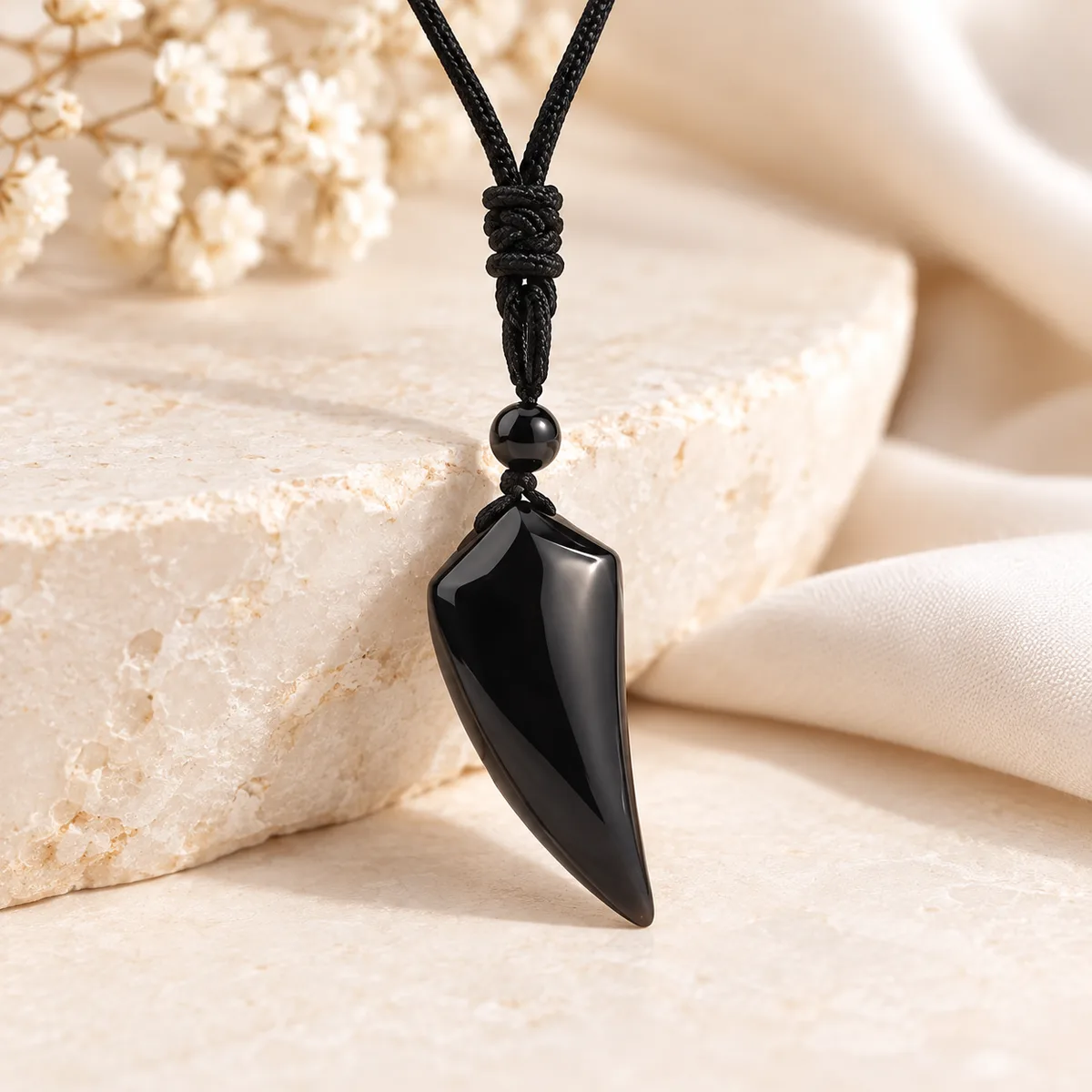
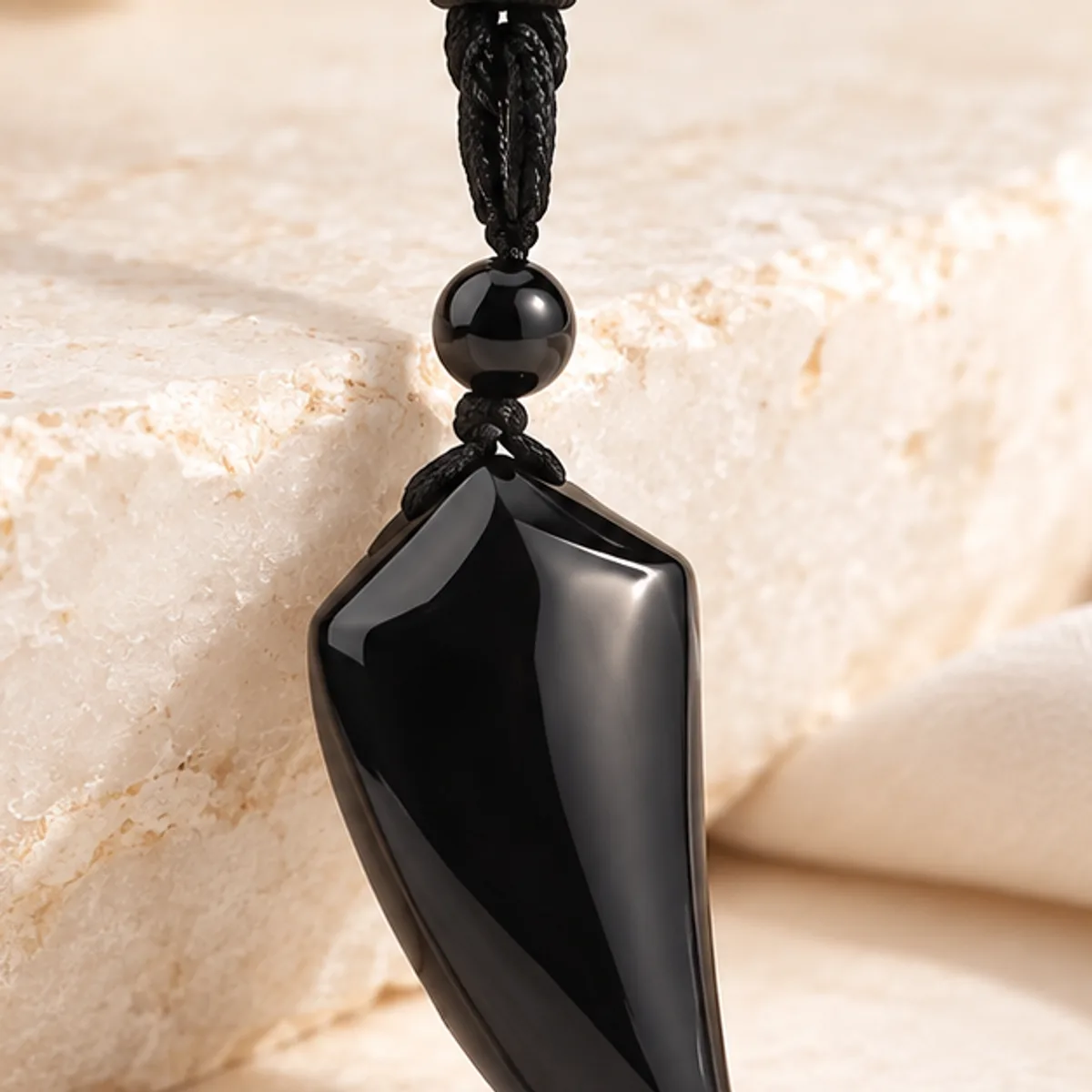
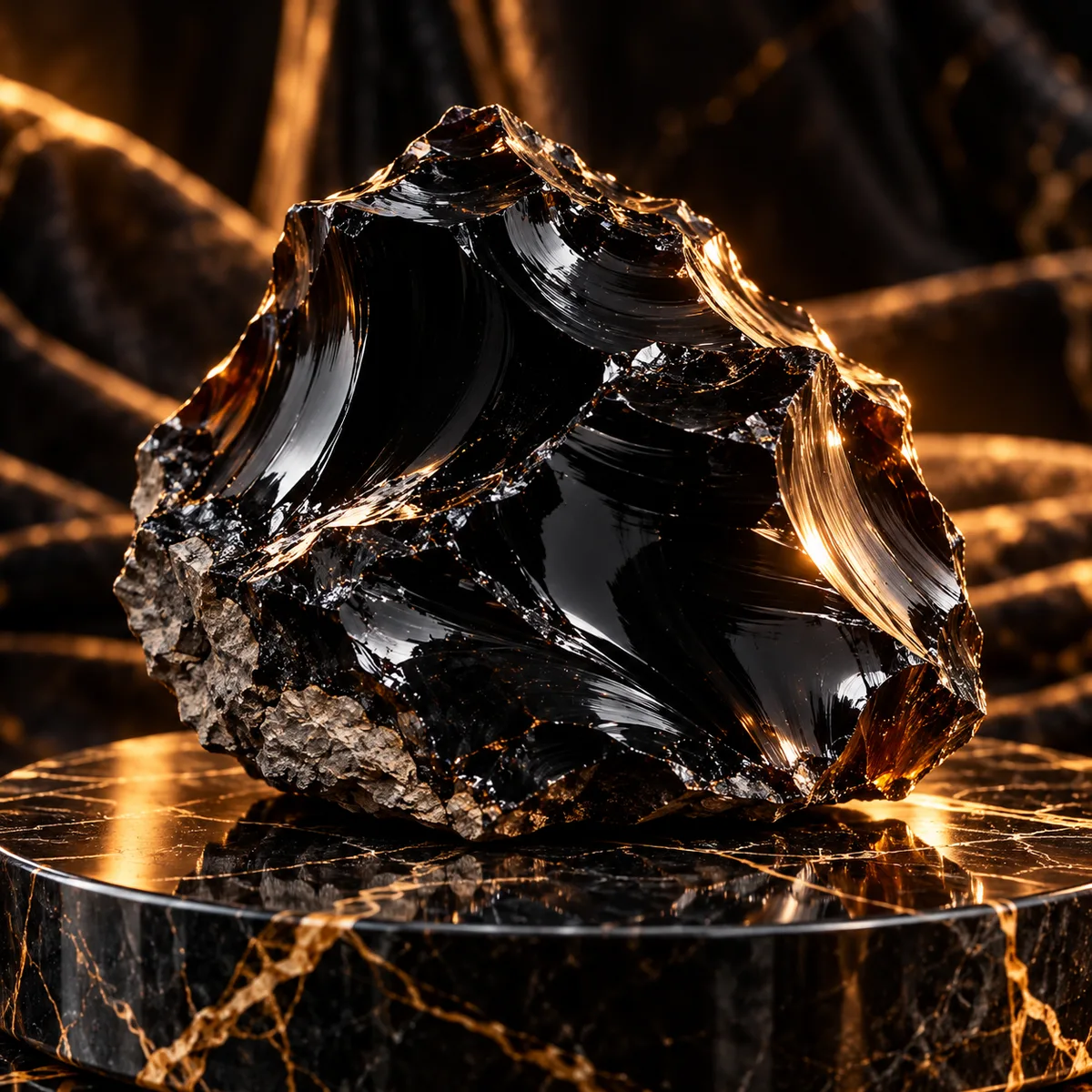
An obsidian fang cut from the solid, a full curve thickening toward the top and tapering toward the bottom, mirror polished over its whole surface. No edge, no angle, no facet.
This shape is the most resistant one you can give a volcanic glass, and that is no accident of style. Obsidian flakes away in a shell from a point of contact, and an angle concentrates the impact on a few tenths of a square millimetre. An entirely curved surface spreads that impact, and the lower tip is itself rounded rather than sharpened. It is the pendant I recommend to anyone who has already broken a stone.
The polish goes to a mirror on both faces, including the one against the skin. On a curved shape that produces a moving band of light sliding along the fang as the body moves, a little like the chatoyancy of a tiger’s eye but with no fibres: it is simply the reflection following the curvature. The other pendants are here.
The reservation is the one every mirror polish carries: it shows everything. A fingerprint shows, and a micro-scratch picked up against a zipper reads at a raking angle, where a matte stone would have shown nothing. It repolishes without difficulty, but you are better off hearing it before than after. On a fang worn every day, count on a touch-up every five or six years.
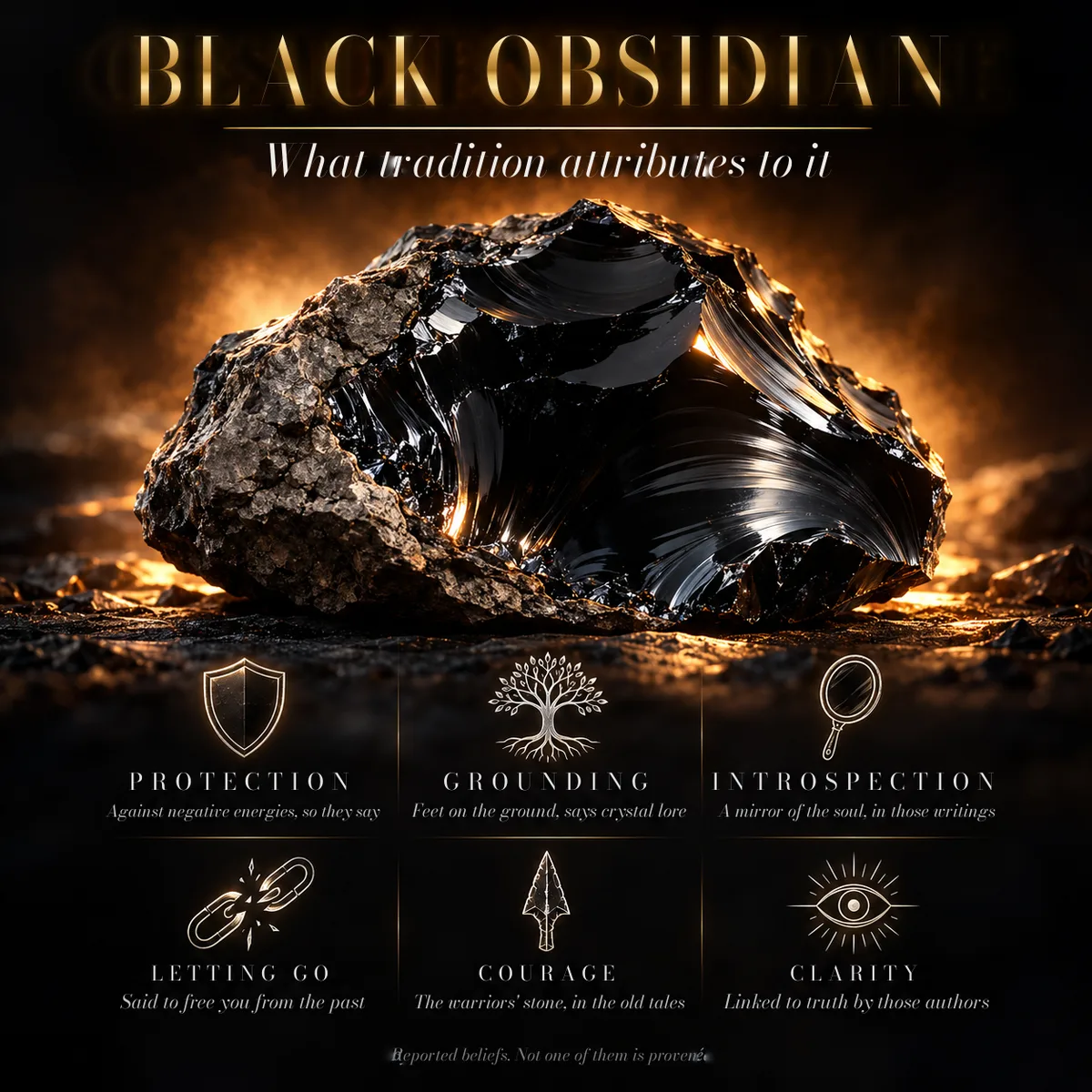
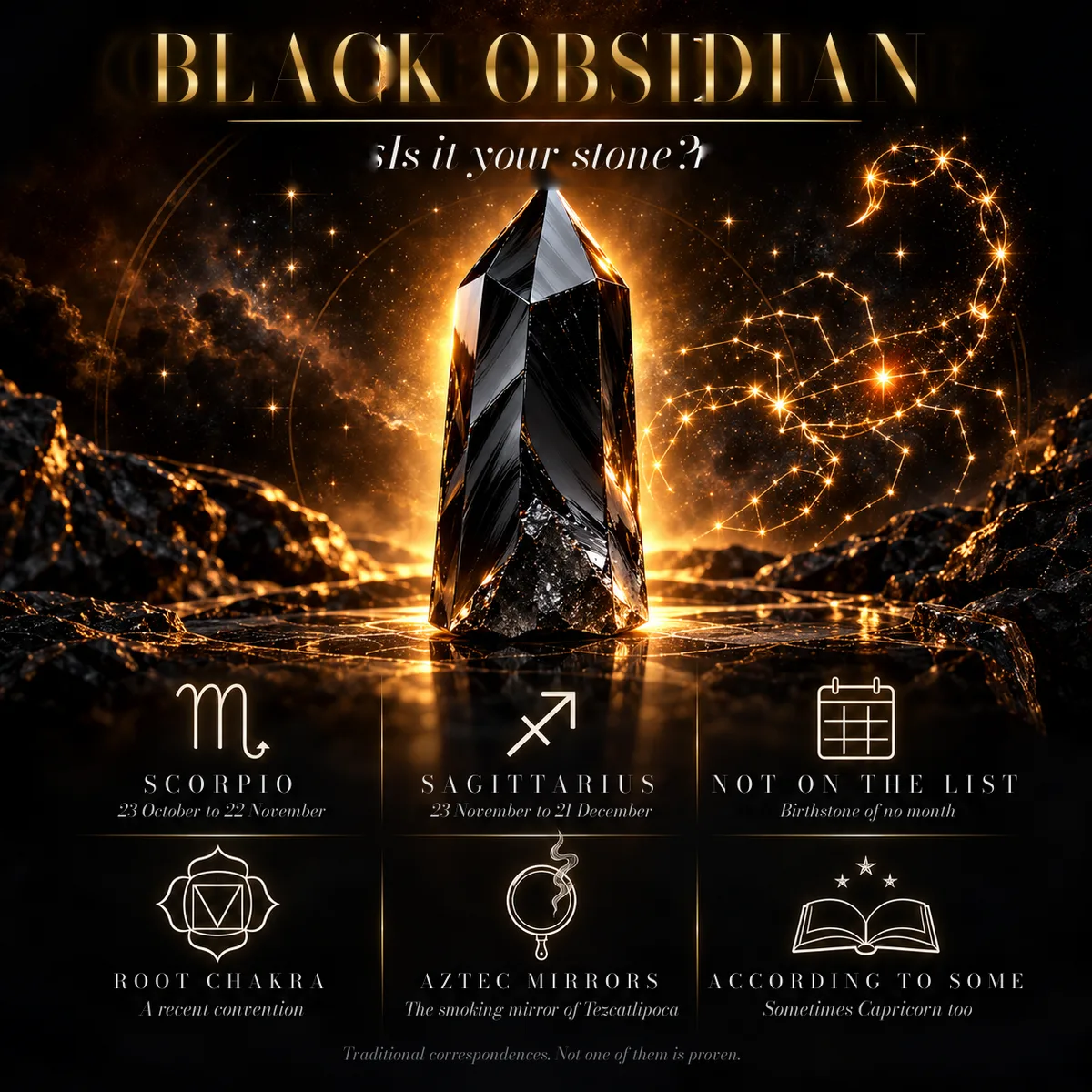
Crystal lore ties obsidian to grounding, and fang shapes to protection, by analogy with the animal tooth. None of that is proven, and no piece of jewellery heals anything. I have gathered separately what tradition attributes to obsidian, in the conditional from start to finish.
- Genuine black obsidian, a fang cut from the solid and mirror polished.
- No edge and no angle: the most resistant shape for a volcanic glass.
- Lower tip rounded, not sharpened.
- Adjustable braided black cord, no metal clasp.
What to know before you wear it
 |  |  |
The specifications
- Stone
- Black obsidian, volcanic glass
- Shape
- Curved fang, mirror polished
- Length
- About 45 mm / 1 3/4 in
- Setting
- None, stone drilled and knotted
- Cord
- Braided black cord, adjustable length
- Gender
- Unisex
- Brand
- Bijoux Obsidienne

The strongest shape you can give a glass
The drilling of a fang is not done along the axis but slightly off it, and that is what decides the look of the pendant. Drilled straight, the fang hangs perfectly vertical and looks stiff. Drilled with three or four degrees of tilt, it leans and follows the line of the neck. The difference is invisible on the bench and obvious in the mirror. So I always drill after hanging the piece to see how it falls, never before.
This model exists for people who love obsidian and break their jewellery. That is a real category, and I would rather sell them a shape that holds than a point they will send back to me chipped in six months. The other pendants are here and the obsidian guide explains the material.
Drilled straight, the fang hangs stiff. Three degrees of tilt, and it follows the line of the neck.
Obsidian does not mind water. The mirror polish keeps fingerprints, a dry microfiber cloth is enough. Avoid prolonged contact with a zipper, and never an ultrasonic bath. Cleaning an obsidian piece covers the rest.