Description
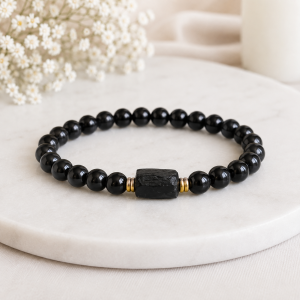
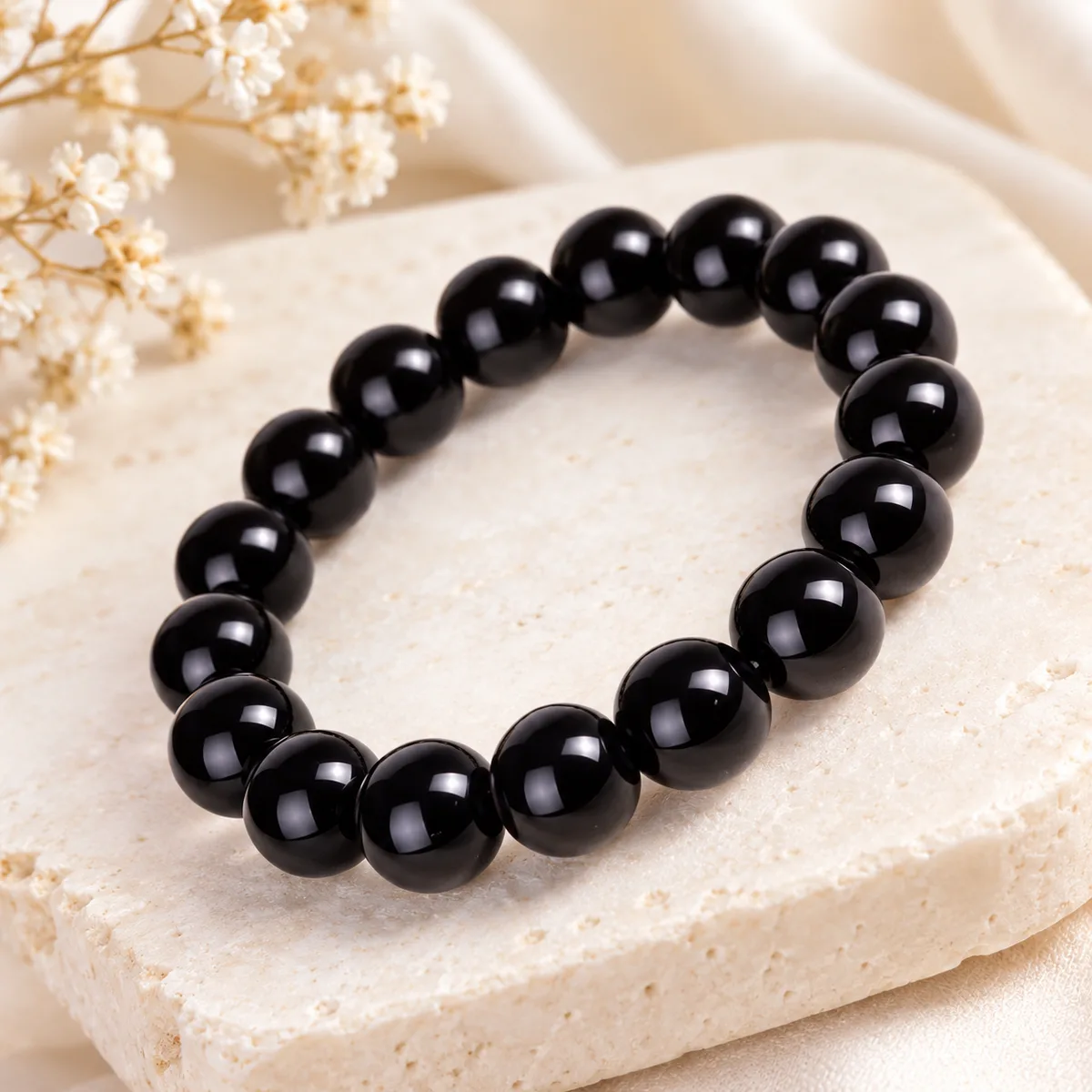
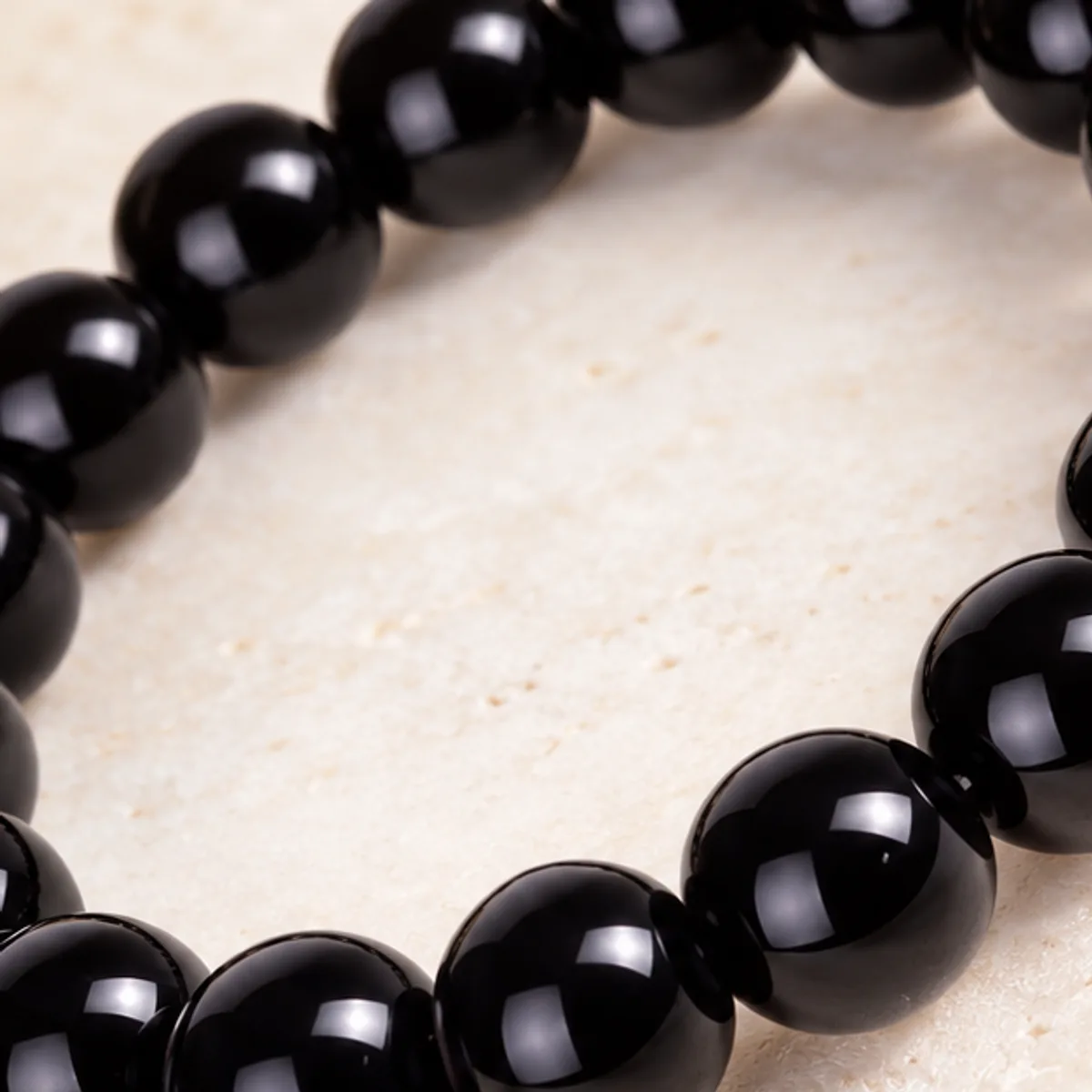
Nineteen round black obsidian beads, 10 millimeters across, polished to a mirror and strung on elastic cord. No golden sheen, no silver veil: solid black that returns light like a drop of ink. This is the one you wear when you want no color at all on your wrist.
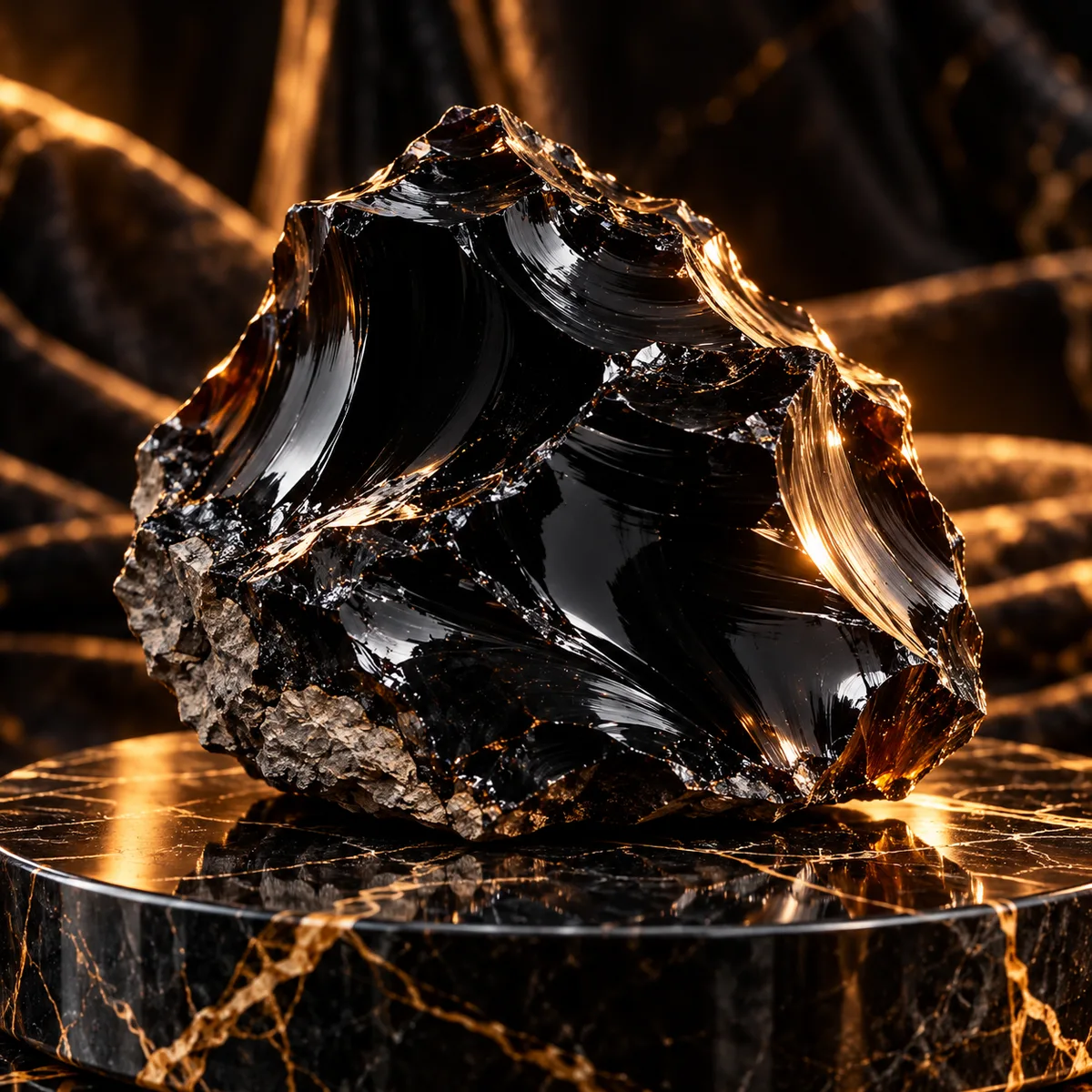
Obsidian is a volcanic glass, not a crystallized mineral. A felsic lava cooled too fast for the atoms to organize: the result is a natural glass with no internal structure and no cleavage plane, and that is why it polishes like optical glass. On a well-polished 10 mm bead you can see your own reflection. On a crystallized stone of the same size, never. The obsidian guide covers that formation.
Ten millimeters changes everything compared with 6 and 8. The strand weighs about an ounce, you feel it on the wrist, and it will not slip under a fitted shirt cuff. In exchange each bead is an object you can make out from across a room, and the polished surface is wide enough to return real light rather than a bright dot. This is not a discreet bracelet and it does not pretend to be. The other bracelets, including the finer diameters, are here.
An honest reservation about mirror polish: it shows everything. A hairline scratch that would go unnoticed on a matte stone catches the eye here at a certain angle, and obsidian scratches against hard metal, a key, a watch bracelet. After two years of daily wear the strand will carry marks. They polish out, but you should know it when you buy rather than discover it later.
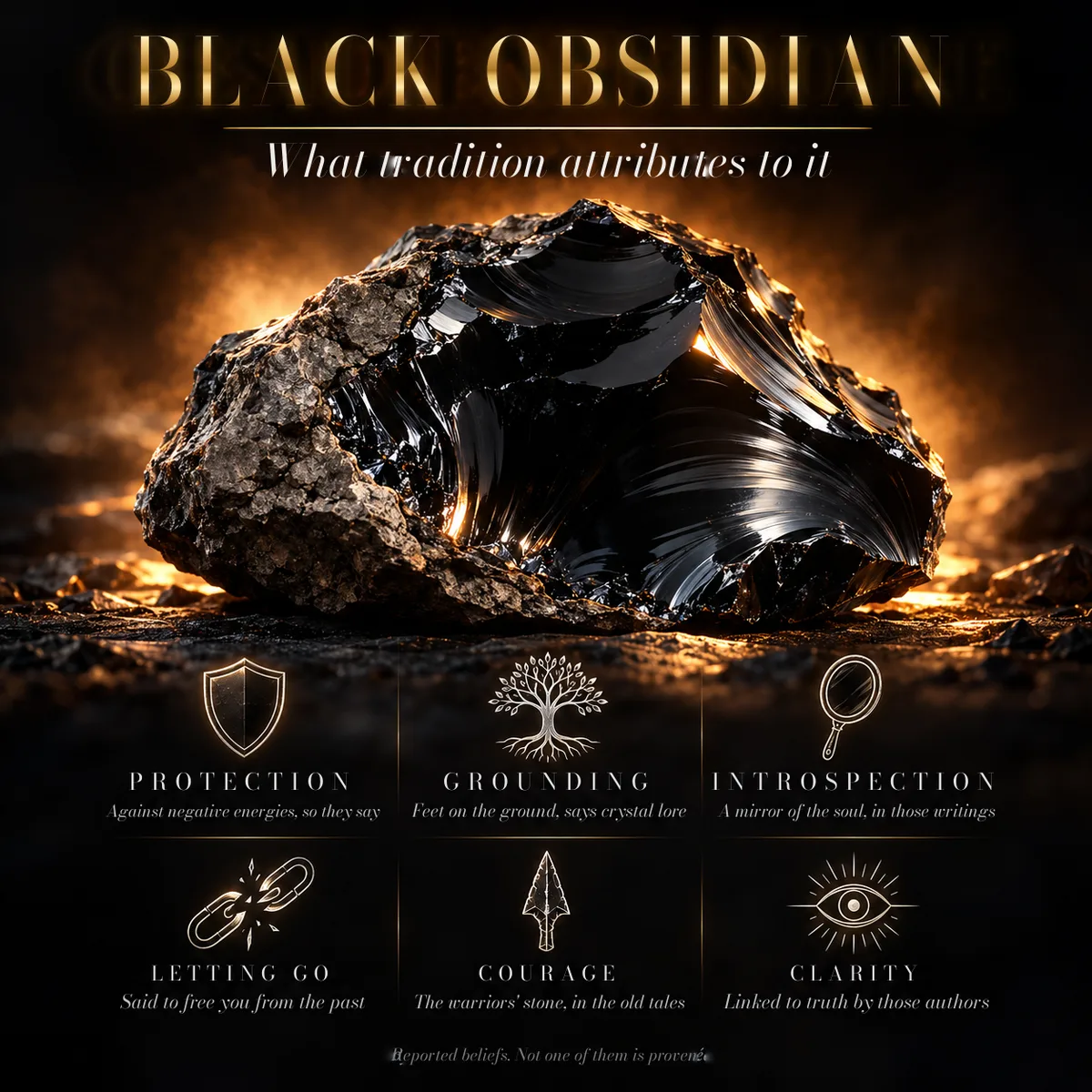
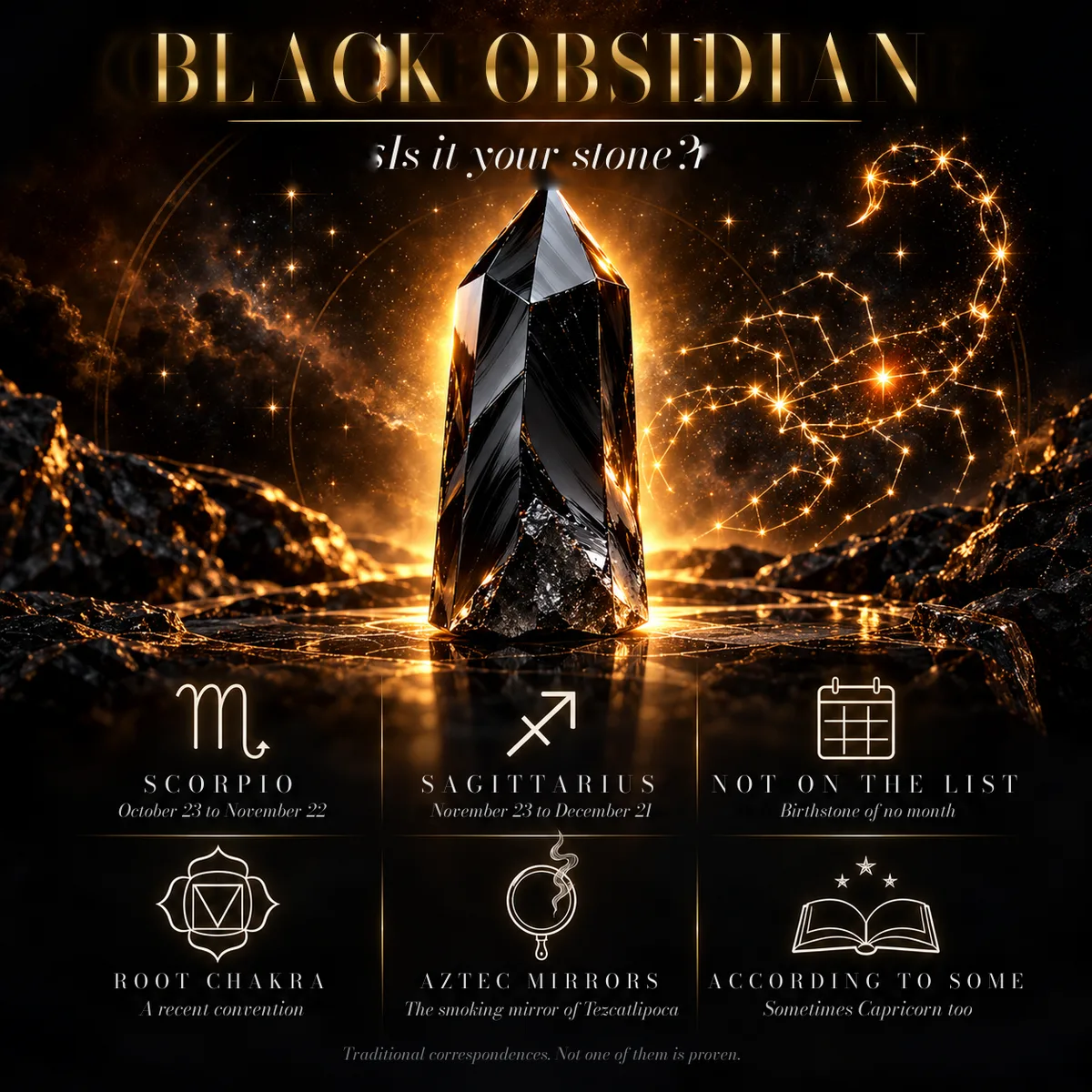
Crystal lore makes black obsidian the grounding stone above all others, the one linked to staying in place. None of that is proven, and no piece of jewelry heals anything. I have gathered separately what tradition attributes to obsidian and how it is worn, in the conditional from start to finish.
- Real black obsidian, nineteen round 10 mm beads, mirror polished.
- Hand-strung in France on braided elastic cord, no clasp.
- Solid black, no golden sheen and no silver veil: the plainest in the range.
- Free restringing for life: send it back and I will rebuild it.
What to know before you wear it
 |  |  |
The specifications
- Stone
- Black obsidian, volcanic glass
- Bead diameter
- 10 mm
- Number of beads
- 19
- Wrist size
- 6 3/4 to 7 1/2 in (17 to 19 cm), elastic
- Finish
- Mirror polished
- Stringing
- Braided elastic cord, no clasp
- Weight
- About 1 oz (30 g)
- Stone origin
- Mexico
- Gender
- Unisex
- Brand
- Bijoux Obsidienne

Plain black is harder to source than golden
People assume plain black is the easiest to source. It is the opposite. Obsidian with truly no sheen is rare, because most blocks hold at least a few planes of bubbles, and a bead cut from them will show a grey or golden veil at some angle. For a plain strand you have to set aside every bead that lights up, and out of a hundred beads I easily set aside twenty. They go into the mixed strands, they are not wasted, but they cannot come in here.
This model exists for those who tried golden obsidian and did not like it. The copper sheen either appeals or it does not, and when it does not there is nothing to negotiate. This one offers no color and no effect, just a well-polished black mass. The obsidian varieties explain what separates black from golden, and the other bracelets are here.
Truly plain black costs more to sort than golden. Nobody expects that.
Obsidian does not mind water, but it chips on impact and scratches against hard metal. Take the bracelet off before exercising, do not store it with keys, and do not wear it against a steel watch bracelet. A soft cloth is enough, never an ultrasonic bath. Cleaning an obsidian piece covers the rest.