Obsidian: dangers, contraindications and precautions
Obsidian carries a reputation as a "powerful" stone, and that sometimes worries people. Let's look at it calmly: what's myth, what the real precautions are (it is a volcanic glass, after all), and the essential reminder, a piece of jewellery is never medical care.
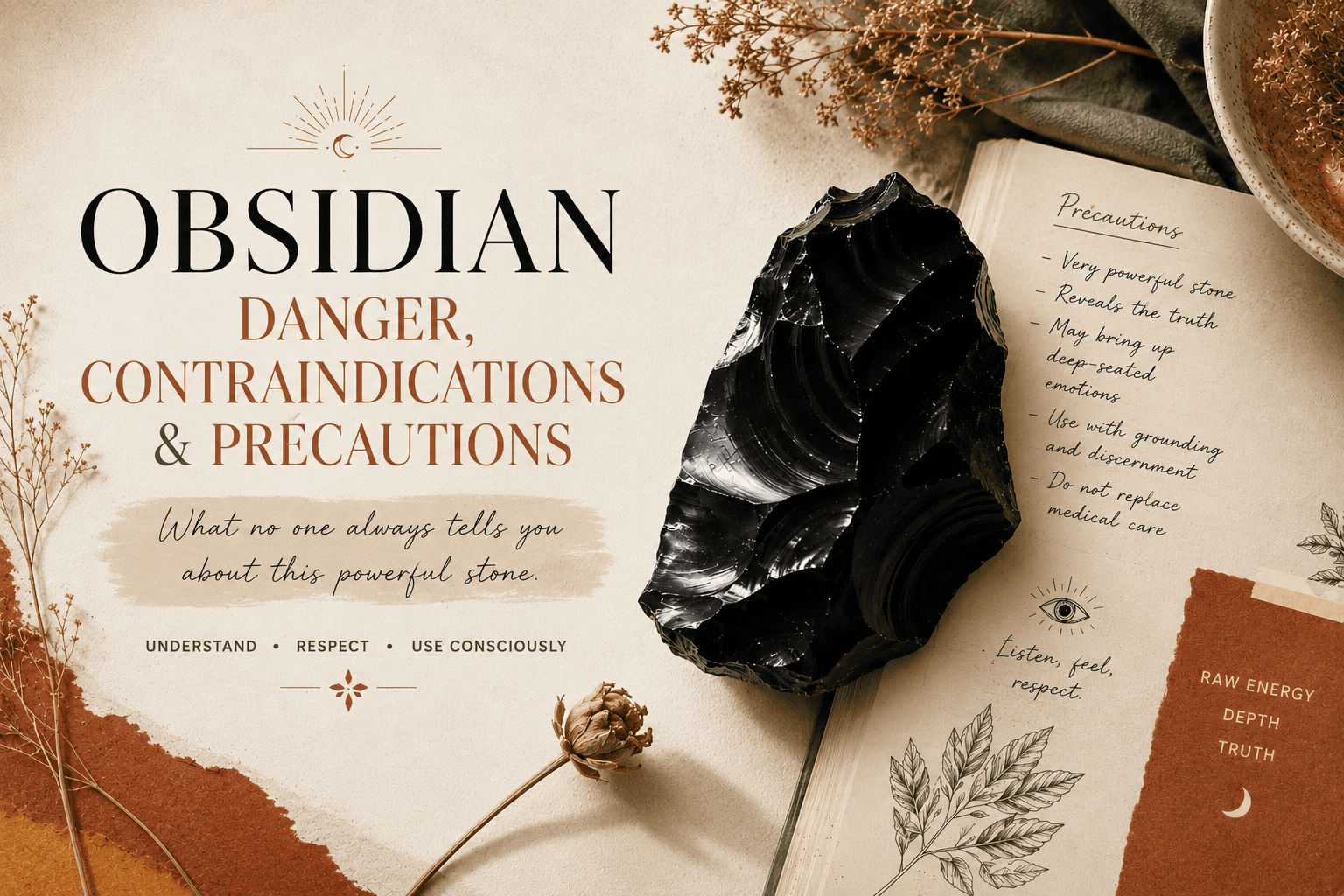
Is obsidian dangerous?
Let's clear this up straight away: worn as jewellery, obsidian is not dangerous. It's a natural stone that people wear every day without a second thought, as millions do.
Its reputation as an "intense" stone in crystal healing circles does feed some anxiety. But to see clearly, you need to separate two very different things:
The real
Concrete physical precautions: obsidian is a volcanic glass, brittle and prone to breaking. That part is factual.
The belief
"Energetic dangers" that come from tradition: the stone is said to be too strong, and so on. These are beliefs, not demonstrated facts.
We'll go through both honestly, without dramatising anything or leaving anything out.
The real precautions: a volcanic glass
The one genuinely factual precaution comes down to what obsidian is. It's a volcanic glass of moderate hardness (around 5 to 5.5 on the Mohs scale). In practice that means it can be scratched, chipped, and above all break cleanly into sharp edges. That's not trivial: our ancestors knapped obsidian precisely to make blades and arrowheads.
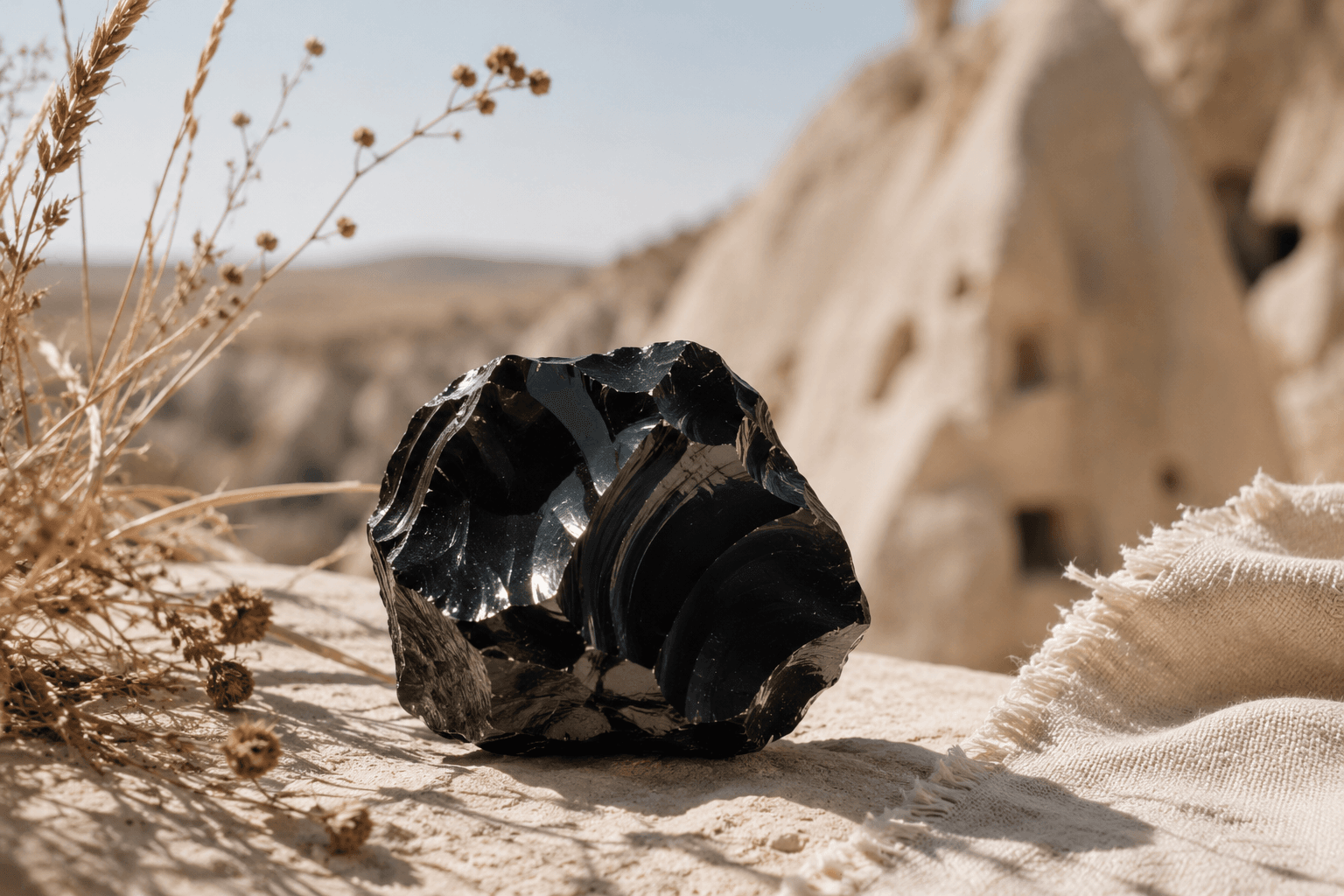
Good habits:
- avoid knocks and drops onto hard surfaces;
- if a piece breaks, handle the fragments carefully, the edges can cut;
- on a bracelet, the weak point is the elastic thread: take it off before showering, swimming and exercising (see my guide on cleaning obsidian).
That said, obsidian is not a toxic stone: wearing it against your skin carries no risk.
Elixirs and water: the cautious method
In crystal healing, some people make "elixirs", water that has been in contact with a stone. As a matter of basic caution, it's best not to drop just any stone straight into water you're going to drink: depending on their composition, some stones can release unwanted elements.
If the subject interests you, always prefer the indirect method (the stone in a separate container, never touching the water you drink) over immersion. And above all, keep in mind that an elixir is a wellbeing practice: it is not a therapeutic drink, and it replaces neither hydration nor any treatment.
What the traditions say: an "intense" stone
This is where most of the worry comes from. In crystal healing traditions, obsidian is often described as a "blunt" stone, one "that reveals the truth", sometimes called intense. According to those beliefs, and to some practitioners:
- it is said to bring buried emotions to the surface, so people advise easing into it gradually;
- some recommend not wearing it constantly at first, or pairing it with a gentler stone (rose quartz, amethyst);
- others prefer not to sleep with it.
It bears repeating plainly: these are beliefs drawn from tradition, not demonstrated facts. No study shows that a stone acts on emotions or on sleep. And if obsidian makes you uncomfortable, for whatever reason, there's obviously nothing stopping you simply taking it off.
I'd rather be straight with you: a stone isn't going to "transform" your life, for better or worse. I see it as a lovely reminder, an object that invites you to pause. If you like it, wear it for the pleasure of it above all.
Are there any contraindications?
In the medical sense of the word, crystal healing has no contraindications, for a simple reason: it isn't a treatment. A stone produces no medical effect, positive or negative. So there's nothing to "contraindicate".
What remains are a few common-sense precautions:
- Young children: small beads are a choking hazard, and fragments of a broken stone can cut. Keep jewellery out of reach of little ones.
- Never as a replacement for care: a stone is no substitute for medication, medical follow-up or therapy.
- Pregnancy, fragile health: wearing obsidian jewellery carries no toxicity, but if you have any doubt or health question, ask a health professional, and never stop a treatment on your own initiative.
The principle fits in one sentence: obsidian is an object of wellbeing and pleasure, not a health device.
Choosing and wearing your obsidian well
For a relaxed experience, two or three pointers are enough:
- real obsidian: genuine volcanic glass, not an imitation in coloured glass or plastic, for everything about the stone, see my complete obsidian guide;
- gentle care: a soft cloth, no salt or harsh products (how to clean it);
- calm cleansing if you follow crystal healing customs (cleansing and recharging).
And if you're just starting out and obsidian's reputation intimidates you, begin simply with a bracelet, worn whenever you feel like it: nothing obliges you to keep it on all the time.
The essential reminder
This is the heart of the article, and it deserves saying without hedging. Crystal healing is a wellbeing practice grounded in tradition and belief. The properties attributed to stones are not scientifically demonstrated and are in no way therapeutic claims.
Worth keeping in mind, no piece of jewellery and no stone cures, treats or prevents any illness whatsoever. Crystal healing is never a substitute for medical advice, diagnosis or treatment. If you have a health concern, physical or mental, see a health professional; in an emergency, call 000.
My obsidian pieces
If you'd like to treat yourself, every one of my pieces, bracelets, necklaces, pendants and rings, is made by hand, with real obsidian chosen one piece at a time:
Frequently asked questions
Is obsidian dangerous to wear?
Can you sleep with obsidian?
Does obsidian have any contraindications?
Can you put obsidian in water or make an elixir?
Can obsidian break?
Discover obsidian differently
Handmade pieces, and an honest journal to help you understand this stone.