
Description
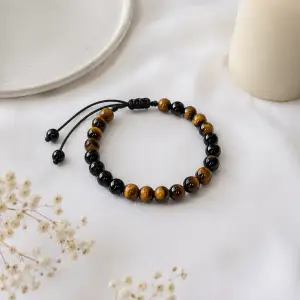
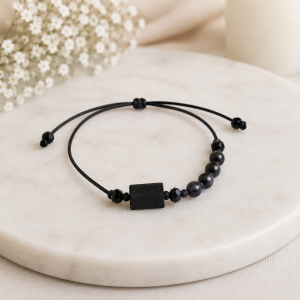
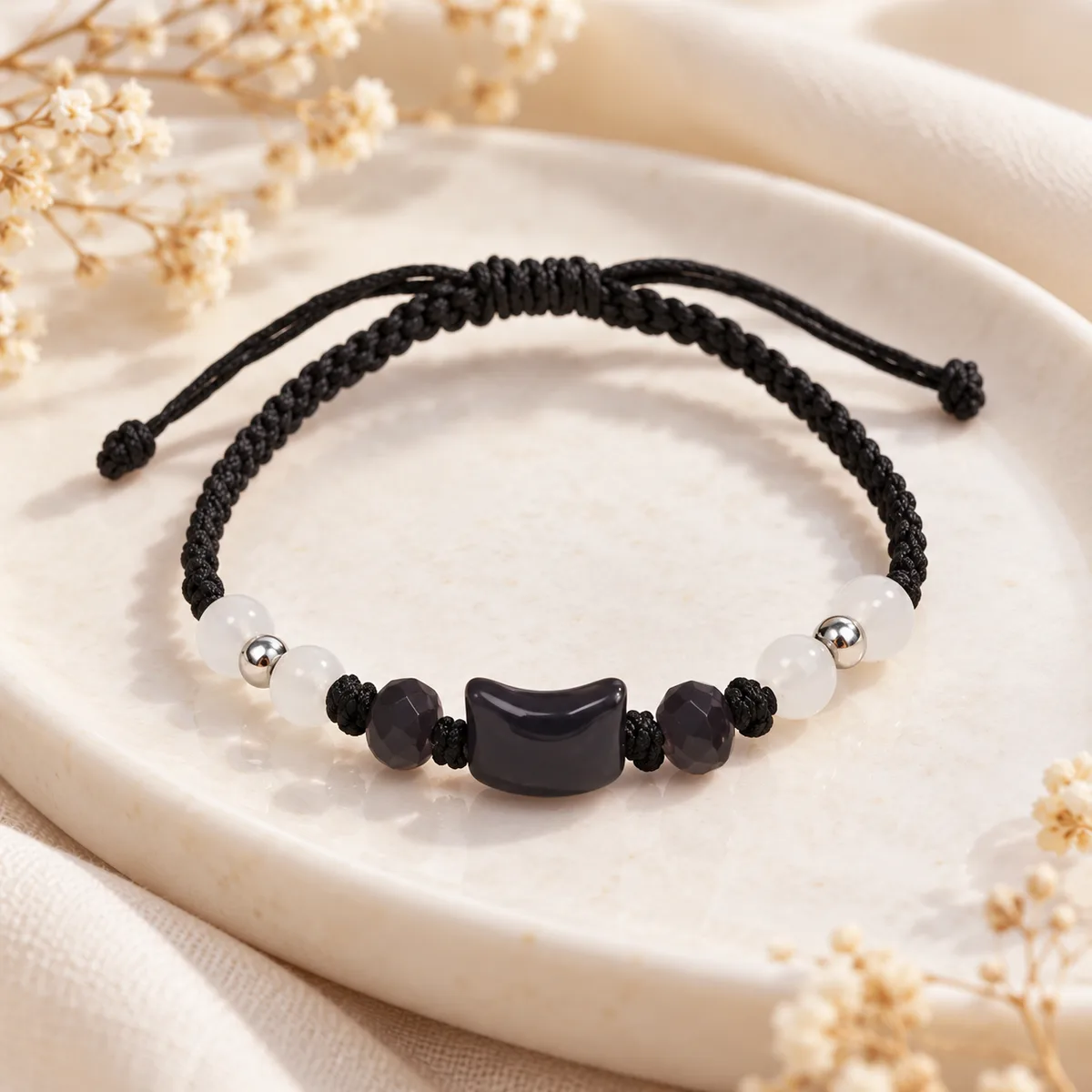
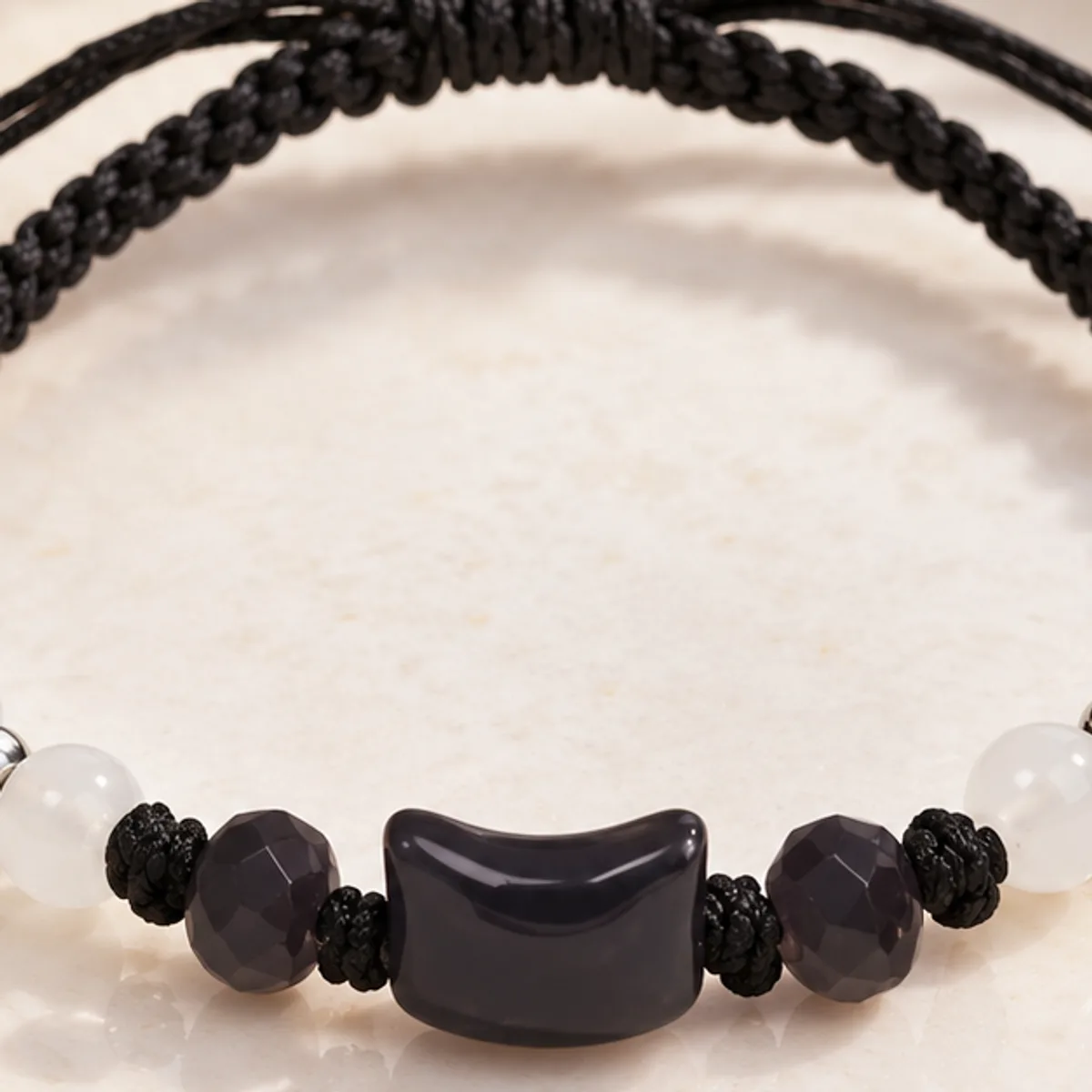
A small rectangular obsidian plate, laid flat against the wrist, framed by two translucent white beads and two dark facets. All on a black braided cord with a sliding knot. It is the most discreet bracelet in the range.
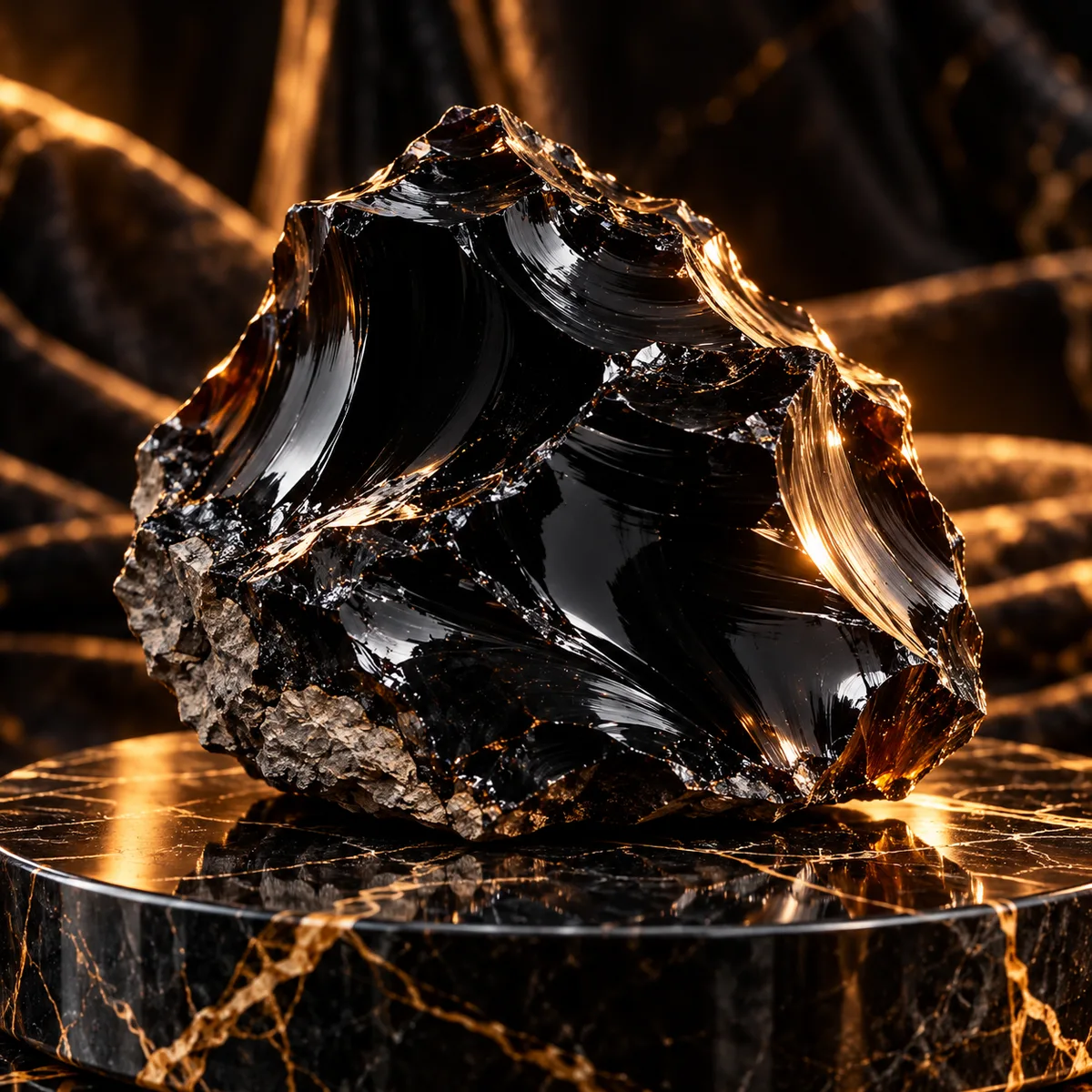
The plate is cut from solid stone, not from an offcut: its four edges are softened and both faces are polished, including the one against the skin that nobody will see. It is the kind of detail that makes no commercial sense but that you feel: a sharp obsidian edge cuts, and volcanic glass was used to make scalpels for that very reason. An unfinished plate would mark the wrist. The obsidian guide explains the material.
The flat format changes how the stone is worn. A round bead rolls and shows a different face with every movement; a plate stays oriented, keeps the same face visible, and disappears under a sleeve without adding bulk. It is the only mounting in the catalogue that goes unnoticed under a closed shirt cuff. The other bracelets are here.
Two reservations. The first: the two translucent white beads in the mounting come from the supplying workshop without a species name, and I would rather not invent one for them. They are white beads, they are pretty, I cannot tell you which stone. The second: a flat plate always rubs the same face against a table or a keyboard, and that face will pick up micro-scratches faster than a bead that turns.
Crystal lore ties obsidian to grounding. None of that is proven, and no piece of jewellery heals anything. I have gathered separately what tradition attributes to obsidian, in the conditional from start to finish.
- Real obsidian plate, cut from solid stone and polished on both faces.
- Black braided cord with a sliding knot, adjustable from 15 to 22 cm.
- The only mounting in the catalogue that goes under a closed shirt cuff.
- The two white beads come without a species name: this page does not give them one.
What to know before you wear it
 |  |  |
The specifications
- Stone
- Black obsidian, volcanic glass, rectangular plate
- Other elements
- Two translucent white beads, two dark facets, two metal balls
- Wrist size
- Adjustable from 15 to 22 cm
- Mounting
- Braided cord with a sliding knot, no metal clasp
- Weight
- About 8 g
- Stone origin
- Mexico
- Gender
- Unisex
- Brand
- Bijoux Obsidienne

Laying a plate flat without it tipping
A plate drilled right through tips over if the two holes are not rigorously on the same axis, and it then stands on edge at the wrist, edge forward. That is the classic fault of this mounting. The check is simple and never skipped: you thread the plate on a taut line and spin it, and it has to come back flat by itself. The ones that stay crooked go back to the drill.
This model exists for trades where a visible piece of jewellery is a problem. A strand of 10 millimetre beads will not go under a closed sleeve, a plate three millimetres thick will. The other bracelets are here, and how to wear obsidian gives other discreet formats.
You thread the plate on a taut line and spin it. It has to come back flat by itself, or it goes back to the drill.
Obsidian does not mind water, but braided cord takes a long time to dry: take the bracelet off before the shower. The face of the plate that rubs will pick up micro-scratches, which polish out. A soft cloth is enough, never an ultrasonic bath. Cleaning an obsidian piece covers the rest.