Description
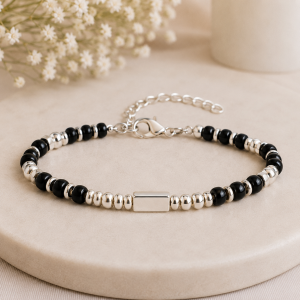
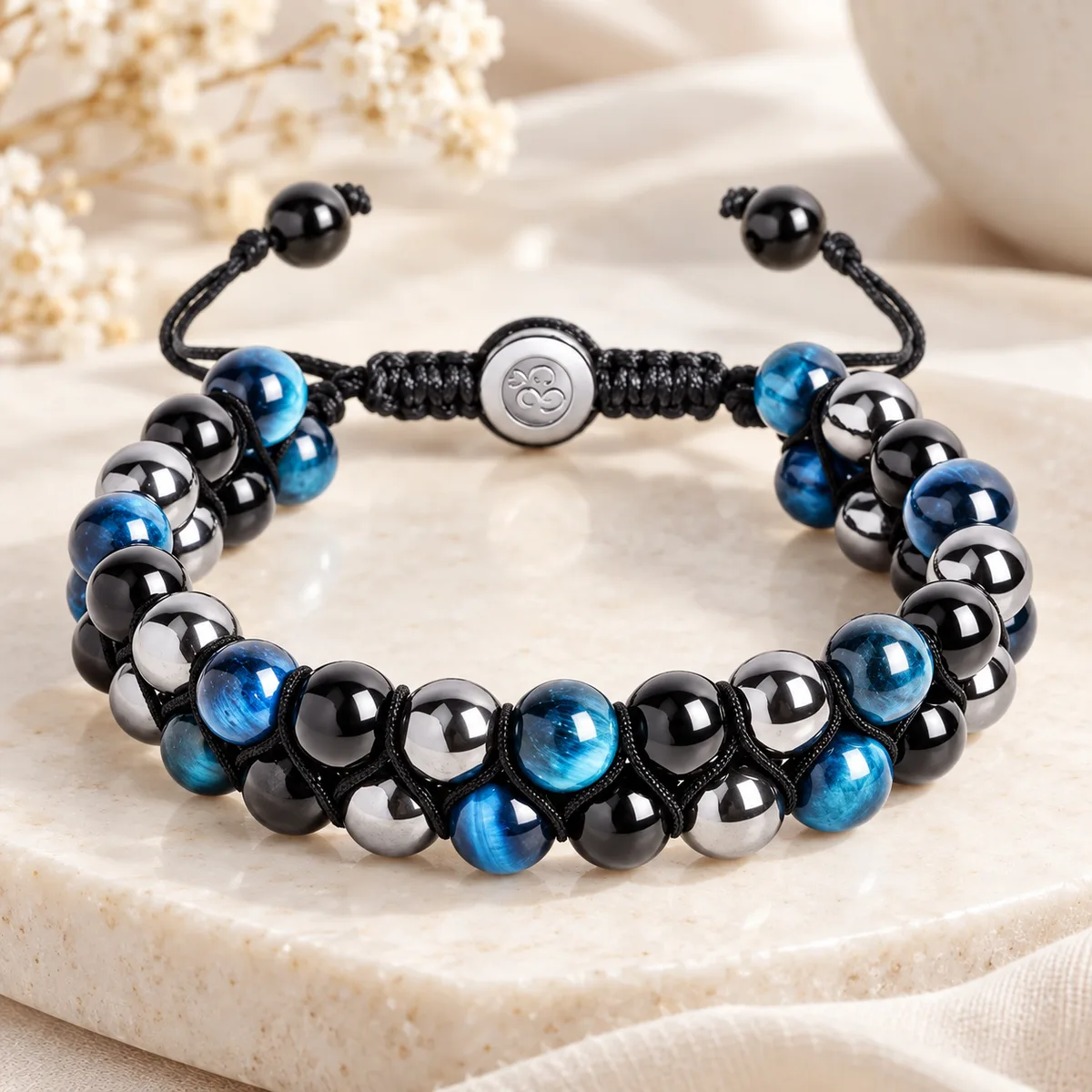
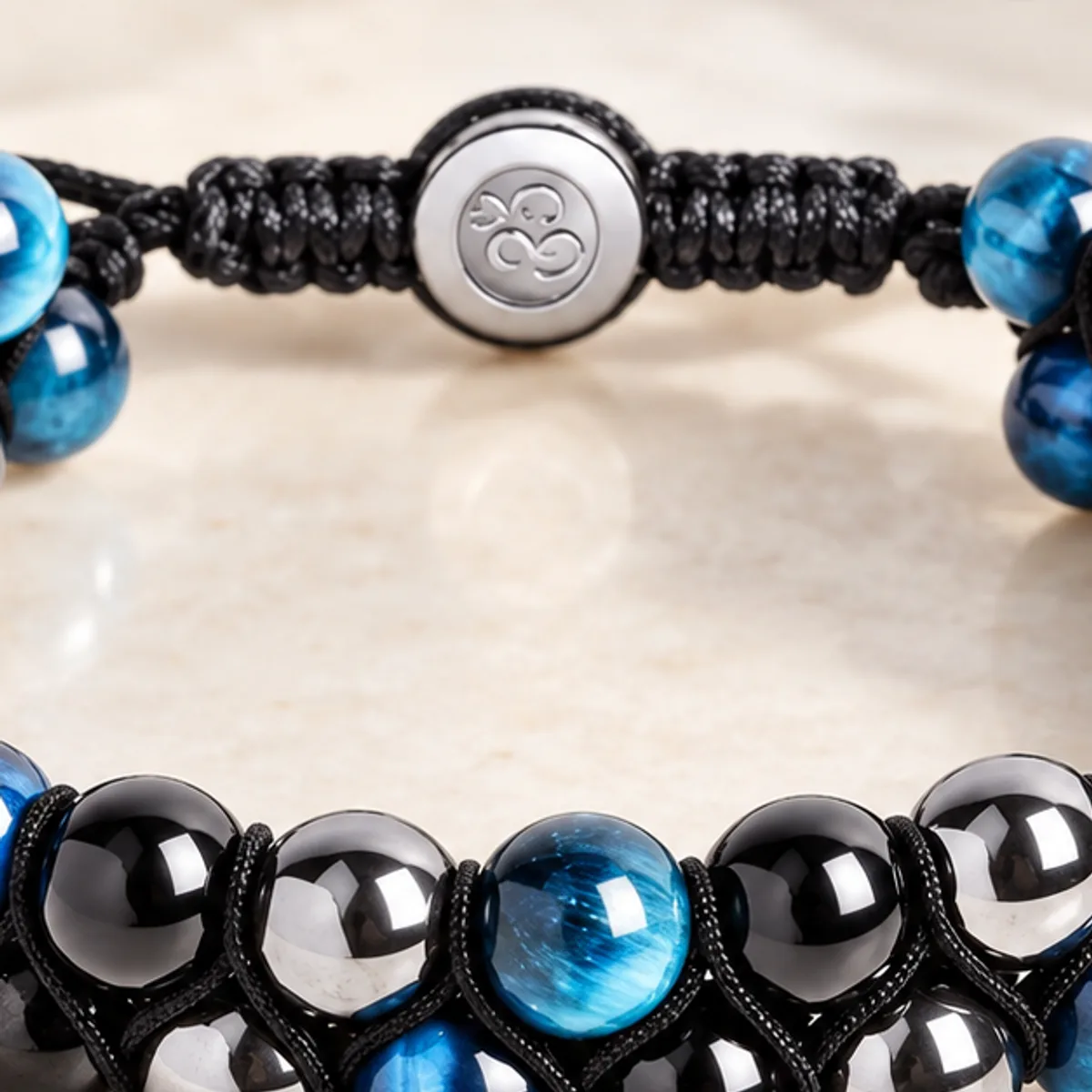
Two strands of beads woven side by side on a single cord, kept parallel by a macramé stitch between every bead. Three stones: blue tiger’s eye, mirror haematite and black obsidian. The size is set by a sliding knot.
Blue tiger’s eye does not exist in nature in this frank blue. The naturally bluish stone is called hawk’s eye, and it is grey, muted, very different. The vivid blue you see here is obtained by dyeing or by heating a brown tiger’s eye. That is neither fraud nor flaw as long as it is stated, and I state it. The chatoyancy, on the other hand, is quite real: it is the reflection off parallel fossilized fibres.
Double-strand weaving changes how the bracelet behaves. Two loose strands cross and tangle; woven with a stitch between every bead, they stay parallel and form a band that follows the wrist like a watch strap. It takes longer to make and it does not come undone. The other bracelets are here.
The reservation follows from the first point. A colour obtained by dyeing fades under prolonged exposure to direct sun, and dulls faster in contact with perfumes and creams. The blue of the first month will not be exactly the blue of the third year. Obsidian and haematite, for their part, do not move. If you want a blue that does not move at all, lapis lazuli is what you need.
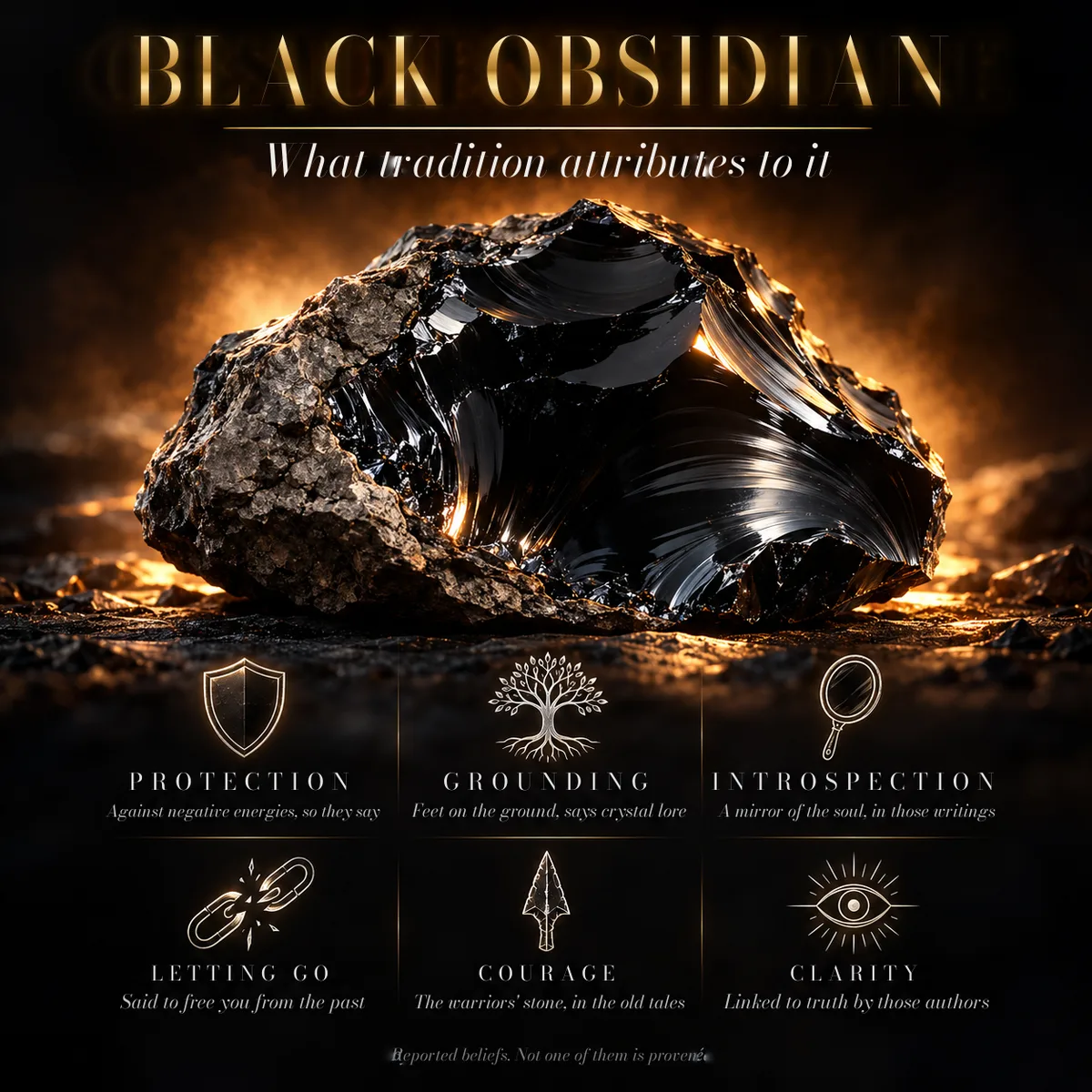
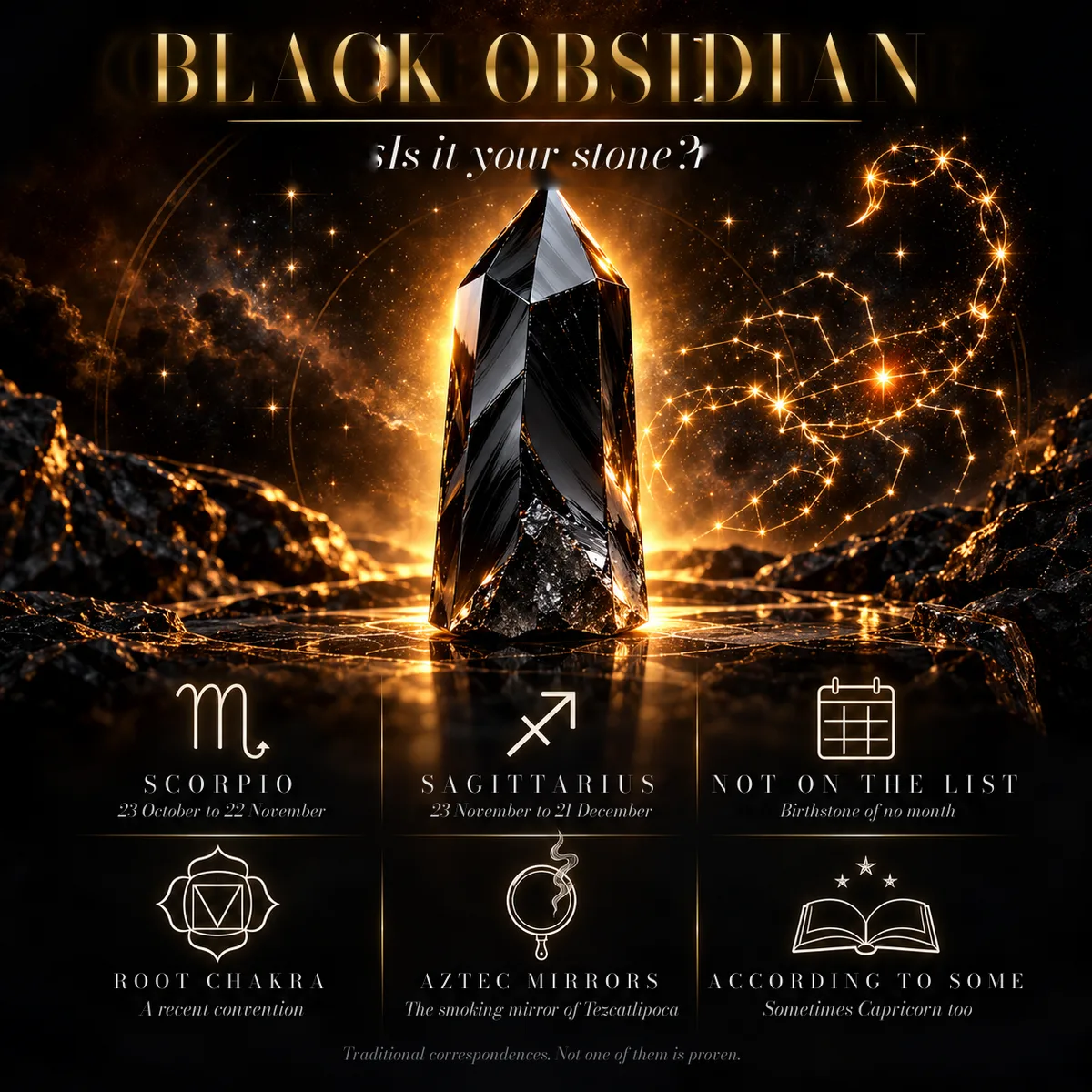
Crystal lore ties obsidian to grounding, haematite to strength and tiger’s eye to watchfulness. None of that is proven, and no piece of jewellery heals anything. I have gathered separately what tradition attributes to obsidian and what it says about pairings, in the conditional from start to finish.
- Three stones on two woven strands: blue tiger’s eye, haematite, obsidian.
- Blue tiger’s eye is a brown stone dyed or heated: no tiger’s eye is naturally blue.
- Woven with a macramé stitch between every bead: the strands stay parallel.
- Adjustable sliding knot, hand-made in France.
What to know before you wear it
 |  |  |
The specifications
- Stones
- Black obsidian, haematite, tiger’s eye dyed blue
- Bead diameter
- 8 mm
- Treatment
- Tiger’s eye dyed or heated, the other two untreated
- Wrist size
- Adjustable from 15 to 22 cm
- Stringing
- Two strands woven on cord, sliding knot
- Stone origins
- Mexico, Brazil, South Africa
- Gender
- Unisex
- Brand
- Bijoux Obsidienne

Weaving two strands that stay parallel
The trap of the woven double strand is tension. Both strands must receive exactly the same, otherwise the bracelet warps: one strand pulls, the other follows, and the band twists into a helix instead of staying flat. You only notice once the knot is closed, so too late. The way around it is to build the two strands alternately, one bead on the left, one bead on the right, rather than a whole strand then the other. It is twice as slow and it does not warp.
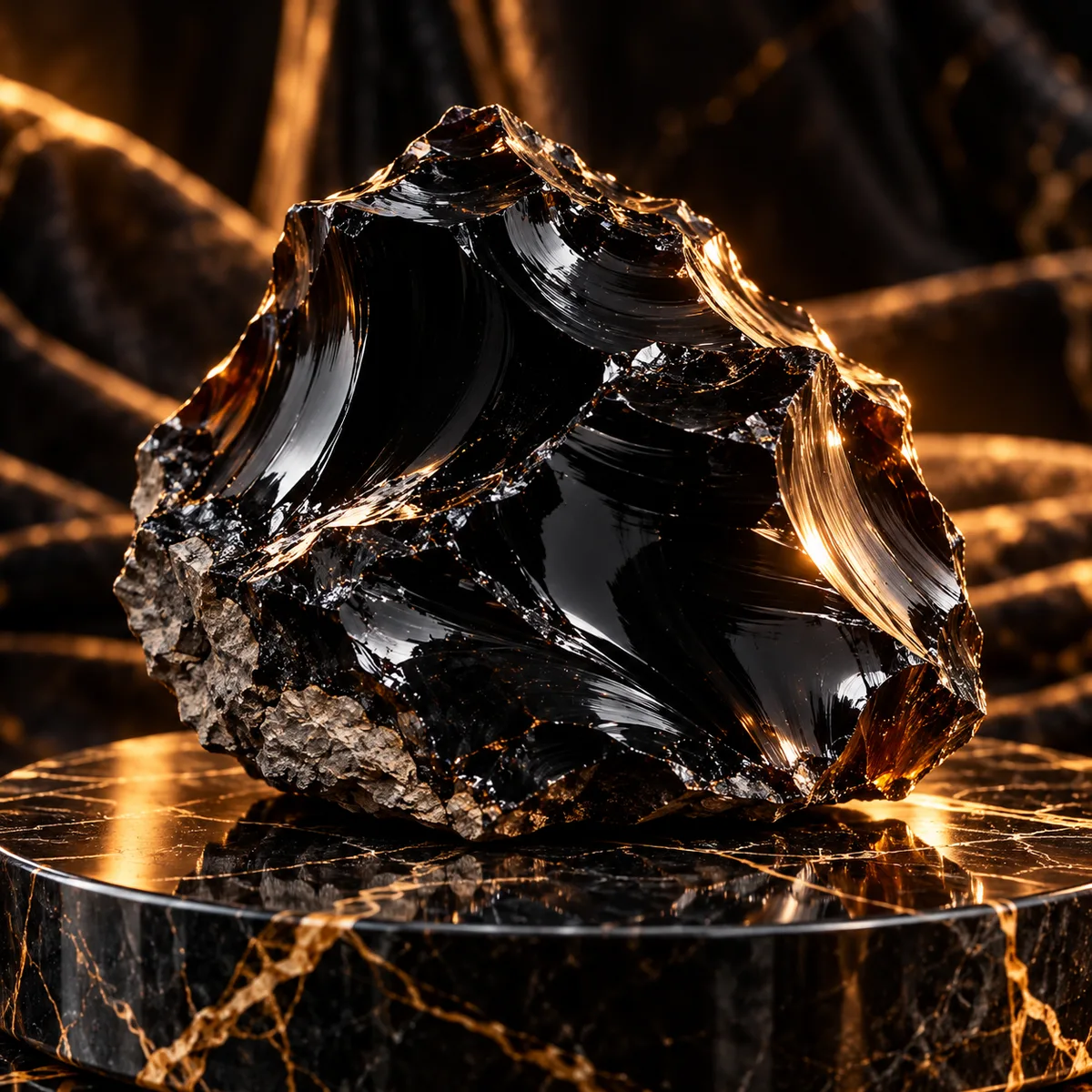
This model exists for those who want colour without leaving the dark register. Dyed blue is the only way to get that intensity on a tiger’s eye; lapis lazuli gives a natural blue but a matte one, with no chatoyancy. Both are in the catalogue, here, and the obsidian guide explains the main stone.
One bead on the left, one bead on the right. Twice as slow, and the band does not twist into a helix.
Obsidian does not mind water, but haematite spots with rust if it stays damp and the tiger’s eye dye fades in direct sun. Take the bracelet off before the shower and do not leave it on a windowsill. A soft dry cloth, never an ultrasonic bath. Cleaning an obsidian piece covers the rest.