
Description
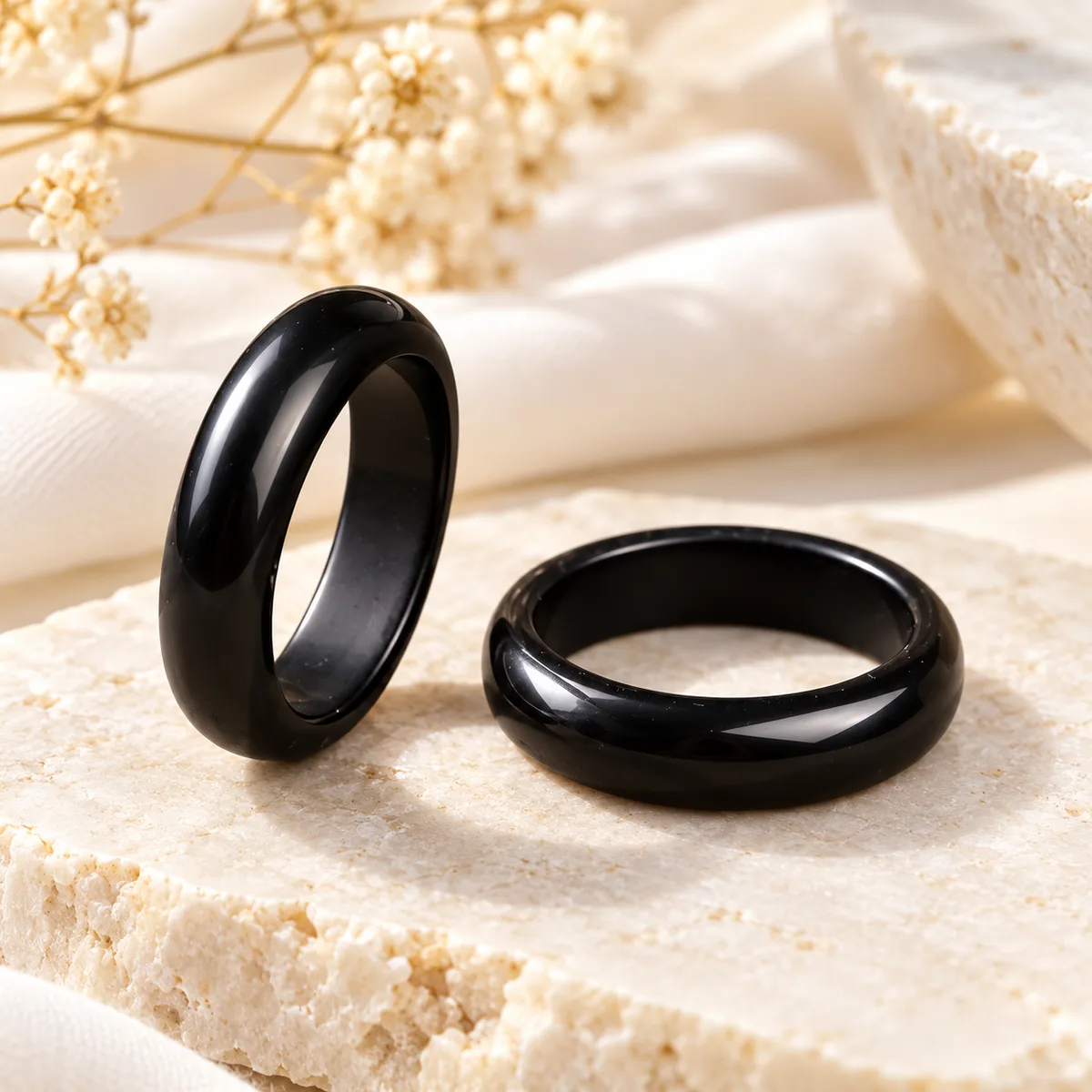
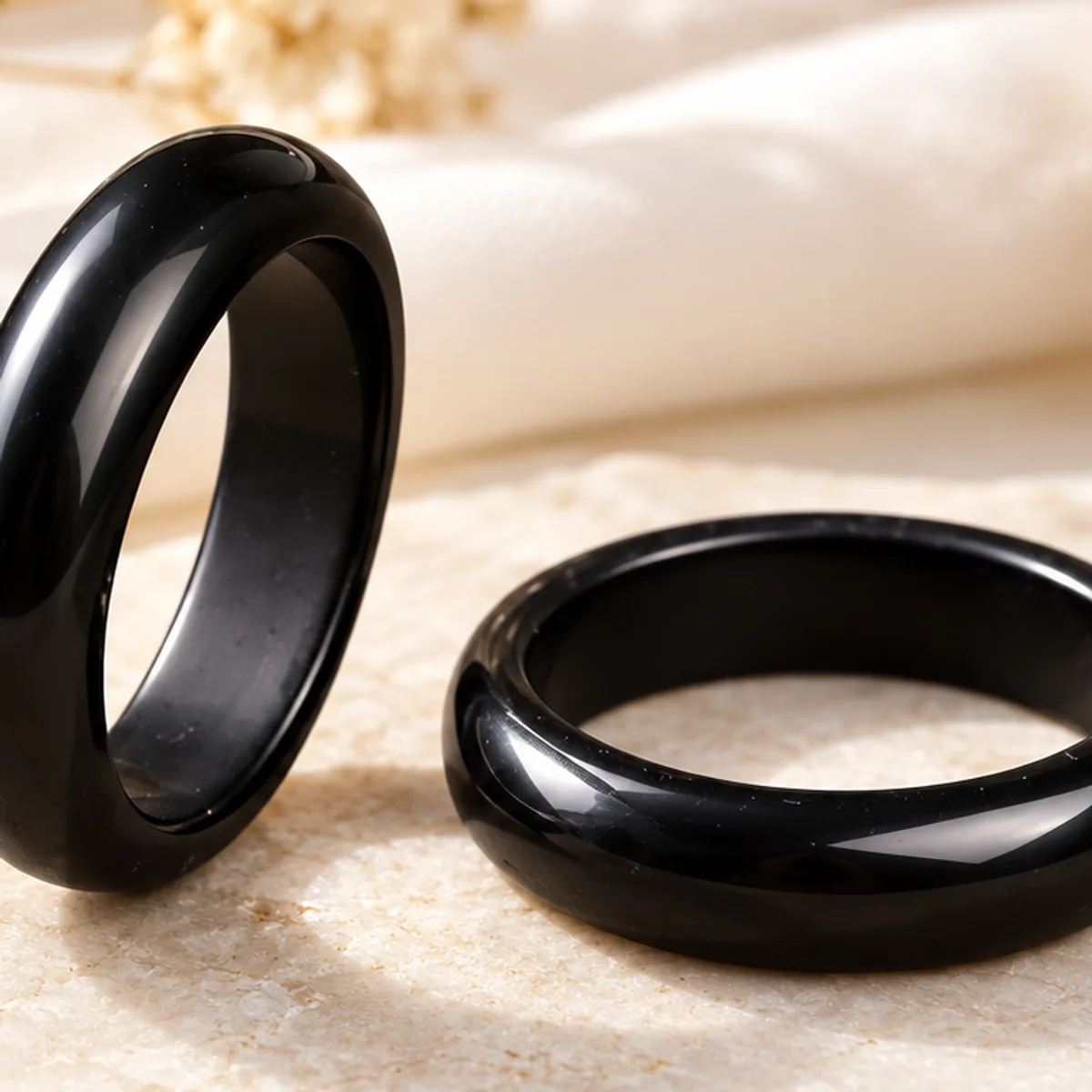
A ring cut from a single block of obsidian, polished inside as well as out. No metal, no setting, no stone added on: the ring is the stone. It is the most fragile piece in the catalogue, and I would rather start there.
I have to answer a sentence written elsewhere on this site. On the obsidian bangle page I explain that I do not offer a bracelet bangle cut from a solid block because this stone is a brittle glass and it would break. This ring is cut from a solid block, and I stand by both statements, because a wrist bangle and a finger ring are not the same object mechanically.
The difference is a question of proportions. A bracelet bangle has a diameter of two and a half to two and three quarter inches for a section of three or four millimetres: it is a large thin circle, which works in bending along its whole length at the slightest pressure, and the glass gives way. A finger ring has a diameter under three quarters of an inch for a comparable section: proportionally it is far thicker relative to its radius, and the bending stress in it is several times lower. That is not a commercial nuance, it is strength of materials.
That said, fragile stays fragile, and here are the facts. This ring cannot be recut, cannot be resized and cannot be repaired: if it breaks, it is lost. A fall onto tile is enough. It will not take being clenched in a closed hand or slipped into a pocket with keys. I sell it because it is beautiful and because it is honest, not because it is practical, and I strongly advise against making it a wedding band or an everyday ring. The rings with a metal setting are here.
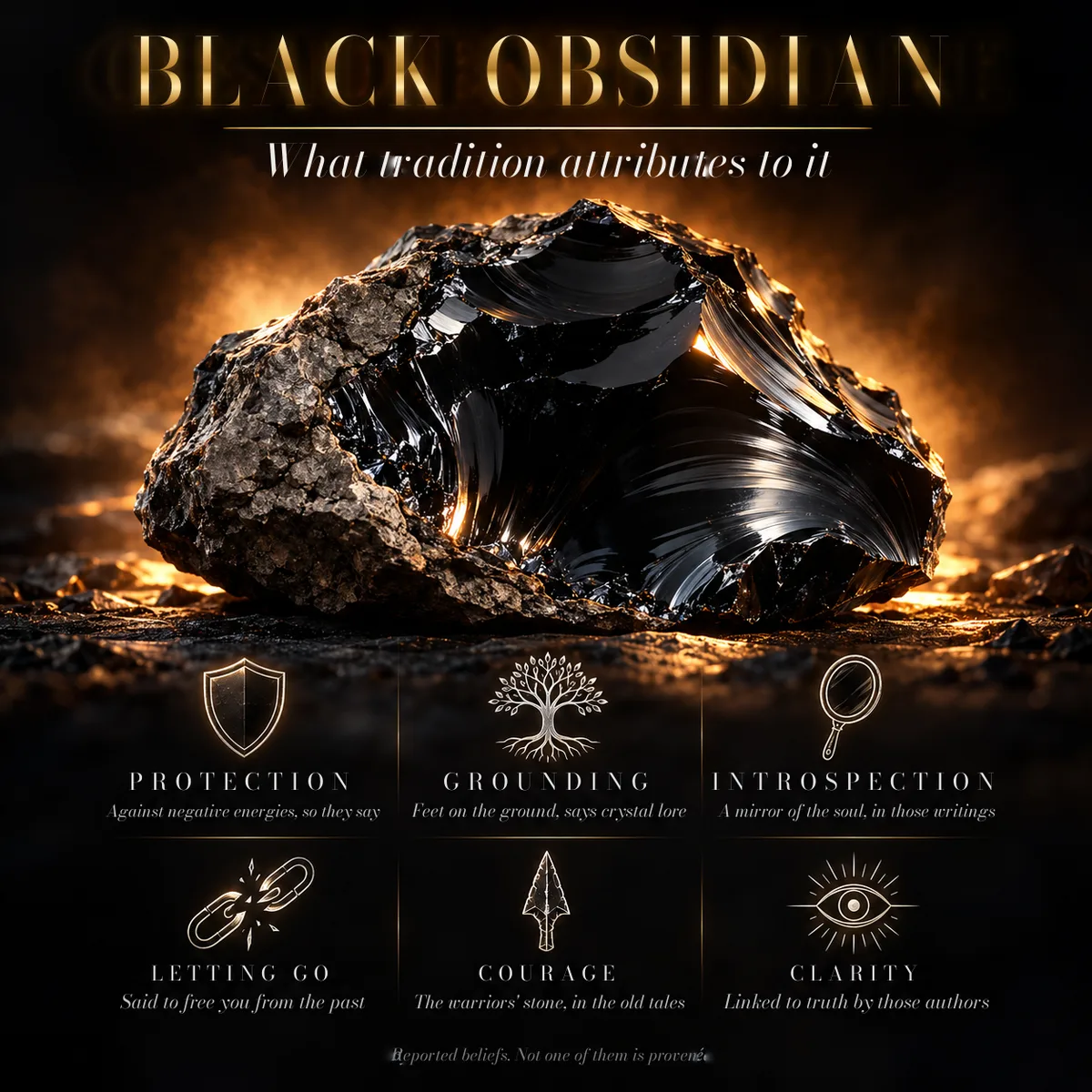
Crystal lore ties obsidian to grounding. None of that is proven, and no piece of jewellery heals anything. I have gathered separately what tradition attributes to obsidian, in the conditional from start to finish.
- A single block of obsidian, polished inside and out, no metal at all.
- The most fragile piece in the catalogue: it is not repaired, it is lost.
- Not to be worn daily, and above all not as a wedding band.
- Fixed size: a stone ring is never resized.
What to know before you wear it
 |  |  |
The specifications
- Stone
- Black obsidian, volcanic glass, cut from the solid
- Metal
- None
- Shape
- Solid ring, polished inside and out
- Width
- About 6 mm
- Sizes
- Fixed, to be chosen when ordering
- Gender
- Unisex
- Brand
- Bijoux Obsidienne

Why I refuse the bangle and not the ring
A stone ring is turned, not carved. You start from a thick disc, drill the centre with a diamond bit attacking from both sides so as not to blow out the exit, then open the hole to the diameter of the finger by widening in stages. Each stage takes off a few tenths, and it is at the last ones that pieces are lost: the wall is thin by then and the vibration of the tool splits it. On this model one piece in three does not make it to the end, and that scrap is what makes the price of an object without a gram of metal in it.
I refused for a long time to sell solid obsidian as a ring, and what changed my mind was not demand but a calculation. I deliberately dropped a dozen failed rings from three feet up onto a wood floor: not one broke. Onto tile, all of them. That was enough for me to decide the object was sellable on condition of saying exactly that, and that is what this page does. The other rings are here.
Three feet up onto a wood floor, not one broke. Onto tile, all of them. That is the only promise I can make.
Obsidian does not mind water. It minds everything else: knocks, pressure, keys in a pocket, tile floors. Take the ring off for any manual work, keep it on its own in its pouch. It cannot be repaired. Cleaning an obsidian piece covers the rest.