How to Use a Black Obsidian Scrying Mirror
You sit in a dim room, set the polished disc in front of you, and let your gaze go soft for around ten minutes. That's it, and it's already a lot. Here's the story behind the black obsidian scrying mirror, the exact steps of a session, what you actually see (the answer is well documented, and more fascinating than the legend), and the precautions no one bothers to mention.
What is a black obsidian scrying mirror?
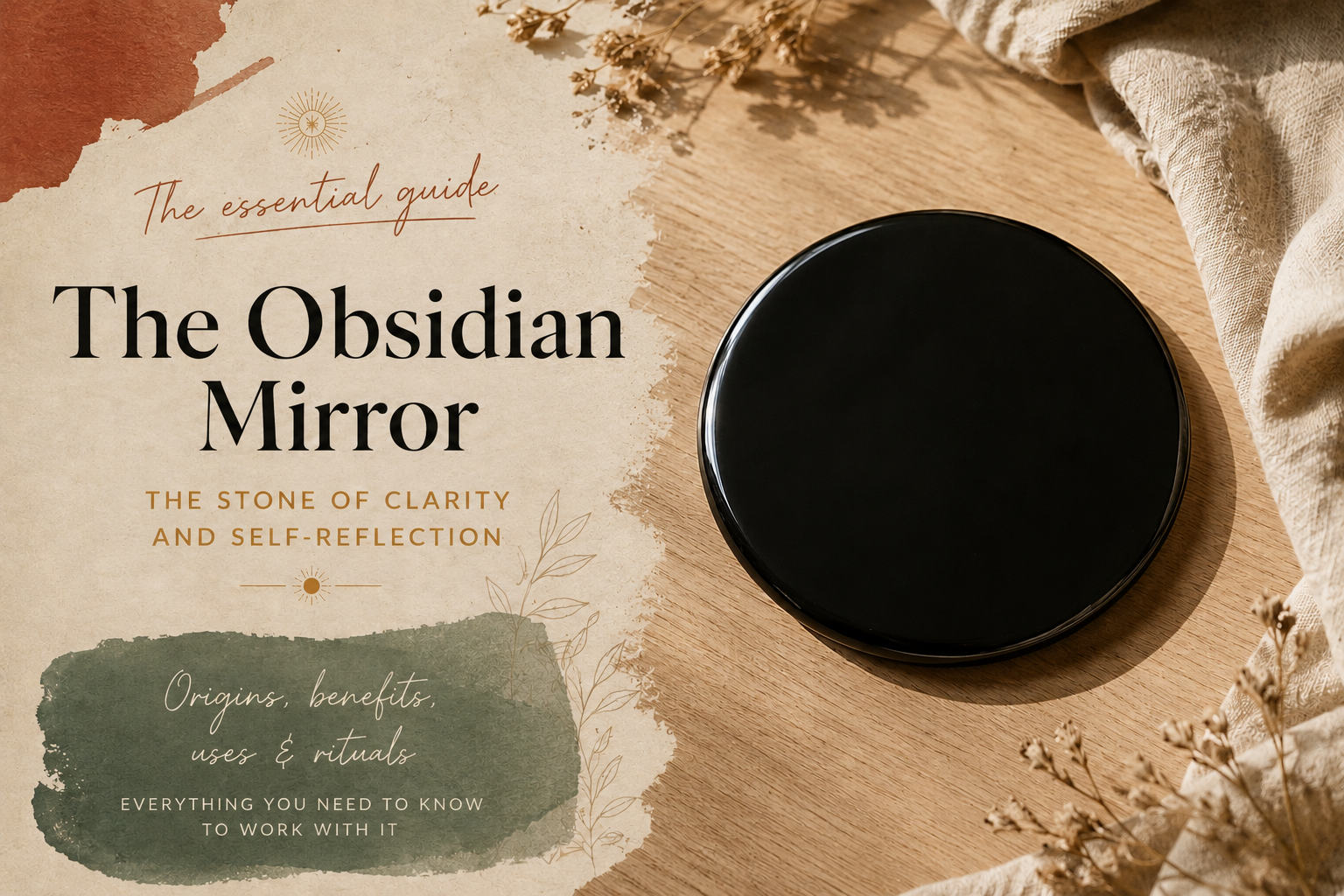
It's a disc, sometimes an oval or a rectangle, of black obsidian polished to a mirror finish, with no silvering and no particular mount. Unlike a bathroom mirror, it only ever gives back a dark, partial, light-swallowing reflection. It's also known as a black mirror, a mirror of seeing, or a scrying mirror.
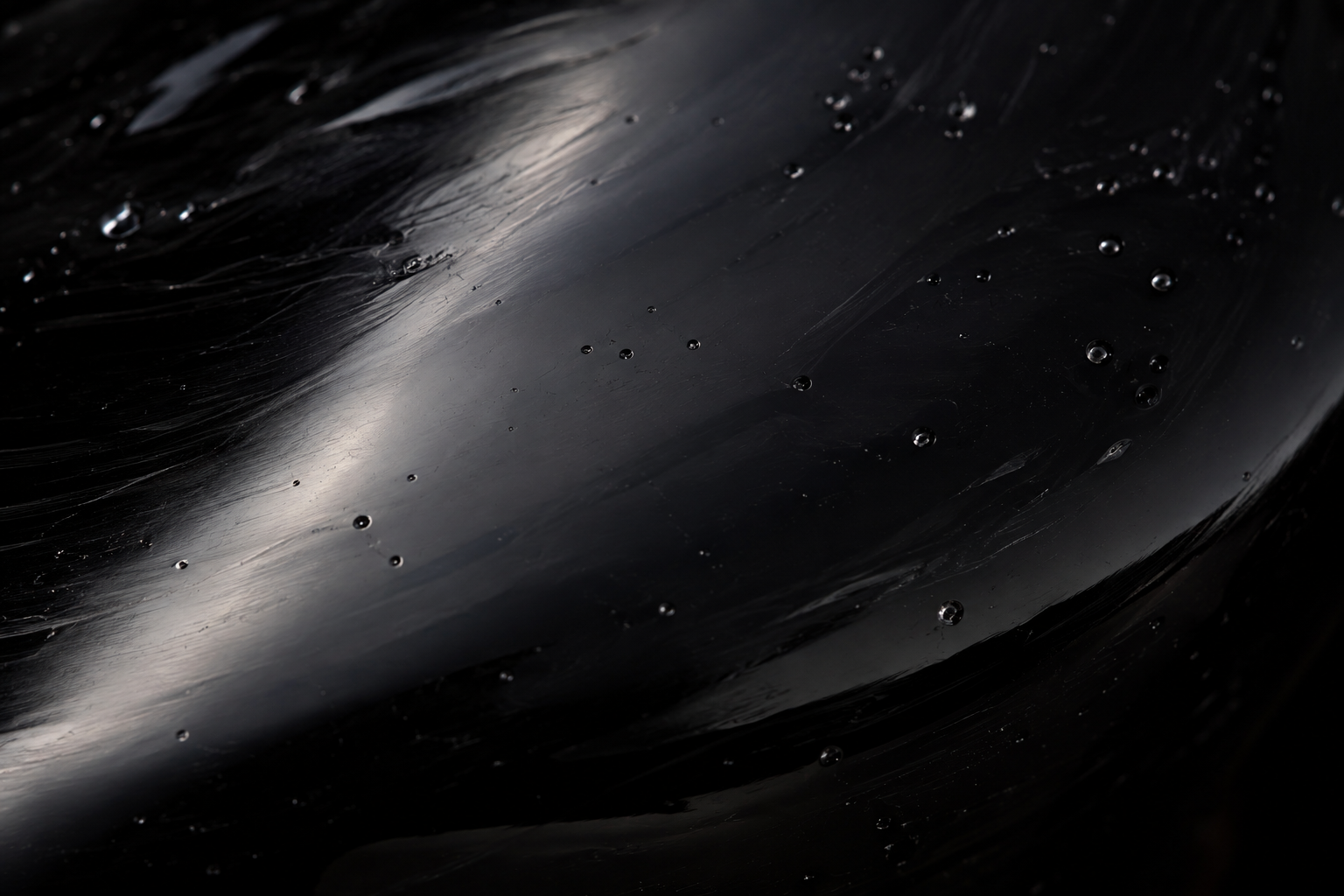
The material itself isn't incidental. Obsidian is a natural volcanic glass: silica-rich lava that cools too quickly to crystallise, which gives it a perfectly smooth surface once polished. It's the only stone that naturally offers a reflective surface of this quality, I cover that origin story in how obsidian is formed.
Two things set it apart from an ordinary mirror, and they explain everything else: it reflects poorly (the image is dark, with no sharp edges) and it has no readable depth of field. An eye that tries to fix on it finds nothing to grip. Keep that detail in mind, it comes back later.
From the Aztecs to John Dee: the history of the black mirror
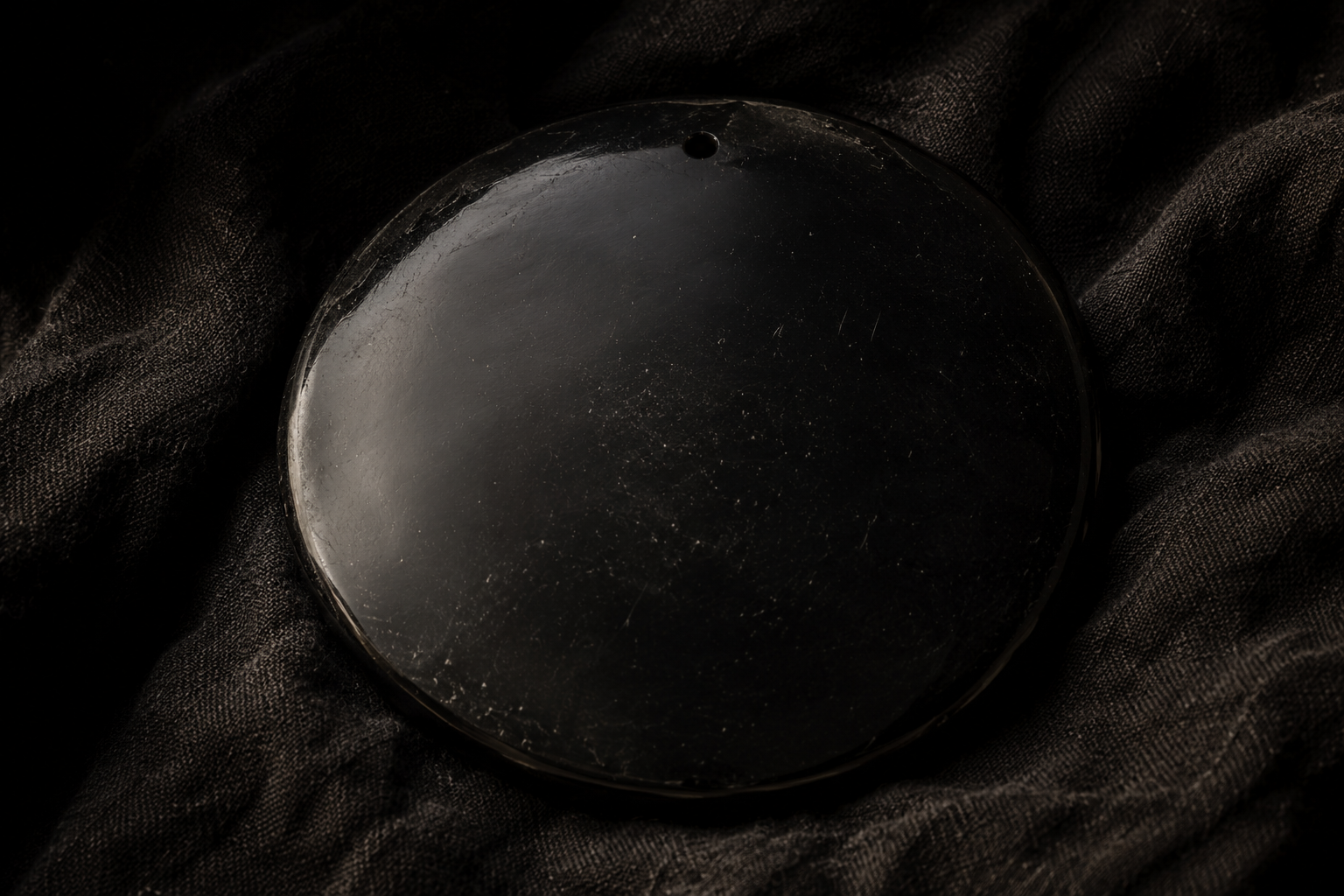
The obsidian mirror is Mesoamerican before it's esoteric. In the Aztec pantheon, Tezcatlipoca, literally "Smoking Mirror", carries an obsidian mirror, sometimes at his chest, sometimes in place of a foot. God of night, fate and sorcery, he's said to read all things in it. Priests and seers used mirrors of this material in their divination practices.
After the Spanish conquest, these objects reached Europe and became highly sought-after curiosities. One of them ended up in the hands of John Dee (1527-1609), mathematician, astrologer and adviser to Elizabeth I, who used it for his famous "conversations with angels". That mirror is now held at the British Museum.
And here's the detail I love: in 2021, two archaeologists from the University of Manchester, Stuart Campbell and Elizabeth Healey, ran that mirror and several other museum pieces through a portable X-ray fluorescence spectrometer. The geochemical profile matched obsidian from Pachuca, Mexico. Published in the journal Antiquity, the analysis confirms that the most famous object in Elizabethan occultism is an Aztec artefact, carved by a Mexican craftsman more than a century before Dee went looking for angels in it.
This story sums up everything worth knowing about the black mirror: every era saw in it what it was looking for. The Aztecs saw their god, Dee saw his angels, we see our own unconscious. The disc itself has never done anything but reflect a dark image.
What you actually see in an obsidian mirror
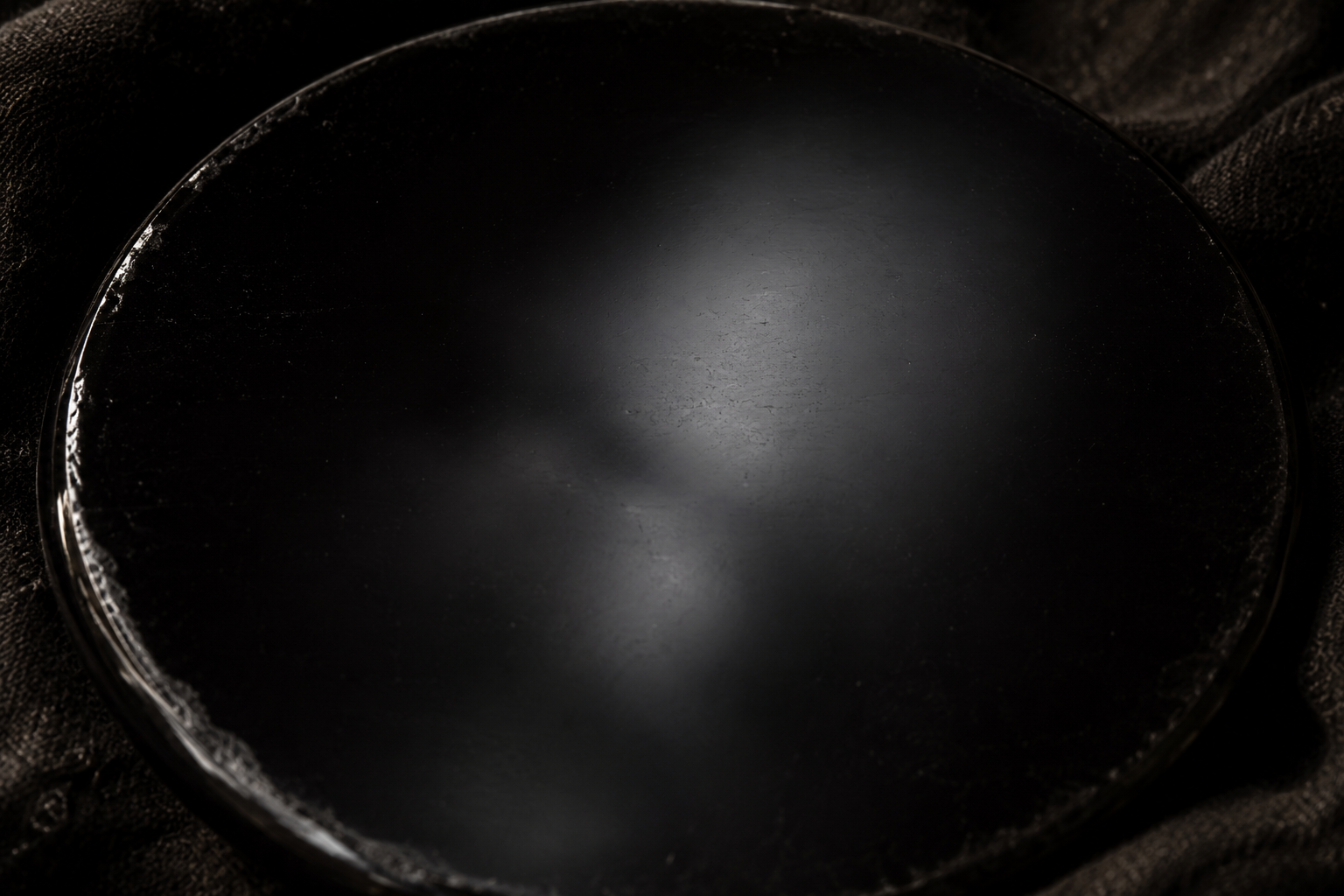
This is the section I wrote this article for, so I'll be direct: a black mirror doesn't show the future. It doesn't open a portal and doesn't connect you to anyone. What it does do is far more interesting, and it's thoroughly documented.
In 2010, psychologist Giovanni Caputo, at the University of Urbino, published a now-classic experiment in the journal Perception. Fifty healthy adults stared at their own reflection in a mirror, under very dim light, for ten minutes. After roughly a minute, most began perceiving "apparitions": their face distorted, then gave way to other faces, strangers, relatives, deceased parents, animal or monstrous figures. The phenomenon has a name, the strange-face-in-the-mirror illusion, and three conditions are enough to trigger it: low light, a prolonged, unbroken gaze, and a face to look at.
In other words: deprived of stable edges and reliable light information, the visual system fills in the gaps. It builds shapes out of the little it receives, drawing on a memory bank of faces. An obsidian mirror brings these conditions together better than almost anything else: dark, smooth, with no readable depth.
| What people report | Traditional reading | Perceptual reading |
|---|---|---|
| The reflection blurs | A veil lifts | Prolonged fixation, peripheral vision fades |
| Shapes appear | Presences manifest | The brain fills in a weak signal |
| Unknown faces | Guides, spirits, ancestors | Strange-face illusion (Caputo, 2010) |
| A sense of unreality | Passage to another plane | A well-described transient dissociative effect |
| An intuition surfaces | A message received | Ten minutes of silence, no distraction |
In short, saying these images come from you doesn't make them meaningless. A tool that gives you ten minutes of silence, facing yourself, phone-free, produces something real. It's introspection, not fortune-telling, and obsidian, a stone often described as a mirror turned toward the self, stays consistent right to the end.
How to use an obsidian mirror: the session, step by step
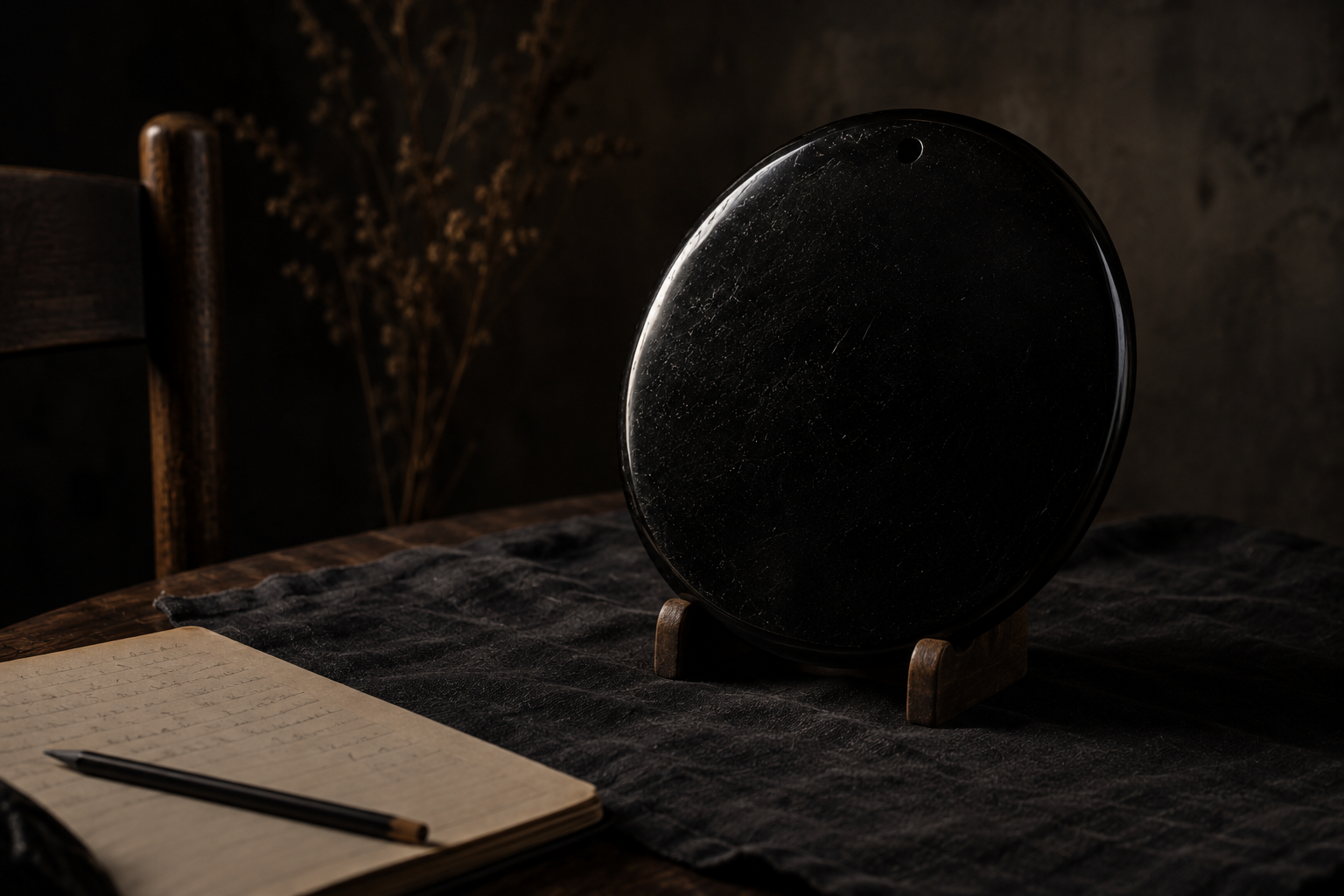
The steps below are the ones you'll find across most practices. Allow ten minutes at most for a first attempt.
Set the room
Dim the light without going fully dark: a low lamp behind you, never facing you, to avoid stray reflections. Switch your phone off. A quiet, slightly cool room beats a heavily set atmosphere.
Place the mirror
On a dark cloth, tilted at roughly 45° facing you, at arm's length. The point is not to see your whole face sharply, you want a partial reflection, not a selfie.
Settle in
Two or three minutes seated, back straight, breathing slowly. This is the moment to form a question, one, open-ended, more like "what am I avoiding looking at right now?" than "what will it show me?".
Look without staring
The core move: rest your gaze on the surface and let it go soft, the way you'd look off into the distance. Blink normally. Don't search for anything, don't expect anything, expectation is exactly what blocks the phenomenon.
Let it come
After one to three minutes, the surface often starts to "move": haze, blotches, shapes. Receive it without commenting. If an image feels unsettling, look away, breathe, come back or stop.
Come out cleanly
This is the step everyone skips. Turn the light back on, drink some water, move around, touch a few things nearby. Then write down what came up, without interpreting it. Reading it back three weeks later beats decoding it on the spot.
Once a week is plenty. Consistency does more than duration, true here as it is for obsidian meditation, which follows a very similar structure.
Many practitioners keep a stone on the wrist or in hand during the exercise: the touch of something smooth and cool gives a concrete anchor when the gaze drifts far. It also makes coming out of the session easier.
The mistakes that ruin a session
Five slip-ups come up constantly, and they explain most of the "it didn't work for me" stories:
- Going fully dark, without at least some light, there's no reflection left at all, so nothing to see;
- Placing the light source facing you, it reflects off the surface and washes everything out;
- Staring intensely, the eye tenses, waters, and the gaze stays locked. Letting go is what does the work;
- Expecting a specific outcome, going in with a closed question means seeing nothing, or worse, seeing what you'd already decided to see;
- Stacking long sessions back to back, past fifteen or twenty minutes, eye fatigue and the sense of unreality take over, without adding anything.
A sixth, less obvious one: interpreting on the spot. A shape glimpsed in half-light isn't a message. Writing it down and coming back to it later is more honest, and often more revealing.
Choosing and caring for your obsidian mirror
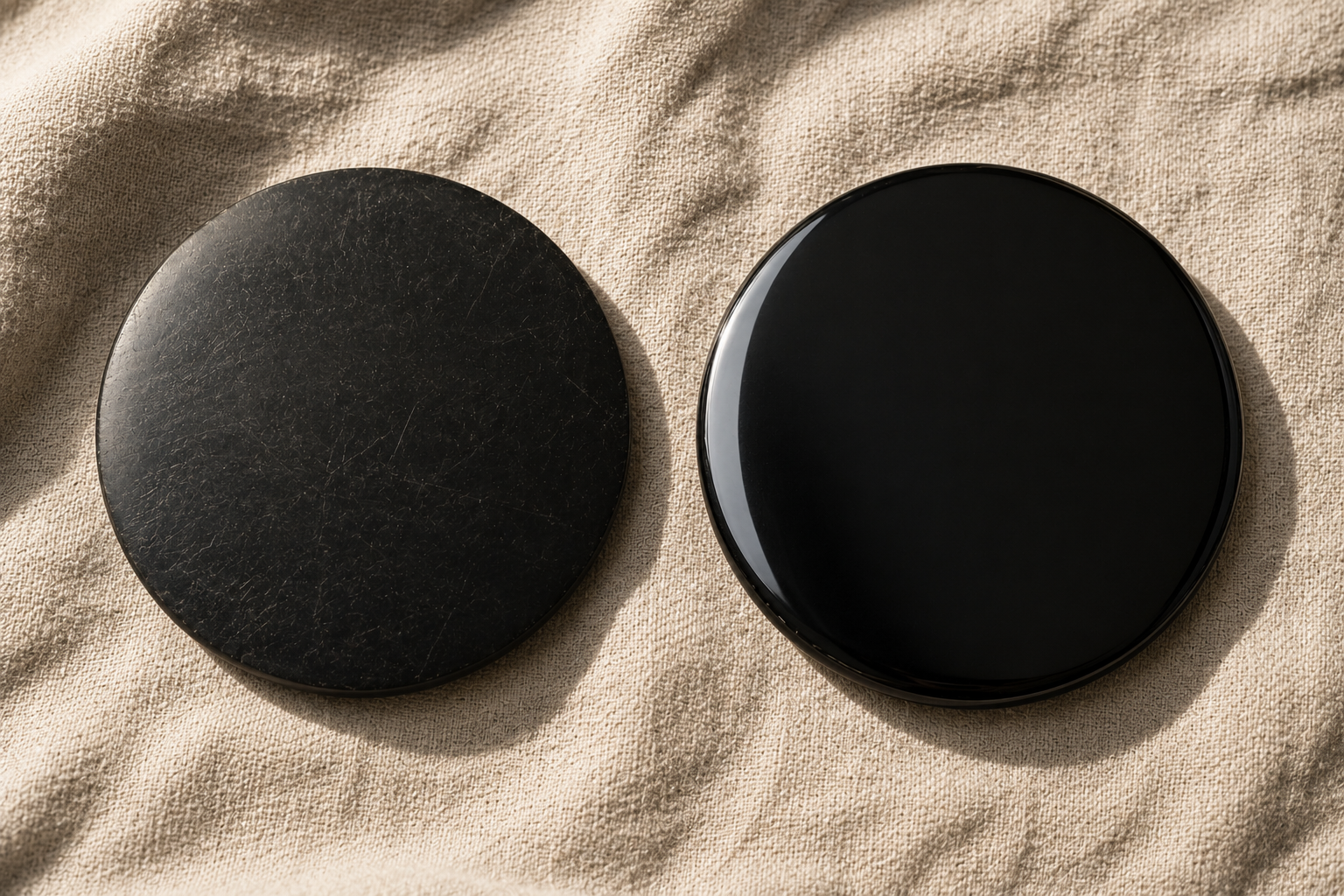
Worth saying upfront: I don't make mirrors. My studio works with beads and set pieces, not the polishing of large discs, which is a different trade entirely. So what follows is buying advice with no commercial angle.
Genuine obsidian
Opaque and black, never translucent through its thickness. It feels cool to the touch, warms up slowly, and can show fine bubbles or a faint sheen in raking light. Medium hardness: it scratches.
Tinted black glass
Often too perfect: no inclusions, edges too regular, translucent at the edge, lighter in weight. It warms up quickly in hand. Sold for far more than it's worth, under flattering names.
Three practical criteria for choosing: a polish with no micro-scratches (tilt the piece toward a window to check, they ruin the reflection), a diameter of 10 to 15 cm for everyday use, bigger gets unwieldy, smaller gives too small a reflection, and a perfectly flat face, since the slightest dip distorts the image. For anything to do with imitations and inflated prices, my guide to obsidian price and value covers the traps in detail.
On care: obsidian is a glass rated 5-5.5 on the Mohs scale, so it scratches and doesn't handle knocks well. A dry microfibre cloth, never an abrasive product, and store it flat in a cloth. It's all covered in cleansing and charging obsidian.
People often ask if I'll start making them. The answer is no, and not just for technical reasons: I'd feel uneasy selling an object whose implicit promise is to show the future. A bracelet, at least, never promises more than it can deliver.
If you're new to this stone, the full picture, origin, varieties, properties, care, is gathered in the complete obsidian guide.
Precautions & good practice
This is the part most pages on the topic skip, and it matters more than the rest. Prolonged fixation under low light produces transient dissociative effects, a sense of unreality, a feeling of being outside yourself. For most people, this fades within a few minutes once the light comes back on. For some, it doesn't.
A few simple rules:
- Ten minutes, no more, and one session a week to begin with;
- Always come out cleanly: light, movement, water, contact with everyday objects;
- Stop as soon as it feels unpleasant. There's nothing to gain from pushing through;
- Don't practise it if you're going through a hard time, are prone to anxiety, dissociative or depressive episodes, or are recently bereaved, seeing the face of someone you've lost surface can be deeply distressing, and that's exactly what Caputo's experiment describes;
- Adults only, and never under the influence of alcohol or any substance.
If feelings of unreality persist after the session, or return outside of it, stop the practice and speak to a health professional. Obsidian is otherwise described as a blunt stone, best approached gradually, I've written a full article on this: obsidian, dangers and precautions.
Good to know, the divination practices described here come from spiritual traditions and belief systems. They have no demonstrated predictive value, are not a medical claim, do not treat any condition, and never replace advice from a health professional. Don't base any major decision, about health, money or relationships, on what you believe you saw in a mirror.
Frequently asked questions
How do you use a black obsidian mirror?
Does an obsidian mirror let you see the future?
Why do you see faces in a black mirror?
Where does the obsidian scrying mirror come from?
How long should a session last?
How can you tell a genuine obsidian mirror?
Are there any contraindications?
Obsidian for everyday
Bracelets, necklaces, pendants and rings in natural obsidian, handmade in France, the seer's mirror material, in a quieter form.