Types of Obsidian: The Complete Guide to Every Variety
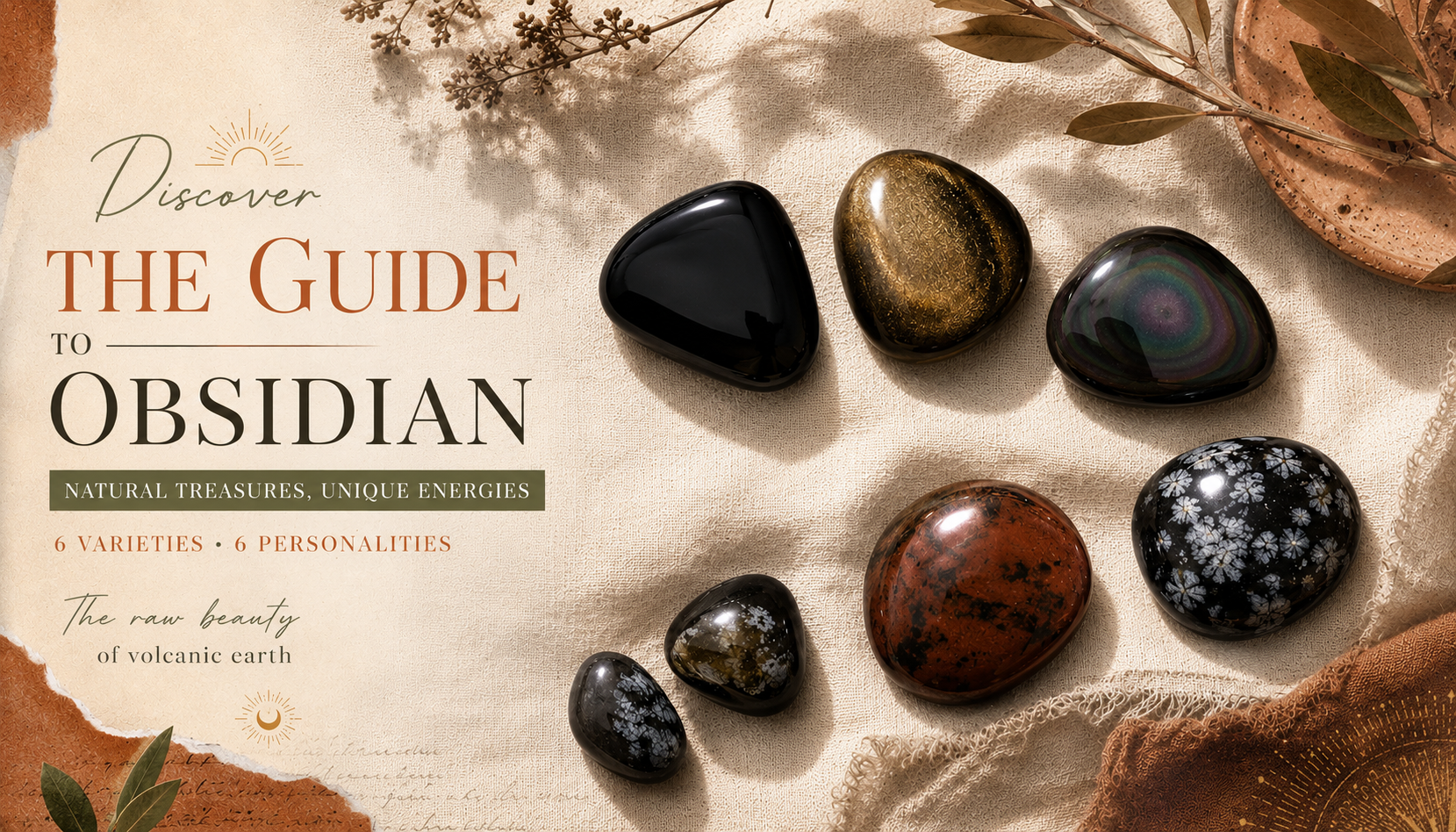
Most people think obsidian is simply a black stone. In truth, it's an entire family of varieties: deep blacks, golden sheens, iridescent rainbows, snowflake-white speckles, and a handful of much rarer treasures. Here's every type of obsidian, from the best known to the most elusive.
In this guide
Obsidian fascinates people with its raw, volcanic beauty and its reputation as a stone of protection. But mention "obsidian" to most people and they picture just one thing: a smooth black stone. In truth, obsidian is a whole family of varieties, and the differences between them go far beyond looks.
Here's my honest guide to every type of obsidian I know, from the everyday to the barely findable.
Where the different types of obsidian come from
To understand the varieties, it helps to remember what obsidian actually is: a natural volcanic glass, born from silica-rich lava that cooled so fast its minerals never had time to crystallise. I go into that whole process in my guide on how obsidian is formed.
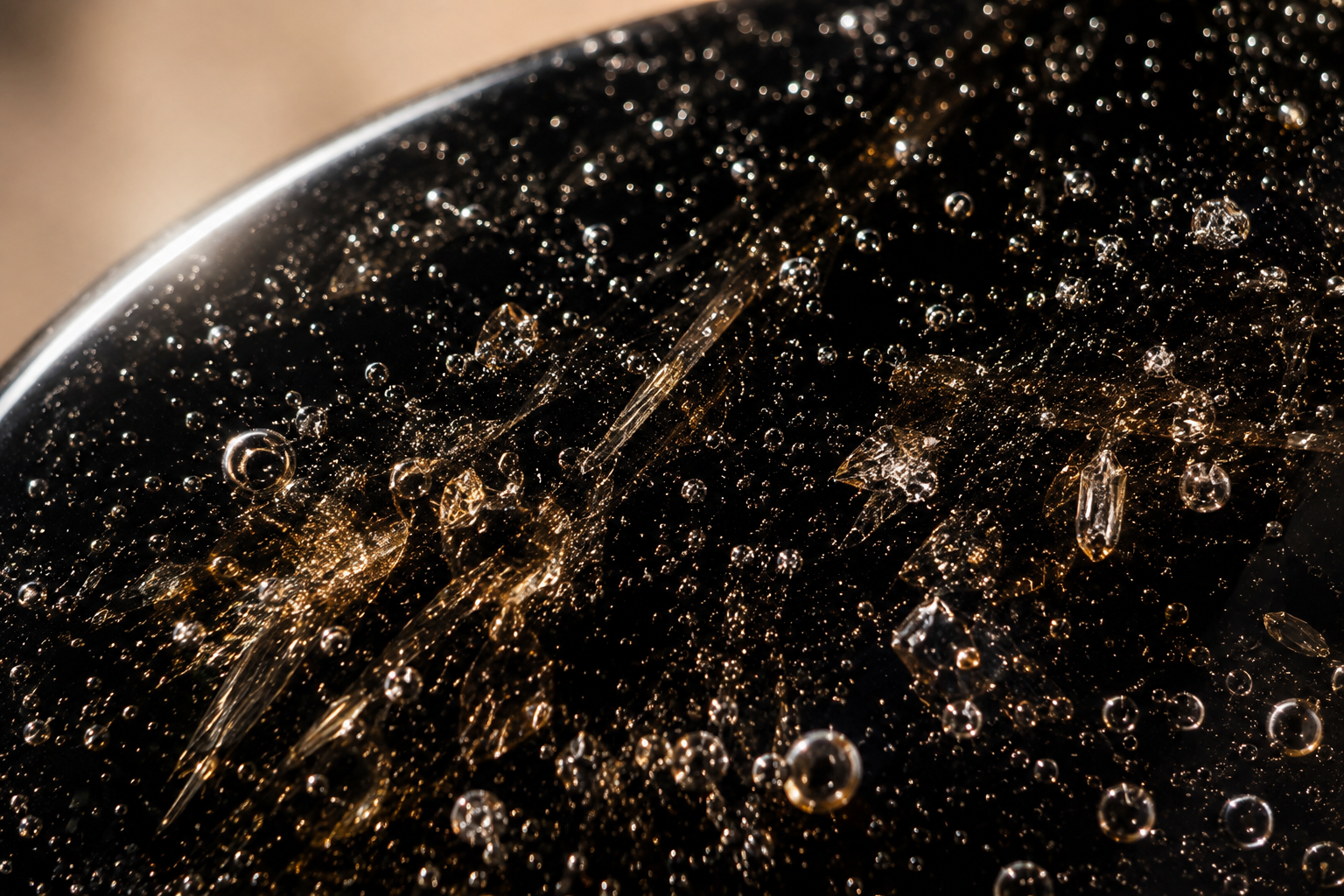
As a result, obsidian is almost always dark. Its "colours" and patterns don't come from pigments, they come from tiny inclusions that play with light: white cristobalite crystals, aligned gas bubbles, magnetite nanoparticles, traces of iron or haematite. That inner signature is what sets each variety apart.
A single block can even combine several effects, which is why no two stones ever look quite alike. For the essentials on the stone itself, its origin, symbolism and properties, head to my complete guide to obsidian.
Whenever a new batch arrives, I spend ages tilting each stone toward the window. That's when the varieties reveal themselves, a stone that looked perfectly plain suddenly turns gold, or a blue veil appears out of nowhere.
The 7 best-known types of obsidian
Let's start with the varieties you'll come across most often, in jewellery and in crystal healing alike.
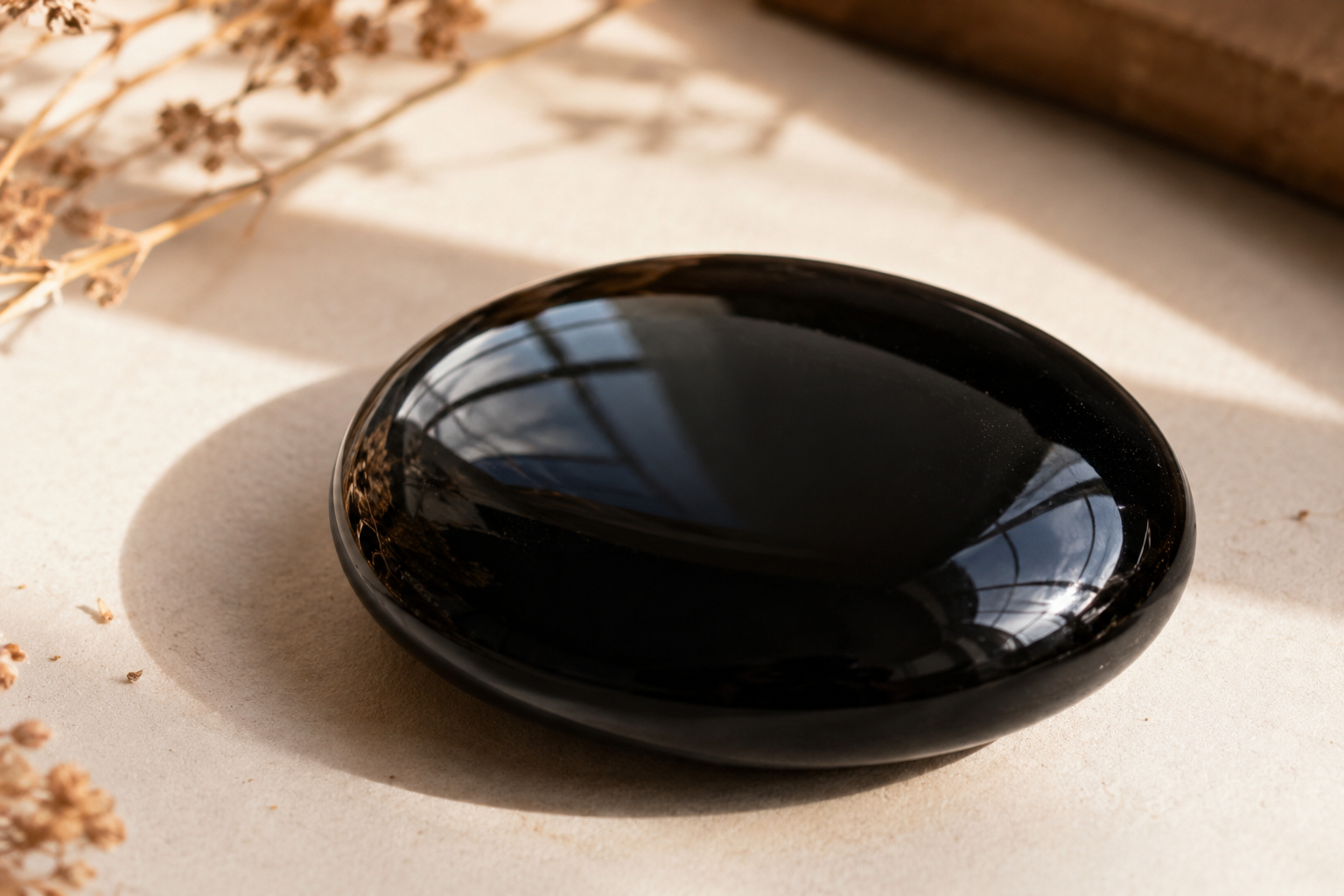
Black obsidian
Black, smooth and glassy. Protection and grounding.
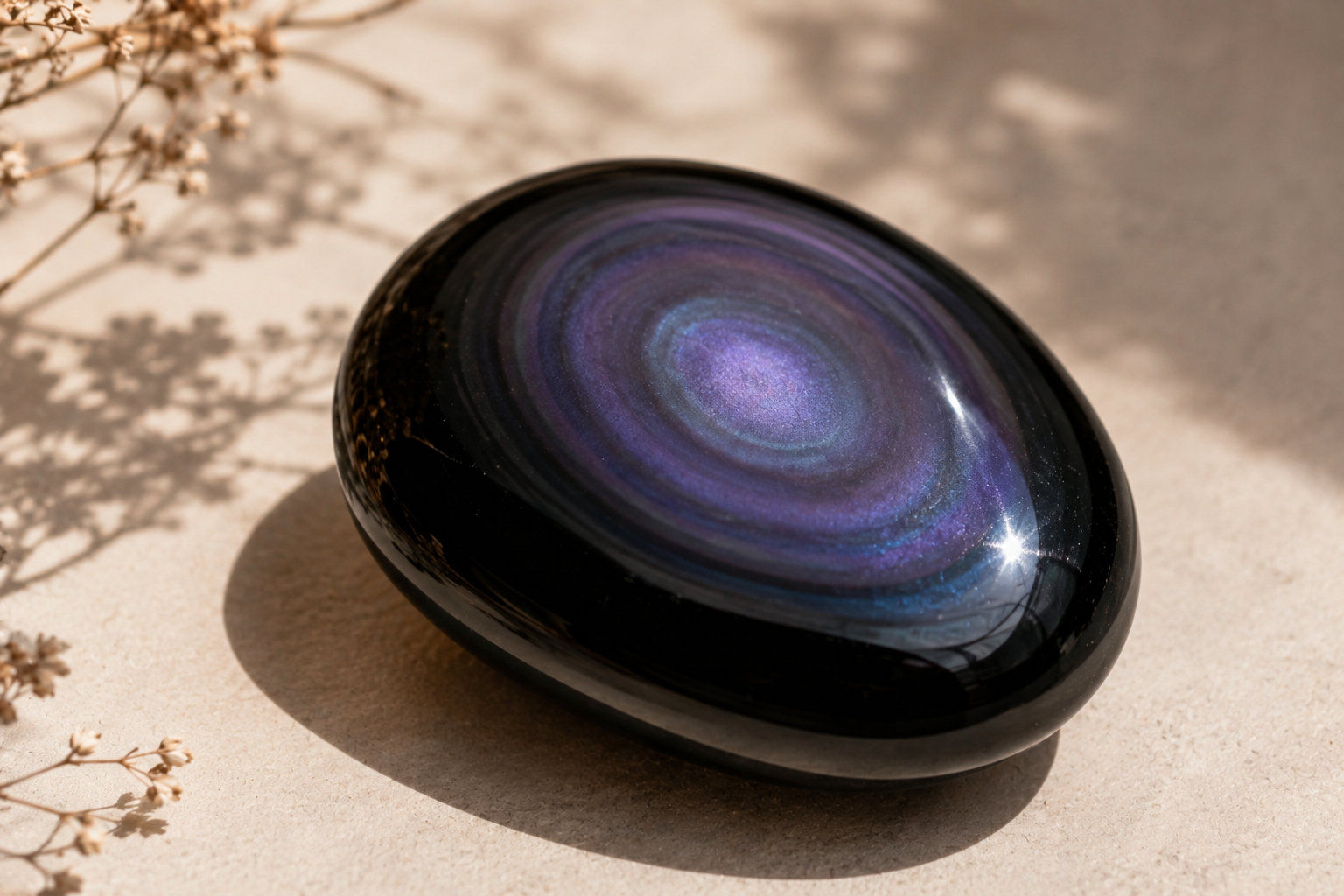
Celestial eye
A blue sheen depending on the light. Gentleness and intuition.
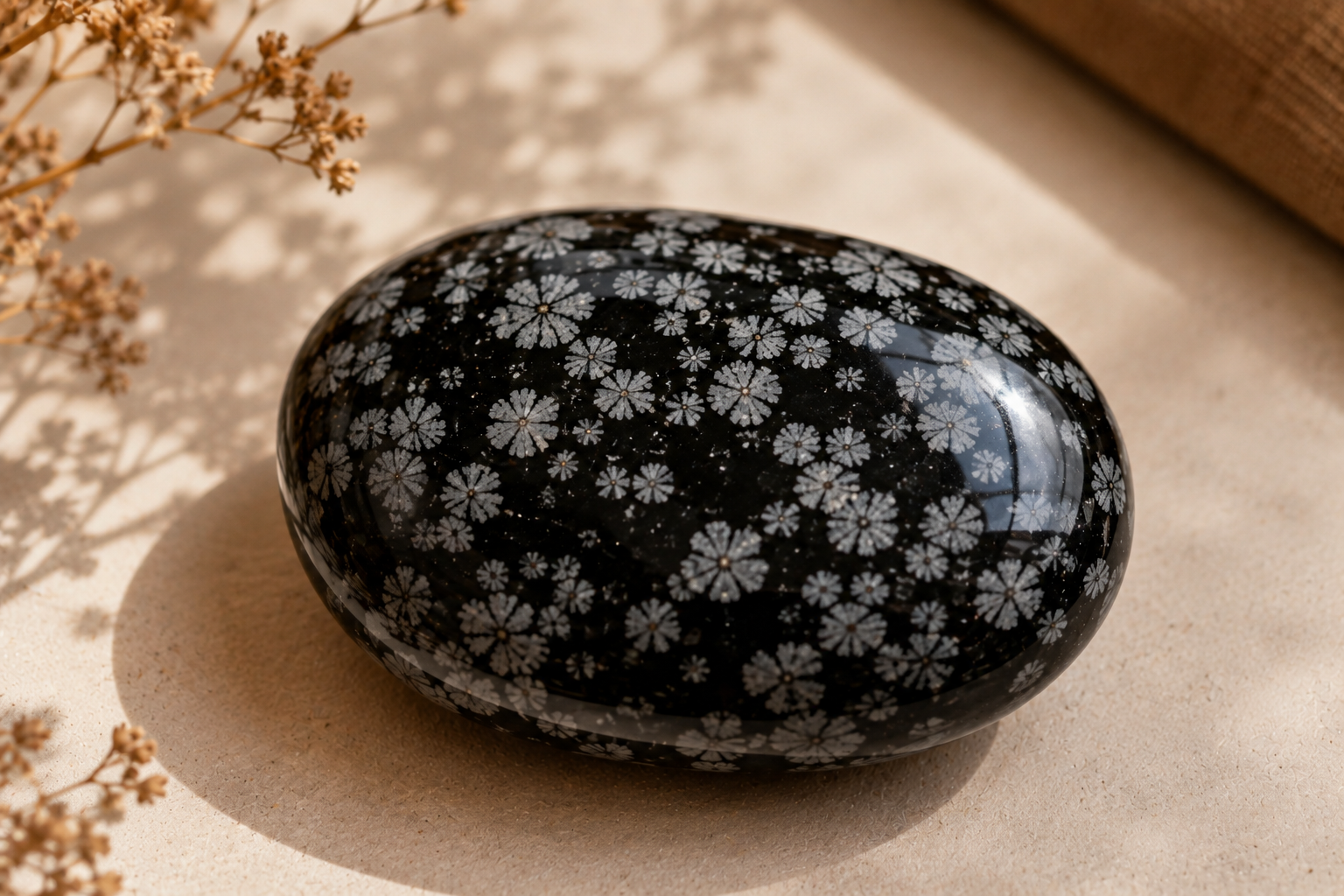
Snowflake
Speckled with white. Balance and calm.
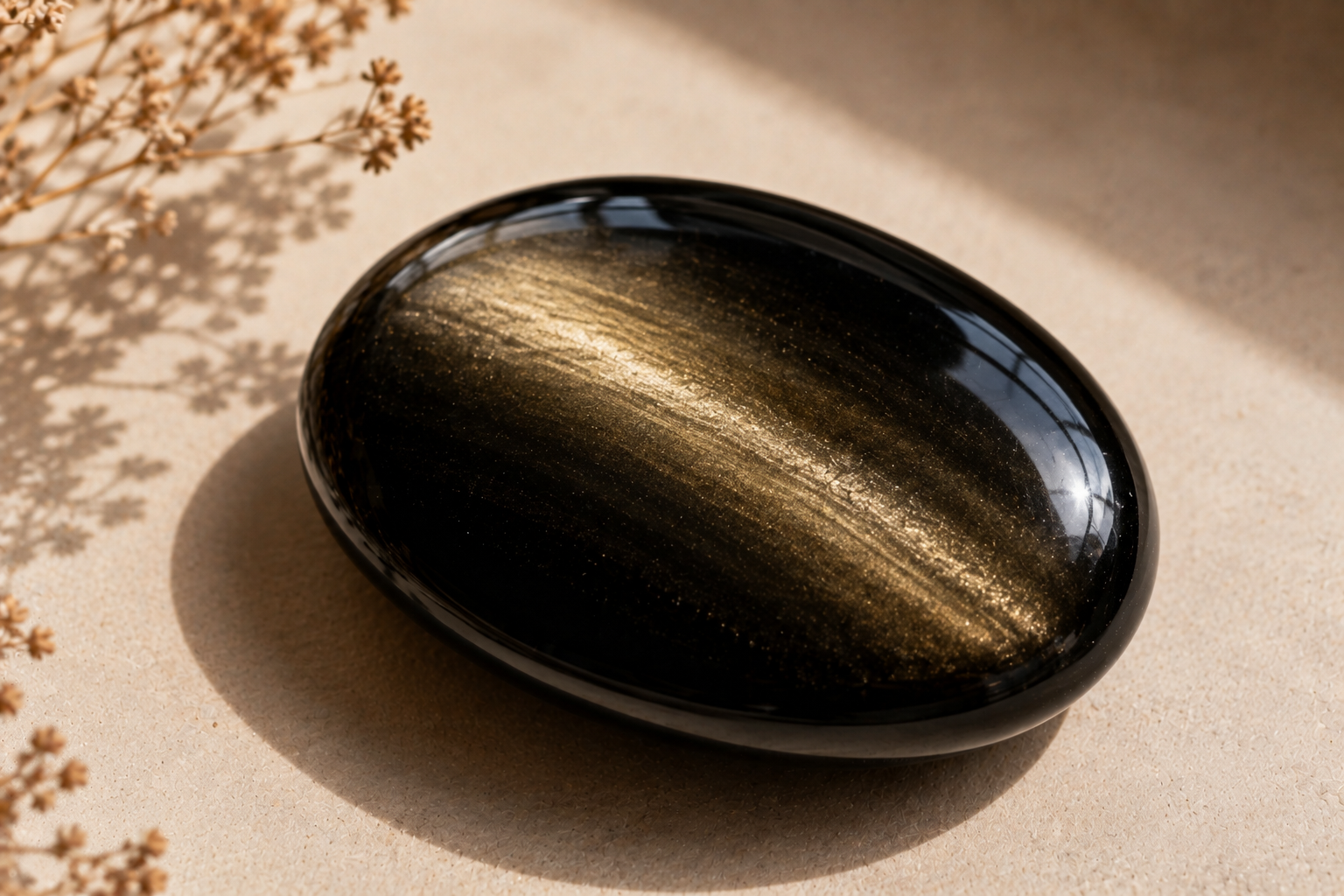
Gold sheen
A golden veil runs through the stone. Confidence and abundance.
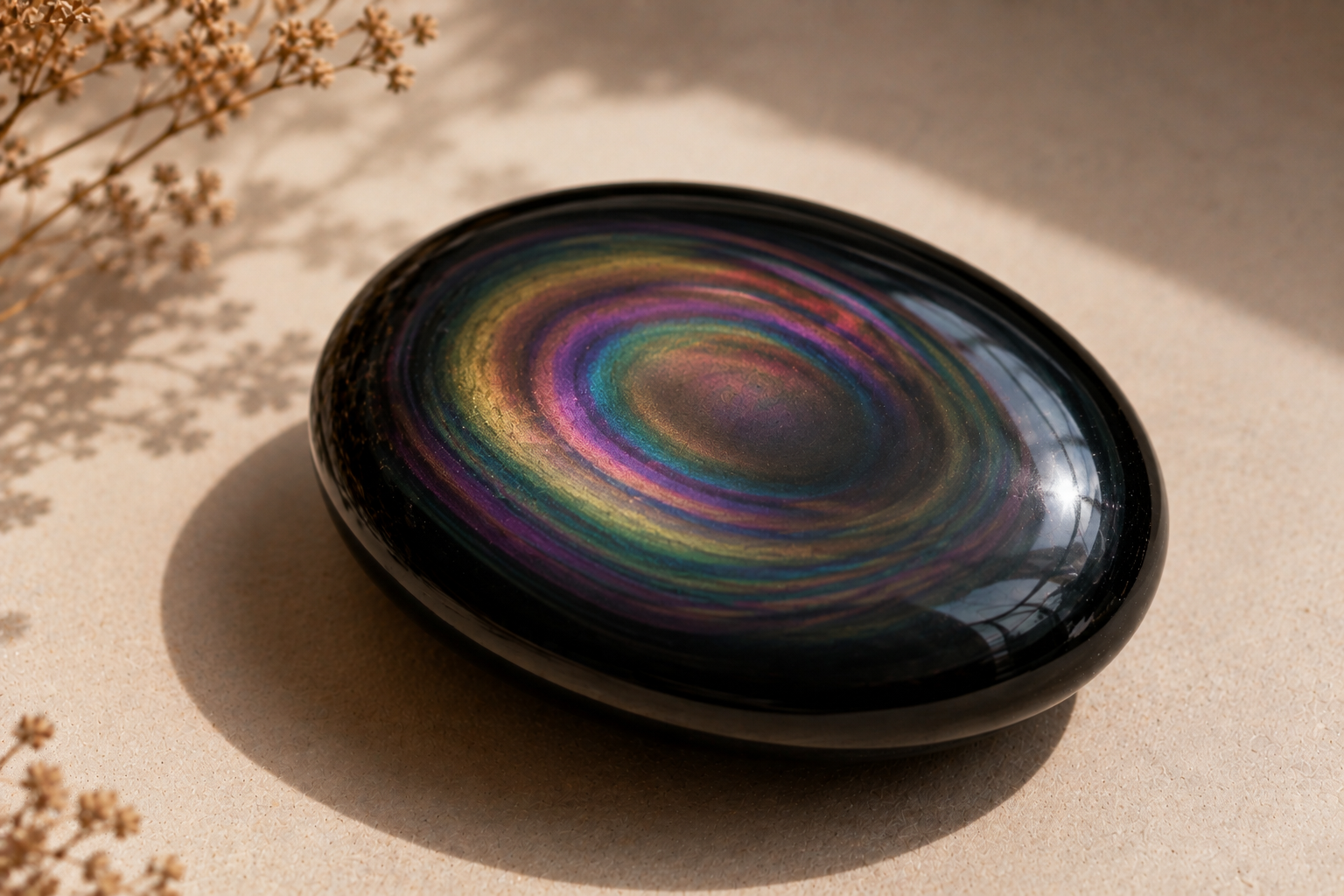
Rainbow
Multicoloured iridescence. The most spectacular of all.
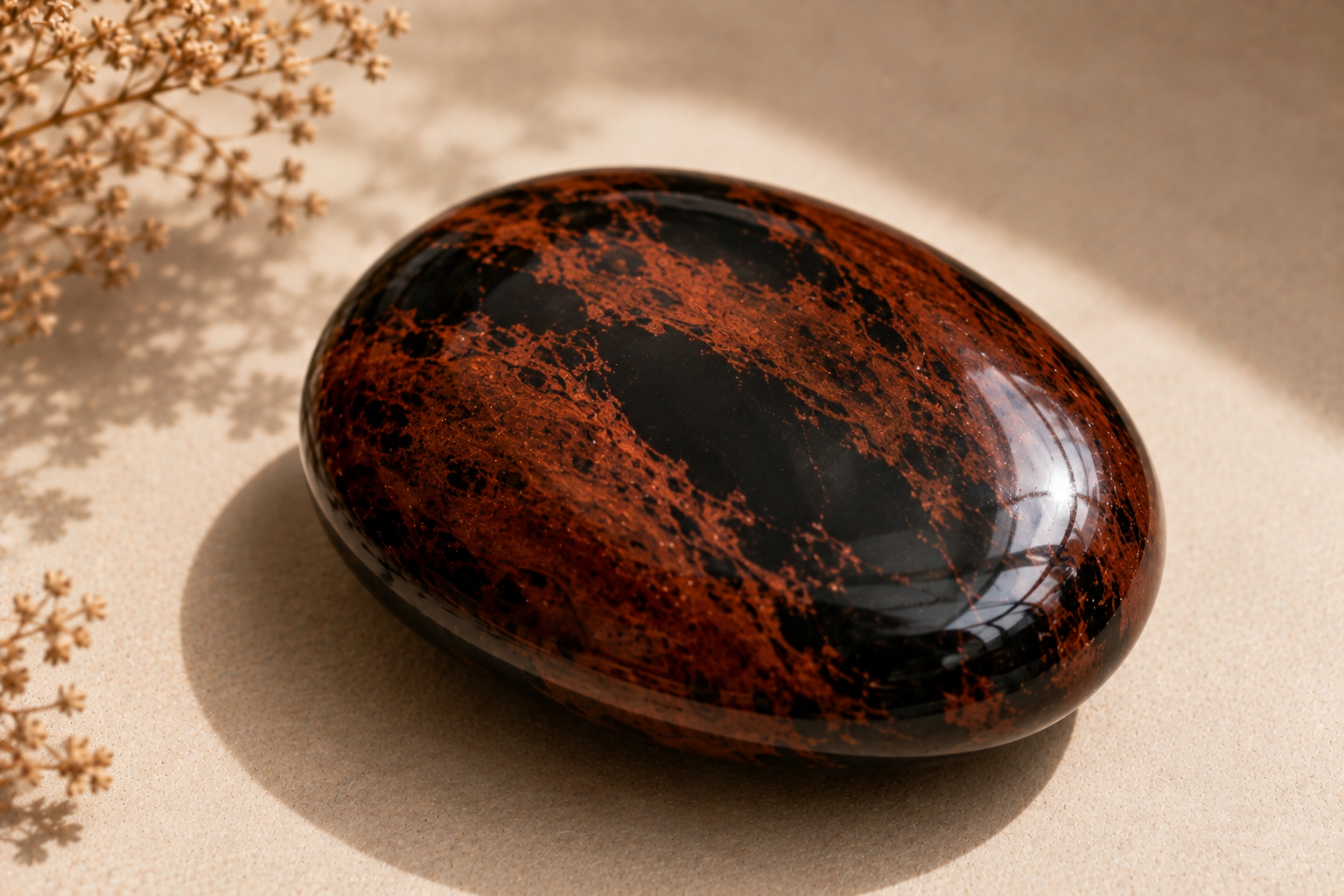
Mahogany
Black and red-brown, from iron. Grounding and vitality.
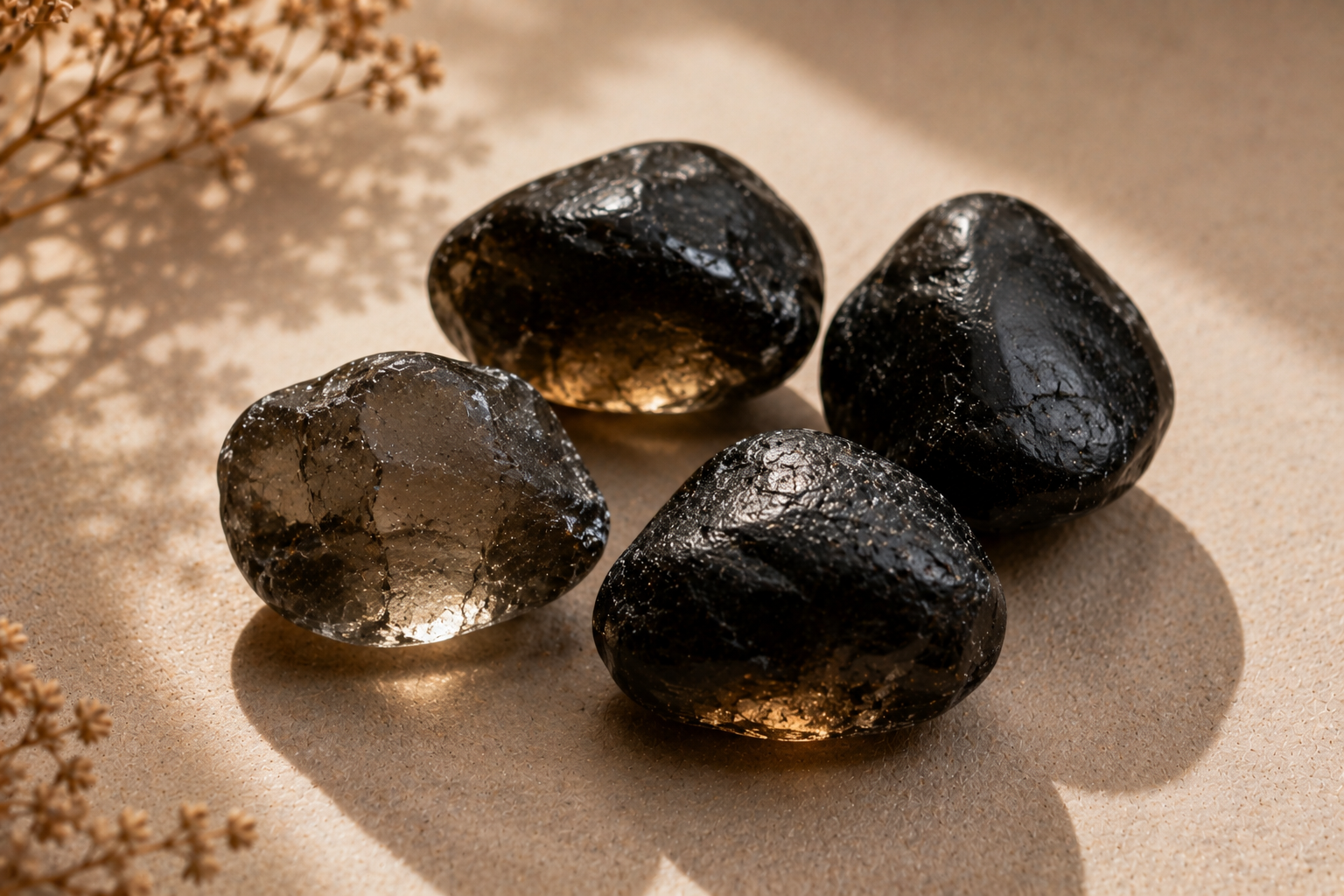
Apache tears
Small translucent pebbles. Comfort and consolation.
Black obsidian, the protector
The most iconic of all: black, smooth, almost mirror-like once polished. Its deep tone comes from iron and magnesium. It's the ultimate stone of protection and grounding, linked to the root chakra. If you're just starting out, this is where to begin, I've written a whole guide on its protective and grounding properties. In jewellery, a simple black obsidian bracelet remains the most versatile choice.
Celestial eye, the gentlest one
Tilt it at the right angle and a blue or violet sheen appears on the surface, like an eye opening. The effect comes from fine layers of inclusions that diffract the light. It's associated with gentleness, intuition and a real gift for calming the mind, often the favourite of anyone who finds black obsidian a touch too intense. Find out more on my celestial eye obsidian page, or as a pendant.
Snowflake, the balancer
Black, speckled with tiny white flowers: these "snowflakes" are crystals of cristobalite formed within the glass. Symbolically, it's linked to balance and letting go, shadow and light reconciled. You'll find the full story on my snowflake obsidian page.
Gold and silver sheen, the "sheen" effect
Tilt the stone and a golden (or silver) veil sweeps across it. That reflection comes from microscopic gas bubbles aligned during cooling, which bounce light back like a tiny mirror. It's linked to confidence, willpower and abundance. One of my favourite varieties to work with, see my gold sheen obsidian page, as a bracelet or a necklace.
Rainbow, the showstopper
Multicoloured iridescence, green, purple, gold, blue, appears in concentric layers, caused by tiny magnetite nanoparticles aligned within the glass. It takes real care to polish, and needs to be tilted toward the light to reveal its full rainbow. It suits a rainbow obsidian bracelet particularly well.
Mahogany, the earthy one
A mix of black and red-brown, veined like fine wood, caused by iron and haematite. It's associated with grounding, vitality and quiet strength. Warm and welcoming, it's especially popular as a mahogany obsidian bracelet.
Apache tears, the comforter
Small dark pebbles, naturally rounded and slightly translucent against the light. Their name comes from a Native American legend: the tears of Apache women, turned to stone. It's a softer take on black obsidian, often recommended during periods of grief.
My own favourite is the celestial eye. The first time I tilted one toward the workshop window and that blue-violet sheen appeared, I could have sworn it winked at me.
Rare & sought-after varieties
Beyond the classics, there are far more elusive types of obsidian, prized by collectors. You won't find them everywhere, but they deserve a place in a guide that aims to be complete.
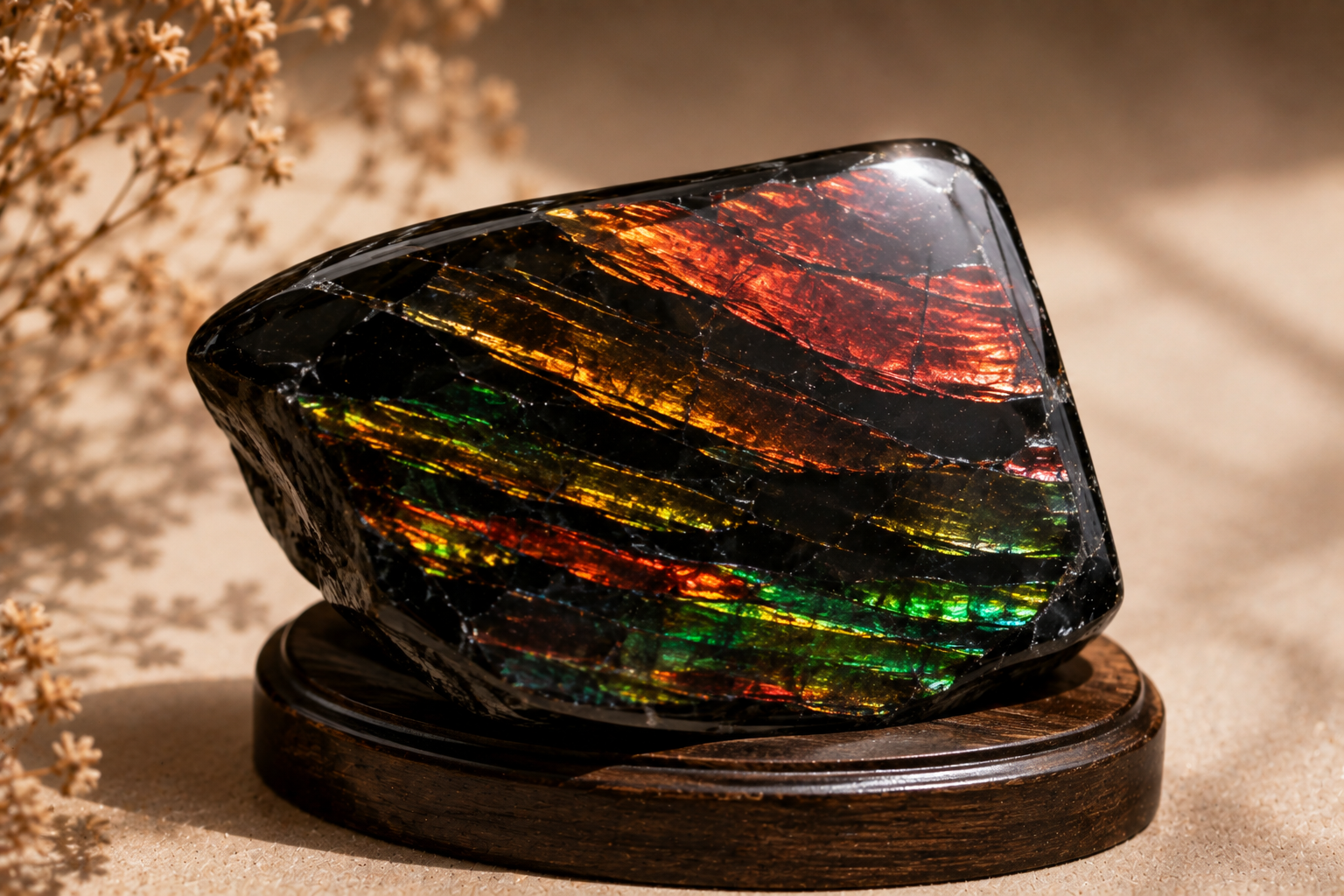
- Fire obsidian, the most prized. Extremely thin layers of magnetite create opal- or butterfly-wing-like iridescent flashes in red, gold and green. Found almost exclusively in Oregon.
- Midnight lace, fine, tightly curled black ribbons that trace a lace-like pattern through the stone.
- Spiderweb, a network of pale veins that streak the stone like a web. Every block is a one-off pattern.
- Peacock velvet / blue pearl, once polished, it reveals lavender, green and violet ripples, like a peacock feather. Native to Mexico.
- Pumpkin & peanut, two spherulitic varieties: the first leans orange, the second shows pale patches like a shell.
- Tri-flow, three tones mixed within a single block (black, red-brown, translucent), evidence of several lava flows layered on top of one another.
I don't work with all of these rare varieties myself, some are too fragile, others too hard to source reliably. But I love knowing about them, and when a customer shows me a fire obsidian they picked up while travelling, I go a little weak at the knees.
Beware of fake coloured obsidian
This is the most important point in this whole guide. The transparent, brightly coloured "obsidian", electric blue, apple green, ruby red, aqua, sold all over the internet is almost always manufactured glass, not natural stone.
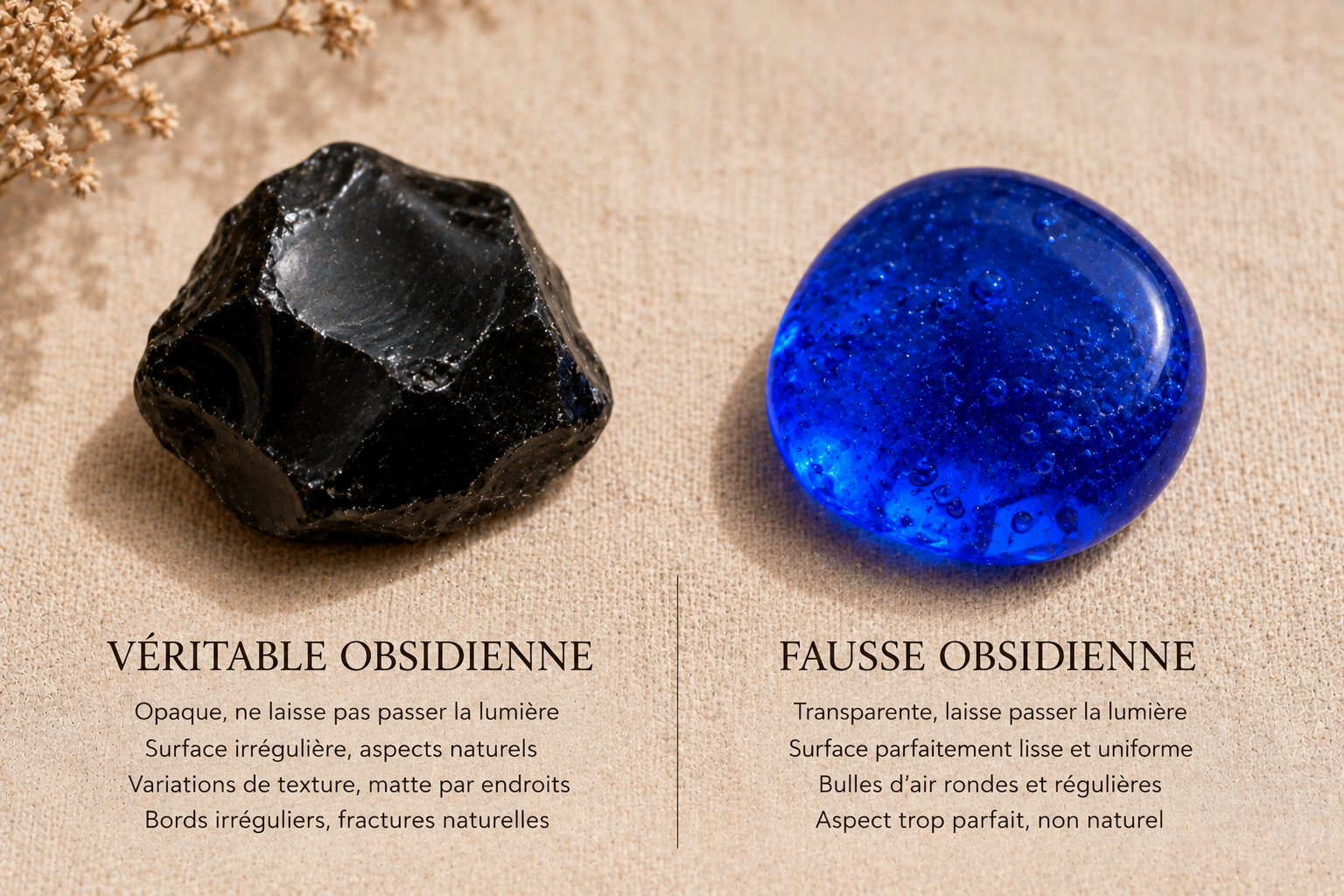
A few pointers for recognising genuine obsidian:
- it often shows tiny bubbles or inclusions and slight irregularities;
- it feels cool to the touch and warms up slowly;
- its fracture is conchoidal (curved), never perfectly clean;
- imitation glass, by contrast, is too "perfect": uniform colour, even transparency, suspiciously light weight.
In short, if an "obsidian" is translucent and a bright blue or green, it's almost certainly glass. Genuine obsidian stays deeply dark. The rare truly-coloured varieties (a matte green from Mexico, for instance) are opaque and understated.
If the price looks too good to be true, be wary, I help you get a sense of fair pricing in my guide to obsidian price and value. And keep in mind that a few precautions are worth taking with this stone, as I explain in dangers and precautions.
Early on, I got caught out by a "blue obsidian" I spotted online: a gorgeous blue... and completely fake. That's the day I decided I'd only work with stone whose origin I actually know.
The variety table at a glance
For a quick overview, here's the essential on each type of obsidian:
| Variety | Look | Meaning |
|---|---|---|
| Black | Deep, glassy black | Protection, grounding |
| Celestial eye | Blue / violet sheen | Gentleness, intuition |
| Snowflake | Black speckled with white | Balance, calm |
| Gold sheen | Moving golden veil | Confidence, abundance |
| Rainbow | Multicoloured iridescence | Hope, transformation |
| Mahogany | Black and red-brown | Vitality, grounding |
| Apache tears | Translucent pebbles | Comfort, ease |
| Fire (rare) | Opal-like iridescent flashes | Passion, energy |
Which type of obsidian should you choose?
It all comes down to what you're after, an intention, or simply a sheen that speaks to you.
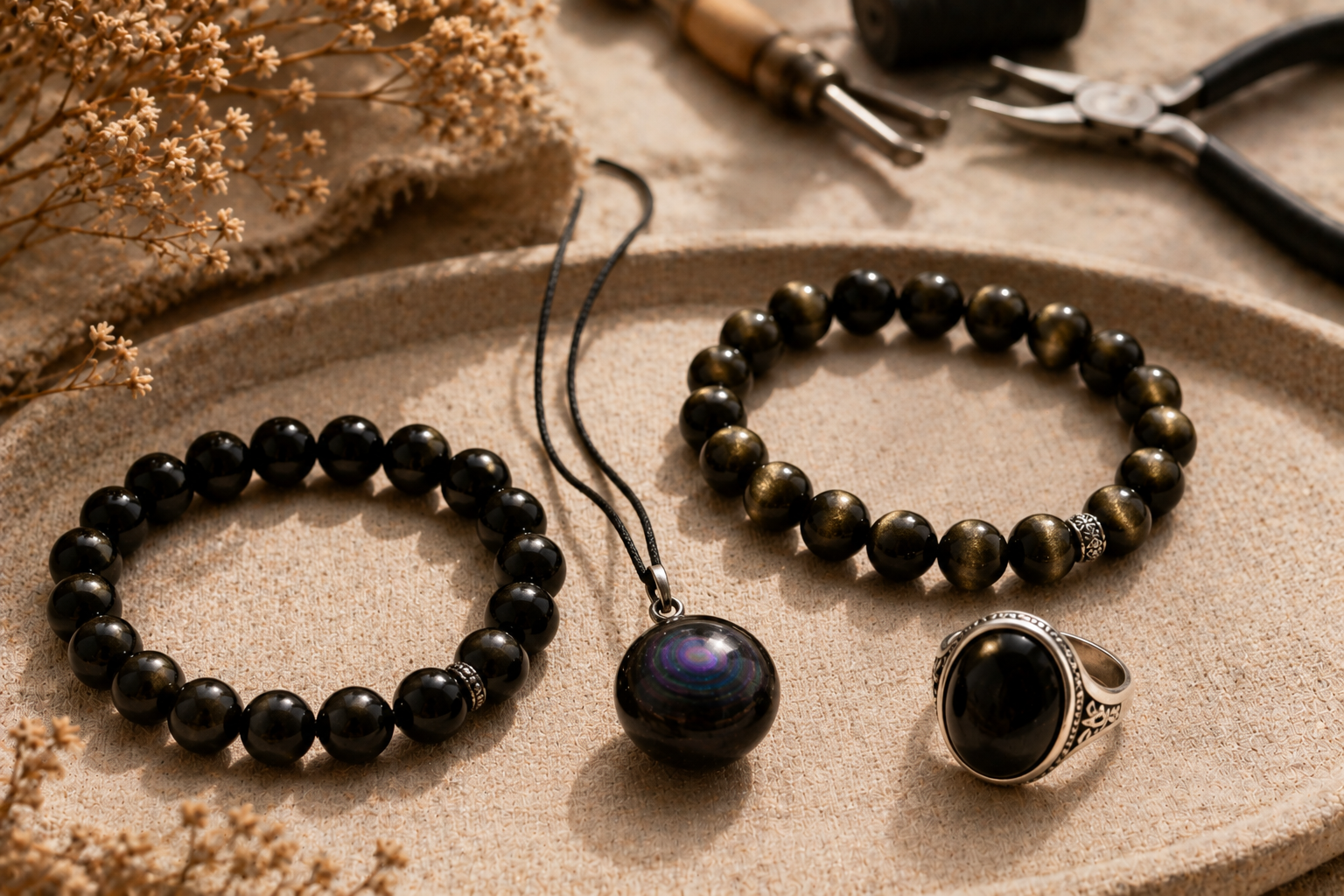
- For everyday protection: black obsidian, as a feng shui bracelet or a triple protection bracelet;
- for gentleness and intuition: celestial eye;
- for balance and letting go: snowflake;
- for confidence and abundance: gold sheen;
- for vitality and grounding: mahogany;
- for pure, spectacular colour: rainbow.
As for the piece itself, choose whichever sits closest to your everyday life: a bracelet for a discreet, all-day presence, a pendant or necklace to keep the stone close to your heart, or a ring to have it in view. Men will find pieces designed with them in mind on my obsidian for men page, and do check the jewellery size guide before ordering.
There's nothing to stop you mixing varieties, or pairing obsidian with other stones: I cover the best combinations in my guide to crystal pairings, including the beautiful obsidian & tiger eye duo. The triple protection bracelet is the best illustration of that idea. And if you're into meditation, every one of these varieties makes a wonderful ally for root chakra work.
Worth knowing, the properties described here belong to crystal healing, a wellbeing practice rooted in tradition and belief. They are not a medical claim, and never replace the advice of a health professional.
Cleansing & recharging every type of obsidian
Whatever the variety, the care routine stays the same.
Cleansing it
By smudging (sage, palo santo), a brief rinse under clear water, or resting it on a quartz cluster. Avoid salt and salt water, which can damage it over time.
Recharging it
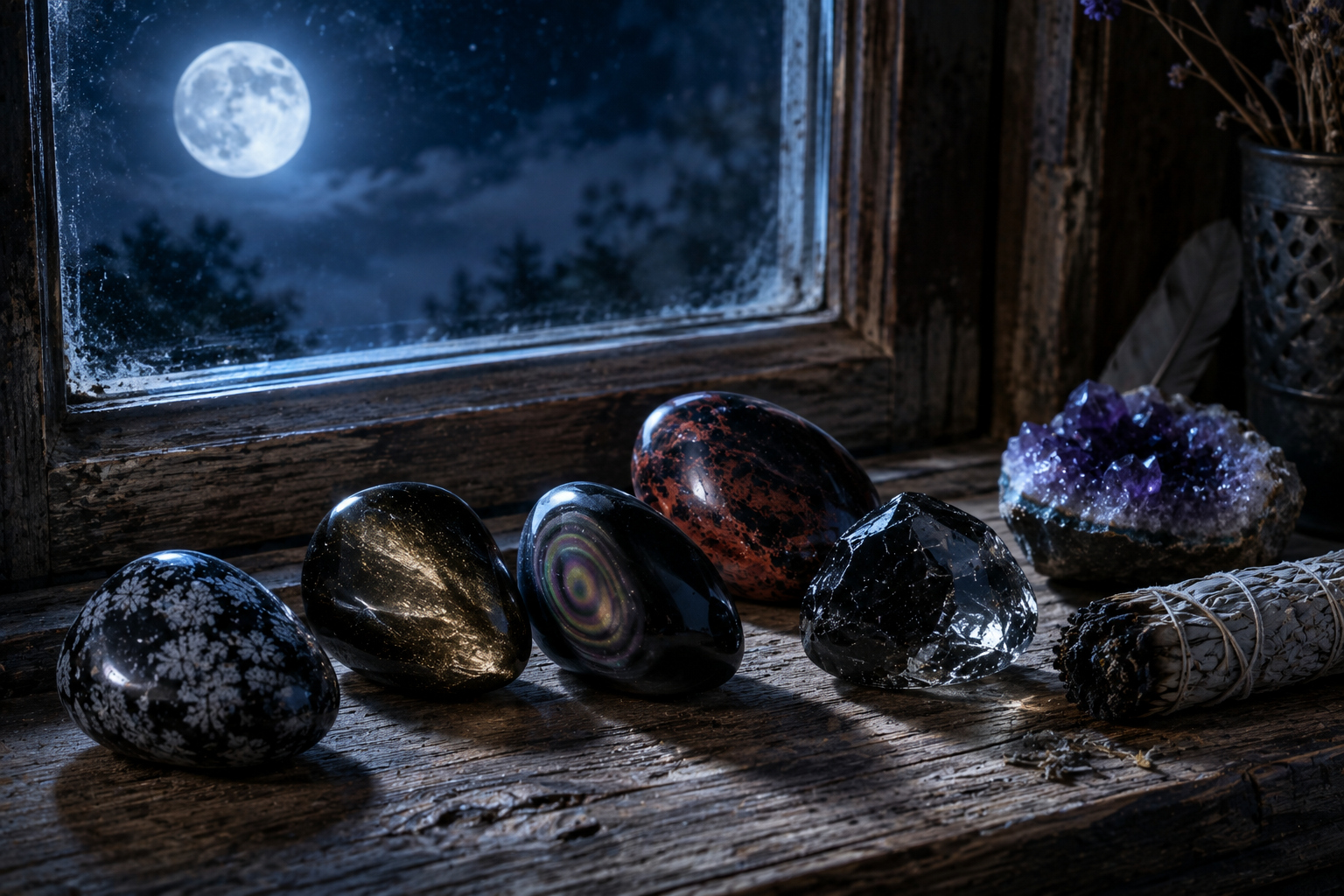
Under moonlight (a full moon is ideal), on an amethyst geode, or in contact with the earth. Avoid prolonged sun exposure. I walk through every step in my guides on cleaning your obsidian and on recharging and cleansing it.
My own ritual: on full moon nights, I line up my stones on the workshop windowsill, every variety mixed together. Come morning, it's probably irrational, but they always seem a little more "awake".
Frequently asked questions
How many types of obsidian are there?
What's the rarest type of obsidian?
Which obsidian is the most powerful in crystal healing?
Does blue or green obsidian really exist?
What's the difference between gold and silver sheen obsidian?
Which obsidian should a beginner choose?
Do all varieties cleanse the same way?
Find your type of obsidian
Bracelets, necklaces, pendants and rings in every obsidian variety, handmade in France with natural stones, chosen one by one.