
Description
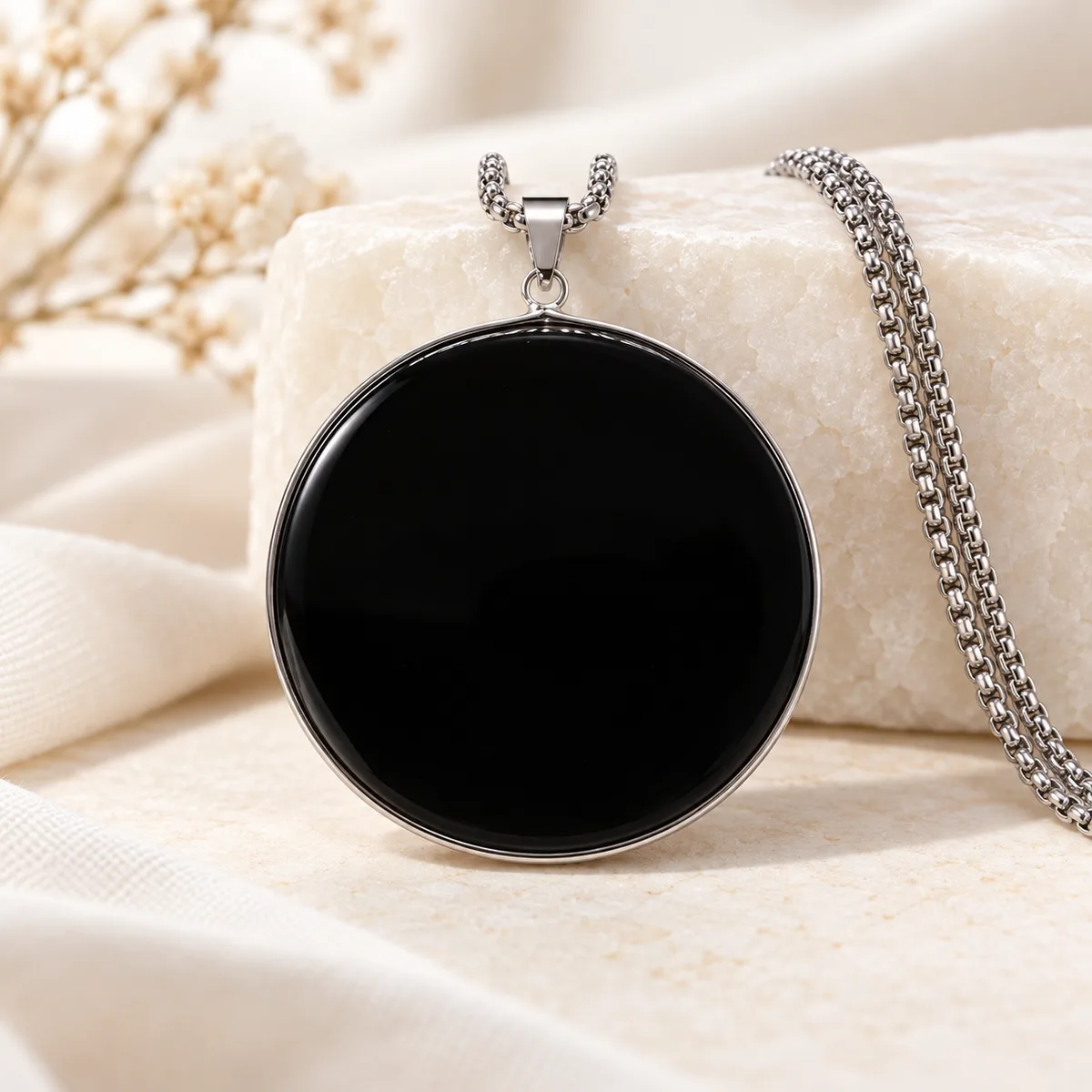
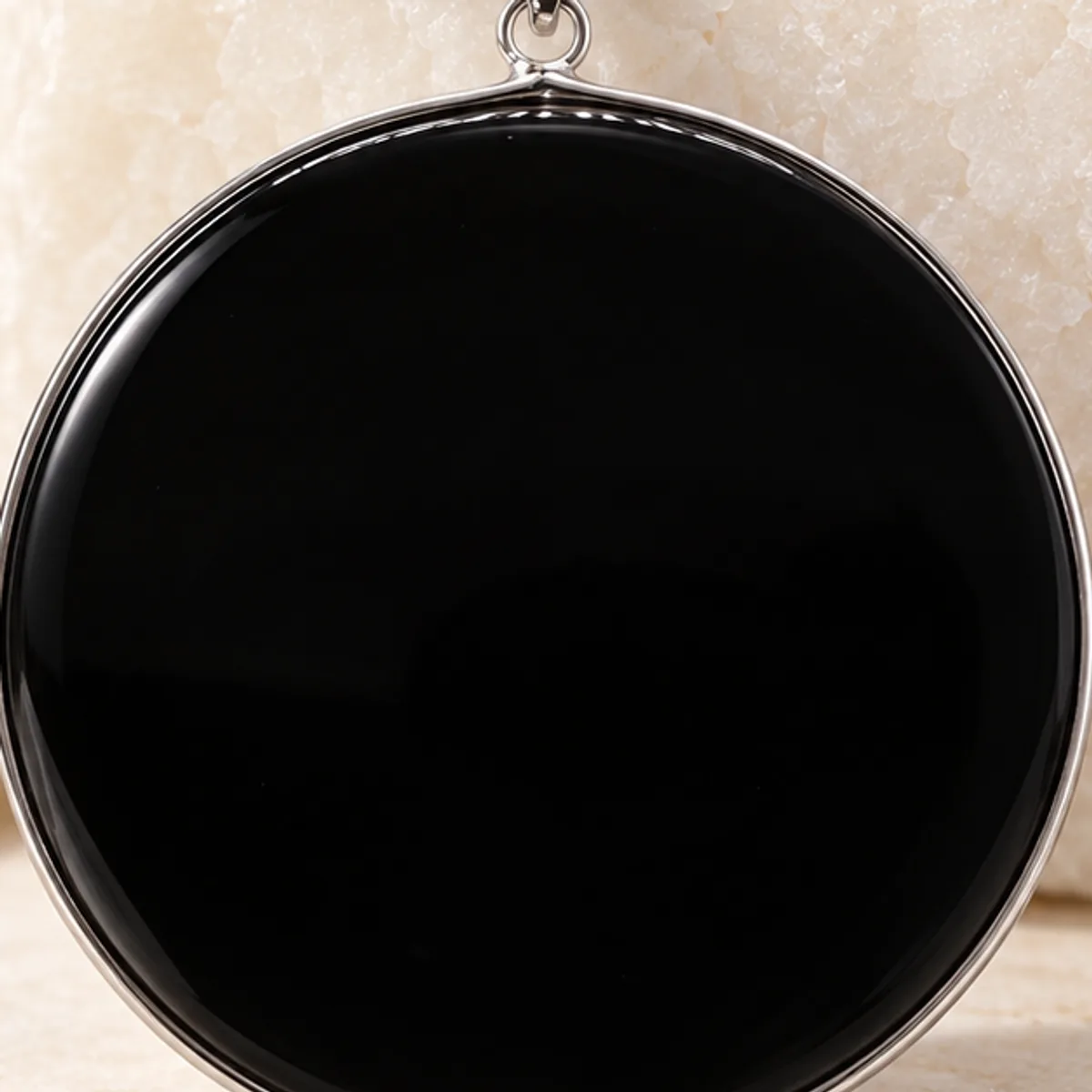
A large obsidian disc polished on both sides, set in a ring of stainless steel, hung from a box chain. It is the piece in the catalogue closest to this stone’s original use: a mirror.
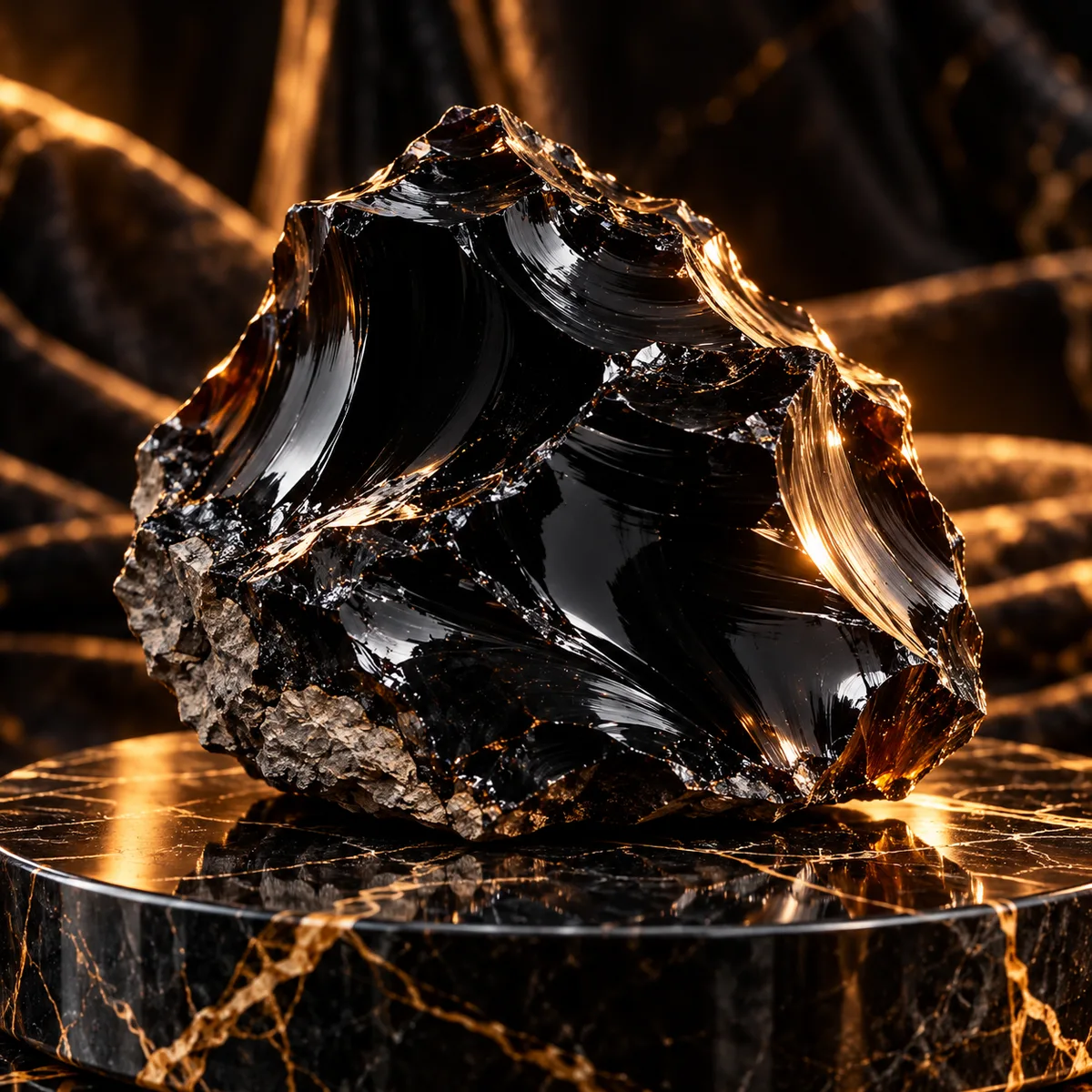
Before it was jewellery, polished obsidian was a mirror. Mesoamerican workshops were producing discs of it as early as the Olmec period, and examples have turned up in sixteenth-century European collections. This is not product-page legend: the objects exist, they are dated, and their surface is flat enough to reflect a face. This disc takes up the format, smaller. The obsidian guide tells that story.
The setting is a closed ring of stainless steel, not prongs. On a wide thin disc it is the only sensible mounting: prongs would press on four points of a flat edge and chip it at the first knock, whereas a ring spreads the bearing over the whole circumference. The chain is the same steel, in box link, which does not kink. The other pendants are here.
The reservation is the mirror polish, and it is the same as for a real mirror: it shows everything. Fingerprints appear on it immediately, and a micro-scratch that would go unnoticed on a matte stone reads here at certain angles. A disc this size worn against a zipper will pick up marks. They can be repolished, but you are better off knowing.
Crystal lore ties obsidian to grounding, and the black mirror to introspection. None of that is proven, and no piece of jewellery heals anything. I have gathered separately what tradition attributes to obsidian, in the conditional from start to finish.
- Genuine black obsidian, a large disc polished to a mirror on both sides.
- Closed stainless steel rim, no prongs: the bearing is spread over the whole edge.
- Stainless steel box chain, which does not kink.
- The mirror polish shows fingerprints and micro-scratches.
What to know before you wear it
 |  |  |
The specifications
- Stone
- Black obsidian, volcanic glass
- Shape
- Round disc, mirror polished both faces
- Diameter
- About 40 mm
- Setting
- Stainless steel ring, closed bezel
- Chain
- Stainless steel, box link
- Gender
- Unisex
- Brand
- Bijoux Obsidienne

Polishing a disc without leaving a single mark
Polishing a flat disc is harder than polishing a cabochon, and that always comes as a surprise. On a domed surface the wheel touches only one point at a time and flaws melt into the curve. On a flat, it bears across the whole width, and the slightest change of pressure leaves a slightly duller zone that only shows when you tilt the piece under a raking light. So the check is done at the window, never under the bench lamp, which is too direct to show that flaw.
This pendant exists because the story of the obsidian mirror comes up in every conversation I have, and no piece in the catalogue showed it. A disc polished on both faces makes it obvious without anyone having to explain it. The other pendants are here and the obsidian guide tells the rest.
A flat is checked at the window, never under the lamp. The lamp is too direct, it hides the dull zone.
Obsidian does not mind water and neither does stainless steel, but the mirror polish keeps fingerprints. A dry microfiber cloth is enough, as for eyeglasses. Avoid knocks against a zipper, and never an ultrasonic bath. Cleaning an obsidian piece covers the rest.