
Description
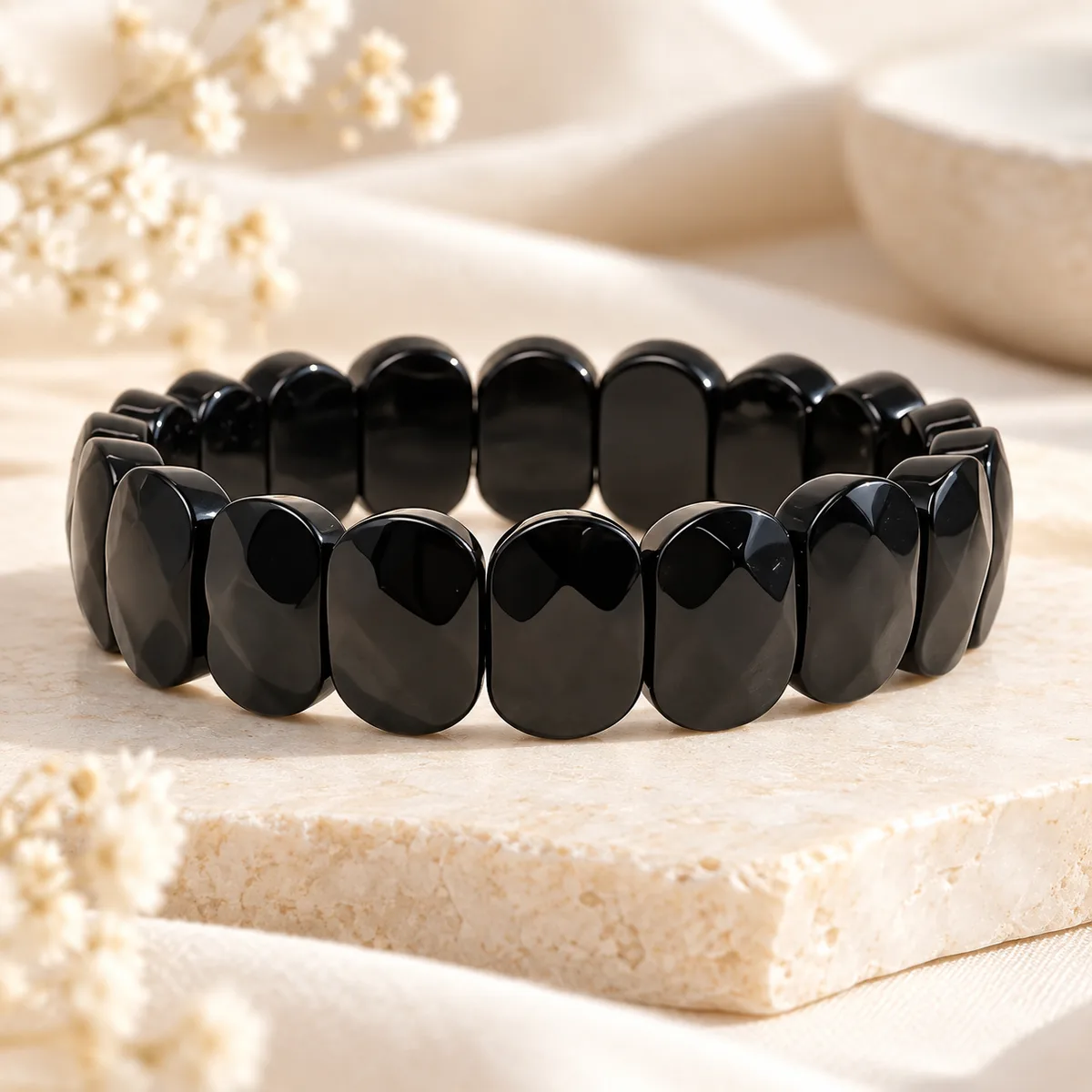
Some twenty obsidian plaques with a domed, faceted face, set edge to edge on two parallel elastics. The result is not a strand of beads but a continuous band, covering three quarters of an inch of wrist.
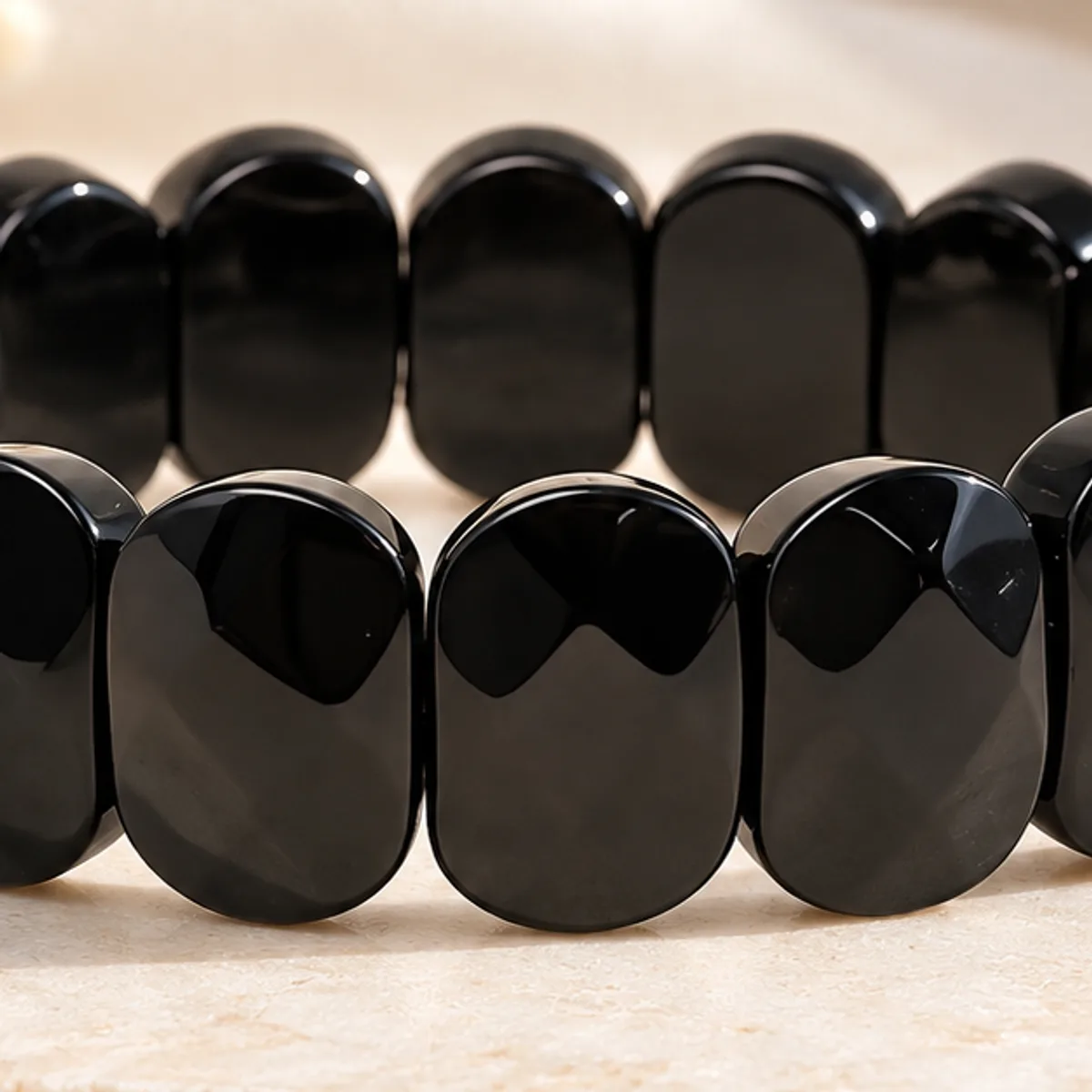
Each plaque is cut separately: a flat back that sits against the skin, a domed face, and facets on the flanks. They are drilled twice, across the width, and it is that double drilling that keeps them from pivoting and makes the band possible. On a strand of beads every element turns; here nothing moves, and the cuff keeps its face forward all day.
The facets are not gratuitous decoration. On an entirely domed and polished surface, obsidian returns a single wide, uniform reflection, and a three-quarter-inch band becomes a black mirror that reads rather flat. The facets break that reflection into separate glints, which gives relief to the mass. It is the same reasoning as on a cut gemstone, applied to a volcanic glass. The other bracelets are here.
The reservation is weight and behaviour. A solid stone cuff comes to nearly two ounces, twice a 10 millimetre strand, and you feel it by the end of a day. Nor does it go under a fitted sleeve. And if one elastic gives, twenty plaques fall at once, where a simple strand loses a few. So I fit two separate elastics rather than one doubled over: if one lets go, the other holds the band long enough for you to notice.
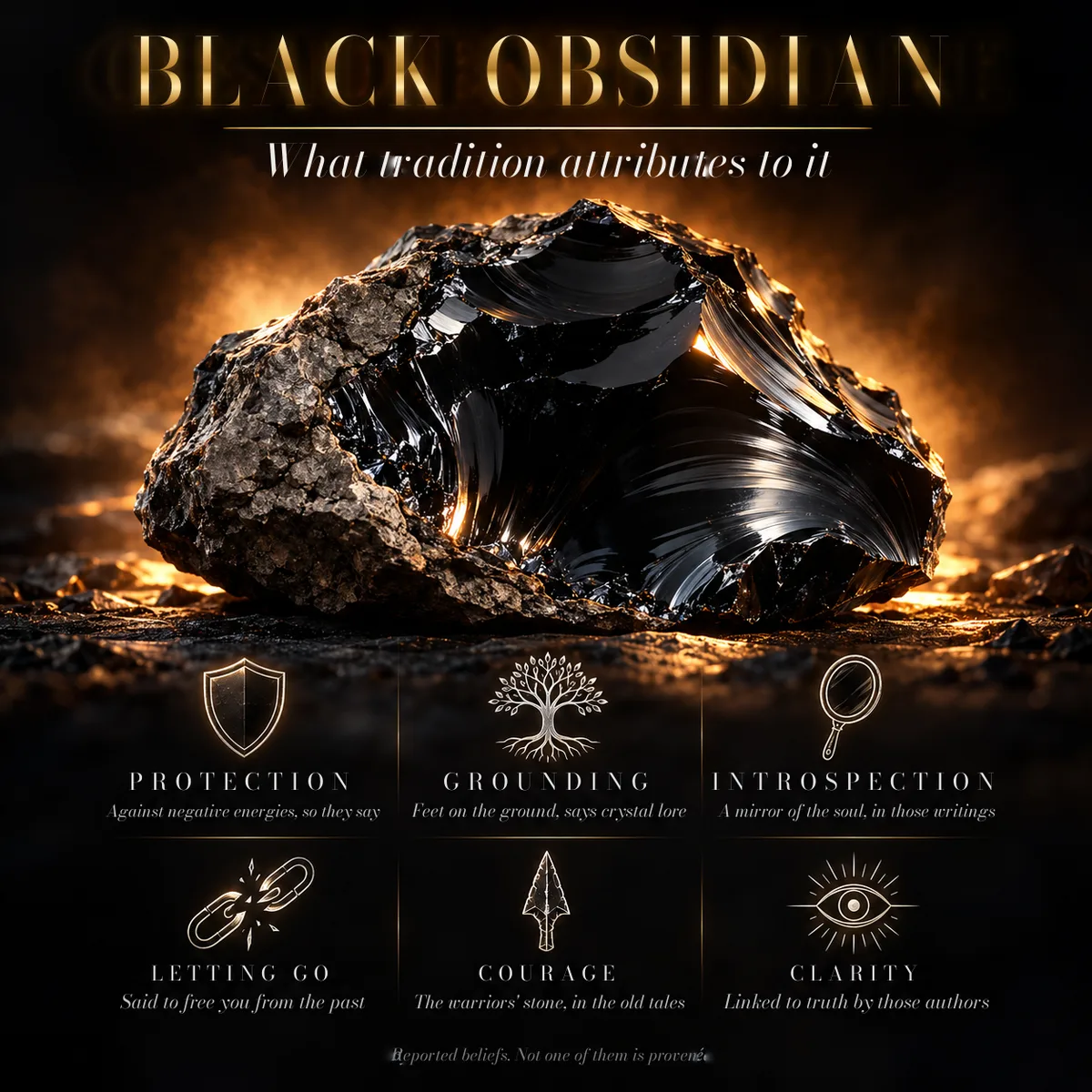
Crystal lore ties obsidian to grounding. None of that is proven, and no piece of jewellery heals anything. I have gathered separately what tradition attributes to obsidian, in the conditional from start to finish.
- Genuine black obsidian, some twenty faceted plaques set edge to edge.
- Double drilling: the plaques do not pivot, the band keeps its face forward.
- Two separate elastics, so that one breaking does not empty the cuff.
- About 2 oz: the heaviest piece in the bracelet range.
What to know before you wear it
 |  |  |
The specifications
- Stone
- Black obsidian, volcanic glass
- Shape
- Plaques with a flat back, domed face and faceted flanks
- Band width
- About 2 cm
- Wrist size
- 17 to 19 cm, elastic
- Stringing
- Two parallel elastics, double drilling, no clasp
- Weight
- About 60 g
- Stone origin
- Mexico
- Gender
- Unisex
- Brand
- Bijoux Obsidienne

Faceting a glass without shattering it
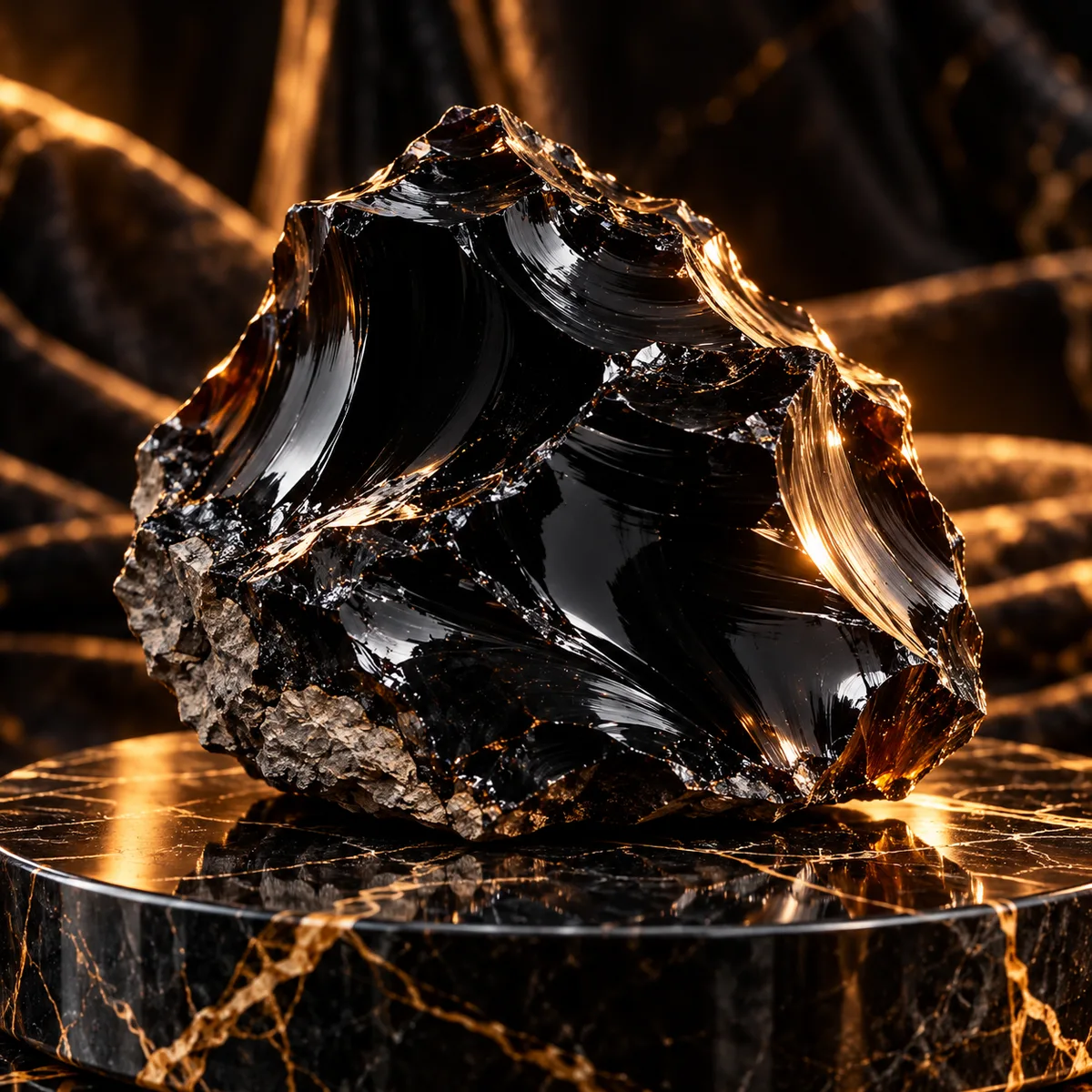
Faceting obsidian has nothing to do with faceting a quartz. A glass has no cleavage plane, so it does not split along a preferred direction, but it flakes away in shells as soon as the wheel heats up or the angle of attack is too abrupt. Sharp edges are the critical point: a badly formed edge is not merely ugly, it cuts, and obsidian was used to make scalpels for that very reason. Every plaque therefore goes through an edge-softening step before assembly, and I check by running a thumb over it.
This model exists because a strand of beads, however large, remains a line. A cuff is a surface, and that is another object. It does not suit the same wrist: on a six inch circumference, three quarters of an inch of width looks enormous. The bead strands are here and the obsidian guide explains the material.
A badly formed obsidian edge does not merely displease, it cuts. You soften it, then you run a thumb over it.
Obsidian does not mind water, but a faceted plaque chips at the corner more easily than a round bead: avoid knocks against table corners and take the cuff off before sport. A soft cloth is enough, never an ultrasonic bath. Cleaning an obsidian piece covers the rest.