How to Wear a Black Obsidian Pendant
My short answer: against the skin if you want it to live with you, over your clothing if you'd rather keep it flawless, and closer to the solar plexus than to the hollow of the throat. Everything else comes down to four choices: chain length, how often to wear it, what to pair it with, and how to care for it. Here's how I recommend wearing a black obsidian pendant day to day.
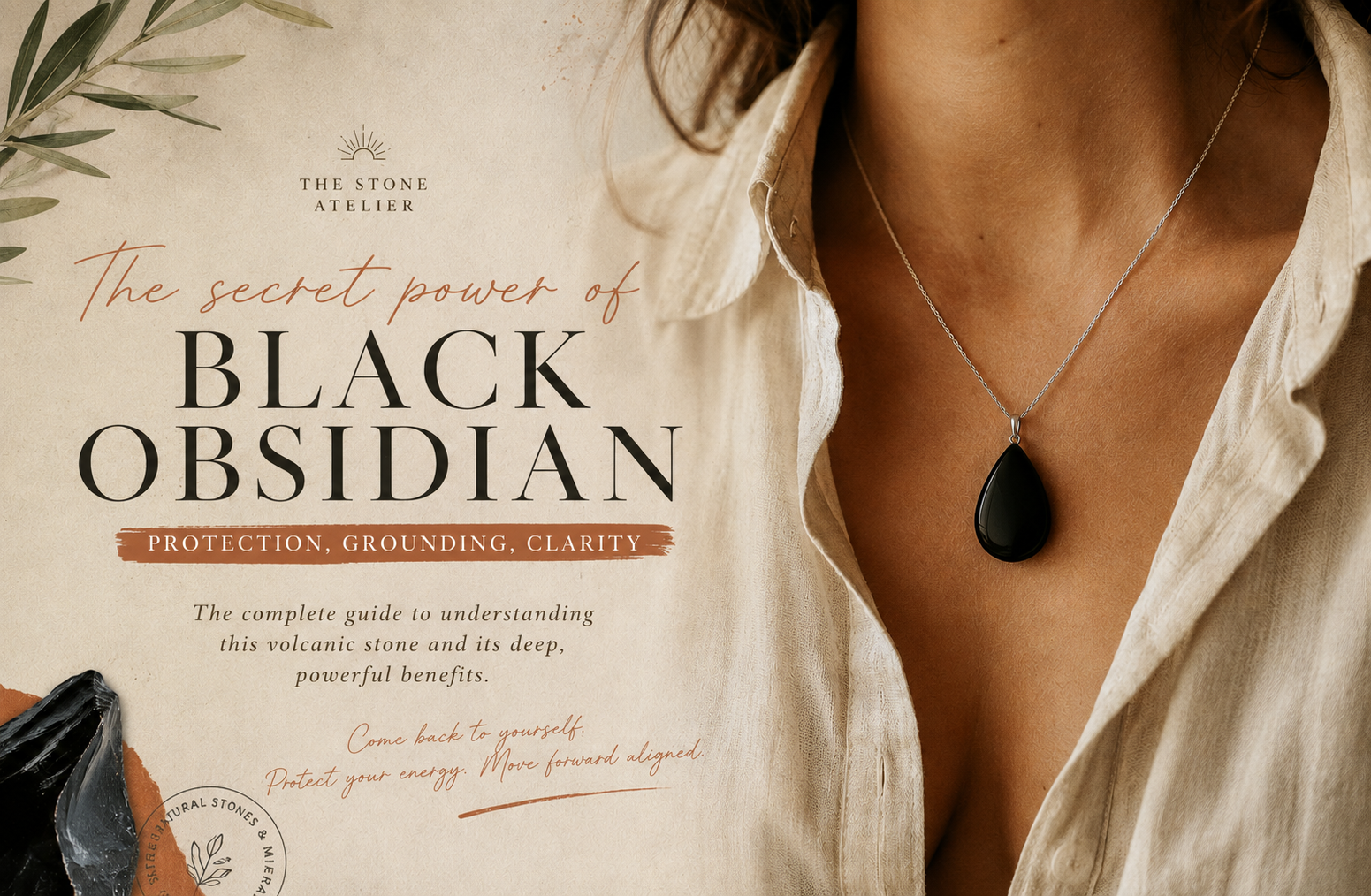
Why a pendant rather than a bracelet
It's the question I get asked before all others, and there's a very concrete answer, nothing energetic about it. Obsidian is a volcanic glass: it rates around 5 to 5.5 on the Mohs scale, barely more than a knife blade. On the wrist, a stone at that hardness meets the edge of a desk, a keyboard, a door handle, a steering wheel, every single day. Within a few months, the micro-scratches show.
At the neck, it touches almost nothing. That's the plain reason a black obsidian pendant ages better than a bracelet worn to the same degree. If obsidian appeals to you but you work with your hands, the pendant is the format to choose. To understand where this unusual material comes from, see my article on how obsidian forms.
The second reason is a matter of tradition. In crystal healing, black obsidian is placed on the side of protection and grounding, and the torso, throat, heart, solar plexus, is the area these notions are tied to. A bracelet follows your movements; a pendant stays at the centre. That's also why so many people describe it as more "present" than an obsidian bracelet.
I sell both, so I can say this without an agenda: if you're torn and only get to have one piece, take the pendant. It scratches less, it draws less attention at work, and it's easier to forget you're wearing it, which, for a stone meant to accompany you, is actually a good thing.
Skin or over clothing?
This is THE question, and also the one that attracts the most nonsense. The line you'll see everywhere: "the stone has to touch the skin to work". It's presented as a rule. It isn't one.
No measurement establishes that an exchange occurs between a stone and a body, through fabric or not. It's a crystal-healing convention, widely shared and passed from practitioner to practitioner, but it remains a belief, not a fact. Naming it for what it is takes nothing away, it simply spares anyone from feeling guilty for wearing their pendant over a jumper.
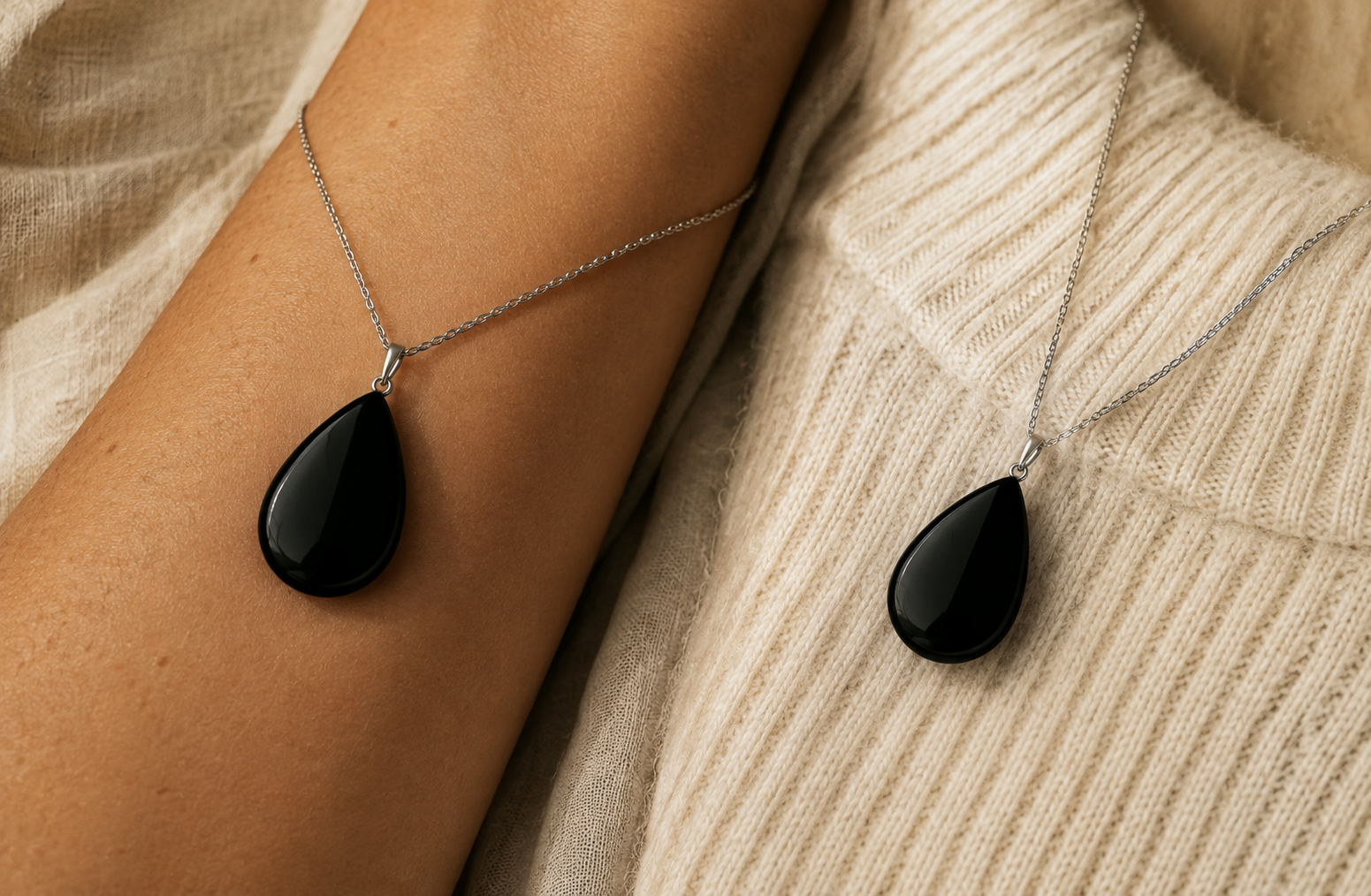
What the choice does change, though, are some very real, measurable things:
Against the skin
The stone takes on body temperature and quickly goes unnoticed. It's the most common way to wear it. Downside: it picks up sebum, perspiration, perfume and sunscreen residue, which dull the polish and wear the cord faster.
Over clothing
The stone stays clean, the chain wears less, and the piece is visible, which matters when it's a beautiful piece. Downside: it moves around more, knocks against buttons and zips, and scratches more easily if it swings and hits something.
In short, wear it however you like. If you want to follow the traditional convention, wear it against the skin and wipe the stone with a soft cloth in the evening. If your pendant is strung on nylon or cotton cord, wearing it over clothing will make it last noticeably longer: it's always the cord that fails first, never the stone.
What chain length to choose
This is the parameter that changes the piece's overall look the most, and the one talked about the least. The right length depends on three things: how high you want the stone to sit, the size of the stone, and the necklines you usually wear.
| Length | Where the stone sits | Best for | My take |
|---|---|---|---|
| 40 to 45cm | Hollow of the throat | Open collars, round necklines, small stones | Very pretty, but the stone rubs against the collar |
| 45 to 50cm | Top of the sternum | The most versatile length | My default choice when unsure |
| 50 to 55cm | Solar plexus | Worn over a jumper, stones 3cm and up | The best compromise for a heavier piece |
| 55 to 60cm | Below the chest | Layering, tall silhouettes | Beautiful, but the stone swings and knocks |
| Over 60cm | Upper stomach | Statement layered look, worn over a coat | Best kept for small, light stones |
If you follow the logic of energy centres, a 40 to 45cm chain places the stone near the throat, and 50 to 55cm near the solar plexus. Tradition ties black obsidian to the root chakra, so lower on the body, no chain length will bring it there. That's one more reason to choose the length that suits you rather than one that ticks a box. The full mapping is in my guide to obsidian and chakras.
Good to know, weight matters more than length. A 5cm stone hanging at 45cm pulls on the neck all day; the same stone at 55cm distributes better and goes unnoticed. If your pendant is a substantial piece, go longer rather than shorter. That's exactly why I mount my pendants on adjustable chains: you find your ideal height in three tries, not by buying three necklaces.
One last thing that's often overlooked: think about the clasp. A tiny spring clasp is fiddly to manage every morning, and that's how a piece of jewellery ends up never being worn. For wrist and neck sizing, everything's covered in the jewellery size guide.
How long to wear it each day
Crystal healing describes black obsidian as a blunt stone, at times confronting. In practical terms: it's a daytime stone, best taken off at night. Many people report restless nights when sleeping with it; these are anecdotes, not measurements, but they're common enough to be worth factoring in. I've written a full article on this: sleeping with black obsidian.
The moments I'd recommend taking it off, and this time for purely practical reasons:
- In the shower and bath, soap leaves a dull film on the stone and seeps into the bail;
- At the pool and the beach, chlorine attacks cords, and salt lodges in the volcanic glass's micro-fissures;
- During exercise, the stone bounces against the sternum, and perspiration speeds up cord wear;
- For sleep, for the reason above, and because a pendant flips and tangles overnight;
- Before applying perfume or cream, alcohol dulls the polish. Apply your perfume first, put the piece on after.
The rest of the time, there's no reason to take it off. Ten to twelve hours of daily wear is what most people do, and that's perfectly fine.
I keep a small ceramic bowl on the hallway dresser. The pendant goes in when I get home, comes back out in the morning. It's not an energetic ritual, it's just the only method I've found to never lose it, and it happens to stop me sleeping with it too.
The first few days: what to expect
Let's be honest about this, because it's where so many sites promise all sorts of things. You might feel absolutely nothing, and that's neither a flaw in the stone nor a flaw on your part.
What people who do describe something report is usually a sense of weight and re-centring, the effect of an object reminding you of its presence at the middle of your chest. Some of this feeling likely comes down to attention itself: you notice more of what you're thinking about. These are accounts, not measurements, and that's how they should be taken.
A persistent tradition holds that black obsidian surfaces "what was buried" in the first few days, and advises against wearing it continuously at first. Again, no data confirms this. But the advice to ease in gradually costs nothing, and it lets you check something genuinely useful: that the piece doesn't bother you.
- Days 1 to 3, two to three hours a day, at home, to get a feel for the weight and length;
- Days 4 to 7, half a day, under real conditions, with the necklines you normally wear;
- After that, all day, taking it off in the evening.
If the piece feels heavy, irritates you, or makes you uncomfortable, stop wearing it. It's an object, not a commitment. The genuine points of caution, metal allergies, sharp edges, children, are covered in obsidian, dangers and precautions.
What to pair it with
Two topics hide behind this question: other stones, and the metal of the setting. The second matters more, and almost no one talks about it.
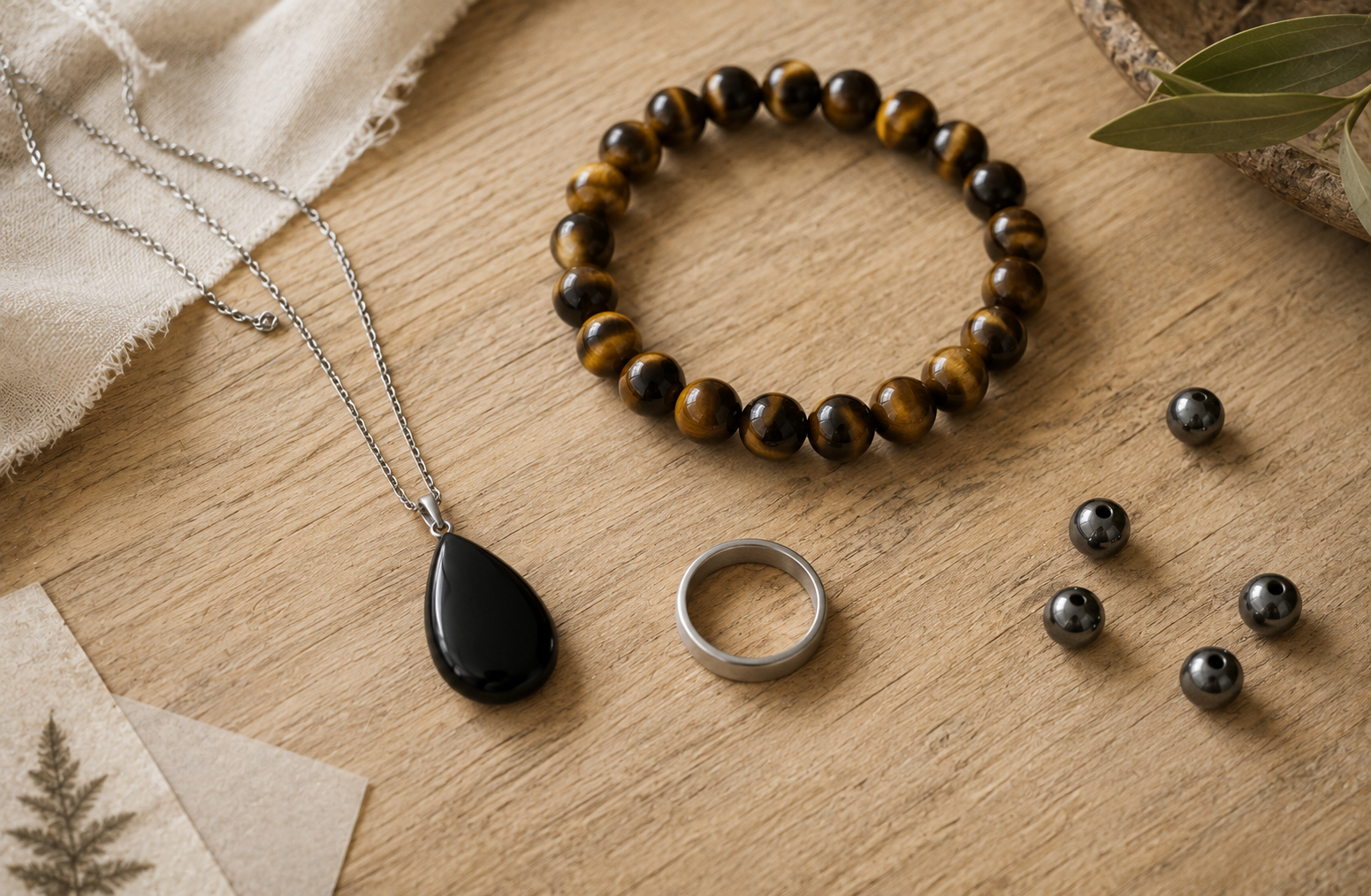
The metal, first
Black obsidian is matte and deep: it absorbs light rather than reflecting it. It therefore pairs better with cool, understated metals, 925 silver, stainless steel, than with a warm gold tone, which makes it look dull. Above all, avoid low-grade alloys: nickel is the leading cause of skin reactions to jewellery, and irritation blamed on the stone almost always comes from the chain. My settings are stainless steel or 925 silver, precisely for this reason.
The other stones, next
In crystal healing, black obsidian is readily paired with:
- tiger's eye, the most classic duo, described as protective and stabilising; I've written a full guide on it;
- hematite, to reinforce grounding, along a very similar logic;
- rose quartz, to soften things, when obsidian alone feels too blunt;
- amethyst, often recommended in the evening, for its calming side.
Tradition does advise against certain combinations, particularly with stones considered highly stimulating. The detail is in obsidian's pairings and in crystals not to pair with obsidian. Again, these are traditional correspondences: if a combination appeals to your eye, nothing stops you.
On style, black obsidian is one of the few genuinely unisex stones: it carries no feminine or masculine connotation, which explains why it's become a classic in men's jewellery. And if the matte black feels too severe, look toward the localised "eye" sheen obsidian, which keeps the same depth with a blue-violet glow, or browse the full range of obsidian varieties.
Caring for it without damage
A pendant worn daily needs about three minutes of attention a week, no more.
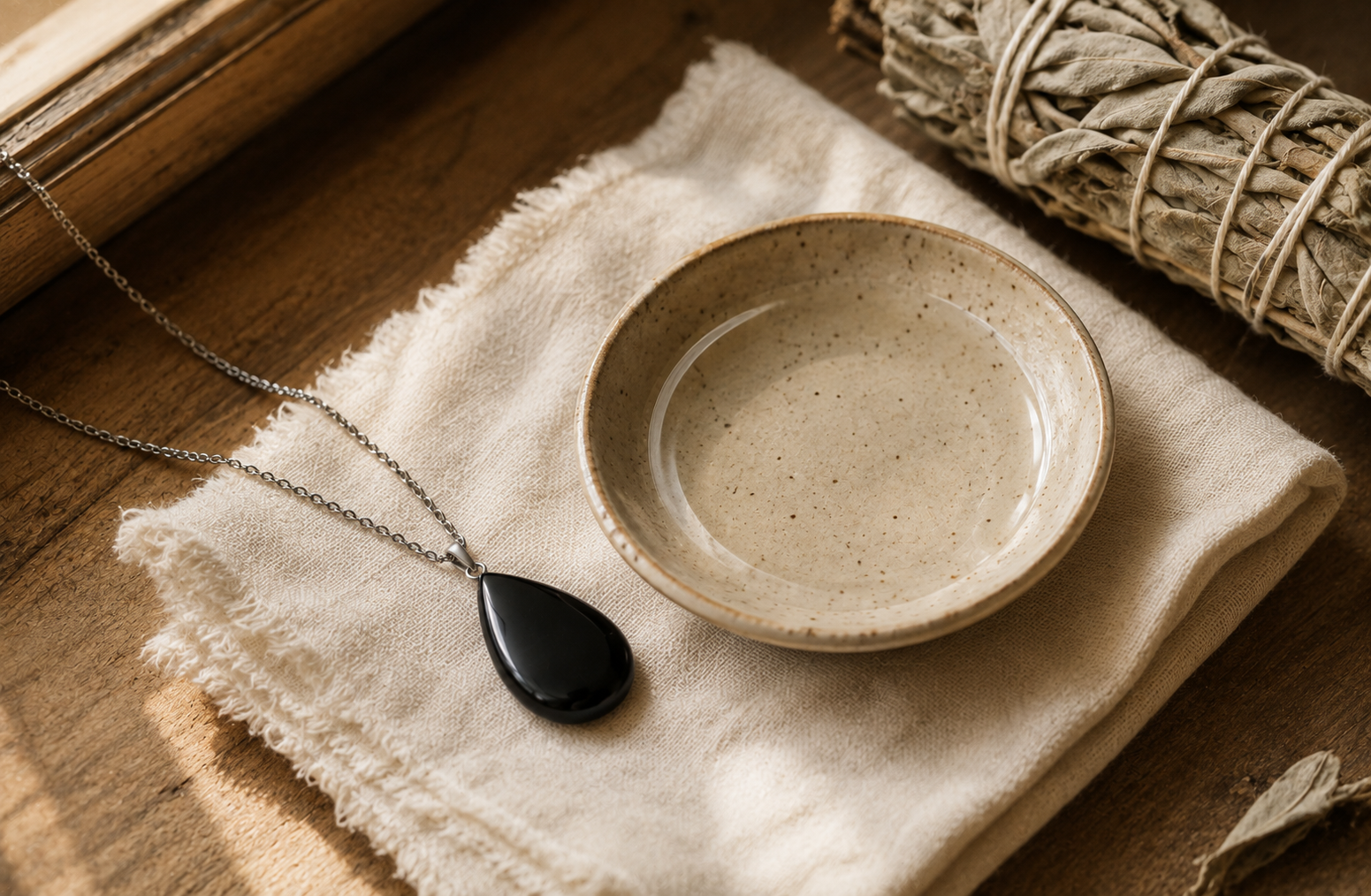
- Daily, a wipe with a soft, dry cloth in the evening is enough to remove sebum. This is what keeps the polish deep;
- Once a week, lukewarm clear water, a cloth, dried immediately. No products, no prolonged soak, no ultrasonic cleaner;
- Never salt, dry or in salt water: it lodges in micro-fissures and dulls the surface. It's the most broken rule, and the most damaging;
- Cleansing, smoke from sage or palo santo, or a quick rinse in clear water, depending on the tradition you follow;
- Charging, moonlight, or simple contact with the earth. Avoid prolonged direct sun, which does nothing for obsidian and harms cords.
The full run-down is in my guides to cleansing and charging obsidian. A final word on what you're buying: coloured glass sold as obsidian is common, and the markers to avoid it are gathered in obsidian price and value. Genuine black obsidian has no reason to be expensive.
If you've enjoyed the pendant and want to extend the set, the wrist and hand are the two natural companions, provided you accept that those pieces wear out faster.
Precautions & good use
Three practical points worth knowing before wearing a cut stone near the neck.
- Edges, obsidian breaks into sharp shards, it's a glass. A chipped pendant should be taken off and repolished, not worn;
- Children, never a corded pendant on a young child, due to a strangulation risk that has nothing to do with the stone;
- Skin, redness under the piece almost always comes from the metal, not the obsidian. Change the chain before giving up on the stone.
And one broader point: if you're wearing black obsidian because you're going through a period of anxiety, poor sleep or persistent fatigue, the piece can be a companion, but it doesn't replace medical advice. Talk to your doctor: it's the most useful step, and there's nothing excessive about it.
Good to know, the properties described here come from spiritual traditions and crystal healing, a wellbeing practice based on belief. They are not a medical claim, do not treat any condition, and never replace advice from a health professional. See also obsidian, dangers and precautions and the complete obsidian guide.
Frequently asked questions
Should a black obsidian pendant be worn against the skin?
What chain length suits a black obsidian pendant?
Can you wear a black obsidian pendant every day?
Can you sleep with a black obsidian pendant?
Which metal should you choose for the setting?
Can a man wear a black obsidian pendant?
How do you clean a black obsidian pendant?
Black obsidian, worn at the neck
Pendants, necklaces, bracelets and rings in natural obsidian, handmade in my studio in France.