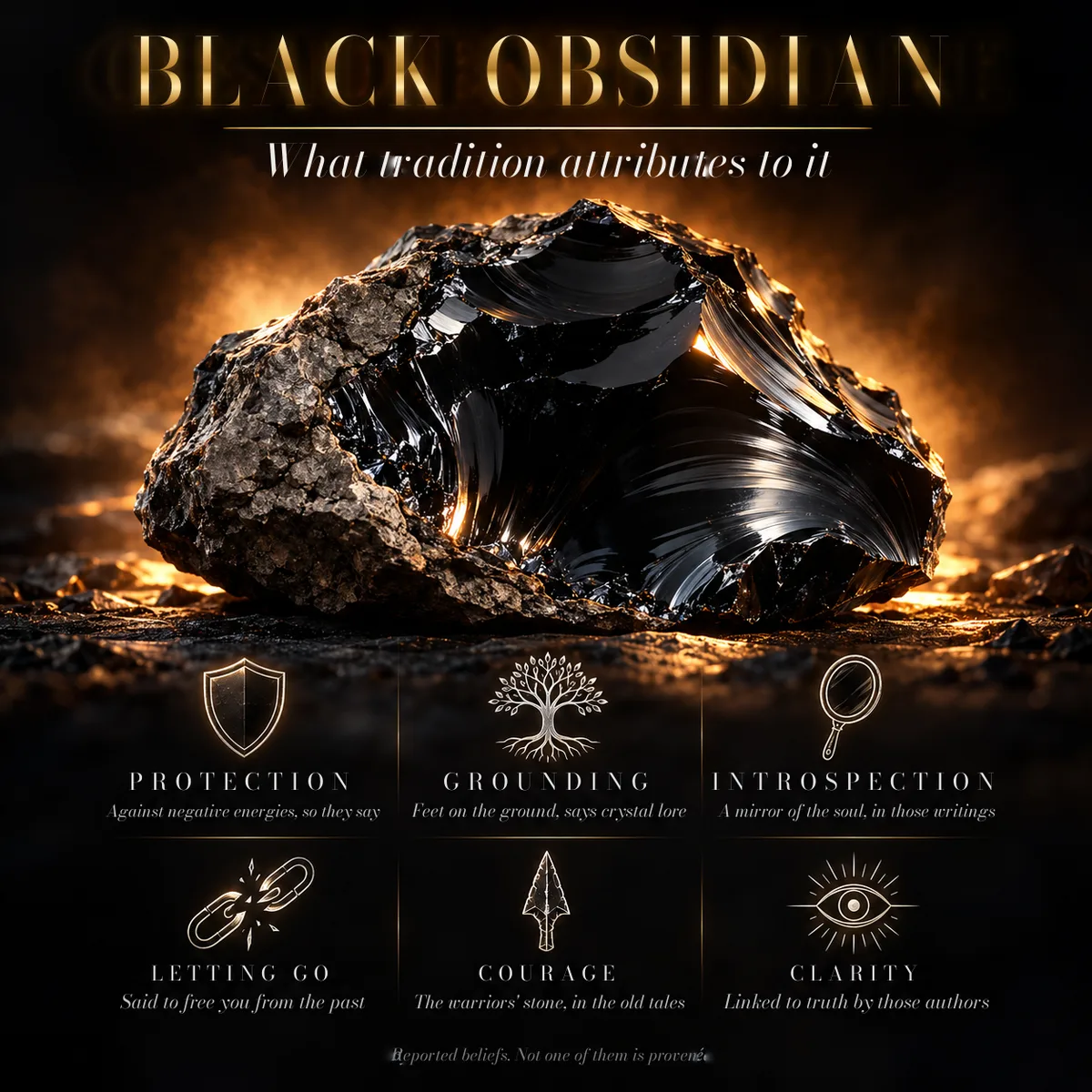
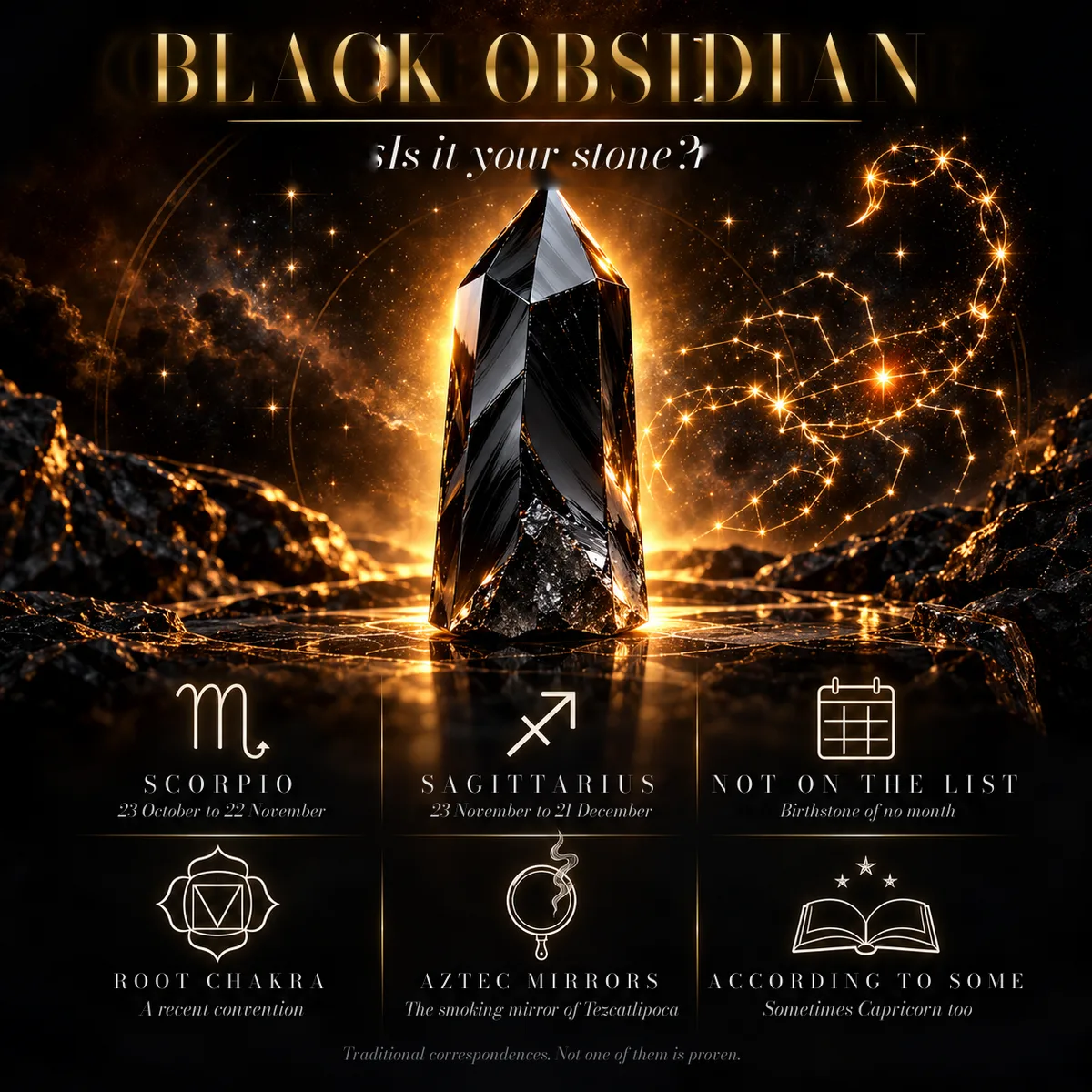
Description
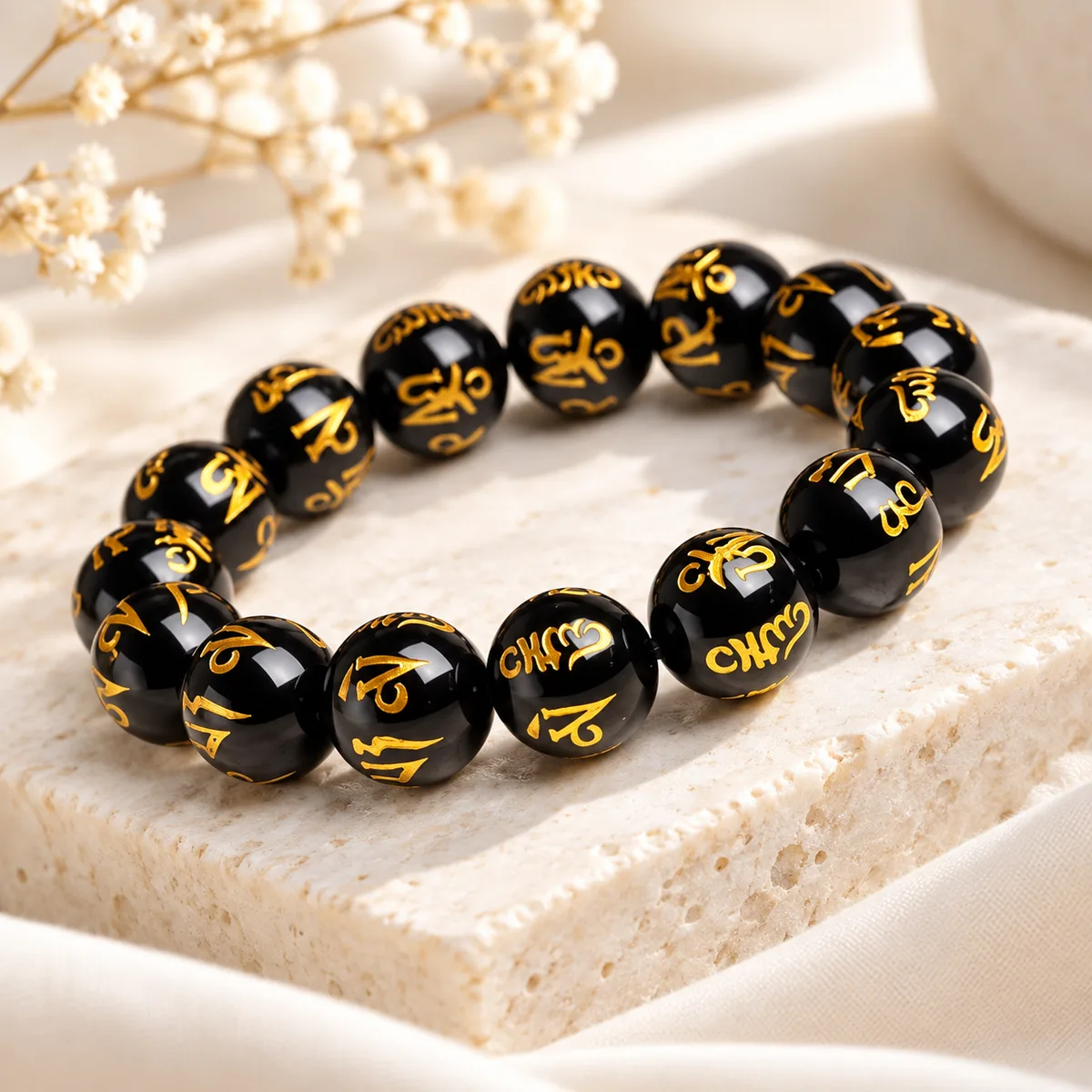
Sixteen black obsidian beads of 12 millimetres, engraved with the six-syllable Tibetan mantra, the hollows filled with gold. The syllables follow one another all the way round the wrist and return to where they started. This is an object to be read, not only worn.
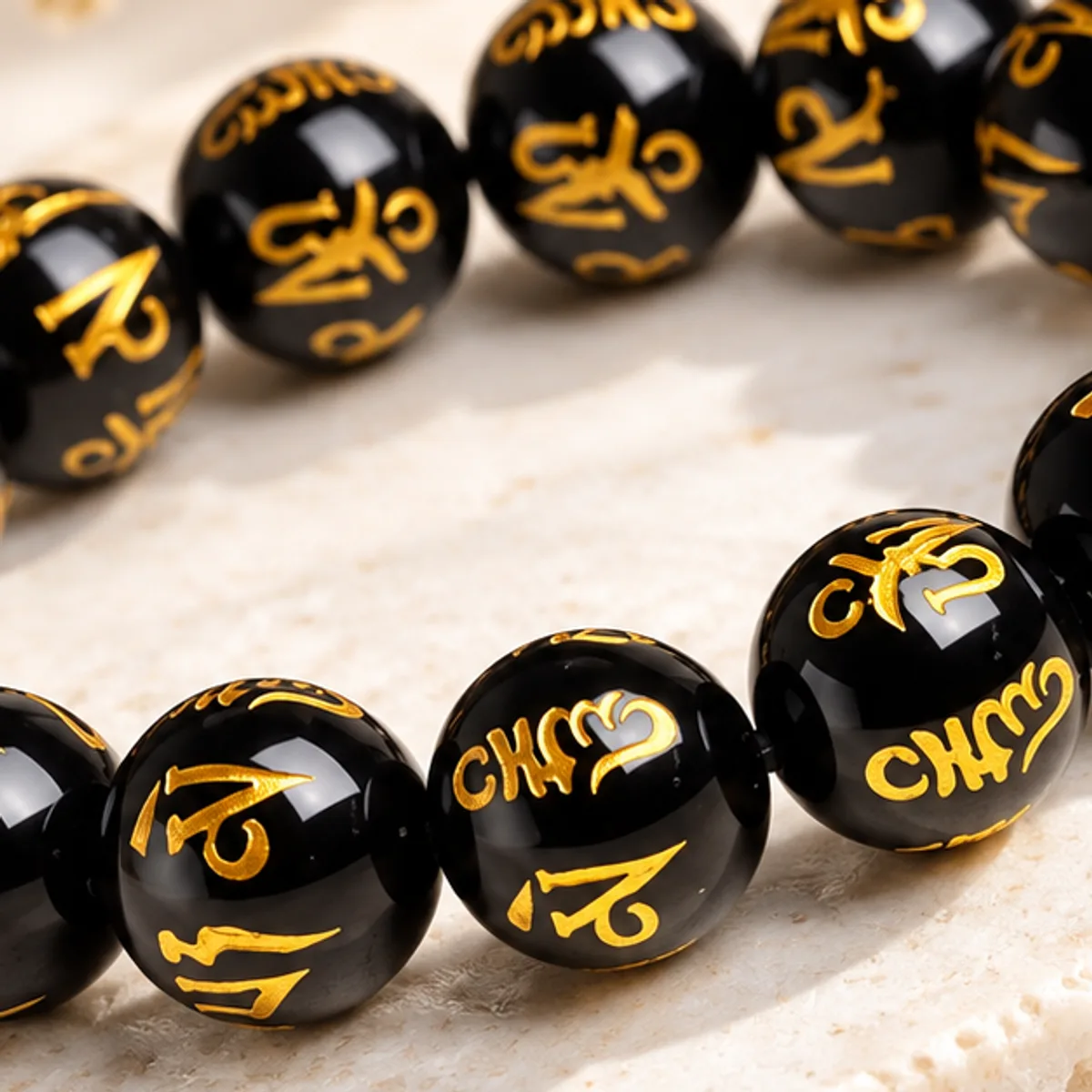
The engraved mantra is the six-syllable one, the most widespread in Tibetan Buddhism. On this strand it is written in Tibetan characters, one syllable per bead, repeated until the circle closes. I mention it because the question keeps coming: the characters really are Tibetan, not invented decoration, and the sequence reads in order if you turn the bracelet clockwise. What the mantra means belongs to a living religious tradition, and it is not for a French jeweller to interpret.
Twelve millimetres is the largest diameter in the range, and here it is not a matter of looks: a Tibetan syllable engraved on an 8 mm bead becomes unreadable. The size is imposed by reading. The strand weighs about 50 g and is seen from a distance. The other bracelets, in finer diameters, are here.
The reservation concerns the gold in the hollows. It is not solid gold poured into the engraving, it is a surface filling. Beads that rub against a watch clasp or a worktop will lose their gold first on the most prominent syllables, and the hollow will go black again. That takes two to three years of daily wear. The engraving itself stays: it is the filling that goes, not the line.
Crystal lore makes obsidian a grounding stone. The mantra, for its part, belongs to religious practice and not to crystal lore. None of that is proven, and no piece of jewellery heals anything. I have gathered separately what tradition attributes to obsidian, in the conditional from start to finish.
- Real black obsidian, sixteen round 12 mm beads.
- Six-syllable Tibetan mantra, engraved and picked out in gold, one syllable per bead.
- Hand-strung in France on braided elastic cord, no clasp.
- The diameter is imposed by reading: below 12 mm the characters become unreadable.
What to know before you wear it
 |  |  |
The specifications
- Stone
- Black obsidian, volcanic glass
- Bead diameter
- 12 mm
- Number of beads
- 16
- Engraving
- Six-syllable Tibetan mantra, hollows picked out in gold
- Wrist size
- 17 to 19 cm, elastic
- Stringing
- Braided elastic cord, no clasp
- Weight
- About 50 g
- Stone origin
- Mexico
- Gender
- Unisex
- Brand
- Bijoux Obsidienne

Engraving a volcanic glass without shattering it
Engraving a volcanic glass has nothing to do with engraving a crystallised stone. Obsidian has no cleavage plane, so it does not split along a preferred direction, but it flakes off in shells as soon as the tool forces or heats. The characters are therefore cut in several very light passes, never in one, and each pass takes off a few hundredths of a millimetre. A bead engraved too fast shows tiny white flakes at the edge of the line, visible under a loupe. Those are the ones I set aside.
This model exists because a strand of plain beads tells nothing, and because some people want an object that occupies the hand. Engraved beads catch the finger and you turn them without thinking. If the gesture interests you more than the text, the other bracelets are here, and the obsidian guide explains the material.
A botched engraving on obsidian does not show to the eye. It shows under a loupe, as white flakes at the edge of the line.
Obsidian does not mind water, but it chips on impact. Never rub the engraved beads with an abrasive cloth or a brush: the gold in the hollows goes after a few passes. A soft dry cloth, never an ultrasonic bath. Cleaning an obsidian piece covers the rest.