
Description
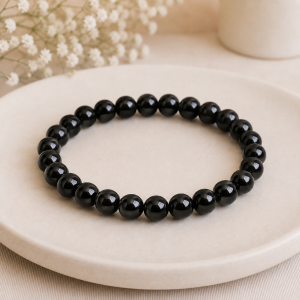
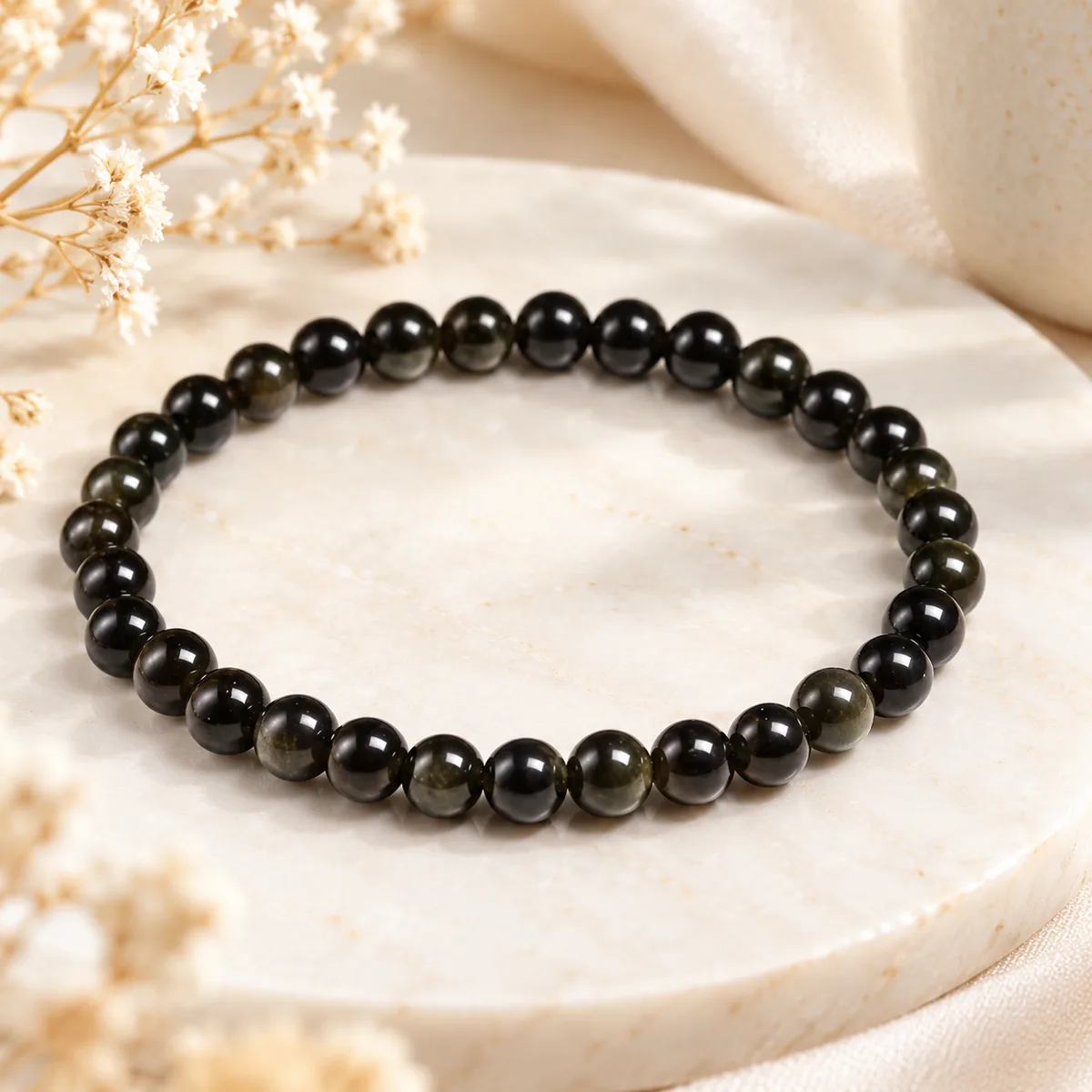
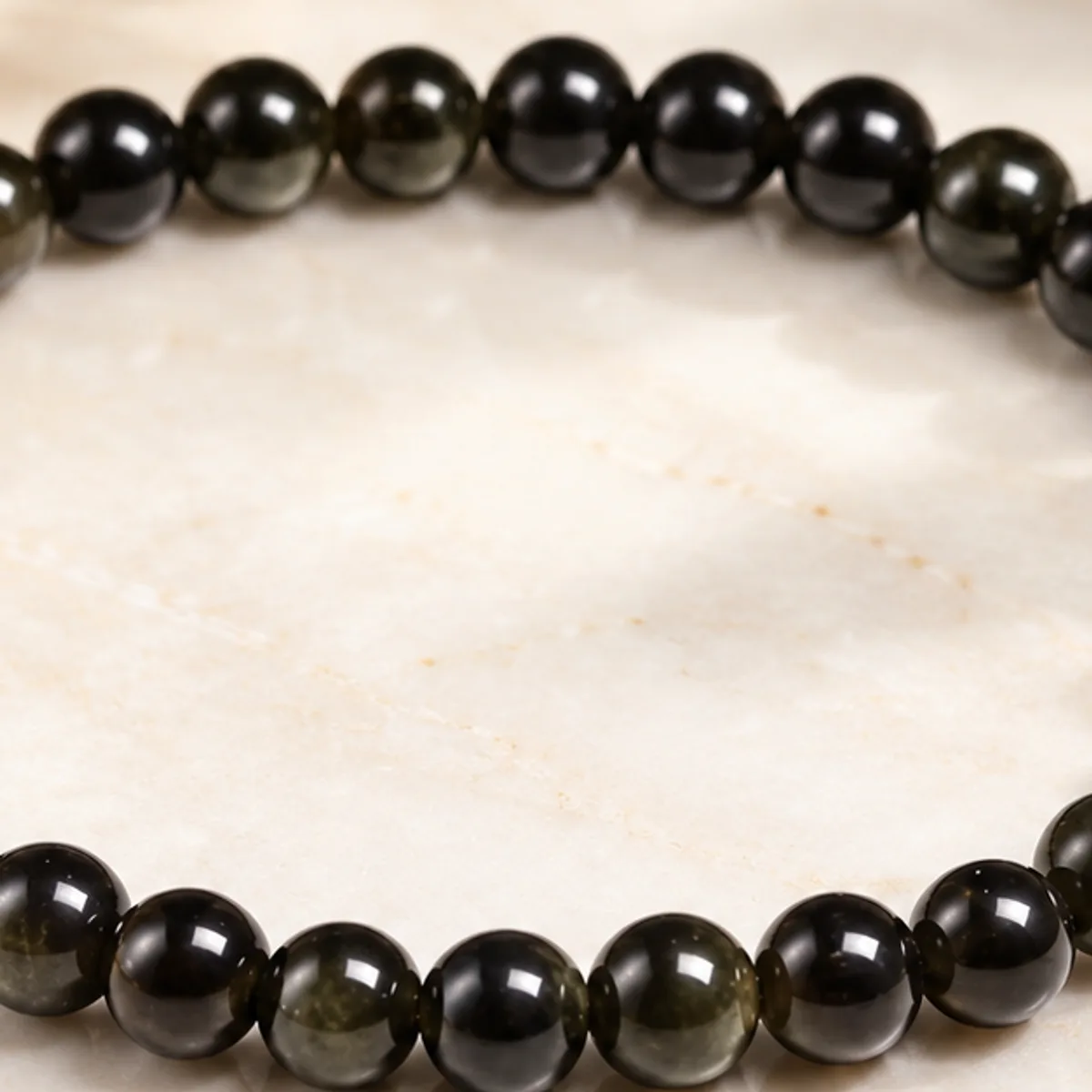
About thirty round golden obsidian beads, 6 millimetres across, strung on elastic cord. The copper sheen does not light up on every bead at once: it runs along the strand as your hand moves. This is the one you wear when you want the stone without announcing it.
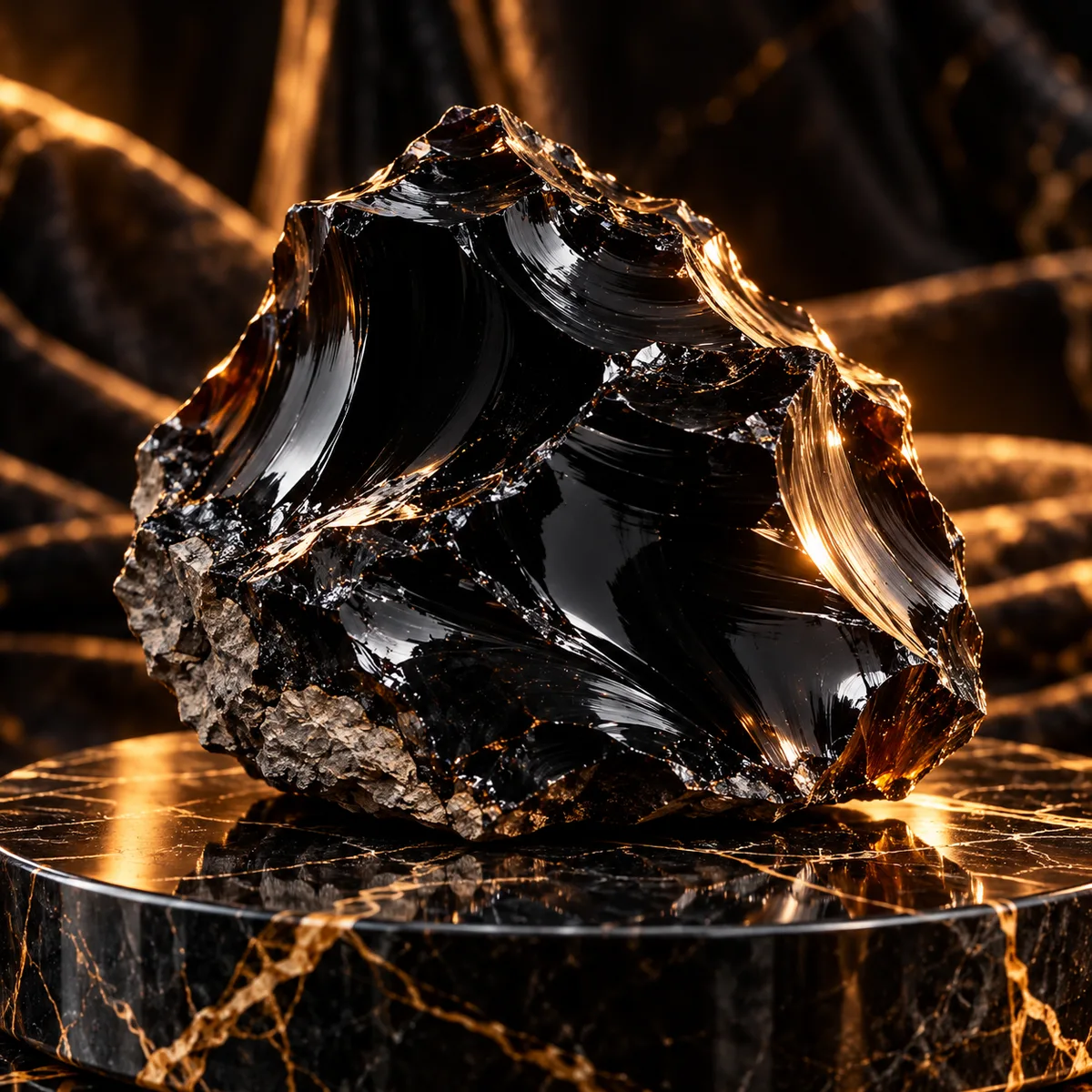
Golden obsidian is not a dyed or heat-treated variety. It is ordinary black obsidian holding microscopic gas bubbles, all laid down in the same plane by the lava flowing before it froze. Light bounces off them and comes back golden, but along one axis only: that is why the sheen appears and disappears as you turn your wrist. On a bead polished into a sphere that axis goes all the way around, and each bead lights up in turn. The other obsidian varieties do not behave this way.
Six millimetres is the smallest round-bead diameter in the range, and the strand holds about thirty of them instead of twenty. It weighs under 10 g and slips under a shirt cuff unseen. The trade-off is real and worth stating: on a 6 mm bead the surface returning light is nearly three times smaller than on a 10 mm one. The sheen is therefore fine and even, never spectacular. If you want a sharp contrast between black beads and frankly golden ones, a 10 mm strand is what you need, not this one. The other bracelets are here.
The cord is braided elastic, not silk knotted between each bead. That is a choice made for strength, and it has a cost: elastic slackens over the years, faster if you pull it on instead of sliding it over your hand. Reckon on two to three years of daily wear before it needs restringing. I restring it free of charge, just send it back. Knotted silk would last longer, but it doubles the price and makes the bracelet stiffer to put on.
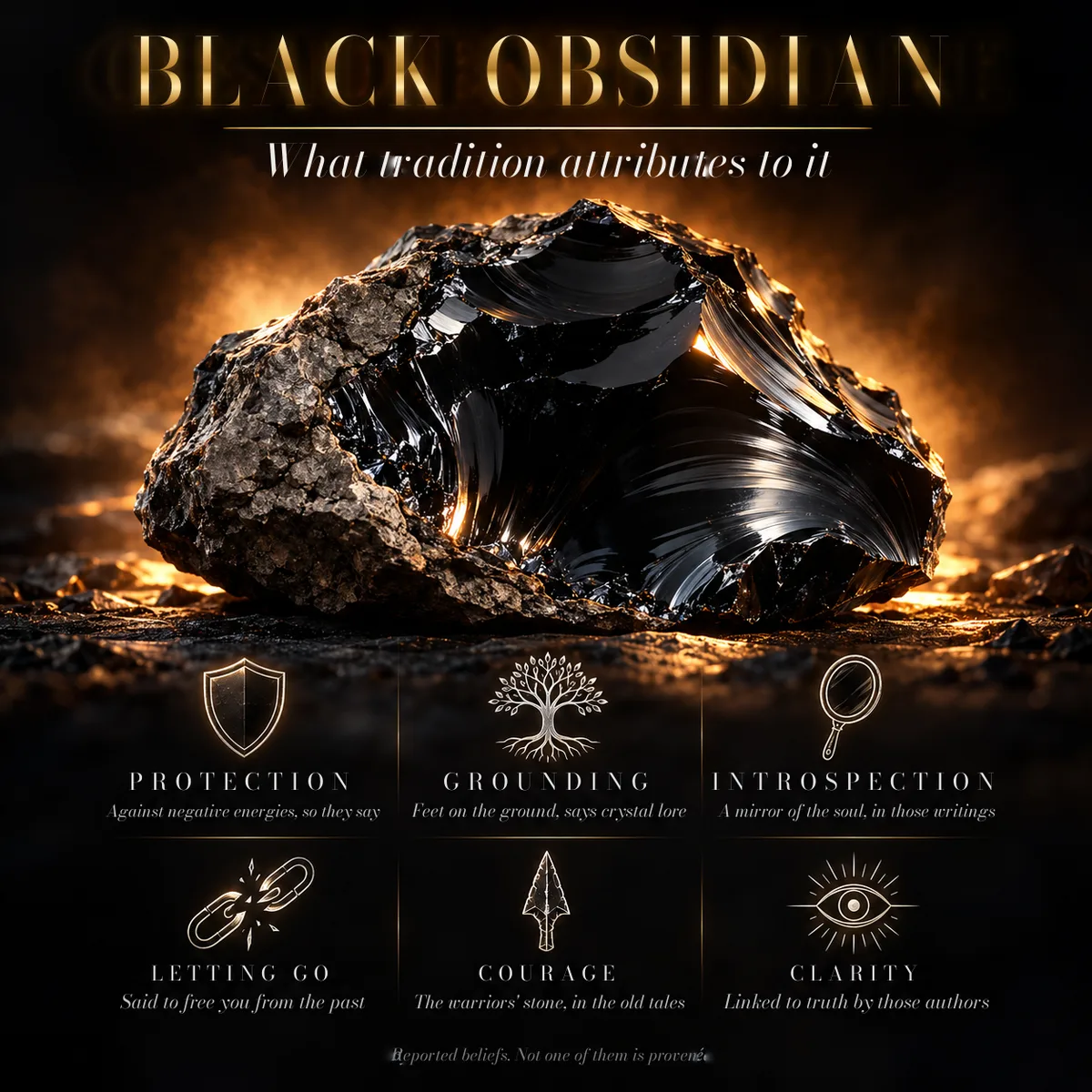
Crystal lore would have obsidian be a grounding stone, and golden obsidian in particular one linked to self-confidence. None of that is proven, and no piece of jewellery heals anything. If the subject interests you, I have gathered separately what tradition attributes to obsidian and how it is worn, in the conditional from start to finish.
- Real golden obsidian, about thirty round 6 mm beads, fine copper sheen.
- Hand-strung in France on braided elastic cord, no clasp.
- Free restringing for life: send it back and I will rebuild it.
- The smallest diameter in the range, the one that slips under a cuff.
What to know before you wear it
 |  |  |
The specifications
- Stone
- Golden obsidian, volcanic glass
- Bead diameter
- 6 mm
- Number of beads
- About 30
- Wrist size
- 17 to 19 cm, elastic
- Stringing
- Braided elastic cord, no clasp
- Weight
- About 8 g
- Stone origin
- Mexico
- Gender
- Unisex
- Brand
- Bijoux Obsidienne

Sorting the beads under the lamp, one by one
Sorting is done bead by bead under the lamp, and it takes longer than the stringing. Out of a hundred golden obsidian beads, about fifteen have no usable sheen: the bubbles in them sit at odd angles and the bead stays black whatever you do. They are not faulty, they simply fell badly inside the block. I set them aside and build the strand from beads whose sheen lights along the same axis, otherwise the bracelet shows dark gaps the moment the hand turns. On a 6 mm strand that sorting counts double: thirty matched beads instead of twenty.
This model exists because people kept asking me for an obsidian bracelet to wear at the office. The 10 and 12 millimetre strands in the catalogue are handsome but they show, and not everyone wants to explain their stone at the coffee machine. This one is worn without conversation. For the rest of the range, the bracelets are here, and the obsidian guide explains the varieties.
A bead that does not light up is not a reject. It simply fell in the wrong place inside the block.
Obsidian is a volcanic glass: water does it no harm, but it chips on impact and scratches against hard metal. Take the bracelet off before exercising and do not store it with keys. A soft cloth is enough, never an ultrasonic bath. Cleaning an obsidian piece covers the rest.